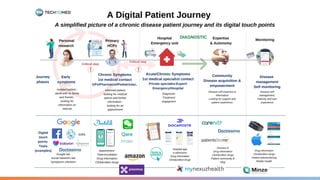
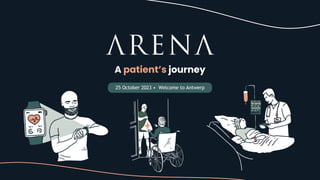
A patient’s journey
25 October 2023 • Welcome to Antwerp
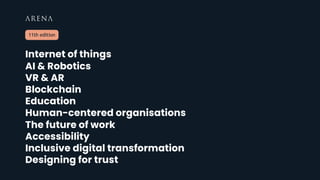
Internet of things
AI & Robotics
VR & AR
Blockchain
Education
Human-centered organisations
The future of work
Accessibility
Inclusive digital transformation
Designing for trust
11th edition
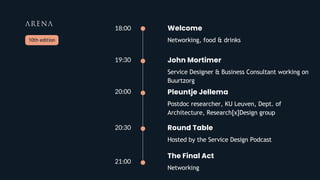
Welcome
Networking, food & drinks
John Mortimer
Service Designer & Business Consultant working on
Buurtzorg
Pleuntje Jellema
Postdoc researcher, KU Leuven, Dept. of
Architecture, Research[x]Design group
Round Table
Hosted by the Service Design Podcast
The Final Act
Networking
19:30
20:00
20:30
21:00
18:00
10th edition
A patient’s journey
26 October 2023 • Welcome to Antwerp
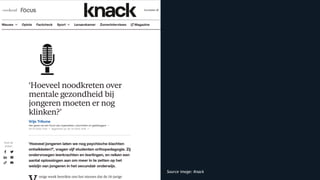
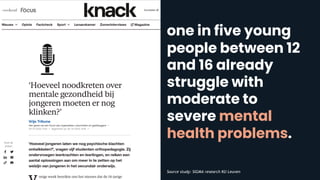
Source image: Knack
Source study: SIGMA research KU Leuven
one in five young
people between 12
and 16 already
struggle with
moderate to
severe mental
health problems.
An integrated care model:
strengthen the patient person and
strengthen the environment
even before they are ready for help.
Professor Marina Danckaerts (Child and adolescent psychiatry UPC KU Leuven)
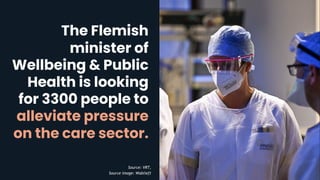
Source image: Wablieft
Source: VRT,
Source image: Wablieft
The Flemish
minister of
Wellbeing & Public
Health is looking
for 3300 people to
alleviate pressure
on the care sector.
3 in 10 Flemish people will take on
the role of informal carer at some
point in their life: 'We get too little
support'
De Morgen
How can we design with health
in mind holistically?
Challenge
Designing for health holistically
means investing in people, the
right tools and building trust.
Levers for designing for health
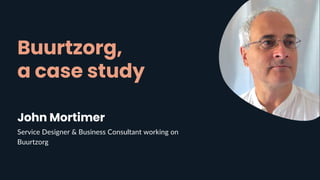
Service Designer & Business Consultant working on
Buurtzorg
Buurtzorg,
a case study
John Mortimer
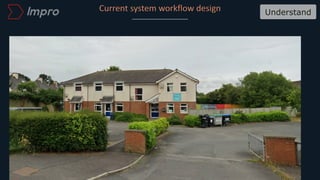
Understand
Current system workflow design
16
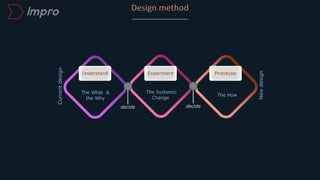
Design method
Current
design
New
design
The What &
the Why
The How
The Systemic
Change
decide decide
Experiment Prototype
Understand
Understand
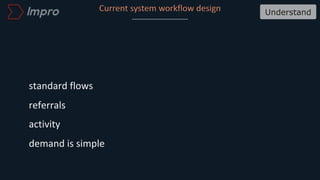
Current system workflow design
standard flows
referrals
activity
demand is simple
Understand
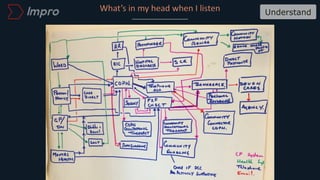
What’s in my head when I listen
Understand
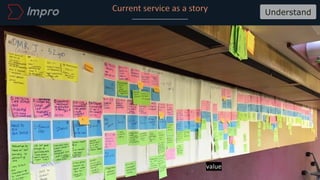
Current service as a story
value
Experiment
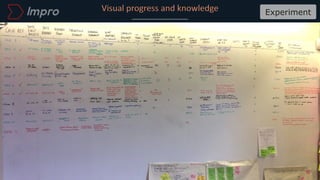
Visual progress and knowledge
Experiment
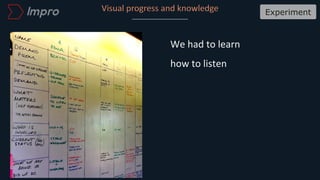
Visual progress and knowledge
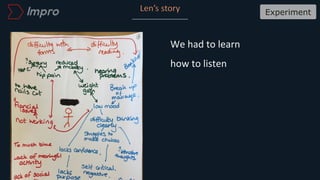
We had to learn
how to listen
Len
Early 60’s
He needs a walking aid & his chair raised so he
can get in and out easier
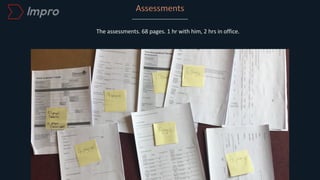
Assessments
The assessments. 68 pages. 1 hr with him, 2 hrs in office.
Experiment
Len’s story
We had to learn
how to listen
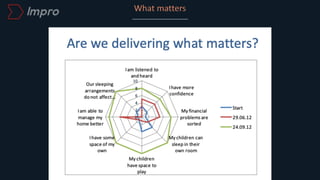
What matters
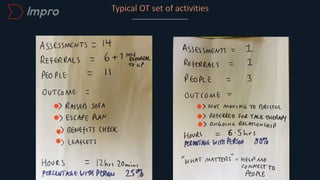
Typical OT set of activities
Experiment
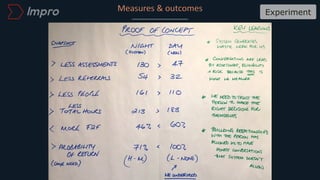
Measures & outcomes
Experiment
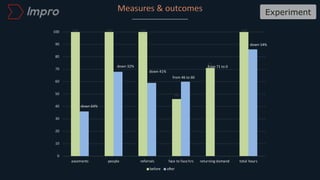
Measures & outcomes
100 100 100
46
71
100
down 64%
down 32%
down 41%
from 46 to 60
from 71 to 0
down 14%
0
10
20
30
40
50
60
70
80
90
100
assements people referrals face to face hrs returning demand total hours
before after
Experiment
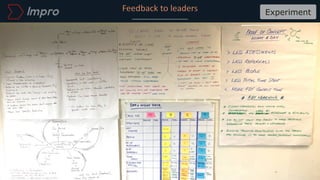
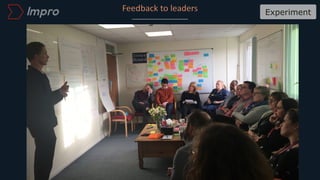
Feedback to leaders
Experiment
Feedback to leaders
Experiment
Feedback to leaders
Experiment
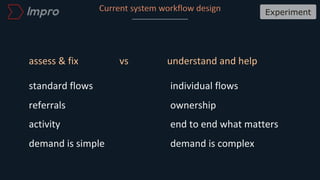
Current system workflow design
standard flows
referrals
activity
demand is simple
assess & fix vs understand and help
individual flows
ownership
end to end what matters
demand is complex
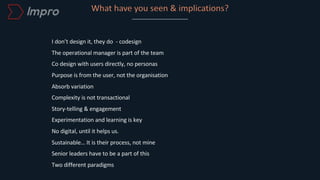
What have you seen & implications?
I don’t design it, they do - codesign
The operational manager is part of the team
Co design with users directly, no personas
Purpose is from the user, not the organisation
Absorb variation
Complexity is not transactional
Story-telling & engagement
Experimentation and learning is key
No digital, until it helps us.
Sustainable… It is their process, not mine
Senior leaders have to be a part of this
Two different paradigms
Thank you!
Feel free to contact me at john.mortimer@improconsult.co.uk
You might be interested in
1. Health and social care workshop https://www.improconsult.co.uk/integrated-health-social-ics.html
2. Systemic design workshop https://www.improconsult.co.uk/service-design-workshop-systemic.html
Any questions
for John?
Q&A
Postdoc researcher, KU Leuven, Dept. of Architecture,
Research[x]Design group
Designing the care
environment around
the person
Pleuntje Jellema
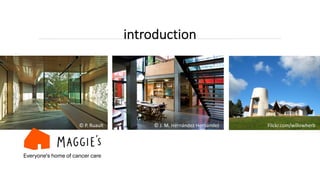
introduction
Flickr.com/willowherb
© J. M. Hernández Hernández
© P. Ruault
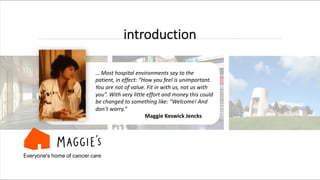
… Most hospital environments say to the
patient, in effect: “How you feel is unimportant.
You are not of value. Fit in with us, not us with
you”. With very little effort and money this could
be changed to something like: “Welcome! And
don’t worry.”
Maggie Keswick Jencks
introduction
46
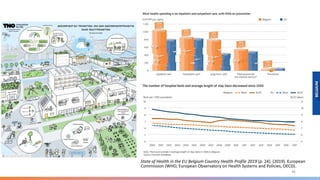
State of Health in the EU Belgium Country Health Profile 2019 (p. 24). (2019). European
Commission (WHO, European Observatory on Health Systems and Policies, OECD).
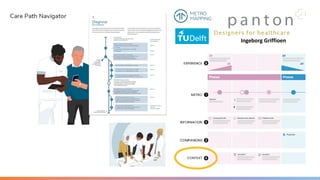
Ingeborg Griffioen
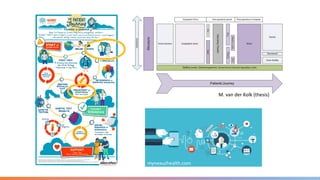
M. van der Kolk (thesis)
mynexuzhealth.com
50
photo:
Chris
Yarzab
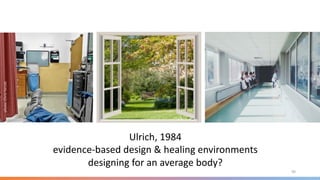
Ulrich, 1984
evidence-based design & healing environments
designing for an average body?
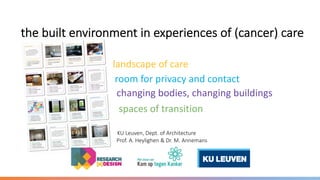
the built environment in experiences of (cancer) care
KU Leuven, Dept. of Architecture
Prof. A. Heylighen & Dr. M. Annemans
landscape of care
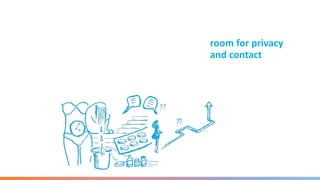
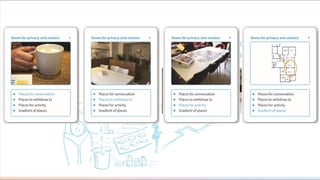
room for privacy and contact
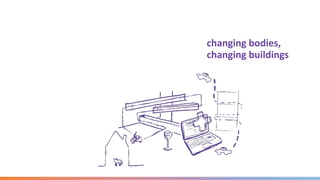
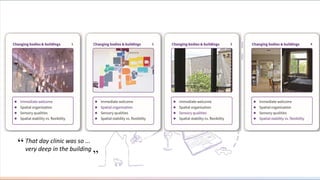
changing bodies, changing buildings
spaces of transition
landscape of care
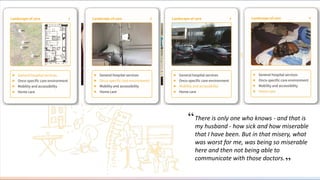
landscape of care
There is only one who knows - and that is
my husband - how sick and how miserable
that I have been. But in that misery, what
was worst for me, was being so miserable
here and then not being able to
communicate with those doctors.
“
”
room for privacy
and contact
room for privacy
and contact
changing bodies,
changing buildings
changing bodies,
changing buildings
“
”
That day clinic was so ...
very deep in the building
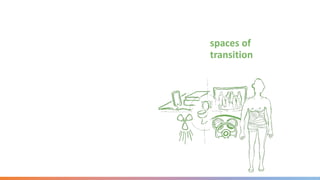
spaces of
transition
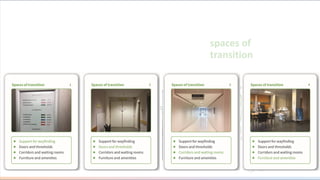
spaces of
transition
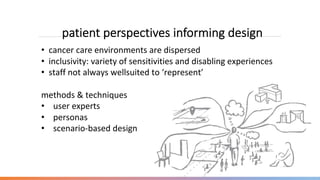
patient perspectives informing design
• cancer care environments are dispersed
• inclusivity: variety of sensitivities and disabling experiences
• staff not always wellsuited to ‘represent’
methods & techniques
• user experts
• personas
• scenario-based design
pleuntje.jellema@kuleuven.be
http://rxd.architectuur.kuleuven.be
@PleuntjeJellema & @ResearchxDesign
thank you!
Any questions
for Pleuntje?
Q&A
Round table
Hosted by the Service Design Podcast
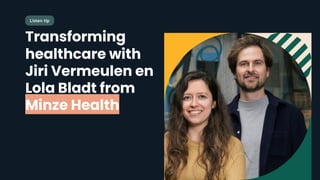
Transforming
healthcare with
Jiri Vermeulen en
Lola Bladt from
Minze Health
Listen tip
We’d love
your feedback!
Scan me
Save the date!
24th April 2023 • 18h • Brussels
Special thanks to our sponsors
by