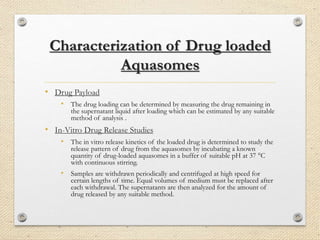
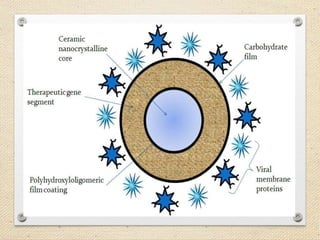
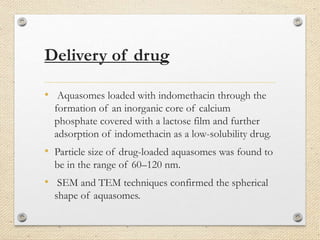
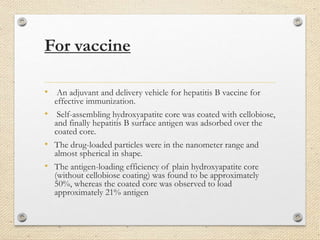
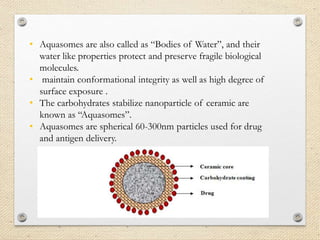
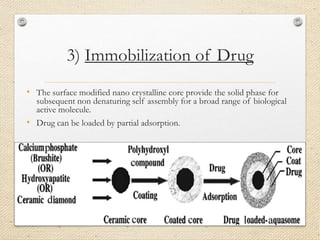
Aquasomes are spherical nanoparticles 60-300nm in size that are used to deliver drugs and antigens. They are composed of a central ceramic core coated with carbohydrates to protect and preserve fragile biological molecules. The core is typically made of calcium phosphate prepared using methods like sonication or colloidal precipitation. It is then coated with polyhydroxy oligomers like cellobiose or trehalose to stabilize the nanoparticle. Drugs or antigens are then adsorbed onto the coated core. Aquasomes maintain the structural integrity of molecules and deliver them through controlled release while protecting them from degradation. They have applications in delivering substances like insulin, hemoglobin, antigens, enzymes, and genes.



 Most read








 Most read