GOVT LARANG SAI PG. COLLEGE RAMANUJGANJ BALRAMPUR CG
DEPARTMENT OF BOTANY
SEMINAR- PRESENTION- 2023-24
SUBJECT- ANGIOSPERMS TAXONOMY AND EMBRYOLOGY
SEMINAR TOPIC- LEGUMINOSAE FAMILY
DATE-26 /04/2024
SUBJECT CODE- MBT-202 PRESENTED BY
MUKESH KUMAR YADAV
CLASS- M.SC.II SEMESTER
PRESENTED TO
S.B YADAV SIR ROLL NO. 18
DEPARTMENT OF BOTANY
CONTENT-
• 1 INTRODUCTION
• 2. systematic possion
• 3. Distribution
• 4.vegetative characters
• (i) Habit (ii)Root (iii)Stem (iv)Leaves
• 5.floral characters
• (i) inflorescences (ii) flower (iii) calyx (iv) corolla (v) Androecium (vi) Gynoecium
• 6.Fruit (i) seeds (ii)pollination
• 7. Floral diagram
• 8.floral formula
• 9. Economic importance of family
• 1.INTRODUCTION-
Herbs,shrubs,or trees stem-climbers twinners climbers by leaf,leaflet tendril,
leaves- stipulate,Alternate,simple or, compound .Inflorescences- racehorse rarely
composed,Flower-
Bracteate,pedicellare,zygomorphic,bisexuality,complete,slightly epigenous. Calyx-
5 gamosepalous,ascending imbricate,Corolla- 5 petals, polypetalous, Imbricate
Androecium- (9)+1 stamens or (9)monadelphous due to absence of posterior
single. Stamen anther dithecous introse Gynoecium- monocarpellary unilocular
marginal placentation. Fruit – Legume or pod sometimes lomentum seed
exalbuminous.
• (Bentham& Hooker) (Englar & prantl) (Hutchinson)
• Phraseograms Phraseograms Angiospermae
• Dicotyledones Dicotyledonae Dicotyledones
• Polypetalae Archichlamydeae Lignosae
• Calciflorarae Leguminosae
• Rosales Papilionapacea
• Rosales
3.Systematic position-
• It is popular known as matar kul ,about 490 genera & 12000 spices are found in
it.100 genera and 748 species of this sub family are found in India. This family is
cosmopolitan most of the plants &mesophyte. Some plants become xerophytes' due
to modification of leaves such as- aluminum pseudoalahgi halophtes.
•Vegetative character:-
• (i) Habit (ii) Root (iii) Stem (iv) Leaves
• (i) Habit :- annual or biennial herbs as- melilotus
climber such as-pisum Vicia Delicious
(sem)Shrub,woody climber jaise- Dalbergiya etc.
3.Distribution
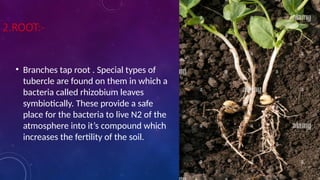
2.ROOT:-
• Branches tap root . Special types of
tubercle are found on them in which a
bacteria called rhizobium leaves
symbiotically. These provide a safe
place for the bacteria to live N2 of the
atmosphere into it’s compound which
increases the fertility of the soil.
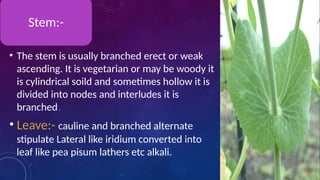
• The stem is usually branched erect or weak
ascending. It is vegetarian or may be woody it
is cylindrical soild and sometimes hollow it is
divided into nodes and interludes it is
branched.
• Leave:- cauline and branched alternate
stipulate Lateral like iridium converted into
leaf like pea pisum lathers etc alkali.
Stem:-
(i) Infloroscence:- these characters are floral
character racemose spike like- Urania capitulum like-
trifolium solitary axillary ordelineated flower
compound Inflorescences sequences are also found.
•(ii)Flower :- flower intermediate is medically
zygomorphic rediellate bracteate mostly two
bracteoles like sesbania bisexuality complete
Pentamerous hypogynous or slightly foliaceous and
persistent
Floral character:-
• Five sepals gamosepalous subject sepals anterior
sepals ascending imbricate or valdate medicago
the sepals are free.
• (iv) Corolla :- petals are five separate
polypetalous the group is known as
papilionaceous the posterior petals is the largest
on the outer side it is called strand vegxillum.
• There are two sides in the lateral part called
wings two anterior petals are small and fused.
3.Calyx:-
• Stamen are ten (9)+1 diadelphous.the posterior Stamen is
free and the remaining nine from a union which forms a
covering around the carple. There is a cover over the
puntanute which burstat from the front some plants have
only nine stamens and they from a compound posterior
stamen is absent like in peanuts arches' hypogea dalbergia
sisso etc.
Androecium:-
GYNOCIUM:-
• Monocarpellry unilocular superior ovary any
placentation is marginal sometimes held up by a
short or long jab the stigma and are bent several
times.
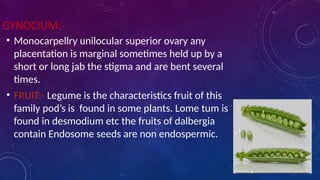
• FRUIT:- Legume is the characteristics fruit of this
family pod’s is found in some plants. Lome tum is
found in desmodium etc the fruits of dalbergia
contain Endosome seeds are non endospermic.
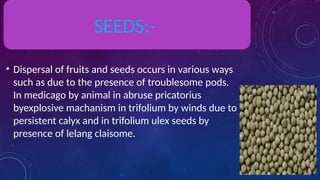
• Dispersal of fruits and seeds occurs in various ways
such as due to the presence of troublesome pods.
In medicago by animal in abruse pricatorius
byexplosive machanism in trifolium by winds due to
persistent calyx and in trifolium ulex seeds by
presence of lelang claisome.
SEEDS:-
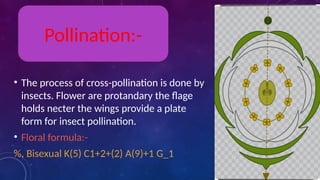
• The process of cross-pollination is done by
insects. Flower are protandary the flage
holds necter the wings provide a plate
form for insect pollination.
• Floral formula:-
%, Bisexual K(5) C1+2+(2) A(9)+1 G_1
Pollination:-
• 1. Cicero arietinum Eng. Gram Verna Chana –this is a herb. It is native of South Europe
but now commonly grown in Uttar Pradesh Rajasthan Bihari and mayday pradesh.
• 2.pisum sativum var.Arvense syn p. Adverse english garden pea Verna Mattar it is
native of South urope but now cultivated in our country chiefly in the Punjab utter
pradesh Delhi himachal pradesh.
3. cajanus Cajan syn.cajanus indices Eng. Pigeon
pea.verna- Arhar. This is a shrubs grown chiefly in Uttar
Pradesh Bihar madhya pradesh chhattisgarh.
4.Lens culinaris syn L. Escalante ervum Lens Eng Lentil Verna masur – this is native of
South West Asia but now cultivated in our country chiefly in Andhra pradesh utter pradesh
etc.
5.
Economic importance of family
Reference:-
Angiosperms and Embryology pdf.pptx and fabace family