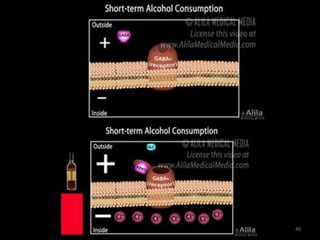
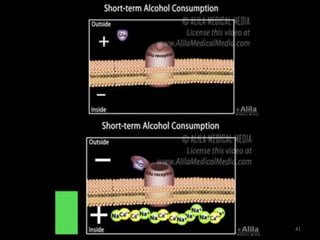
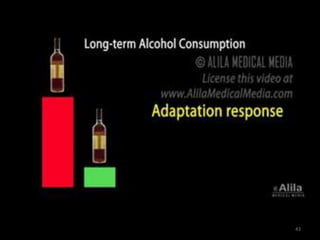
1
2
3
4
MEHAK KHURANA
MSc – II
2015-BCH-18
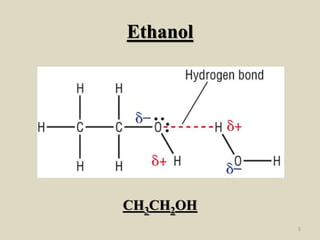
Ethanol
5
CH3CH2OH
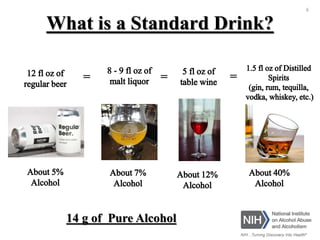
What is a Standard Drink?
6
= = =
14 g of Pure Alcohol
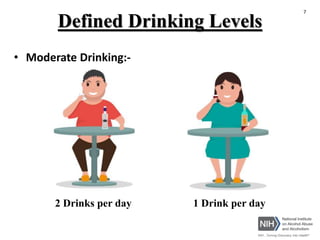
Defined Drinking Levels
• Moderate Drinking:-
7
2 Drinks per day 1 Drink per day
Defined Drinking Levels
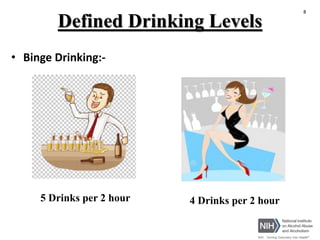
• Binge Drinking:-
8
5 Drinks per 2 hour 4 Drinks per 2 hour
Defined Drinking Levels
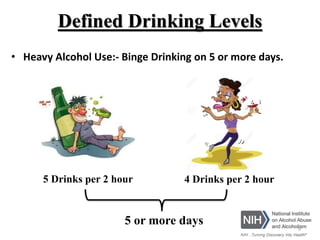
• Heavy Alcohol Use:- Binge Drinking on 5 or more days.
9
5 Drinks per 2 hour
4 Drinks per 2 hour
5 or more days
5 Drinks per 2 hour 4 Drinks per 2 hour
10
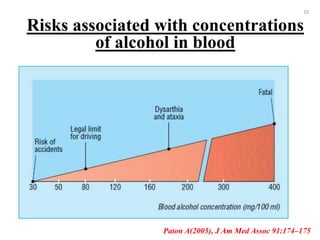
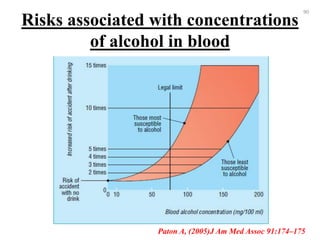
Risks associated with concentrations
of alcohol in blood
Paton A(2005), J Am Med Assoc 91:174–175
11
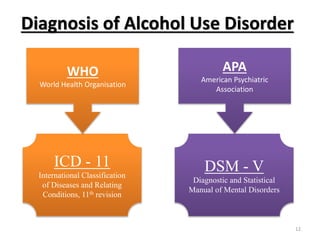
Diagnosis of Alcohol Use Disorder
12
ICD - 11
International Classification
of Diseases and Relating
Conditions, 11th revision
DSM - V
Diagnostic and Statistical
Manual of Mental Disorders
WHO
World Health Organisation
APA
American Psychiatric
Association
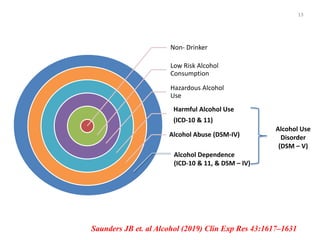
Non- Drinker
Low Risk Alcohol
Consumption
Hazardous Alcohol
Use
Harmful Alcohol Use
(ICD-10 & 11)
Alcohol Abuse (DSM-IV)
13
Alcohol Dependence
(ICD-10 & 11, & DSM – IV)
Alcohol Use
Disorder
(DSM – V)
Saunders JB et. al Alcohol (2019) Clin Exp Res 43:1617–1631
14
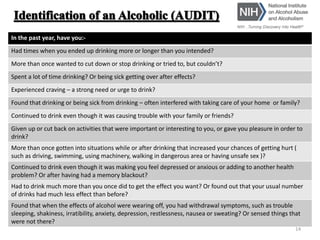
In the past year, have you:-
Had times when you ended up drinking more or longer than you intended?
More than once wanted to cut down or stop drinking or tried to, but couldn’t?
Spent a lot of time drinking? Or being sick getting over after effects?
Experienced craving – a strong need or urge to drink?
Found that drinking or being sick from drinking – often interfered with taking care of your home or family?
Continued to drink even though it was causing trouble with your family or friends?
Given up or cut back on activities that were important or interesting to you, or gave you pleasure in order to
drink?
More than once gotten into situations while or after drinking that increased your chances of getting hurt (
such as driving, swimming, using machinery, walking in dangerous area or having unsafe sex )?
Continued to drink even though it was making you feel depressed or anxious or adding to another health
problem? Or after having had a memory blackout?
Had to drink much more than you once did to get the effect you want? Or found out that your usual number
of drinks had much less effect than before?
Found that when the effects of alcohol were wearing off, you had withdrawal symptoms, such as trouble
sleeping, shakiness, irratibility, anxiety, depression, restlessness, nausea or sweating? Or sensed things that
were not there?
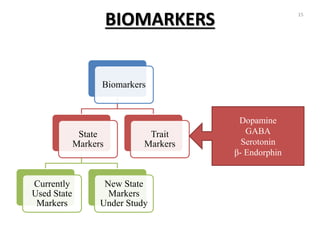
Biomarkers
State
Markers
Currently
Used State
Markers
New State
Markers
Under Study
Trait
Markers
15
BIOMARKERS
Dopamine
GABA
Serotonin
β- Endorphin
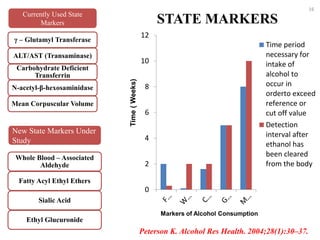
γ – Glutamyl Transferase
ALT/AST (Transaminase)
Carbohydrate Deficient
Transferrin
N-acetyl-β-hexosaminidase
Mean Corpuscular Volume
Currently Used State
Markers
Whole Blood – Associated
Aldehyde
Fatty Acyl Ethyl Ethers
Sialic Acid
Ethyl Glucuronide
New State Markers Under
Study
0
2
4
6
8
10
12
Time period
necessary for
intake of
alcohol to
occur in
orderto exceed
reference or
cut off value
Detection
interval after
ethanol has
been cleared
from the body
Time(Weeks)
Markers of Alcohol Consumption
16
STATE MARKERS
Peterson K. Alcohol Res Health. 2004;28(1):30–37.
17
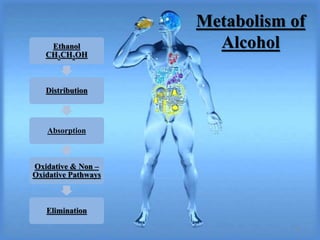
Metabolism of
AlcoholEthanol
CH3CH2OH
Distribution
Absorption
Oxidative & Non –
Oxidative Pathways
Elimination
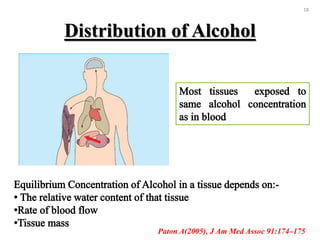
Distribution of Alcohol
18
Paton A(2005), J Am Med Assoc 91:174–175
19
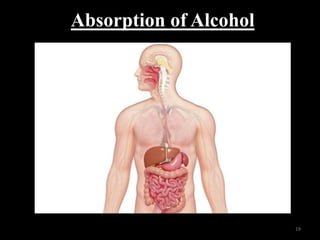
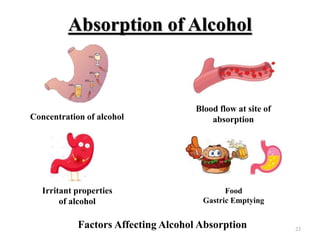
Absorption of Alcohol
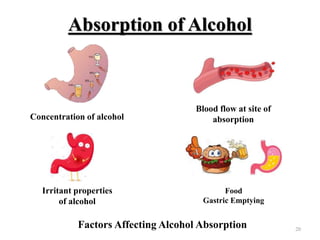
Factors Affecting Alcohol Absorption 20
Concentration of alcohol
Blood flow at site of
absorption
Irritant properties
of alcohol
Food
Gastric Emptying
Absorption of Alcohol
Factors Affecting Alcohol Absorption 21
Concentration of alcohol
Blood flow at site of
absorption
Irritant properties
of alcohol
Food
Gastric Emptying
Absorption of Alcohol
Factors Affecting Alcohol Absorption 22
Concentration of alcohol
Blood flow at site of
absorption
Irritant properties
of alcohol
Food
Gastric Emptying
Absorption of Alcohol
Factors Affecting Alcohol Absorption 23
Concentration of alcohol
Blood flow at site of
absorption
Irritant properties
of alcohol
Food
Gastric Emptying
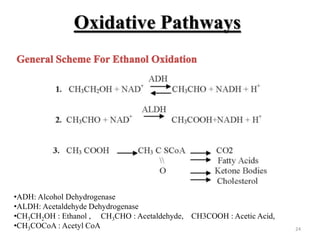
24
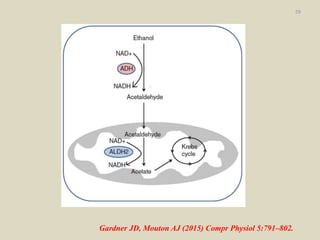
•ADH: Alcohol Dehydrogenase
•ALDH: Acetaldehyde Dehydrogenase
•CH3CH2OH : Ethanol , CH3CHO : Acetaldehyde, CH3COOH : Acetic Acid,
•CH3COCoA : Acetyl CoA
Oxidative Pathways
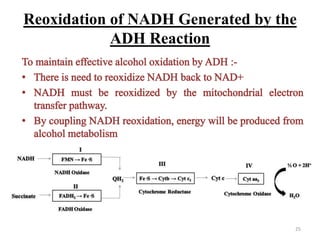
Reoxidation of NADH Generated by the
ADH Reaction
25
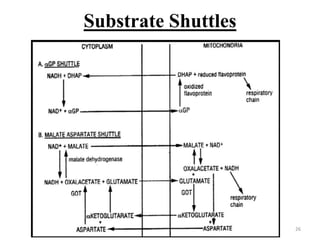
Substrate Shuttles
26
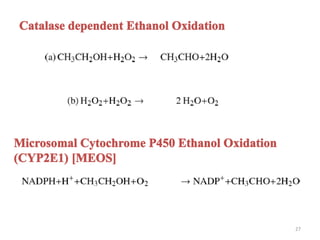
27
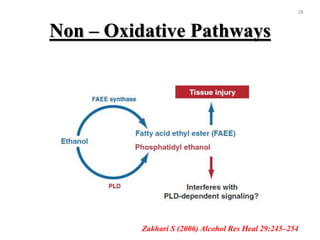
Non – Oxidative Pathways
28
Zakhari S (2006) Alcohol Res Heal 29:245–254
29
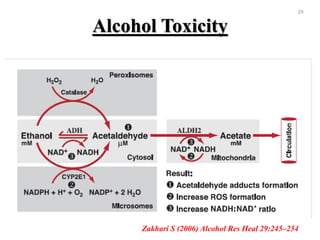
Alcohol Toxicity
Zakhari S (2006) Alcohol Res Heal 29:245–254
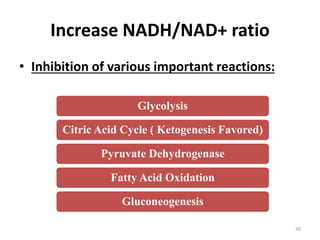
Increase NADH/NAD+ ratio
• Inhibition of various important reactions:
30
Glycolysis
Citric Acid Cycle ( Ketogenesis Favored)
Pyruvate Dehydrogenase
Fatty Acid Oxidation
Gluconeogenesis
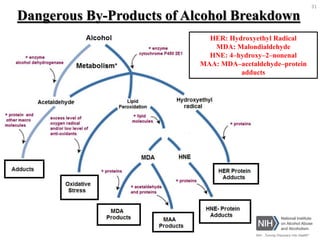
Dangerous By-Products of Alcohol Breakdown
31
HER: Hydroxyethyl Radical
MDA: Malondialdehyde
HNE: 4–hydroxy–2–nonenal
MAA: MDA–acetaldehyde–protein
adducts
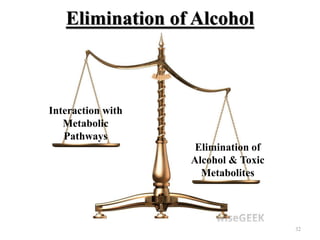
Elimination of Alcohol
32
Interaction with
Metabolic
Pathways
Elimination of
Alcohol & Toxic
Metabolites
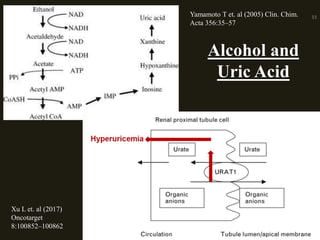
Alcohol and
Uric Acid
33
Xu L et. al (2017)
Oncotarget
8:100852–100862
Yamamoto T et. al (2005) Clin. Chim.
Acta 356:35–57
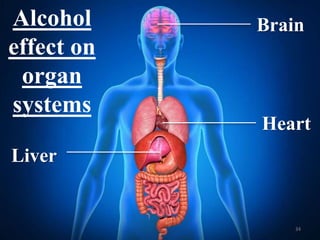
Alcohol
effect on
organ
systems
34
Heart
Brain
Liver
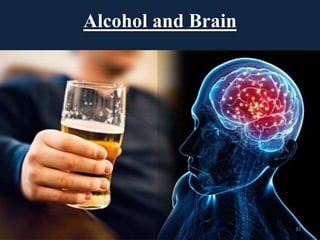
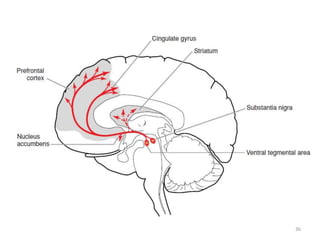
Alcohol and Brain
35
36
37
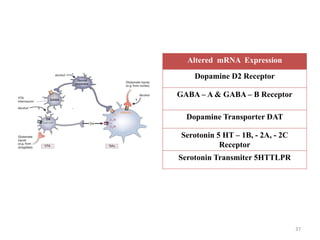
Altered mRNA Expression
Dopamine D2 Receptor
GABA – A & GABA – B Receptor
Dopamine Transporter DAT
Serotonin 5 HT – 1B, - 2A, - 2C
Receptor
Serotonin Transmiter 5HTTLPR
38
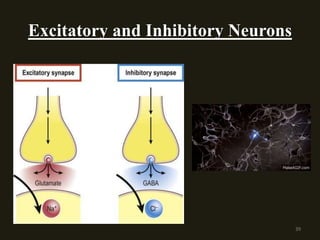
Excitatory and Inhibitory Neurons
39
40
41
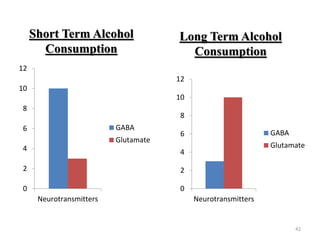
0
2
4
6
8
10
12
Neurotransmitters
GABA
Glutamate
42
0
2
4
6
8
10
12
Neurotransmitters
GABA
Glutamate
Short Term Alcohol
Consumption
Long Term Alcohol
Consumption
43
44
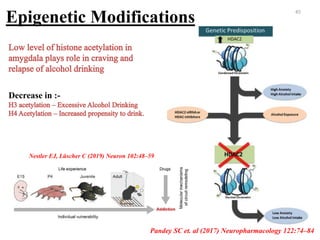
Epigenetic Modifications
45
Nestler EJ, Lüscher C (2019) Neuron 102:48–59
Decrease in :-
Pandey SC et. al (2017) Neuropharmacology 122:74–84
Dorit Ron
46
Molecular mechanisms
underlying alcohol-drinking
behaviours
47
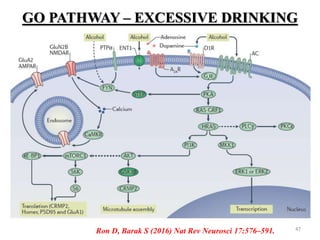
GO PATHWAY – EXCESSIVE DRINKING
Ron D, Barak S (2016) Nat Rev Neurosci 17:576–591.
48
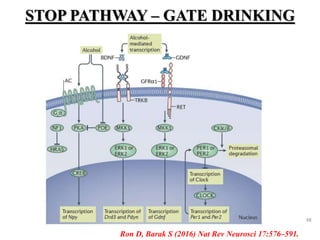
STOP PATHWAY – GATE DRINKING
Ron D, Barak S (2016) Nat Rev Neurosci 17:576–591.
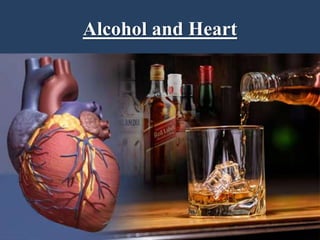
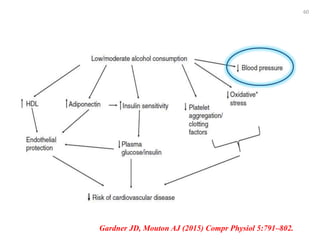
Alcohol and Heart
49
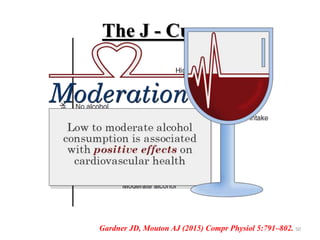
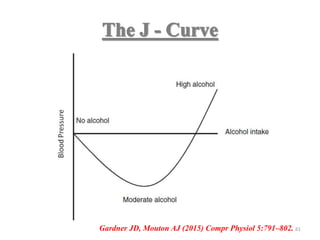
The J - Curve
50Gardner JD, Mouton AJ (2015) Compr Physiol 5:791–802.
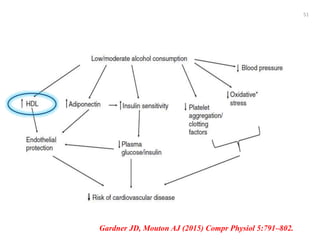
51
Gardner JD, Mouton AJ (2015) Compr Physiol 5:791–802.
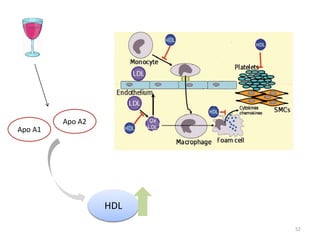
HDL
52
Apo A1
Apo A2
HDL
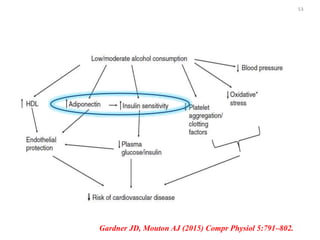
53
Gardner JD, Mouton AJ (2015) Compr Physiol 5:791–802.
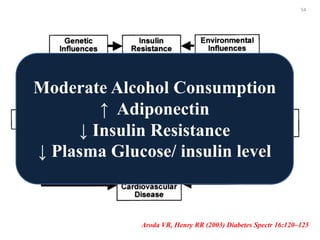
54
Moderate Alcohol Consumption
↑ Adiponectin
↓ Insulin Resistance
↓ Plasma Glucose/ insulin level
Aroda VR, Henry RR (2003) Diabetes Spectr 16:120–125
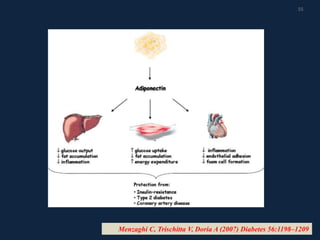
55
Menzaghi C, Trischitta V, Doria A (2007) Diabetes 56:1198–1209
56
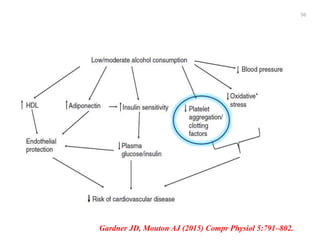
Gardner JD, Mouton AJ (2015) Compr Physiol 5:791–802.
57
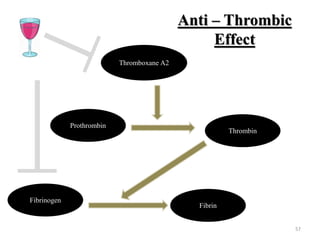
Thromboxane A2
Prothrombin
Thrombin
Fibrinogen
Fibrin
Anti – Thrombic
Effect
58
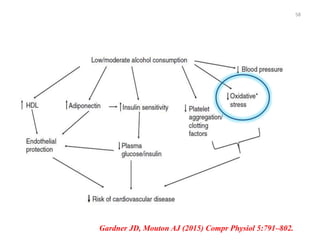
Gardner JD, Mouton AJ (2015) Compr Physiol 5:791–802.
59
Gardner JD, Mouton AJ (2015) Compr Physiol 5:791–802.
60
Gardner JD, Mouton AJ (2015) Compr Physiol 5:791–802.
61Gardner JD, Mouton AJ (2015) Compr Physiol 5:791–802.
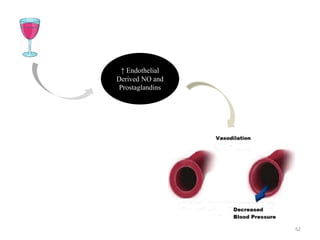
62
↑ Endothelial
Derived NO and
Prostaglandins
THE FRENCH PARADOX
63
64
65
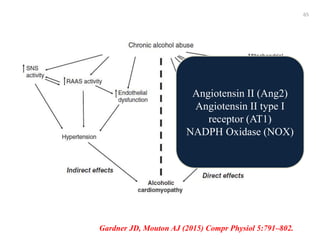
Gardner JD, Mouton AJ (2015) Compr Physiol 5:791–802.
Angiotensin II (Ang2)
Angiotensin II type I
receptor (AT1)
NADPH Oxidase (NOX)
66Gardner JD, Mouton AJ (2015) Compr Physiol 5:791–802.
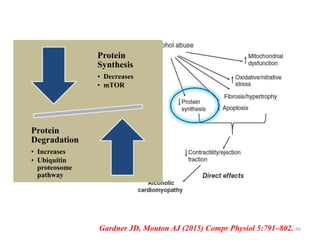
Protein
Synthesis
• Decreases
• mTOR
Protein
Degradation
• Increases
• Ubiquitin
proteosome
pathway
67Gardner JD, Mouton AJ (2015) Compr Physiol 5:791–802.
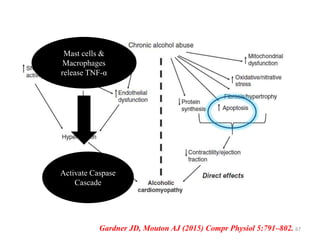
Mast cells &
Macrophages
release TNF-α
Activate Caspase
Cascade
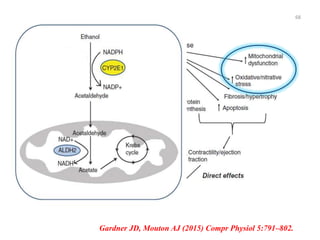
68
Gardner JD, Mouton AJ (2015) Compr Physiol 5:791–802.
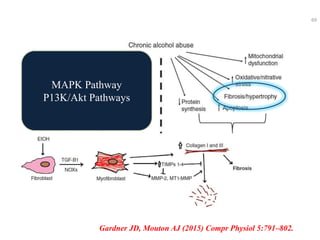
69
Gardner JD, Mouton AJ (2015) Compr Physiol 5:791–802.
MAPK Pathway
P13K/Akt Pathways
70
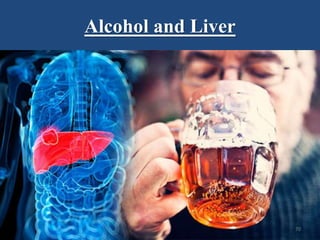
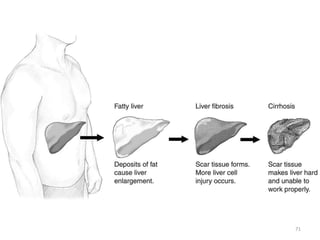
Alcohol and Liver
71
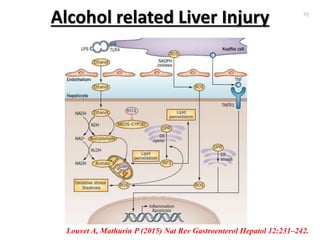
Alcohol related Liver Injury 72
Louvet A, Mathurin P (2015) Nat Rev Gastroenterol Hepatol 12:231–242.
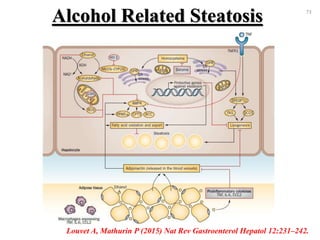
Alcohol Related Steatosis 73
Louvet A, Mathurin P (2015) Nat Rev Gastroenterol Hepatol 12:231–242.
74
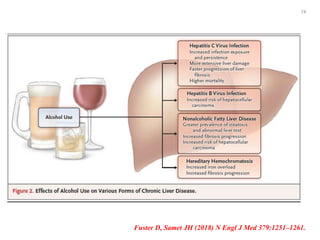
Fuster D, Samet JH (2018) N Engl J Med 379:1251–1261.
Treatment
75
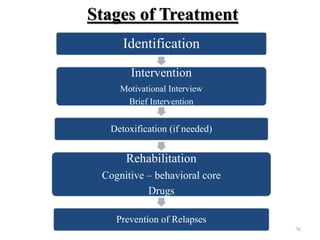
Stages of Treatment
76
Identification
Intervention
Motivational Interview
Brief Intervention
Detoxification (if needed)
Rehabilitation
Cognitive – behavioral core
Drugs
Prevention of Relapses
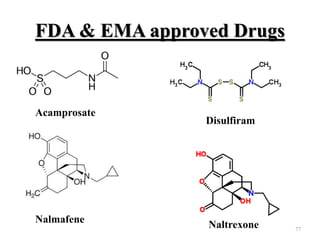
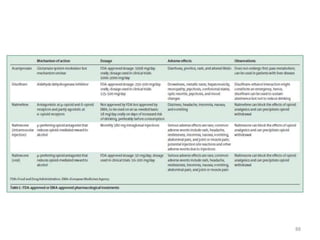
FDA & EMA approved Drugs
77
Acamprosate
Naltrexone
Nalmafene
Disulfiram
78
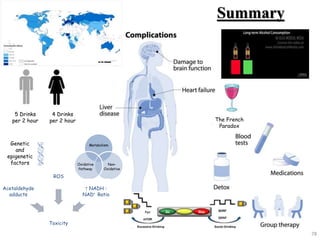
5 Drinks
per 2 hour
4 Drinks
per 2 hour
Genetic
and
epigenetic
factors
Metabolism
Non-
Oxidative
Oxidative
Pathway
The French
Paradox
Toxicity
Acetaldehyde
adducts
ROS
↑ NADH :
NAD+ Ratio
Summary
79
First you take a drink, then the
drink takes a drink and then the
drink takes you
F. Scott Fitzgerald
80
References
• Carvalho AF, Heilig M, Perez A, et al (2019) Alcohol use disorders. Lancet 394:781–792. https://doi.org/10.1016/S0140-
6736(19)31775-1
• Schuckit MA (2009) Alcohol-use disorders. Lancet 373:492–501. https://doi.org/10.1016/S0140-6736(09)60009-X
• Fuster D, Samet JH (2018) Alcohol use in patients with chronic liver disease. N Engl J Med 379:1251–1261.
https://doi.org/10.1056/NEJMra1715733
• Louvet A, Mathurin P (2015) Alcoholic liver disease: Mechanisms of injury and targeted treatment. Nat Rev
Gastroenterol Hepatol 12:231–242. https://doi.org/10.1038/nrgastro.2015.35
• Gardner JD, Mouton AJ (2015) Alcohol effects on cardiac function. Compr Physiol 5:791–802.
https://doi.org/10.1002/cphy.c140046
• Zakhari S (2006) Overview: How is alcohol metabolized by the body? Alcohol Res Heal 29:245–254
• Pandey SC, Kyzar EJ, Zhang H (2017) Epigenetic basis of the dark side of alcohol addiction. Neuropharmacology
122:74–84
• Saunders JB, Degenhardt L, Reed GM, Poznyak V (2019) Alcohol Use Disorders in ICD-11: Past, Present, and Future.
Alcohol Clin Exp Res 43:1617–1631. https://doi.org/10.1111/acer.14128
• Goldman D, Oroszi G, Ducci F (2005) The genetics of addictions: Uncovering the genes. Nat Rev Genet 6:521–532.
https://doi.org/10.1038/nrg1635
• Ostroumov A, Dani JA (2018) Inhibitory Plasticity of Mesocorticolimbic Circuits in Addiction and Mental Illness.
Trends Neurosci 41:898–910. https://doi.org/10.1016/j.tins.2018.07.014
• Peterson K (2004) Biomarkers for alcohol use and abuse: A summary. Alcohol Res Heal 28:30–37
• Nathan PE, Conrad M, Skinstad AH (2016) History of the Concept of Addiction. Annu Rev Clin Psychol 12:29–51.
https://doi.org/10.1146/annurev-clinpsy-021815-093546
• Hyman SE, Malenka RC, Nestler EJ (2006) NEURAL MECHANISMS OF ADDICTION: The Role of Reward-Related
Learning and Memory. Annu Rev Neurosci 29:565–598. https://doi.org/10.1146/annurev.neuro.29.051605.113009
• Ron D, Barak S (2016) Molecular mechanisms underlying alcohol-drinking behaviours. Nat Rev Neurosci 17:576–591.
https://doi.org/10.1038/nrn.2016.85
THANK YOU
82
83
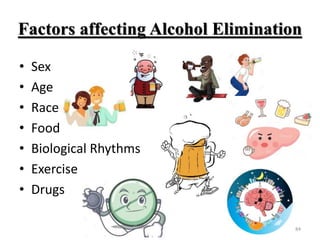
Factors affecting Alcohol Elimination
• Sex
• Age
• Race
• Food
• Biological Rhythms
• Exercise
• Drugs
84
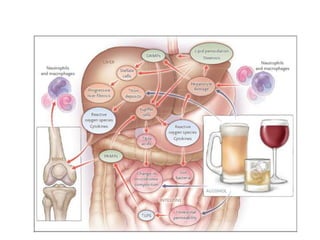
85
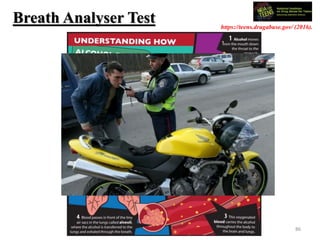
Breath Analyser Test
86
https://teens.drugabuse.gov/ (2016).
87
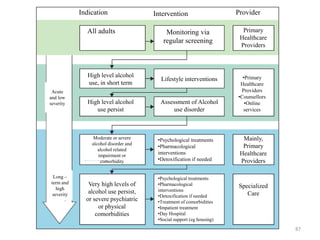
Indication Intervention Provider
All adults Monitoring via
regular screening
Primary
Healthcare
Providers
High level alcohol
use, in short term
High level alcohol
use persist
Assessment of Alcohol
use disorder
Lifestyle interventions •Primary
Healthcare
Providers
•Counsellors
•Online
services
Mainly,
Primary
Healthcare
Providers
Specialized
Care
Long –
term and
high
severity
Acute
and low
severity
Moderate or severe
alcohol disorder and
alcohol related
impairment or
comorbidity
•Psychological treatments
•Pharmacological
interventions
•Detoxification if needed
Very high levels of
alcohol use persist,
or severe psychiatric
or physical
comorbidities
•Psychological treatments
•Pharmacological
interventions
•Detoxification if needed
•Treatment of comorbidities
•Impatient treatment
•Day Hospital
•Social support (eg housing)
88
Alcoholism is Heritable
89
Risks associated with concentrations
of alcohol in blood
90
Paton A, (2005)J Am Med Assoc 91:174–175