Air Regulations forCPL ATPL Wg Cmdr Rk Bali
install download
https://ebookmeta.com/product/air-regulations-for-cpl-atpl-wg-
cmdr-rk-bali/
Download more ebook from https://ebookmeta.com
2.
We believe theseproducts will be a great fit for you. Click
the link to download now, or visit ebookmeta.com
to discover even more!
Air Navigation As Per DGCA Syllabus For CPL ATPL ATC
and Flight Despatcher Courses 4th Edition R.K. Bali
https://ebookmeta.com/product/air-navigation-as-per-dgca-
syllabus-for-cpl-atpl-atc-and-flight-despatcher-courses-4th-
edition-r-k-bali/
CPL Air Law 2022nd Edition Bob Tait
https://ebookmeta.com/product/cpl-air-law-2022nd-edition-bob-
tait/
A Textbook of Organic Chemistry for JEE Main and
Advanced 1st Edition Rk Gupta
https://ebookmeta.com/product/a-textbook-of-organic-chemistry-
for-jee-main-and-advanced-1st-edition-rk-gupta/
How to Heal and Prevent Dental Disasters Book 1 1st
Edition Frederic Patenaude
https://ebookmeta.com/product/how-to-heal-and-prevent-dental-
disasters-book-1-1st-edition-frederic-patenaude/
3.
Opposing the Cowboy1st Edition Margo Bond Collins
https://ebookmeta.com/product/opposing-the-cowboy-1st-edition-
margo-bond-collins/
The Routledge Companion to Decolonizing Art History
Routledge Art History and Visual Studies Companions
1st Edition Tatiana Flores
https://ebookmeta.com/product/the-routledge-companion-to-
decolonizing-art-history-routledge-art-history-and-visual-
studies-companions-1st-edition-tatiana-flores/
Innovations in Learning and Technology for the
Workplace and Higher Education Proceedings of The
Learning Ideas Conference 2021 1st Edition David
Guralnick
https://ebookmeta.com/product/innovations-in-learning-and-
technology-for-the-workplace-and-higher-education-proceedings-of-
the-learning-ideas-conference-2021-1st-edition-david-guralnick/
The Divine Liturgy of St. John Chrysostom (Orthodox
Service Books Book 1) Fr. Joseph Irvin
https://ebookmeta.com/product/the-divine-liturgy-of-st-john-
chrysostom-orthodox-service-books-book-1-fr-joseph-irvin/
Turning Archival The Life of the Historical in Queer
Studies 1st Edition Daniel Marshall
https://ebookmeta.com/product/turning-archival-the-life-of-the-
historical-in-queer-studies-1st-edition-daniel-marshall/
4.
What About EverythingTales from Foster High 9 A Sequel
to Taking Chances John Goode
https://ebookmeta.com/product/what-about-everything-tales-from-
foster-high-9-a-sequel-to-taking-chances-john-goode/
5.
f
PREFACE (9TH EDITION)
Iam overwhelmedbyreader's response. The bookgets stockedout in a short time and I
get busy to update the new edition. 9th edition is revised and updated to include latest
rules fromthe authentic documents. With ATClicensing being introduced, this edition
will be ofuse to aspiring ATCs as well. Suggestions/commentsare welcome.
CONTENT
FOR UPDATES AND CORRECTIONS VISIT:
https://www.facebook.com/pages/The-A
viation-Internationa1l17833
5642211969
Chapter Page
1. DefinitionsAnd Abbreviations 1
2. Convention On International Civil Aviation,
SignedAt Chicago, On 7 December 1944 45
3. Airworthiness of Aircraft 75
4. Aircraft Nationality and Registration Marks 79
5. Personnel Licensing 85
6. Rules of the Air 109
7. Rules of the Air Questions 151
8. Procedures ForAir Navigation Services
Aircraft Operations 167
9. Procedures ForAir Navigation Services: Questions 219
10. Air Traffic Services 235
11. Area Control Service 269
12. Approach Control Service 293
13. Aerodrome Control Service 303
14. Use of Air Traffic Services Surveillance System 321
15. Aeronautical Information Services 335
Ghaziabad,
August 2015
Wg. Cdr. R.K. Bali (Retd.)
The Aviation International
M-9899809930.
6.
DEFINITIONS AND
ABBREVIATIONS
A BasicInstrument Flight Trainer. which is equipped with appropriate
instruments, and which simulates the flight deck environment of an aircraft in flight
in instrument flight conditions.
A Flight Procedures Trainer. which provides a realistic flight deck
environment, and which simulates instrument responses, simple control functions of
mechanical, electrical, electronic,etc. aircraft systems, and the performance and flight
characteristics of aircraft of a particular class;
AFlight Simulator. whichprovidesan accurate representation ofthe flight deck
ofa particular aircraft type to the extent that the mechanical, electrical,electronic,etc.
aircraft systems control functions, the normal environment of flight crew members,
and the performance and flight characteristics of that type ofaircraft are realistically
simulated;
Accelerate-Stop Distance Available (ASDA). The length of the take-off run
available plus the length ofstop way, if provided.
Accepting Unit. Air traffic control unit next to take controlof an aircraft.
Accident. An occurrence associated with the operation of an aircraft which
takes place between the time any person boards the aircraft with the intention of
flight, until such time as all such persons have disembarked, in which:
a) a person is fatally or seriously injured.
b) the aircraft sustains damage or structural failure.
c) the aircraft is missing or is completely inaccessible.
(For details see chapter 21, Part II)
Accredited Representative. A person designated by a State, on the basis of
his or her qualifications, for the purpose ofparticipating in an investigation conducted
by another State.
Accuracy. A degree of conformancebetween the estimated or measured value
and the true value.
1
7.
AIR REGULATIONS
Note: -For measured positional data the accuracy is normally expressed in terms of
a distance from a stated position within which there is a defined confidence of the true
position falling.
Acrobatic Flight. Maneuvers intentionally performed by an aircraft involving
an abrupt change in its attitude, an abnormal attitude, or an abnormal variation in
speed.
ADS-C agreement. reporting plan which establishes the conditions of ADS·C
data reporting (i.e.data required bythe air traffic servicesunit and frequencyofADS-C
reports which have to be agreed to prior to using ADS-Cin the provision of air traffic
services).
Note: - The terms of the agreement will be exchanged between the ground system and
the aircraft by means of a contract, or a series of contracts.
Adviser. (ADZ) A person appointed by a State, on the basis of his or her
qualifications, for the purpose of assisting its accredited representative in an
investigation.
Advisory Airspace (ADA).An airspace of defined dimensions, or designated
route, within which air traffic advisory service is available.
Advisory Route (ADR). A designated route along which air traffic advisory
service is available.
Aerial Work. means any aircraft operation undertaken for an industrial or
commercialpurpose or any other remunerative purpose, but doesnot includeoperation
of an air transport service;
Aerodrome Beacon (ABN). Aeronautical beacon used to indicate the location
of an aerodrome from the air.
Aerodrome Control Service. Air traffic control service for aerodrome traffic.
Aerodrome Control Tower (TWR). A unit established to provide air traffic control
service to aerodrome traffic.
Aerodrome Elevation. The elevation ofthe highest point ofthe landing area.
Aerodrome Identification Sign. A sign placed on an aerodrome to aid in identifying
the aerodrome from the air.
Aerodrome operating minima. The limits ofusability of an aerodrome for:
a) take-off, expressed in terms of runway visual range and/or visibility and, if
necessary, cloudconditions;
b) landing in 2D instrument approach operations, expressed in terms of
visibility and/or runway visual range, minimum descent altitude/height
(MDAlH) and, if necessary, cloudconditions;and
2
DEFINITIONSANDABBREVIATIONS
c) landing in 3D instrument approach operati?~s, exp.ressed i.n terms of
visibility and/or runway visual range and decision alt~tude/helght (DAlH)
as appropriate to the type and/or category ofthe operation..
Aerodrome Operator. means a person, organization or enterprise responsible
for operation and management of an aerodrome.
Aerodrome reference point(ARP). The designated geographical location of
an aerodrome.
Aerodrome Traffic Density.
Light.Wherethe number ofmovements in the meanbusy hour is not greater
than 15per runway or typically less than 20 total aerodrome movements.
Medium. Where the number of movements in the mean busy hour is of the
order of 16to 25 per runway or typically between 20 to 35 total aerodrome
movements. c) Heavy. Where the number of movements in the mean busy
hour is ofthe order of26 or more per runway or typically more than 35 total
aerodrome movements.
Note 1:_ The number of movements in the mean busy hour is the arithmetic mean over
the year of the number ol movements in the daily busiest hour.
Note 2: - Either a take-off or a landing constitutes a movement.
Aerodrome traffic zone(ATZ). An airspace of defineddimensions established
around an aerodrome for the protection of aerodrome traffic.
Aerodrome Traffic. All traffic on the maneuvering area of an aerodrome and
all aircraft flying in the vicinity of an aerodrome.
Note: _ An aircraft is in the vicinity of an aerodrome when it is in, entering or leaving
an aerodrome traffic circuit.
Aerodrome(AD). A defined area on land or water (including any buildings,
installations and equipment) intended to be used either wholly or in part for the
arrival, departure and surface movement ofaircraft.
Aerodyne. means an aircraft whose support in flight is derived dynamically
fromthe reaction on surfaces in motion relative to the air, and includes all aeroplanes,
helicopters, gyroplanes, gliders and kites;
Aeronautical Data. A representation of aeronautical facts, concepts or
instructions in a formalized manner suitable for communication, interpretation or
processing.
Aeronautical Fixed Service (AFS). A telecommunication service between
specifiedfixed points provided primarily for the safety of air navigation and for the
regular, efficient and economicaloperation ofair services.
Aeronautical Ground Light. Any light specially provided as an aid to air
navigation, other than a light displayed on an aircraft.
a)
b)
3
8.
AIR REGULATIONS
Aeronautical InformationCircular (AlC). A notice containing information
that does not qualify for the origination of a NOTAM or for inclusion in the AlP but
which relates to flight safety, air navigation, technical, administrative or legislative
matters.
Aeronautical Information Publication (AlP). A publication issued by or
with the authority of a State and containing aeronautical information of a lasting
character essential to air navigation.
Aeronautical Information Service (AlS). A service established within the
defined area of coverage, responsible for the provision of aeronautical information/data
necessary for the safety, regularity and efficiency of air navigation.
Aeronautical Information. Information resulting from the assembly analysis
and formatting of aeronautical data. '
Aeronautical Mobile Service (AMS). A mobile service between aeronautical
stations and aircraft stations, or between aircraft stations, in which survival craft
stations may participate; emergency position-indicating radio beacon stations may
also participate in this service on designated distress and emergency frequencies.
Aeronautical Station. A land station in the aeronautical mobile service. In
certain instances, an aeronautical station may be located, for example, on board ship
or on a platform at sea.
Aeronautical Telecommunication Station. A station in the aeronautical
telecommunication service.
Aeroplane Reference Field Length. The minimum field length required
for t~~e-off a~ ma.ximum certificated take-off mass, sea level, standard atmospheric
conditions, still air and zero runway slope, as shown in the appropriate aeroplane
flight manual prescribed by the certificating authority or equivalent .data from the
aeroplane manufacturer. Field length means balanced field length for aeroplanes if
applicable, or take-off distance in other cases. '
Note: - Attachment A, Section 2provides information on the concept of balanced field
length and the ICAO Airworthiness Manual (Doc 9760) contains detailed guidance on
matters related to take-off distance.
. Aeroplane. A power-driven heavier-than-air aircraft, deriving its lift in flight
chiefly from aerodynamic reactions on surfaces which remain fixed under given
conditions offlight.
AlP Amendment. Permanent changes to the information contained in the AlP.
. Ai:r:Def~nce I.de~tification Zone (ADIZ). Special designated airspace of
defmed dimensions within aircraft are required to complywith special identification
andlor reporting procedures additional to those related to the provision of air traffic
services (ATS).
DEFINITIONS ANDABBREVIATIONS
Air Operator Permit/ Certificate (AOP/~OC~. A Permit /Ce~ificate
authorizing an operator to carry out specified commercial air transport operations,
Air Traffic Advisory Service. A service provided within advisory airspace to
ensure separation, in so far as practical, between aircraft which are operating on IFR
flight plans.
Air Traffic Control Clearance. Authorization for an aircraft to proceedunder
conditions specifiedby an air traffic control unit.
Note 1: - For convenience, the term "air traffic control clearance" is frequently
abbreviated to "clearance'ttoheti used in appropriate contexts.
Note 2: - The abbreviated term "clearance" may beprefixed by the words "taxi': "ta~e-
off': "departure': "en route", "approach" or "landing" to indicate the particular portion.
of flight to which the air traffic control clearance relates.
Air Traffic Control Service. A service provided for the purpose of:
a) preventing collisions:
1) between aircraft, and
2) on the maneuvering area between aircraft and obstructions; and
b) expediting and maintaining an orderly flowof air traffic.
Air Traffic Control Unit (ATCU). A generic term meaning variously, area
controlcentre, approach control unit or aerodrome control tower.
Air Traffic Flow Management (ATFM). A service established with the
objectiveofcontributing to a safe, orderly and expeditious flowofair traffic byensuring
that ATC capacity is utilized to the maximum extent possible and that the traffic
volumeis compatible with the capacities declared by the appropriate ATSauthority.
Air Traffic Service (ATS).Agenericterm meaning variously,flight information
service, alerting service, air traffic advisory service, air traffic control service (area
control service, approach control service or aerodrome control service).
Air Traffic Services Airspaces. Airspaces ofdefineddimensions,alphabetically
designated, within which specifictypes offlights may operate and for which air traffic
services and rules of operation are specified.
Air Traffic Services Reporting Office (ARO). A unit established for the
purpose ofreceiving reports concerning air traffic services and flight plans submitted
beforedeparture.
Note: - An air traffic services reporting office may be established as a separate unit or
combined with an existing unit, such as another air traffic services unit, or a unit of the
aeronautical information service.
Air Traffic Services Unit (ATSU). A generic term meaning variously, air
traffic control unit, flight information centre or air traffic servicesreporting office.
9.
AIR REGULATIONS
Air Traffic.All aircraft in flight or operating on the manoeuvring area of an
aerodrome.
Air Transport Service. means a service for the transport by air of persons, mails
or any other thing, animate or inanimate, for any kind of remuneration whatsoever,
whether such service consists of a single flight or series of flights;
Air Transport Undertaking. means an undertaking whose business includes
the carriage by air of passengers or cargo for hire or reward;
AIRAC. An acronym (aeronautical information regulation and control)
signifying a system aimed at advance notification based on common effective dates, of
circumstances that necessitate significant changes in operating practices.
Airborne Collision Avoidance System (ACAS). An aircraft system based on
secondary surveillance radar (SSR) transponder signals which operates independently
of ground- based equipment to provide advice to the pilot on potential conflicting
aircraft that are equipped with SSR transponders.
Aircraft Classification Number (ACN). A number expressing the relative
effect of an aircraft on a pavement for a specified standard sub grade category.
Note: - The aircraft classification number is calculated with respect to the center of
gravity (CG)position which yields the critical loading on the critical gear. Normally the
aft most CG position appropriate to the maximum gross apron (ramp) mass is used to
calculate the ACN. In exceptional cases, the forward most CG position may result in the
nose gear loading being more critical.
Aircraft Component. means any part, the soundness and correct functioning
of which, when fitted to an aircraft, is essential to the continued airworthiness or
safety ofthe aircraft and includes any item of equipment;
Aircraft Operating Manual. A manual, acceptable to the DGCAcontaining
normal, abnormal and emergency procedures, checklists, limitations, performance
information, details ofthe aircraft systems and other material relevant to the operation
ofthe aircraft.
Note: - The aircraft operating manual is the part of the operation manual.
Aircraft Stand. A designated area on an apron intended to be used for parking
an aircraft.
Aircraft (ACFT). Any machine which can derive support in the atmosphere
from the reactions ofthe air other than reactions ofthe air against the earth's surface
and includes balloonswhether fixedor free, airships, kites, gliders and flying machines.
Air-Ground Communication. Two-waycommunication between aircraft and
stations or locations on the surface of the earth.
Air-Ground Control Radio Sta.tion. An aeronautical telecommunication
station having primary responsibility for handling communications pertaining to the
operation and control of aircraft in a given area.
6
DEFINITIONS ANDABBREVIATIONS
AIRMET Information. Information issued by a met~orologicalwatch office
. the occurrence or expected occurrence of specified en-route weather
concernmg .' d hi h
h a which may affect the safety oflow-levelaircraft opsrations an w IC was
p enlomedny
iricluded in the forecast issued for lowlevel flights in the flight information
not a rea .
region concerned or sub-area thereof.
Note 1:- For convenience, the term "air traffic control clearance" is frequently
abbreviated to "clearance" when used in appropnate contexts.
N te 2:- The abbreviated term "clearance" may be prefixed by the words "taxi", "ta~e-
off", "departure", "en route", "approach" or "landing" to indicate the particular portion
of flight to which the air traffic control clearance relates.
Airship. means a power-driven lighter-than air aircraft;
Air-taxiing. Movementofa helicopterNTOL abovethe surface ofan aerodrome,
normally in ground effect and at a ground speed normally less than 37 kmlh (20kt).
Airway (AWY).A control area or portion thereof established in the form of a
corridor.
Airworthy. The status ofan aircraft, engine, propeller or part when it conforms
to its approved design and is in a condition for safe operation.
AIS Product. Aeronautical information provided in the form ofthe elements of
the Integrated Aeronautical Information Package (exceptNOTAMand PIB), including
aeronautical charts, or in the form of suitable electronic media.
ALERFA. The codeword used to designate an alert phase.
Alert Phase. (ALERFA) A situation wherein apprehension exists as to the
safety of an aircraft and its occupants.
Alerting Post. Any facility intended to serve as an intermediary between a
person reporting an emergency and a rescue coordination centre or rescue sub centre.
Alerting Service (ALRS).Aserviceprovidedto notifyappropriate organizations
regarding aircraft in need of search and rescue aid, and assist such organizations as
required.
Alternate Aerodrome (ALTN). An aerodrome to which an aircraft may
proceed when it becomes either impossible or inadvisable to proceed to or to land at
the aerodrome ofintended landing. Alternate aerodromes include the following:
Altimetry System Error (ASE). The differencebetween the altitude indicated
by the altimeter display, assuming a correct altimeter barometric setting, and the
pressure altitude corresponding to the undisturbed ambient pressure.
Altitude (ALT). The vertical distance of a level, a point or an objectconsidered
as a point, measured from mean sea level (MS:L).
Altitude (ALT). The vertical distance of a level, a point or an objectconsidered
as a point, measured from mean sea level (MSL).
7
10.
AIR REGULATIONS
Amphibian. meansan aeroplane capable normally of taking off from and
alighting on either land or a solid platform or water;
Application. Manipulation and processing of data in support of user
requirements (ISO 19104*).
Approach and Landing Operations with Vertical Guidance. An
instrument approach and landing which utilizes lateral and vertical guidance but does
not meet the requirements established for precision approach and landing operations.
Approach and Landing Operations Using Instrument Approach
Procedures. Instrument approach and landing operations are classified as follows:
Approach Control Service (App). Air traffic control service for arriving or
departing controlled flights.
Approach Control Unit. A unit established to provide air traffic control service
to controlled flights arriving at, or departing from, one or more aerodromes.
Appropriate ATS Authority. The relevant authority designated by the State
responsible for providing air traffic services in the airspace concerned.
Appropriate Authority.
a) Regarding flight over the high seas: The relevant authority of the State of
Registry.
b) Regardingflightotherthanoverthehighseas:TherelevantauthorityoftheState
having sovereignty over the territory being over flown.
Approved Maintenance System. means the maintenance system approved by
the Director-General of Civil Aviation;
Apron Management Service. A service provided to regulate the activities and
the movement of aircraft and vehicles on an apron.
Apron (APN). A defined area, on a land aerodrome, intended to accommodate
aircraft for purposes ofloading or unloading passengers, mail or cargo, fuelling, parking
or maintenance.
Area Control Centre (ACC). A unit established to provide air traffic control
service to controlled flights in control areas under its jurisdiction.
Area Control Service. Air traffic control service for controlled flights in control
areas.
Area Navigation (RNAV) Specification. A navigation specification based on
area navigation that does not include the requirement for performance monitoring and
alerting, designated by the prefix RNAV, e.g. RNAV 5, RNAV 1.
The Performance-based Navigation (PBN) Manual (Doc 9613), Volume II
contains detailed guidance on navigation specifications,
8
DEFINITIONS ANDABBREVIATIONS
h t
RNP as previously defined as "a statement of the navigation
T e erm fi d ai "h b d
f necessary for operation within a de me airspace , as een remove
per ormh,anAnce,
ex as the concept of RNP has been overtaken by the concept of PBN,
from t IS n . f navi if ti
The term RNP in this Annex is no,:"solely used ~ncontext 0 navigation speer lC~ions
, performance monitormg and alerting. E.g, RNP 4 refers to the aircraft
that reqUlre ' h b d
d t.ing requirements, including a 4 NM lateral performance WIt on oar
an c opera Iemonitoring and alerting that are detailed in the PBN Manual (Doc9613),
penormanc , '
Area Navigation (RNAV). A method of navigation which permIts aircraft
t
' on any desired flight path within the coverage of ground or space-based
opera Ion ' , f If ined id
, ti aids or within the limits of the capablhty 0 se contame ai s, or a
naVlgaion J
combination ofthese.
lT t ' _ Area navigation includes performance based navigation as well as other
lYO e: b d iaati
operations that do not meet the definition of performance ase nautga ron.
Area Navigation Route. An ATS route established for the use of aircraft
capable ofemploying area navigation,
ASHTAM. A special series NOTAM notifying by means of a specific for~at
change in activity of a volcano, a volcanic eruption and/or volcanicash cloudthat ISof
significanceto aircraft operations,
ATS Route. A specified route designed for channeling the flow of traffic as
necessary for the provision of air traffic services.
Note 1: _ The term "ATS route" is used to mean variously, airway, advisory route,
controlled or uncontrolled route arrival' or departure route, etc,
Note 2: _ An ATS route is defined by route specifications which include an ATS route
designator, the track to or from significant points (wa_y-points), distance, between
significant points, reporting requirements and, as determined by the appropnate ATB
authority, the lowest safe altitude,
ATS Surveillance Service. Term used to indicate a service provided directly
by means of an ATS surveillance system,
ATS Surveillance System. Agenericterm meaning variously,ADS-B,PSR,SSR
or any comparable ground-based system that enables the identification of aircraft: A
comparable ground-based system is one that has been demonstrated, by comparatlve
assessment or other methodology,to have a level ofsafety and performance equal to or
better than monopulse SSR.
Automatic Fixed ELT (ELT(AF». An automatically activated ELT which
is permanently attached to an aircraft.
Automatic D~;,"ndent Surveillance - Broadcast (AI?S-B). A me~ns by
which aircraft aerodrome vehicles and other objects can automatlcally transmIt and!
or receive data such as identification, position and additional data, as appropriate, in
a broadcast mode via a data link.
9
11.
DEFINITIONS AND ABBREVIATIONS
BEarth supplemented by vegetation height.
Canopy. are . ..' f
. h Light A lamp in which high-intensity flashes 0
Capacitor DIsc ar~e ~uce'dbv the discharge of electricity at high voltage
t mely short duratIOn me pro -
ex re . . b
h gas enclosedIII a tu e.
throug a h did'
I (CAT I) Operation. A precision instrument approac an an mg
Category
with:
d . 'on height not lower than 60 m (200 ft); and
a) a eClSI . 1 ge not less
.' . ibilit not less than 800 m or a runway visua ran
b) with either a VISI I 1 Y ~
than 550 m. .
II (CAT II) Operation. Aprecision instrument approach and landing
Category
with:
d .. h ight lower than 60 m (200ft). but not lowerthan 30 m (100ft),;
a) a ecrston ei .'
and
b) a runway visual range not less than 300 m.
IlIA (CAT IlIA) Operation. A precision instrument approach and
Category
landing with:
d .. hei ht lower than 30 m (100ft) or no decisionheight; and
a) a ocision eignt iowe t:
b) a runway visual range not less than 170 m.
Category IIIB (CAT IIIB) Operation. A precision instrument approach and
landing with:
a) a decision height lower than 15 m (50 ft), or no decisionheight; and
b) a runway visual range less than 175 m but not less than 50 m.
C IIIC (CAT IIIC) Operacion, A precision instrument approach and
ate gory r . .
landing with no decisionheight and no runway visual range imitations, . .
Note' - Where decision height (DR)and runway visual range (RVR) fall.mto d~f~e;;e~!
cate 'ories of operation, the instrument approach and landing operatw~ wou
! ted in accordance with the requirements of the most demanding categorv
con uc ti ~ ith. a DR in the range of CAT IlIA but with an RVR m the range
(e.g.an opera wnldw~b id d CAT IIlB operation or an operation with a DR in
of CAT IIIB iooiu e eonsz ere a ld b id d CAT
the range of CAT II but with an RVR in the range of CAT I wou e consz ere a
Il operotio»). .
Causes. Actions, omissions, events, conditv-ns, or a combinationthereof, which
led to the accident or i~~2;dent.
Ceiling. The height above the ground or water ofthe base ofthe lowest layer of
cloudbelow 6,000 metres (20,000feet) covering more than half the sky.
Certificate of Airworthiness. means a certificate issued under these rules;
AIR REGULATIONS
Automatic Dependent Surveillance - Contract (ADS-C). A means by
which the terms ofan ADS-Cagreement will be exchanged between the ground system
and the aircraft, via a data link, specifyingunder what conditions ADS-Creports would
be initiated, and what data would be contained in the reports.
Note: - The abbreviated term "ADS contract" is commonly used to refer to ADS event
contract, ADS demand contract, ADS periodic contract or an emergency mode.
Automatic Dependent Surveillance (ADS).Asurveillance technique in which
aircraft automatically provide, via a data link, data derived from onboard navigation
and position-fixingsystems, including aircraft identification, four-dimensional position
and additional data as appropriate.
Automatic Deployable ELT (ELT(AD». An ELT which is rigidly attached to
an aircraft and which is automatically deployed and activated by impact, and, in some
cases, also by hydrostatic sensors. Manual deployment is also provided
Automatic Portable ELT (ELT(AP». An automatically activated ELT which
is rigidly attached to an aircraft but readily removable from the aircraft.
Automatic Terminal Information Service (ATIS). The automatic provision
ofcurrent, routine information to arriving and departing aircraft throughout 24 hours
or a specifiedportion thereof.
Balked Landing. A landing manoeuvre that is unexpectedly discontinued at
any point belowthe obstacle clearance altitude/height (OCA/H).
Balloon. means a non-power-driven lighter-than-air aircraft;
Bare Earth. Surface of the Earth including bodies of water and permanent ice
and snow, and excluding vegetation and man-made objects.
Barrette. Three or more aeronautical groundlights closelyspaced in a transverse
line so that from a distance they appear as a short bar of light.
Base Turn. A turn executed by the aircraft during the initial approach between
the end ofthe outbound track and the beginning ofthe intermediate or final approach
track. The tracks are not reciprocal.
Note:- Base turns may be designated as being made either in level flight or while
descending, according to the circumstances of each individual procedure.
Cabin Crew Member. A crew member who performs, in the interest of safety
ofpassengers, duties assigned by the operator or the pilot-in-command ofthe aircraft,
but who shall not act as a flight crew member
12.
AIR REGULATIONS
Change-Over Point(COP). The point at which an aircraft navigating on an
ATS route segment defined by reference to very high frequency omni-directional radio
ranges is expected to transfer its primary navigational reference from the facility
behind the aircraft to the next facility ahead of the aircraft,
Note: - Change-over points are established toprovide the optimum balance in respect
of signal strength and quality between facilities at all levels to be used and to ensure a
common source of azimuth guidance for all aircraft operating along the same portion
of a route segment.
Circling Approach. An extension of an instrument approach procedure which
provides for visual circling of the aerodrome prior to landing,
Class Rating. shall comprise (a) Single-engine, land; (b) Single-engine, sea; (c)
Multi-engine, land; (d) Multi-engine, sea;
Clearance Limit. The point to which an aircraft is granted an air traffic control
clearance.
Clearway. A defined rectangular area on the ground or water under the control
of the appropriate authority, selected or prepared as a suitable area over which an
aeroplane may make a portion of its initial climb to a specified height.
Commercial Air Transport Operation. An aircraft operation involving the
transport of passengers, cargo or mail for remuneration or hire.
Configuration Deviation List (CDL). A list established by the organization
responsible for the type design with the approval of the State of Design which identifies
any external parts of an aircraft type which may be missing at the commencement of a
flight, and which contains, where necessary, any information on associated operating
limitations and performance correction.
Continuing Airworthiness. The set of processes by which all aircraft comply
with the applicable airworthiness requirements and remain in a condition for safe
operation throughout their operating life.
Contracting State. means any State which is for the time being a party to the
Convention on International Civil Aviation concluded at Chicago on December 7, 1944,
and any amendment which may be made thereto under the provisions of Article 94
thereof;
Control Area (CTA). A controlled airspace extending upwards from a specified
limit above the earth.
Control zone (CTR). A controlled airspace extending upwards from the surface
of the earth to a specified upper limit.
Controlled Aerodrome. An aerodrome at which air traffic control service is
provided to aerodrome traffic.
Note:- The term "controlled aerodrome" indicates that air traffic control service is
provided to aerodrome traffic but does not necessarily imply that a control zone exists.
DEFINITIONS AND ABBREVIATIONS
Airs ace. An airspace of defined dimensions wi:hin .which air
Controlled. . p .ded in accordance with the airspace classification,
traffic control service ISprovi .
II d airsoace is a generic term which covers ATS curspace Classes A, B,
Note>: Contra e 1-'
D' d E as described in Annex 11, 2.6.
C, an I d Eli ht Any flight which is subject to an air traffic control clearance.
Control e 19.
. Data Link Communications (CPDLC). A m.ean.s of
C~ntrollebrtl;;'! controller and pilot, using data link for ATC communications,
commUnICatIOn e w . . .. ..
. means the Convention relating to International ?IVll A~latIOn
. ConCvh~ntIO:~the 7th day of December, 1944, as amended from time to time;
sIgned at lcago .. .
. means a licensed pilot serving in any piloting capacity other than as
.Co-pilot, db t eluding a pilot who is on board the aircraft for the sole purpose
pilot-m-comm.an . u ex . .
of receiving flight instruction; .. .
"h ading' means the direction in which the longitudinal ax~s of
. Couftrsl'Se'p~~nte~
usually expressed in degrees from North (True, Magnetic or
an aircra ,
Compass); . .
Crew Member. A person assigned by an operator to duty on an aircraft durmg
a flight duty period. .. . .
Cruise Climb. An aeroplane cruising technique resulting m a net mcrease m
altitude as the aeroplane mass decreases. .
Cruise Relief Pilot. A flight crew member who is assi~ned to pe~form pilot
. k duri . flight to allow the pilot-in-command or a co-pilot to obtam planned
tas s urmg cruise ,
rest.
Cruising Level. A level maintained during a significant portion of a flight.
Culture. All man-made features constructed on the surface of the Earth, such
as cities, railways and canals.
Current Flight Plan. The flight plan, including changes, if any, brought about
by subsequent clearances. .
C clic Redundancy Check (CRC). A mathematical algorithm apphed to ~he
digital expression of data that provides a level of assurance agamst loss or alteration
ofdata.
12
13
13.
AIR REGULATIONS
Danger Area(D ... ). An airspace of d f d di . '.
dangerous to the flight of aircraft may e . t at sn 'fl.mensIOns
within which activities
XIS a speer led times,
. Dangerous Goods. Articles or substanc hi h o
risk to health, safety, property or the environm es w lC .are capable 01 posing a
of dangerous goods in the Technical In t ti ent an~ which are shown in the list
those Instructions. s rue IOnsor which are classified according to
Note: - Dangerous goods are I 'fi d L .
Rules, 2003). c ass I e in. Alrcraft (Carriage of Dangerous Goods
Data Link Communications A for f '.
exchange of messages via a data link.' orrn 0 commUnICatIOn
intended for the
. !>ata, Link-~utomatic Terminal Information
prOVISIOn
ot ATIS VIadata link. Service (D ATIS). The
Data link-VOLMET (D-VOLMET) P ..
meteorological reports (METAR) • d . rOVlSIOn
of .current aerodrome routine
(SPECI), aerodrome forecasts (TAF)nSI;;~~rome .spec:al meteorological reports
SIGMET and, where available AIRM'ET . d ' s~eclal mr-reports not covered by a
, . . VIa ata Iink.
Data Quality. A degree or level of t= fid h
requirements of the data user in ter f con 1 ence t at t~e data provided meets the
ms 0 accuracy, resolutIOn and integrity.
Database. One or more files of data st.
may draw from the files and update the~ s ~~.ture~ tha~ appropnate applications
electronically and accessed by comput the: h IS _pn~anly refers to data stored
er ra er t an m files of physical records.
Datum. Any quantity or set of quantities that m
for the calculation of other quantities (ISO 19104*). ay serve as a reference or basis
Dead Reckoning (DR) Navigation Th ... ..
by advancing an earlier known position b th . e e~~lm~tmgor.determining ofposition
data. y e app ication ofdlrectlOn,time and speed
. ~ecision Altitude (DA) or Deci '. . .
heIght m a 3D instrument a h slO~ heIght ~DH). A specified altitude or
be initiated if the required vi~;~~::£ operation at .whlCha missed approach must
established. erence to contmue the approach has not been
Note l: - D " I . .
.. ecision. a titude (DA) 1Sreferenced t. . .
(DH) ISreferenced to the threshold elevation. "0 mean sea level and decision. height
Note 2' - Th . d .
. e require visual reference mea th t .. ,.
approach area which should ha b . .ns a section. of tne visual aids or of the
made an assessment of the a' V~t een. 1~ view for sufficient time for the pilot to have
to the desired flight path In ;;:;~ POlsI1ltwn
an~ rate ?f change of position, in relation
. l 1 . egory operatwns wah ad" hei h
V1sua reterenee is that specified I. the narti easton eig t the required
tor eparticular procedure and operation.
14
DEFINITIONS ANDABBREVIATIONS
Note 3: - For convenience where both expressions are used they may be written in the
form "decision altitude/height" and abbreviated "DA/H".
Declared Capacity. A measure of the ability of the ATC system or any of its
subsystems or operating positions to provide service to aircraft during normal activities.
It is expressed as the number of aircraft entering a specified portion of airspace in a
given period of time, taking due account of weather, ATe unit configuration, staff
and equipment avail-able, and any other factors that may affect the workload of the
controller responsible for the airspace.
Declared Distances.
a) Take-off run available (TORA).The length of runway declared available
and suitable for the ground run of an aeroplane taking off.
b) Take-offdistance available (TODA).The length ofthe take-off run available
plus the length of the clearway, if provided.
c) Accelerate-stop distance available (ASDA).The length of the take-off run
available plus the length of the stop way, if provided.
d) Landing distance available (LDA).The length of runway, which is declared
available and suitable for, the ground run of an aeroplane landing.
De-icing/anti-icing Facility. A facility where frost, ice or snow is removed
(de-icing)from the aeroplane to provide clean surfaces, and/or where clean surfaces of
the aeroplane receive protection (anti-icing) against the formation of frost or ice and
accumulation of snow or slush for a limited period of time.
Note: - Further guidance is given in the ICAO Manual of Aircraft Ground De-icing /
Anti-icing Operations (Doc 9640).
De-icing/anti-icing Pad. An area comprising an inner area for the parking
of an aeroplane to receive de icing/anti-icing treatment and an outer area for the
manoeuvring of two or more mobile de-icing/anti-icing equipment.
Dependent Parallel Approaches. Simultaneous approaches to parallel or
near-parallel instrument runways where radar separation minima between aircraft
on adjacent extended runway centre lines are prescribed.
Descent Fix. A fix established in a precision approach at the FAP to eliminate
certain obstacles before the FAP, which would otherwise have to be considered for
obstacle clearance purposes.
Destination Alternate. An alternate aerodrome to which an aircraft may
proceedshould it become either impossible or inadvisable to land at the aerodrome of
intended landing.
Note:- The aerodrome from which a flight departs may also be an en-route or a
destination alternate aerodrome for that (light.
DETRESF A. The code word used to designate a distress phase.
15
14.
AIR REGULATIONS
J?~rect TransitArrangements. Special arran
authorities concerned by which traffic which is . gem~nts ~p~roved by the public
the Contracting State may remain unde th . d~ausmg briefly m Its passage through
r eir irect control.
Director-General. means Director-General of Civil Aviation'
Displaced Threshold. A threshold not loca~ed at the extre~ity of a runw
Distress Phase. A situation wherein th . ay.
~ircraf~ and its occupants are threatened b ' ere IS r~aso~able certainty that ~n
immediate assistance. )' grave and imminent danger or require
Ditching. The forced landing of an aircraft on water.
DME Distance. The line of sight dist ( 1
DME signal to the receiving antenna. ance s ant range) from the source of a
Downstream Clearance. A clearance . d .
control unit that is not the current cont 11' ruthori to an alrc~aft by an air traffic
ro mg aut onty of that aircraft.
. D~al Flight Time. means flight time duri hi '. .
instructions from a pilot on board th . f urmg w ich a person ISreceiving flight
e aircra t;
Effective Intensity. The effectiveintensit f fl . . .
?f a ~ixedlight of the same colour, which ~~lla a~hmglight ISequal to the intensity
identical conditions of observation. pro uce the same visual range under
Elevation (ELAV). The vertical distanc f .
the surface ofthe earth measured f e 01a point or a level, on or affixed to
, rom mean sea evel.
Ellipsoid Height (Geodetic Hei ht) Th hei
ellipsoid, measured along the ell" .dIg . e eight related to the reference
IpSOIa outer normal through the point in question.
. . EmergencyLocatorTransmitter(ELT) A' ..
which broadcast distinctive signal desi genencter~descnbmgequipment
application, may be automatically :ct~~ t ~~n~ted frequencies and, depending on
ELT may be any ofthe following: a e y Impact or be manually activated. An
Emergency Phase. A generic term mea . h
phase, alert phase or distress phase. rung, as t e case may be, uncertainty
Engine. A unit used or intended t b d £ .
ofat least those components and . 0 e use or aircraft propulsion. It consists
excludes the propeller/rotors (if a~~rt:a~~~~necessary for functioning and control, but
. Enhanced Vision System (EVS) A .
Images ofthe external scene achieved th . h system to .dlsplay electronic real-time
roug the use ofImage sensors.
En-route Alternate. An alter .
able to land after experiencing a b nate ~erodrome at which an aircraft would be
n a norma or emergencycondition while en-route.
16
DEFINITIONS ANDABBREVIATIONS
En-route Alternate. An aerodrome at which an aircraft would be able to land
fter experiencingan abnormal or emergency condition while en route.
Estimated Off-Block Time (EOBT). The estimated time at which the aircraft
willcommencemovement associated with departure.
Estimated Time of Arrival (ETA). For IFR flights, the time at which it is
estimated that the aircraft will arrive over that designated point, defined by reference
to navigation aids, from which it is intended that an instrument approach procedure
willbe commenced,or, if no navigation aid is associated with the aerodrome, the time
at whichthe aircraft willarrive over the aerodrome. For VFRflights, the time at which
it is estimated that the aircraft will arrive over the aerodrome.
ETOPS en-route Alternate. A suitable and appropriate alternate aerodrome
at which an aeroplane would be able to land after experiencing an engine shut-down
or other abnormal or emergency condition while en route in an ETOPSoperation.
Expected Approach Time (EAT). The time at which ATC expects that an
a.rrivingaircraft, followinga delay, will leave the holding fix to complete its approach
fora landing.
Note: - The actual time of leaving the holding fix will depend upon the approach
clearance.
Export. means taking out of India;
Extended Range Operations with Twin Engined Aeroplane (ETOPS).
Any flight by aeroplane with two turbine power engines where from any point on
the route the flight time at the one engine inoperative cruise speed to an adequate
aerodromeis greater than the threshold time.
Fatigue. A physiological state of reduced mental or physical performance
capamnty resulting from sleep loss or extended wakefulness andlor physical activity
2.·.~na{can impair a crew member's alertness and ability to safely operate an aircraft or
'riA,,,f'n,,,,, safety related duties.
Filed Flight Plan. The flight plan as filed with an ATSunit by the pilot or a
designatedrepresentative, without any subsequent changes.
Final Approach (FNA). That part ofan instrument approach procedure which
commencesat the specifiedfinal approach fix or point, or where such a fix or .point is
not specified,a) at the end of the last procedure turn, base turn or inbound turn of
aracetrack procedure, if specified; or b) at the point of interception of the last track
specifiedin the approach procedure; and ends at a point in the vicinityofan aerodrome
fromwhich:
1) a landing can be made; or
2) a missed approach procedure is initiated.
17
15.
AIR REGULATIONS
Final Approachand take-off Area (FATO). A defined area over which ~he
final phase ofthe approach manoeuvre to hover or landing.is completed and from which
the take-off manoeuvre is commenced. Where the FATO IS to be used by p~rformance
Class 1 helicopters, the defined area includes the rejected take-off area available,
Final Approach Segment (FAS). That segment of an instrument approach
procedure in which alignment and descent for landing are accomplished.
Fixed Light. A light having constant luminous intensity when observed from a
fixed point.
Flight Crew Member. A licensed crew member charged with duties essential
to the operation of an aircraft during a flight duty period.
Flight Data Analysis. A process of analysing recorded flight data in order to
improve the safety of flight operations.
Flight Information Centre (FIC). A unit established to provide flight
information service and alerting service.
Flight Information Region (FIR). An airspace of defined dimensions within
which flight information service and alerting service are provided.
Flight Information Service (FIS). A service l?rovided for the .purpose of
giving advice and information useful for the safe and efficient conduct offlights.
Flight Level (FL). A surface of constant atmospheric p~essure which is related
to a specific pressure datum, 1013.2 hectopascals (hf'a), and IS separated from other
such surfaces by specificpressure intervals.
Note 1: - A pressure type altimeter calibrated in accordance with the Standard
Atmosphere:
when set to a QNH altimeter setting, will indicate altitude;
when set to a QFE altimeter setting, will indicate height above the QFE
reference datum; c) when set to a pressure of 1013.2 hPa, may be used to
indicate flight levels.
Note 2:- The terms "height" and "altitude", used in Note 1 above, indicate altimetric
rather than geometric heights and altitudes.
Flight Manual. A manual, associated with the certifi~ate of ~irworthiness,
containing limitations within which the aircraft is to be considered airworthy, and
instructions and information necessary to the flight crew members for the safe
operation ofthe aircraft.
Flight Manual. means a manual associated with the certi~cate of~irworthiness,
containing limitations within which the aeroplane is to be.considered alrworth~', and
contains instructions and information necessary to the flight crew members tor the
safe operations of the aeroplane;
a)
b)
18
DEFINITIONS AND ABBREVIATIONS
Flight Operations Officer/Flight Dispatcher. A person designated by the
operator to engage in.the c?ntrol and super~ision offligh~operatior:-s,,,;h;ther licensed
or not, suitably qualified In accordance with CAR Section 7, Series M Part II, who
supports, briefs and/or assists the pilot-in-command in the safe conduct of the flight.
Flight Plan (PLN). Specified information provided to air traffic services units,
. relative to an intended flight or portion of a flight of an aircraft.
Flight Recorder. Any type of recorder installed in the aircraft for the purpose
ofcomplementing accident/incident investigation.
Note: - See Annex 6, Parts I, II and III, for specifications relating to flight recorders.
Flight Safety Documents System. A set of interrelated documentation
established by the operator, compiling and organizing information necessary for flight
and ground operations, and comprising, as a minimum, the operations manual and the
op~rator's maintenance control manual.
Flight Simulation Training Device. Anyone of the followingthree types of
apparatus in which flight conditions are simulated on the ground:
Flight Time in a Glider. means the total time occupiedin flight, whether being
or not, from the moment the glider first movesfor the purpose oftaking offuntil
movement it comes to rest at the end of the flight;
Flight Time in Free Flight. includes flight time in glider when it is not being
Flight Time. -
(i) in respect of an aeroplane, means the total time from the moment the
aeroplane first moves for the purpose of taking off until the moment it
finally comes to rest at the end of the flight; and
(ii) in respect of a helicopter, means the total time from the moment the
helicopter's rotor blades start turning until the moment it finally comes to
rest at the end of the flight, and the rotor blades are stopped.
.-- Flight time as herein defined is synonymous with the term "blochto block" time,
"chock to chock" time in general usage which is measured from the time an aeroplane
moves for the purpose of taking off until it finally stops at the end of the flight;
Flight Visibility. The visibility forward from the cockpitofan aircraft in flight.
Flying Machine. means a mechanically driven aerodyne, and includes all
yLU'l'LCUHO"" helicopters and gyroplanes;
Forecast (FCST). A state.nsnt of expected meteorological conditions for a
""'''H.Leu time or period, and for a specified area or portion ofairspace.
Foreign Aircraft. means an aircraft registered in a country other than India;
Frangible Object. An object of low mass designed to break, distort or yield on
so as to present the minimum hazard to aircraft.
19
16.
AIR REGULATIONS
General AviationOperation. An aircraft operation other than a commercial
air transport operation or an aerial work operation.
Geodesic Distance. The shortest distance between any two points on a
mathematically defined ellipsoidal surface.
Geodetic Datum. A minimum set of parameters required to define location and
orientation of the local reference system with respect to the global reference system!
frame.
Geoid. Undulation (GUND). The distance of the geoid above (positive) or
below (negative) the mathematical reference ellipsoid.
. In respect to the World Geodetic System -1984 (WGS-84) defined ellipsoid, the
difference between the WGS-84 ellipsoidal height and orthometric height represents
WGS 84 geoid undulation.
Geoid. The equipotential surface in the gravity field of the Earth which coincides
with. the undistur~e~ ~ean sea. level (MSL) extended continuously through the
contments. The geoid IS Irregular m shape because of local gravitational disturbances
(wind tides, salinity, current, etc.) and the direction of gravity is perpendicular to the
geoid at every point.
. G~ider. means a non-power-driven heavier-than-air aircraft, deriving its lift in
flight chiefly from aerodynamic reactions on surfaces which remain fixed under given
conditions of flight;
Government Aerodrome. means an aerodrome which is maintained b; or
on beh~lf of th~. Central Government and includes an airport to which the Airports
Authority of India Ac~, 1994 (55 of 1994) applies or is made applicable;
Gregorian Calendar. Calendar in general use; first introduced in 1582 to define
a year that more closely approximates the tropical year than the Julian calendar (ISO
19108*).
Note: -: .In t~e Gregorian calendar, common years have 365 days and leap years 366
days diuided into twelve sequential months.
Gro_und Handling. Services necessary for an aircraft's arrival at, and departure
from, an airport, other than air traffic services.
Ground Visibility. The visibility at an aerodrome, as reported by an accredited
observer or by automatic system.
20
DEFINITIONS AND ABBREVIATIONS
H
Hazard Beacon (HBN). An aeronautical beacon used to designate a danger to
Heading (HDG). The direction in which the longitudina.l axis of an airc~aft is
usually expressed in degrees from North (true, magnetic, compass or grid).
Head-up Display (HUD). A display system that presents flight information
the pilot's forward external field of view.
Height (HGT). The vertical distance of a level, a point or an object considered
measured from a specified datum. '
Helicopter. means a heavier-than -air aircraft supporte~ in flig~t by ~he
of the air on one or more power driven rotors on substantially vertical aXIS;
Heliport. An aerodrome or a defined area on a structure intend.ed to be used
or in part for the arrival, departure and surface movement of helicopters,
Holding Bay. A defined area where aircraft can be held, or bypassed, to facilitate
surface movement of aircraft.
Holding Procedure. A predetermined maneuver which keeps an aircraft
a specified airspace while awaiting further clearance.
Holdover Time. The estimated time the anti-icing fluid (treatment) will prevent
t"..m~It:,cmof ice and frost and the accumulation of snow on the protected (treated)
of an aeroplane.
Human Factors Principles. Principles which apply to aeronautical design,
training, operations and maintenance and which seek ~afe interface
the human and other system components by proper consideration to human
Human Performance. Human capabilities and limitations which have an
on the safety and efficiency of.
Identification Beacon (IBN). An aeronautical beacon emitting a coded signal
of which a particular point of reference can be identified.
IFR Flight. A flight conducted in accordance with the instrument flight rules.
IFR. The symbol used to designate the instrument flight rules.
Import. means bringing into India;
INCERFA. The code word used to designate an uncertainty phase.
21
17.
AIR REGULATIONS
DEFINITIONS ANDABBREVIATIONS
Incident. An occurrence, other than an accident, associated with the operation
of an aircraft which affect.s or could affect the safety of operation.
Note: - The types of incidents which are of main interest to the International Civil
Aviation Organization for accident prevention studies are listed in the Accident/
Incident Reporting Manual (Doc 9156).
Independent Parallel Approaches. Simultaneous approaches to parallel or
near-parallel instrument runways where radar separation minima between aircraft on
adjacent extended runway centre lines are not prescribed.
Independent Parallel Departures. Simultaneous departures from parallel or
near-parallel instrument runways.
Initial Approach fix (L<.F).A fix that marks the beginning of the initial
segment and the end of the arrival segment, if applicable. In RNAV applications this
fix is normally defined by a fly-by waypoint.
Initial Approach Segment. That segment ofan instrument approach procedure
between the initial approach fix and the intermediate fixor, where applicable, the final
approach fix or point.
Instrument Approach Procedure (lAP). A series of predetermined
manoeuvres by reference to flight instruments with specified protection from obstacles
from the initial approach fix, or where applicable, from the beginning of a defined
arrival route to a point from which a landing can be completed and thereafter, if a
landing is not completed, to a position at which holding or en-route obstacle clearance
criteria apply.
Instrument Approach Procedure (lAP). A series of predetermined
manoeuvres by reference to flight.instruments with specified protection from obstacles
from the initial approach fix, or where applicable, from the beginning of a defined
arrival route t.oa point from which a landing can be completed and thereafter, if a
landing is not completed, to a position at which holding or en-route obstacle clearance
criteria apply. Instrument approach procedures are classified as follows:
Non-precision approach (NPA) procedure. An instrument approach
procedure designed for 2D instrument approach operations Type A
(Instrumsnt approach operation 250' or above).
Approach procedure with vertical guidance (APV). A performance-
based navigation (PBN) instrument approach procedure designed for 3D
instrument approach operations Type A.
Precision approach (PA) procedure. An instrument approach procedure
based on navigation systems (lLS, MLS, GLS and SBASCat I) designed for
3D instrument approach operations Type A or B (A-Instrument approach
operation 250' or above or B- below 250').
Note: - Lateral and vertical guidance refers to the guidance provided either by:
a) a ground-based navigation aid; or b) computer-generated navigation data.
t Fl 'ght Time means the time during which a pilot is piloting an
Instrumen I • . t
• b fence to instruments and without external reference pom s;
solely y re er
t G d Time means the time during which a pilot is practising,
I strumen roun . . ., d b h
n . d . lated instrument flight on a mechamcal device approve y t e
groun , simu
-General;
t Meteorological Conditions (IMC). Meteorological conditions
Instrumen '1' 1 th th .. a
in terms ofvisibility, distance from cloud, and cei mg, ess an e mimm
for visual meteorological conditions.
_ The specified minima for visual meteorological conditions are contained in
2.
t Run way One of the following types of runways intended for the
Instrumen .
of aircraft using instrument approach procedures:
Non-precision approach runway. A runway. served b~ visua~ aids and
. al aidts) intended for landing operations followmg an mstrument
non-VlSU . 0' b )
approach operation type A (Instrument approach operation 25 . or a ove
and a visibility not less than 1000 m.
Precision approach runway, category I. A runway served .byvisu.al aids and
non-visual aid(s) intended for landing operations followmg an mstr~m~nt
approach operation type B (Instrument approach operation ~elow 25? ~,,:,~th
a decision height (DR) not lower than 60 m (200 ft) and either a VISIbIhty
not less than 800 m or a runway visual range not less than 550 m.
Precision approach runway,' category II. A runway served.by visu.alaids and
non-visual aid(s) intended for landing operations followmg an mstrument
approach operation type B with a decision height (DH_)
lower than 60 m
(200 ft) but not lower than 30 m (100 ft) and a runway VIsualrange not less
than 300 m.
Precision approach runway, category III. Arun.wayserve~ by vis~al aids and
non-visual aid(s) intended for landing operations followmg an mstrument
approach operation type B to and along the surface ofthe runway and:
A - intended for operations with a decision height (DR) lower than ao m
(100 ft), or no decision height and a runway visual range not less than
175m.
B - intended for operations with a decision height (DR) lower than 1~ m
(50ft), or no decision height and a runway visual range less than 170 m
but not less than 50 m.
C - intended for operations with no decision height (DR) and no runway
visual range limitations. . .
- Visual aids need not necessarily be matched to the scale of,~?n-v~~ual a~ds
The criterion for the selection of uicucl aids is the conditions ui iohich.
are intended to be conducted.
- Refer to Annex 6for instrument approach operation types.
22
23
18.
AIR REGULATIONS
time.
Instrument Time.means the instrument flight time or the instrument ground
Integrated Aeronautical Information Package. A package which consists
ofthe followingelements:
- AlP, including amendment service;
- Supplements to the AlP;
- NOTAMand PIB;
-AlC; and
- checklists and lists ofvalid NOTAM.
Integrity (aeronautical data). A degree of assurance that an aeronautical
data and its value has not been lost nor altered since the data origination or authorized
amendment.
Intermediate Approach Segment. That segment of an instrument approach
procedure between either the intermediate fix and the final approach fix or point, or
between the end of a reversal, racetrack or dead reckoning track procedure and the
final approach fix or point, as appropriate.
Intermediate Fix (IF). A fix that marks the end of an initial segment and
the beginning of the intermediate segment. In RNAVapplications this fix is normally
defined by a fly-bywaypoint.
Intermediate Holding Position. A designated position intended for traffic
control at which taxiing aircraft and vehicles shall stop and hold until further cleared
to proceed, when so instructed by the aerodrome control tower.
International Airport. Any airport designated by the Contracting State in
whose territory it is situated as an airport ofentry and departure for international air
traffic, where the formalities incident to customs, immigration, public health, animal
and plant quarantine and similar procedures are carried out.
International NOTAM office (NOF). An officedesignated by a State for the
exchange of NOTAMinternationally.
Investigation. A processconducted forthe purpose ofaccident prevention which
includes the gathering and analysis ofdetermination ofcauses and, when appropriate,
the making of safety recommendations.
Investigator-in-charge. A person charged, on the basis of his or her
qualifications, with the responsibility for the organization, conduct and control of an
investigation.
Note: - Nothing in the above definition is intended to preclude the functions of an
investigator-in-charge being assigned to a commission or other body.
Item of Equipment. means any self-contained unit, which, when attached to, or
installed on aircraft, performs a function essential under certain operating conditions
of airworthiness or safety of the aircraft or its occupants;
24
DEFINITIONS ANDABBREVIATIONS
L
Landing Area. That part ofa movement area intended forthe landing or takeoff
ofaircraft.
Landing Direction Indicator (LDI). A deviceto indicatevisually the direction
currently designated for landing and for take-off.
Landing Distance Available (LDA). The length of runway which is declared
available and suitable for the ground run of an aeroplane landing.
Large Aeroplane. An aeroplane of a maximum certificated take-off mass of
over 5700kg.
Laser-beam Critical Flight Zone (LCFZ). Airspace in the proximity of an
aerodrome but beyond the LFFZ where the irradiance is restricted to a level unlikely
to cause glare effects.
Laser-beam Free Flight Zone (LFFZ). Airspace in the immediate proximity
to the aerodrome where the irradiance is restricted to a level unlikely to cause any
visual disruption.
Laser-beam Sensitive Flight Zone (LSFZ). Airspace outside, and not
necessarily contiguous with, the LFFZ and LCFZ where the irradiancs is restricted to
a level unlikely to cause flashblindness or after image effects.
Level (LVL). A generic term relating to the vertical position of an aircraft in
flight and meaning variously, height, altitude or flight level.
Lighting System Reliability. The probability that the complete installation
operates within the specifiedtolerances and that the system is operationally usable.
LogonAddress. A specified codeused for data link logon to an ATSunit.
M
Maintenance Organization's Procedures Manual. Adocument endorsed by
the head ofthe maintenance organization which details the maintenance organization's
structure and management responsibilities, scope of work, description of facilities,
maintenance procedures and quality assurance or inspection systems.
Maintenance Programme. A document which describesthe specificscheduled
maintenance tasks and their frequency of compietiou and related procedures, such as
a reliability programme, necessary for the safe operation ·ofthose aircraft to which it
applies.
25
19.
AIR REGULATIONS
Main~enance Release.A ~ocu~ent which contains a certification confirming
that the ~amt~nance work to which It relates has been completed in a satisfactory
manne:, either m accordance with the approved data and the procedures described in
the mamtenance organization's procedures manual or under an equivalent system.
. M~intenance ',means ~he performance of tasks required to ensure the continuing
aIrworthmess of an aIrcr~ft, I~cludmg anyone or combination of overhaul, inspection,
replacement, defect rectification and the embodiment of a modification or repair or
test;
ir M~intenance .. The p~rfor~ance of tasks requ~red. to ensure the continuing
ai worthmess of an aIrc~aft, ~ncludmg anyone or combmatIOn of overhaul, inspection,
replacement, defect rectification, and the embodiment of a modification or repair.
.Major Airport. shall have the meaning assigned to it in clause (i) of section 2 of
the AIrports Economic Regulatory Authority of India Act, 2008 (27 of 2008);
Making Way. An aircraft is said to be "making way" when under way in the air
or on the surface of the water, it has a velocity relative to the air or water, respectively;
. Manoeuvring Area. That part of an aerodrome to be used for the take-off
landmg and taxiing of aircraft, excluding aprons. '
.Marker. An object displayed above ground level in order to indicate an obstacle
or delIneate a boundary.
. Marking. A symbol or group ofsymbols displayed on the surface of the movement
area m order to convey aeronautical information.
. Master Minimum Equipment List (MMEL). A list established for a particular
~Ircraft typ~ by the or~~niz~tion responsible for the type design with the approval ofthe
tate of Design contammg Items, one or more of which is permitted to be unserviceable
at th: .commencement of a flight. The MMEL may be associated with special operating
condItIOns, limitations or procedures.
Maximum Mass. Maximum certificated take-off mass.
f . Meteorological Office. An office designated to provide meteorological service
or mternational air navigation.
. Microlight Aircraft (single seater). means a fixed wing aircraft with
maXImum all up weight not exceeding 330 kg. and a wing area not less than 10 sq
meters and which is designed to carry not more than one person; .
all u Mi~rolight Aircr~ft (two seater). means a fixed wing aircraft with a maximum
w . P ~eIght not exceeding 450 kg. and a wing area not less than 10 sq. meters and
hich ISdesigned to carry not more than two persons;
. Microlight Aircraft. means Microlight aircraft (single seater) and Microlight
aIrcraft (two seater) and excludes hang gliders and para-planes.
26
DEFINITIONS AND ABBREVIATIONS
Military Aircraft. includes naval, military and air force aircraft, and every
aircraft commanded by a person in naval, military or air force service detailed for the
purpose;
Minimum Descent Altitude (MDA) or Minimum Descent Height (MDH).
A specified altitude or height in a 2D instrument approach operation or circling
approach operation below which descent must not be made without the required visual
reference.
Note 1: - Minimum descent altitude (MDA) is referenced to mean sea level and
minimum descent height (MDH) is referenced to the aerodrome elevation or to the
threshold elevation if that is more than 2 m (7 ft) below the aerodrome elevation. A
minimum descent height for a circling approach is referenced to the aerodrome elevation .
Note 2: - The required visual reference means that section of the visual aids or of the
approach area which should have been in view for sufficient time for the pilot to have
made an assessment of the aircraft position and rate of change ofposition, in relation to
the desired flight path. In the case of a circling approach the required visual reference
is the runway environment .
Note 3: - For convenience when both expressions are used they may be written in the
form "minimum descent altitude I height" and abbreviated "MDAI H".
Minimum en-route Altitude (MEA). The altitude for an en-route segment that
provides dequate reception of relevant navigation facilities and ATS communications,
complies with the airspace structure and provides the required obstacle clearance.
Minimum Equipment List (MEL). A list which provides for the operation
of aircraft, subject to specified conditions, with particular equipment inoperative,
prepared by an operator in conformity with, or more restrictive than, the MMEL
established for the aircraft type.
Minimum Obstacle Clearance Altitude (MOCA). The minimum altitude for
a defined segment of flight that provides the required obstacle clearance.
Minimum Sector Altitude (MSA). The lowest altitude which .may be used
which will provide a minimum clearance of 300 m (1000 ft) above all objects located in
an area contained within a sector of a circle of 46 km (25 NM) radius centred on a radio
aid to navigation .
Minimum Stabilization Distance (MSD). The minimum distance to complete
a turn manoeuvre and after which a new manoeuvre can be initiated. The minimum
stabilization distance is used to compute the minimum distance between waypoints.
Missed Approacn Holding Fix (MAHF). A fix used in RNAV applications
that marks the end ofthe missed approach segment and the centre point for the missed
approach holding.
Missed Approach Point (MAPt). That point in an instrument approach
procedure at or before which the prescribed missed approach procedure must be
initiated in order to ensure that the minimum obstacle clearance is not infringed.
27
20.
AIR REGULATIONS
Missed .ApproachProcedure. The procedure to be followed if the approach
cannot be contmued.
~?veme~t Area. Th.at part of an aerodrome to be used for the take-off, landing
and taxiing of aircraft, conslstmg of the manoeuvring area and the apron(s).
Navigation Specification. A set of aircraft and flight crew requirements
needed to suppo~t performance based navigation operations within a defined airspace.
There are two kmds of navigation specifications:
· Near-parallel Runways. Non-intersecting runways whose extended centre
hnes have an angle of convergence/divergence of 15 degrees or less.
Night .(~GT~ ..Hours between the end of evening civil twilight and the beginning ·1;
.."
of mor.nmgCIVIl
twilight o~such other period between sunset and sunrise, as may be •
prescrIbed by th~ a~pr?prrate authority. Civil twilight ends in the evening when the I
centre ofthe sun s dI~C
I~6 ~egrees belowthe horizon and begins in the morning when .1
...
the centre of the sun s dISC
IS6 degrees belowthe horizon. I
No Transg~ession .Zone (NTZ). In the context of independent parallel I
:tP~oachest' adcodrndorof alrspac~ of defined dimensions located centrally between. I
e wo e~ en e r~nway centre hnes, where a penetration by an aircraft requires a
controller mterventIOnto manoeuvre any threatened aircraft on the adjacent approach.
· ~on-instrument Runway. A runway intended for the operation of aircraft
using visual approach procedures.
N~n-pre~isio~ ~pproach and Landing Operations. An instrument approach
and landmg which utIlIzes lateral guidance but does not utilize vertical guidance.
· Normal Flight Zone (NFZ). Airspace not defined as LFFZ, LCFZor LSFZbut
which must be protected from laser radiation capable of causing biologicaldamage to
the eye.
Norm~l Fligh.t. means flight co~prising climbing, horizontal flight, turning
an~ descen~mg, provIded,however, that It does not entail abrupt variations in height
or m the attitude ofthe aircraft;
· Nor~al Operating zone (NOZ). Airspace of defined dimensions extending
~oeither SIdeof an ILS localiz~r course.andlor MLS final approach track. Only the
mner half of the normal operatmg zone IStaken into account in independent parallel
approaches.
.~OT~. A ~otice to airmen distributed by means of telecommunication
contamll~g mfor.~atIOn concerning the establishment, condition or change in any
aeron~utlcal facility, service, procedure or hazard, the timely knowledge of which is
essential to personnel concerned with flight operations.
28
DEFINITIONS ANDABBREVIATIONS
o
Obstacle (OBST). All fixed (whether temporary or permanent) and mobile
objects, or parts thereof, that: a) are located on an are~ intended for the s~rface
movement of aircraft or b) extend above a defined surface mtended to protect aircraft
in flight; or c) stand outside those defined surfaces and that have been assessed as
being a hazard to air navigation.
Obstacle Assessment Surface (OAS). A defined surface intended for the
purpose of determining those obstacles to be considered in the calculation of obstacle
clearance altitude/height for a specificILS facility and procedure.
Obstacle Clearance Altitude (OCA)or Obstacle Clearance Height (OCH).
The lowest altitude or the lowest height above the elevation of the relevant runway
threshold or the aerodrome elevation as applicable, used in establishing compliance
with appropriate obstacle clearance criteria.
Note 1: - Obstacle clearance altitude is referenced to mean sea level and obstacle
clearance height is referenced to the threshold elevation or in the case of non-precision
approach procedures to the aerodrome elevation or the threshold elevation if that is
more than 2 m (7ft) below the aerodrome elevation. An obstacle clearance height for a
circling approach operation is referenced to the aerodrome elevation.
Note 2: - For convenience when both expressions are used they may be written in the
form "obstacle clearance altitude/height" and abbreviated "OCA/H'~
Obstacle Free Zone (OFZ). The airspace above the inner approach surface,
inner transitional surfaces, and balked .landing surface and that portion of the strip
bounded by these surfaces, which is not penetrated by any fixedobstacle other than a
low-massand frangibly mounted one required for air navigation purposes.
Obstacle/terrain Data Collection Surface. A defined surface intended as a
reference for the purpose ofcollectingobstaclelterrain data.
On the surface of the water. An aircraft is deemed to be "onthe surface ofthe
water" so long as any portion of it is in contact with the water;
Operational Control. The exerciseofauthority overthe initiation, continuation,
diversion or termination ofa flight in the interest ofthe safety ofthe aircraft and the
regularity and efficiencyofthe flight.
Operational Flight Plan. The operator's plan for the safe conduct of the
flight based on considerations of aeroplane performance, other operating limitations
and relevant expected conditions on the route to be followed and at the aerodromes
concerned.
Operations Manual. A manual containing procedures, instructions and
guidance for use by operational personnel in the execution oftheir duties.
29
21.
AIR REGULATIONS
Operations Specifications.The authorizations, conditions and limitations
associated with the air operator certificate and subject to the conditions in the
operations manual.
Operator (OPS). A person, organization or enterprise engaged in or offering to
engage in an aircraft operation.
Operator's Maintenance Control Manual. A document which describes
the operator's procedures necessary to ensure that all scheduled and unscheduled
maintenance is performed on the operator's aircraft on time and in a controlled and
satisfactory manner.
Orthometric Height. Height of a point related to the geoid, generally presented
as an MSL elevation.
Passenger Aircraft., "mail aircraft" and "goods aircraft" means aircraft which
effect public transport of passengers, mails or goods, respectively;
Pavement Classification Number (PCN). A number expressing the bearing
strength of a pavement for unrestricted operations.
Performance -based Navigation (PBN). Area navigation based on perfor-
mance requirements for aircraft operating along an ATS route, on an instrument
approach procedure or in a designated airspace. Performance requirements are
expressed in navigation specifications (RNAV specification, RNP specification) in
terms of accuracy, integrity, continuity, availability and functionality needed for the
proposed operation in the context of a particular airspace concept.
. Performance class 1 helicopter. A helicopter with performance such that,
in case of critical power- unit failure, it is able to land on the rejected take-off area or
safely continue the flight to an appropriate landing area depending on when the failure
occurs.
Performance class 2 helicopter. A helicopter with performance such that, in
case of critical power-unit failure, it is able to safety continue the flight, except when
the failure occurs prior to a defined point after take-off or after a defined point before
landing, in which cases a forced landing may be required.
Permit to Fly. in relation to microlight aircraft, means a document issued by
the Director-General of Civil Aviation authorising the flight ofa microlight aircraft in
accordance with these rules.
Personnel. in relation to any aircraft means the person incharge, the pilot, the
navigator, the engineer, and all other members of the crew;
Petroleum in Bulk. means petroleum contained in receptacle exceeding 900
liters in capacity;
30
DEFINITIONS AND ABBREVIATIONS
Pilot-in-command. in respect of a pilot, -
(i) engaged in commercial operations means the pilot designated by the
operator as being in command and charged with the safe conduct of a flight;
and
(ii) .engaged in general aviation or helicopter operations means the pilot
desIgnated by the operator or owner as being in command and charged with
the safe conduct of a flight.
.Point-in-space Approach (PinS). The point-in-space approach is based on
a ~asIc G~SS non-precision approach procedure designed for helicopters only. It is
ahgned with a ref~rence point located to permit subsequent flight manoeuvring or
approach and landmg using visual manoeuvring in adequate visual conditions to see
and avoid obstacles.
Point-in-sp~ce Reference Point (PRP). Reference point for the point-in-
space approach as Identified by the latitude and longitude of the MAPt.
Portrayal. Presentation of information to humans (ISO 19117*).
h Posi~ion (<:*eographical). Set of coordinates (latitude and longitude) referenced
to tf e mfat emahcal reference ellipsoid which define the position of a point on the
sur ace 0 the Earth.
. t Post Spacing. Angular or linear distance between two adjacent elevation
pom s.
d I P~~cisio.n Approach and Landing Operations. An instrument approach
b
an han mg using precision lateral and vertical guidance with minima as determined
y t e category of operation.
Note: ; tateral and vertical guidance refers to the guidance provided either by: a) a
groun - ased navigation aid; or b) computer generated navigation data.
Precisi
on approach runway, see Instrument runway.
Precision. The smallest difference that can be reliably distinguished by a
measurement process.
Nfote:
- In re(erencetogeodetic surveys, precision is a degree of refinement inperformance
t
o k~n operatwn or a degree of perfection in the instruments and methods used when
a ing measurements.
. f Pr~-flight Information Bulletin (PIB). A presentation of current NOTAM
in ormatlOn of operational significance, prepared prior to flight.
d t ~r~limina~y Report. The communication used for the prompt dissemination of
a a 0 tamed during the early stages of the investigation.
hi h Pressure-Altitude. An atmospheric pressure expressed in terms of altitude
w IC corresponds to that pressure in the Standard Atmosphere.
31
22.
AIR REGULATIONS
DEFINITIONS ANDABBREVIATIONS
Primary Area. A defined area symmetrically disposed about the nominal flight
track in which full obstacle clearance is provided. (See also Secondary area.)
Primary Runway(s). Runway(s) used in preference to others whenever
conditions permit.
Printed Communications. Communications which automatically provide a
permanent printed record at each terminal of a circuit of all messages which pass over
such circuit.
Private Aircraft. means all aircraft other than aerial work aircraft or public
transport aircraft;
Problematic use of Substances. The use of one or more psychoactive
substances by aviation personnel in a way that: a) constitutes a direct hazard to the
user or endangers the lives, health or welfare of others; and/or b) causes or worsens an
occupational, social, mental or physical problem or disorder.
Procedure Altitudelheight. A specified altitude/height flown operationally at
or above the minimum altitudelheight and established to accommodate a stabilized
descent at a prescribed descent gradient/angle in the intermediate/final approach
segment.
Procedure Turn (PTN). A manoeuvre in which a turn is made away from a
designated track followed by a turn in the opposite direction to permit the aircraft to
intercept and proceed along the reciprocal of the designated track.
Note 1:- Procedure turns are designated "left" or "right" according to the direction of
the initial turn.
Note 2: - Procedure turns may be designated as being made either in level flight or
while descending, according to the circumstances of each individual procedure.
Prohibited Area. An airspace of defined dimensions, above the land areas or
territorial waters of a State, within which the flight ofaircraft is prohibited.
Protected Flight Zones. Airspace specifically designated to mitigate the
hazardous effects oflaser radiation.
Psychoactive Substances. Alcohol, opioids, cannabinoids, sedatives and
hypnotics, cocaine, other psychostimulants, hallucinogens, and volatile solvents,
whereas coffeeand tobaccoare excluded.
PUblic Transport Aircraft. means an aircraft which effects public transport;
Public Transport. means all carriage of persons or things effected by aircraft
for a remuneration of any nature whatsoever, and all carriage of persons or things
effected by aircraft without such remuneration if the carriage is effected by an air
transport undertaking;
.Q
Quality Assurance. Par~ of qualit?, management focuse~ on providing
confidencethat fulfill quality reqmrements WIllbe fulfilled (ISO9000 ).
Quality Control. Part of quality management focused on fulfilling quality
requirements will be fulfilled (ISO 9000*).
Quality Management. Coordinated activities to direct and control an
organisation with regard to quality (ISO 9000*).
Quality. Degree to which a set of inheren~ char~cte.risticsfulfils requirements
(ISO 9000*). The term "quality' can be use,~with ad.J~ct~ve~
such as _poor,good or
excellent. "Inherent", as opposedto "assigned , means eXIstmgin somethmg, especIally
as a permanent characteristic.
R
Racetrack Procedure. A procedure designed to enable the aircraft to reduce
altitude during the initial approach seg~ent and/o~ establish the aircraft inbound
when the entry into a reversal procedure ISnot practical.
Radiotelephony. A form of radio·communication primarily intended for the
exchange of information in the form of speech.
Rating. means an authorisation. entered on a licence and formi~g part thereof,
stating special conditions, privileges or limitations pertaining to such hcence;
RCP Type. A label (e.g. RCP 240) that repres~nt~ the v~lue~assigned to R.CP
parameters for communication transaction time, continuity, availability and mtegnty.
Reference Datum Height (RDH). The height of the extended glide path or a
nominal vertical path at the runway threshold.
Relief. The inequalities in elevation of the surface of the Earth re~resented on
aeronautical charts by contours, hypsometric tints, shading or spot elevatIOns.
Rendering a Licence Valid. means the action taken as a~ alternative to
assuming a licence,in accepting a licence issued by any other Contractmg State as the
equivalent of an Indian licence;
Repair. The restoration of an aeronaut~calproduc.tto an airworthy c(lnditio~to
ensure that the aircraft continues ;0 complywith the design aspects oft?e appropnate
airworthiness requirements used for the issuance of,~he type certlficate for the
respective aircraft type, after it has been damaged or sUbjectedto wear.
Repetitive Flight Plan (RPL). A flight ?la~ rel~ted to ~ series of frequ~ntly
recurring, regularly operated individual flights with IdentI~albasicfeatures, submitted
by an operator for retention and repetitive use byATS umts.
32
33
23.
AIR REGULATIONS
Reporting Point(REP). A specified geographical location in relation to which
the position of an aircraft can be reported.
Required Communication Performance (RCP). A statement of the
performance requirements for operational communication in SUpport of specific ATM
functions.
Required Navigation Performance (RNP) Specification. A navigation
specification based on area navigation that includes the requirement for performance
monitoring and alerting, designated by the prefix RNP, e.g. RNP 4, RNP APCH.
Required Navigation Performance (RNP). A statement of the navigation
performance necessary for operation within a defined airspace.
Note: - Navigation performance and requirements are defined for a particular RNP
type and/or application.
Rescue Coordination Centre (RCC). A unit responsible for promoting
efficient organization ofsearch and rescue services and for coordinating the conduct of
search and rescue operations within a search and rescue region.
Rescue Subcentre (RSC). A unit subordinate to a rescue coordination
centre, established to complement the latter according to particular provisions of the
responsible authorities.
Rescue. An operation to retrieve persons in distress, provide for their initial
medical or other needs, and deliver them to a place of safety.
Resolution. A number ofunits or digits to which a measured or calculated value
is expressed and used.
Restricted Area (R...). An airspace of defined dimensions, above the land
areas or territorial waters of a State, within which the flight of aircraft is restricted in
accordance with certain specified conditions.
Reversal Procedure. A procedure designed to enable aircraft to reverse
direction during the initial approach segment of an instrument approach procedure.
The sequence may include procedure turns or base turns.
RNP Type. A containment value expressed as a distance in nautical miles from
the intended position within which flights would be for at least 95 per cent of the total
flying time.
Example:- RNP 4 represents a navigation accuracy of plus or minus 7.4 km (4 NM)
on a 95 per cent containment basis.
Road. An established surface route on the movement area meant for the
exclusive use ofvehicles.
Road-holding Position. A designated position at which vehicles may be
required to hold.
34
DEFINITIONS AND ABBREVIATIONS
fl ith t an intermediate
Route Stage. A route or portion of a route own WI ou
landing.
Runway (RWY). A defined rectangular area on a land aerodrome prepared for
the landing and take-off of aircraft.
E d S f t Area (RESA) An area symmetrical about the extended
Runwayl· n da ed·yent to the end of the strip primarily intended to reduce
runway centre me an a jacent to tne en . h
the risk of damage to an aeroplane undershooting or overrunnmg t e runway. .
Runway Guard Lights. A light system intended to caution pilots or vehicle
drivers that they are about to enter an active runway.
Runway Strip. A defined area including the runway and stopway, if provided,
intended:
a) to reduce the risk of damage to aircraft running offa r~nway; an~
b) to protect aircraft flyingover it during take-off or landmg operations,
Runway Turn Pad. A defined area on a land aerodrome adjacent to a runway
for the purpose ofcompleting a ISO-degreeturn on a runway.
Runway Visual Range (RVR). The range over which the pilot of an air.craft
the centre line of a runway can see the run.way surface markmgs or the lights
on if' it t I
delineating the runway or ident ymg 1 s cen re me.
Runway-holding Position. A designated positi?n inte~~ed to protect. a
nwa an obstacle limitation surface, or an ILS/MLS critlcaVs~nSltlvear:a at which
taxiing aircraft and vehicles shall stop and hold, unless otherwise authorized by the
aerodrome control tower.
Note: - In radiotelephony phraseologies, the expression "holding Point" is used to
designate the runway-holding position.
S
Safe Forced Landing. Unavoidable landing or ditching with a reasonable
expectancy of no injuries to persons in the aircraft or on the surface.
Safety Management System. A systematic approach ~o.managing safety,
including the necessary organizational structures, accountabilities, policies and
procedures.
Safety Management System. A systematic approach to managi~g. safety,
. I structures, accountabilities, policies and
including the necessary organizationa
procedures.
Safety Oversight Function. means a function b~ means ofwhich the ~afet~-
related standards and recommended practices an,~associated procedures contained in
the Annexes to the Convention are implemented.
35
24.
AIR REGULATIONS
Safety Programme.An integrated set of regulations and activities aimed at
improving safety.
Safety Recom_mendat~on. ~ proposal of the accident investigation authority
?f the. St~te conductrng the mvestIgation, based on information derived from the
mvestIgatIOn, made with the intention of preventing c.ccidents or incidents.
S~fety. means the state in which the risk of harm to persons or of property
dama~e I~ reduced to and maint~ined. at o~ below an acceptable level of safety through
a contmumg process o.f hazard ~~entIficatIOn and risk management. Explanation: _
For the purposes of this clause, acceptable level of safety" is the minimum degree of
safety that must be assured by a system in actual practice.
SafetY-Se~siti,:e Personn~l. Pe.rsons who might endanger aviation safety if
they perfor~ their dU~Ies and functions Improperly including, but not limited to, crew
members, aircran mamtenance personnel and air traffic controllers.
Scheduled Air Transport Service. means an air transport service undertaken
betw.een t~e same two or more places and operated according to a published time table
or ~Ith flIght~ so regular or frequent that they constitute a recognisably systematic
series, each flIght being open to use by members of the public;
Seaplane. means an aeroplane capable normally of taking off from and alighting
solely on water;
. Search and ~escue Aircraft. An aircraft provided with specialized equipment
SUItable for the efficIent conduct of search and rescue missions.
Search and ~escue Facility. Any mobile resource, including designated
search and rescue units, used to conduct search and rescue operations.
. Search and. Re~cue Region (SRR). An area of defined dimensions, associated
WItha rescue coordmatIOn centre, within which search and rescue services are provided.
Se.arc.h and ~esc~e Service. The performance of distress monitoring,
co~mumcatIOn, coordmatIOn and search and rescue functions initial medical
~SsIst~nce or med~cal evacuation, through the use of public and ;rivate resources,
mcludmg cooperatmg aircraft, vessels and other craft and installations.
Se~rch ~nd R~scue Un~t. A mobile resource composed of trained personnel
and pr?vIded WItheqUIpment sUItable for the expeditious conduct of search and rescue
operatIOns.
Search. An operation normally coordinated by a rescue coordination centre or
reSCue subcentre using available personnel and facilities to locate persons in distress.
S~cond~ry Area. ~ defined area on each side of the primary area located along
th7 nommal flIght track in which decreasing obstacle clearance is provided. (See also
PrImary area.)
36
DEFINITIONS AND ABBREVIATIONS
Segregated Parallel Operations. Simultaneous operations on parallel or near-
parallel instrument runways in which one runway is used exclusively for approaches
and the other runway is used exclusively for departures.
Segregated Parallel Operations. Simultaneous operations on parallel or near.
parallel instrument runways in which one runway is used exclusively for approaches
and the other runway is used exclusively for departures.
Sensitive Flight Zone. The LFFZ and LCFZ where the irradiance is restricted
to a level unlikely to cause flashblindlless or after-image effects.
Serious Incident. An incident involving circumstances indicating that an
accident nearly occurred. (For details see chapter 21, Part II)
Serious Injury. An injury which is sustained by a person in an accident.
(For details see chapter 21, Part II)
Shoulder. An area adjacent to the edge of a pavement so prepared as to provide
a transition between the pavement and the adjacent surface.
SIGMET Information. Information issued by a meteorological watch office
concerning the occurrence or expected occurrence of specified en-route weather
phenomena which may affect the safety of aircraft operations.
Sign.
a) Fixed message sign. A sign presenting only one message.
b) Variable message sign. A sign capable of presenting several pre· determined
messages or no message, as applicable.
Signal Area. An area on an aerodrome used for the display of ground signals.
Significant Point. A specified geographical location used in defining an ATS
route or the flight path of an aircraft and for other navigation and ATS purposes.
There are three categories of significant points: ground-based navigation aid,
intersection and waypoint. In the context of this definition, intersection is a significant
point expressed as radials, bearings and/or distances from ground-based navigation
aids.
Slush. Water-saturated snow, which with a heel-and-toe slap-down motion
against the ground will be displaced with a splatter; specific gravity: 0.5 up to O.B.
Note: - Combinations of ice, snow and/or standing water may, especially when rain,
rain and snow, or snow is falling, produce substances with specific gravities in excess
of O.B. These substances, due to their high water/ice content, will have a transparent
rather than a cloudy appearance and, at the higher specific gravities, will be readily
distinguishable from slush.
Small Aeroplane. An aeroplane of a maximum certificated take-off mass of
5700 kg or less.
37
25.
AIR REGULATIONS
Snow (onthe ground).
a) Dry snow. Snow which can be blown if loose or, if compacted by hand, will
fall apart again upon release; specific gravity: up to but not including 0.35.
b) Wet snow. Snow which, if compacted by hand, will stick together and tend
to or form a snowball; specific gravity: 0.35 up to but not including 0.5.
c) Compacted snow. Snow which has been compressed into a solid mass that
resists further compression and will hold together or break up into lumps if
picked up; specific gravity: 0.5 and over.
SNOwrAM. A special series NOTAM notifying the presence or removal of
hazardous conditions due to snow, ice, slush or standing water associated with snow,
slush and ice on the movement area, by means of a specific format.
Solo Flight Time. means flight time during which a pilot is the sole occupant
of an aircraft;
Special VFR Flight. A VFR flight cleared by air traffic control to operate within
a control zone in meteorological conditions below VMC.
Standard Instrument Arrival (STAR). A designated instrument flight rule
(IFR) arrival route linking a significant point, normally on an ATS route, with a point
from which a published instrument approach procedure can be commenced.
Standard Instrument Departure (SID). A designated instrument flight rule
(IFR) departure route linking the aerodrome or a specified runway of the aerodrome
with a specified significant point, normally on a designated ATS route, at which the
en-route phase of a flight commences.
State Aircraft. includes military aircraft and aircraft exclusively employed in
the service of the Government such as posts, customs, police.
State of Design. The State having jurisdiction over the organization responsible
for the type design.
State of Manufacture. The State having jurisdiction over the organization
responsible for the final assembly of the aircraft.
State of Occurrence. The State in the territory of which an accident or incident
OCcurs.
State of Registry. The State on whose register the aircraft is entered.
State of Registry. The State on whose register the aircraft is entered.
Note: - In the case of the registration of aircraft of an international operating agency on
other than a national basis, the States constituting the agency are jointly and severally
bound to assume the obligations which, under the Chicago Convention, attach to a
State of Registry. See, in this regard, the Council Resolution of 14 December 1967on
Nationality and Registration of Aircraft Operated by International Operating Agencies
which can be found in Policy and Guidance Material on the Economic Regulation of
International Air Transport (Doc 9587).
38
DEFINITIONS ANDABBREVIATIONS
State of the Operator. The State in which the operator's principal place of
business is located or, if there is no such place of business, the operator's permanent
residence.
Station Declination. An alignment variation betwee~ th.ezer? degree radial of
a VORand true north, determined at the time the VOR station is calibrated,
Stopway. A defined rectangular area on the ground at the end o~take-off run
available prepared as a suitable area in which an aircraft can be stopped m the case of
an abandoned take off.
Student Pilot-in-Command. means a trainee pilot, acting as Pilot-in-
Commandunder observation ofa flight instruct~r, w~o sha~lnot manipulate the flight
controls ofan aircraft or influence the flight durmg flight time except when the safety
ofthe aircraft is jeopartised.
Note: - In the event the instructor manipulates the flight controls during the flight, the
flight shall be deemed to be a dual instructional flight.
Subsequent Aircraft. means an aircraft which is constructed in accordance
with the design and specification of a type of aircraft, w~ich has ~een approved or
accepted by the Central Government for the issue ofa certificate of airworthmess;
Survival ELT (ELT(S». An ELT which is removable from.an aircraft, s~owed
so as to facilitate its ready use in an emergency, and manually activated by survivors.
Switch-Over Time (light). The time required for the actual intensity ofa light
measured in a given direction to fall from 50 per cent and recover ~o50 p~~cent during
a power supply changeover, when the light is being operated at mtensitIes of 25 per
cent or above.
Synthetic Flight Trainer. Anyone ofthe followingthree types ofapparatus in
which flight conditions are simulated on the ground:
T
Take-off Alternate. An alternate aerodrome at which an aircraft can land
should this become necessary shortly after take-off and it is not possible to use the
aerodrome ofdeparture.
Take-off Runway. A runway intended for take-off only.
Target Level of Safety (TLS). A generic term representing the level of risk
which is considered acceptable in particular circumstances.
Tariff. means any fare, rate or charge collectedby an air transport undertaking
for the carriage ofpassengers, baggage, cargo, including the commissionpayable to the
agents, and the conditions governing such fare, charge or rate.
Taxiing (TAX). Movement of an aircraft on the surface ofan aerodrome under
its own power, excluding take-off and landing.
39
26.
AIR REGULATIONS
. Taxiway.(TWY). A define~ path o.na land aerodrome established for the taxiing
of aircra~t and. mtended to provide a lmk between one part of the aerodrome and
another, mcludmg:
a)
Aircraft stand taxilane. A portion of an apron designated as a taxiway and
intended to provide access to aircraft stands only.
Apron taxiway ".A portion of a taxiway system located on an apron and
mtended to provIde a through taxi route across the apron.
Rapid exit taxiway. A taxiway connected to a runway at an acute angle
and des.igned to a~low la~din~ aeroplanes to turn off at higher speeds than
~re achieved on otner exit taxiways thereby minimizing runway occupancv
times. "
Taxiway Intersection. A junction of two or more taxiways.
Taxiway Str~p. An area including a taxiway intended to protect an aircraft
oper~tmg on the taxiway and to reduce the risk of damage to an aircraft accidentally
running off the taxiway.
b)
c)
Te~por~ry Aerodrome. means an aerodrome intended to be used for a period
not exceeding SIXmonths;
.. Terminal Arrival Altitude (TAA). The lowest altitude that will provide a
rmmmum clearance of 300 m (1 000 ft) above all objects located in an arc of a circle
define~ by a 46 km (25 :t:J"M) radi,:s cen.tred on the initial approach fix (IAF),or where
there I~ no IAF on the mtermedlate fIX(IF), delimited by straight lines joining the
extremity of the arc to the IF. The combined TAAs associated with an approach
procedure shall account for an area of 360 degrees around the IF.
Terminal Control Area (TMA). A control area normally established at the
confluence ofATS routes in the vicinity of one or more major aerodromes.
Ter~ain. ~he s~rface of the Earth containing naturally occurring features such
as mo:,ntams, hills, ndges, valleys, bodies of water, permanent ice and snow, and
excluding obstacles, In practical terms, depending on the method of data collection
used, terrain represents the continuous surface that exists at the bare Earth th t
of the canopy or something in-between, also known as "first reflective surface", e op
. Threshold (THR). The beginning of that portion of the runway usable for
landmg.
Time d.ifference of arrival (TDOA). The difference in relative time that a
tran.sponder SIgnal from the same aircraft (or ground vehicle) is received at different
receivers.
To Lan~. is the action under normal conditions of making contact with the
ground or a solid platform or water by an aircraft equipped for this purpose;
To Pilot. means to manipUlate the flight controls of an aircraft during flight
time;
40
DEFINITIONS ANDABBREVIATIONS
Total Estimated Elapsed Time. For IFR flights, the estimated time required
from take-off to arrive over that designated point, defined by reference to navigation
aids, from which it is intended that an instrument approach procedure will be
commenced, or, if no navigation aid is associated with the destination aerodrome, to
arrive over the destination aerodrome. For VFR flights, the estimated time required
from take-off to arrive over the destination aerodrome.
Total Vertical Error (TVE). The vertical geometric difference between .the
actual pressure altitude flown by an aircraft and its assigned pressure altitude (flight
level).
Touchdown Zone (TDZ). The portion of a runway, beyond the threshold,
where it is intended landing aeroplanes first contact the runway.
Track (TR). The projection on the earth's surface of the path of an aircraft, the
direction of which path at any point is usually expressed in degrees from North (true,
magnetic or grid).
Traffic Avoidance Advice. Advice provided by an air traffic services unit
specifyingmaneuvers to assist a pilot to avoid a collision.
Traffic Information. Information issued by an air traffic services unit to alert
a pilot to other known or observed air traffic which may be in proximity to the position
or intended route of flight and to help the pilot avoid a collision.
Transfer of Control Point. A defined point located along the flight path of
an aircraft, at which the responsibility for providing air traffic control service to the
aircraft is transferred from one control unit or control position to the next.
Transferring Unit. Air traffic control unit in the process of transferring the
responsibility for providing air traffic control service to an aircraft to the next air
traffic control unit along the route of flight.
Transition Altitude (TA). The altitude at or below which the vertical position
ofan aircraft is controlled by reference to altitudes.
Transition Layer. The airspace between the transition altitude and the
transition level.
Transition Level (TRL). The lowest flight level available for use above the
transition altitude.
Type Certificate. means a certificate issued or validated by the Director-
General to signify that the design of a type of aircraft, aircraft component or item of
equipment, complies with the applicable design standard specified or approved by the
Director-General;
Type of Aircr ...
:.'t. means all aircraft of the same basic design including all
modifications thereto except those modifications which result in a change in handing
or flight characteristics;
41
27.
AIR REGULATIONS
Type Rating.means a rating for each type of aircraft;
Uncertainty Phase (INCERFA). A situation wherein uncertainty exists as to
the safety of an aircraft and its occupants.
Under Control. an aircraft is said to be "under control" when it is able to
manoeuvre as required by these rules;
Unmanned Free Balloon. A non-power-driven, unmanned, lighter-than-air
aircraft in free flight.
Note: - Unmanned free balloons are classified as heavy, medium or light in accordance
with specifications contained in Appendix 3.
Usability Cactor. The percentage of time during which the use of a runway
or system of runways is not restricted because of the cross-wind component. Note:
- Cross-wind component means the surface wind component at right angles to the
runway centre line.
Vertical Path Angle (VPA). Angle of the published final approach descent in
baro-VNAVprocedures.
VFR Flight. A flight conducted in accordance with the visual flight rules.
VFR. The symbol used to designate the visual flight rules.
Visibility (VIS). Visibility for aeronautical purposes is the greater of: a) the
greatest distance at which a black object of suitable dimensions, situated near the
ground, can be seen and recognized when observed against a bright background; b)
the greatest distance at which lights in the vicinity of 1000 candelas can be seen and
identified against an unlit background.
Note 1:- The two distances have different values in air of a given extinction coefficient,
and the latter b) varies with the background illumination. The former a) is represented
by the meteorological optical range (MOR).
Note. 2.- The definition applies to the observations of visibility in local routine and
special reports, to the observations of prevailing and minimum visibility reported in
METAR and SPEC! and to the observations of ground visibility.
Visible. as applied to lights means visible on a dark night with a clear
atmosphere.
Visual Manoeuvring (circling) Area. The area in which obstacle clearance
should be taken into consideration for aircraft carrying out a circling approach.
42
DEFINITIONS ANDABBREVIATIONS
Visual Meteorological Conditions(VMC). Meteorological conditions
expressed in terms of visibility, distance from cloud, and ceiling, equal to or better
than specified minima.
VMC. The symbol used to designate visual meteorologicalconditions.
Voice-automatic Terminal Information Service (Voice-ATIS). The
provisionofATIS by means of continuous and repetitive voicebroadcasts.
VOLMET Broadcast. Provision, as appropriate, of current METAR, SPECI,
TAFand SIGMETby means ofcontinuous and repetitive voicebroadcasts.
VOLMET. Meteorologicalinformation for aircraft in flight.
W
Waypoint (WPT). A specified geographical location used .to ~efine an ~rea
navigation route or the flight path ofan aircraft employingarea navigation. W~~POI?-ts
are identified as either: Fly-bywaypoint. A waypoint which requires turn anticipation
to allowtangential interception ofthe next segment ofa route or procedure, or Flyover
waypoint. A waypoint at which a turn is initiated in order to join the next segment of
a route or procedure.
43
28.
AIR REGULATIONS
44
INTERNATIONAL
ORGANISATIONS AND
CONVENTIONS
CHICAGOCONVENTION, 1944
Chicago convention consisting of 96 articles was signed on 7 Dec 1944. India has
ratified this convention. Some important articles are listed below:
AIR NAVIGATION
Article 1- Sovereignty: The contracting States recognize that every State has
complete and exclusive sovereignty over the airspace above its territory.
Article 2- Territory: For the purposes of this Convention the territory of a
State shall be deemed to be the land areas and territorial waters adjacent thereto
under the sovereignty, suzerainty, protection or mandate of such State.
Article 3-Civil and state aircraft:
a) This Convention shall be applicable only to civil aircraft, and shall not be
applicable to state aircraft.
b) Aircraft used in military, customs and police services shall be deemed to be
state aircraft.
c) No state aircraft ofa contracting State shall fly over the territory ofanother
State or land thereon without authorization by special agreement or
otherwise, and in accordance with the terms thereof.
45
29.
AIR REGUL....:TIONS
d) Thecontracting States undertake, when issuing regulations for their state
aircraft, that they will have due regard for the safety of navigation of civil
aircraft.
Article 4- Misuse of Civil Aviation: Each contracting State agrees not to use
civil aviation for any purpose inconsistent with the aims of this Convention.
FLIGHT OVER TERRITORY OF CONTRACTING STATES
Article 5- Right of non-scheduled Flight: Each contracting State agrees that
all aircraft of the other contracting States, being aircraft not engaged in scheduled
international air services shall have the right, subject to the observance ofthe terms of
this Convention, to make flights into or in transit non-stop across its territory and to
make stops fornon-traffic purposes without the necessity ofobtaining prior permission,
and subject to the right of the State flown over to require landing. Each contracting
State nevertheless reserves the right, for reasons of safety of flight, to require aircraft
desiring to proceed over regions which are inaccessible or without adequate ail'
navigation facilities to follow prescribed routes, or to obtain special permission for
such flights. Such aircraft, if engaged in the carriage of passengers, cargo, or mail for
remuneration or hire on other than scheduled international air services shall also
subject to the provisions of Article 7, have the privilege of taking on or discharging
passengers, cargo, or mail, subject to the right of any State where such embarkation or
discharge takes place to impose such regulations, conditions or limitations as it may
consider desirable.
Article 6- Scheduled Air Services: No scheduled international air service
may be operated over or into the territory ofa contracting State, except with the special
permission or other authorization of that State, and in accordance with the terms of
such permission or authorization.
Article 7- Cabotage: Each contracting State shall have the right to refuse
permission to the aircraft of other contracting States to take on in its territory
passengers, mail and cargo carried for remuneration or hire and destined for another
point within its territory. Each contracting State undertakes not to enter into any
arrangements which specifically grant any such privilege on an exclusive basis to
any other State or an airline of any other State, and not to obtain any such exclusive
privilege from any other State.
Article 8- Pilotless Aircraft: No aircraft capable ofbeing flown without a pilot
shall be flown without a pilot over the territory of a contracting State without special
authorization by that State and in accordance with the terms of such authorization.
Each contracting State undertakes to insure that the flight of such aircraft without a
pilot in regions open to civil aircraft shall be so controlled as to obviate danger to civil
aircraft.
Article 9- Prohibited Areas:
a) Each contracting State may, for reasons of military necessity or public
safety, restrict or prohibit uniformly the aircraft of other States from
46
CONVENTIONON INTERNATIONAL CIVILAVIATION
flying over certain areas of its territory, provided that no d~stinc~i~nin this
respect is made between the aircraft ofthe State whose terntor~ ISmvolved,
engaged in international scheduled airline services, ar;td.
the aircraft of the
other contracting States likewise engaged. Such prohibited areas ~hall.be
of reasonable extent and location so as not to interfere unnecessarily WIth
air navigation. Descriptions of such prohibited area~ in the te~ritory of a
contracting State, as well as any subsequent alteratl~ns therein, shall be
communicated as soon as possible to the other contractmg States and to the
International CivilAviation Organization.
b) Each contracting State reserves also the right, in exceptio_nal
circumstan~es
or during a period ofemergency, or in the interest ofpublic safety, and WIth
immediate effect, temporarily to restrict or prohibit flying over the .~h?le
or any part of its territory, on condition that such restriction or prohibition
shall be applicable without distinction of nationality to aircraft of all other
States.
c) Each contracting State, under such regulations as it may prescribe, may
require any aircraft entering the areas contemplated in subparagraphs (a.
or b) above to effect a landing as soon as practicable thereafter at some des-
ignated airport within its territory.
Article 10- Landing at Customs Airport: Except in a case whe~e, under the
terms of this Convention or a special authorization, aircraft are permitted to cross
the territory of a contracting State without landing, every aircraft which .enters the
territory of a contracting State shall, ifthe regulations ofthat State so require.Tand at
an airport designated by that State for the p~rpose of customs.and other examination,
On departure from the territory of a contrac~mg State, such ~Ircraft shall depart from
a similarly designated customs airport. Particulars of all deslgnat~d cust?~S aI~po~s
shall be published by the State and transmitted to the International C.lvIl.AviatIOn
Organization established under Part II of this Convention for communication to all
other contracting States.
Article 11-Applicability of Air Regulations: Subject to the provisions ~ft?is
Convention, the laws and regulations of a contracting State relating to ~he ad~ms~IOn
to or departure from its territory of aircraft engaged i.nin~erx:at.ionala~r navigation,
or to the operation and navigation of such aircraf~ while '';It?m ~tsterritory, .shall.be
applied to the aircraft of all contracting States WIthout distinction ~s to natIOnalI~y,
and shall be complied with by such aircraft upon entering or departmg from or while
within the territory of that State.
Article 12- Rules of the Air: Each contracting Stat~ und~rt~k~s to adopt
measures to insure that every aircraft flying over or maneuvermg wlt~m Its territory
and that every aircraft carrying its nationality ma:k, wherever. such aircraft may be,
shall comply with the rules and regulations relatmg to the flight and maneuv~r of
aircraft there in force. Each contracting State undertakes to keep Its own r~gulatIOns
in these respects uniform, to the greatest possible extent, with t~ose established from
time to time under this Convention. Over the high seas, the rules m force shall be those
47
30.
AIR REGULATIONS
establis~ed underthis Convention. Each contracting State undertakes to in th
prosecution of all persons violating the regulations applicable. sure e
~ticle 13- Entry and Clearance Regulations: The laws and regulations of a
contractmg State. as to the admission to. or departure from its territory of passengers,
crew or cargo of aircraft, such as regulations relating to entry clearance immigratio
passports, customs, and quarantine shall be complied with' by or on behalf of su~
pas~engers, crew or cargo upon entrance into or departure from or while ithi th
territory of that State. ' 1 WI m e
Articl~ 14- Prevention of Spread of Disease: Each contracting State a ees
to take effe~tlve.measures to prevent the spread by means of air navigation of chrera
typhus (epidemic., sm~llpox, yellow fever, plague, and such other communicabl~
diseases as the contractmg States shall from time to time decide t desi t d
that end contracting States will keep in close consultation with th 0 eSI?na e, an .tdo
with i t ti I I" e agencies concerne
1 m e~na iona regu ations relating to sanitary measures applicable to aircraft S h
consult~tIOnsha~lbe w:ithout prejudice to the application of any existing internatio~~l
convention on this subject to which the contracting States b ti
may e par ies,
Ar~icl~ 15- Airport and Similar Charges: Every airport in a contracting
State W~I:h IS open ~o public use by its national aircraft shall likewise subject to
the prOVISIOns
of ~tlcle 68, be open under uniform conditions to the aircraft of all
t~e other contractmg Sta~es. The like uniform conditions shall apply to the use, by
aircraft of ever_ycontracting S!ate, of all air navigation facilities, including radio
and ~e~eorolog~calse~Ic~s, which may be provided for public use for the safety and
~xpedltlOnof air na~gatIOn. Any charges that may be imposed or permitted to be
Imposed.by a contractmg State for t~e use of such airports and air navigation facilities
by the aircraft of any other contractmg State shall not be higher,
a) As to aircraft not engaged in scheduled international air services than
~ho~e:hat would.be paid by its national aircraft of the same class e~gaged
m similar operations, and
b) As to aircraft engaged in scheduled international air services than those
t~at wo~ld be paid by its national aircraft engaged in similar international
air services.
. .All such charges shall.be published and communicated to the International Civil
Aviation Organization: provided that, upon representation by an interested contracting
State,. the charges Imposed for the use of airports and other facilities shall be bi t
to revle~ by t~e Council, which shall report and make recommendations ther:~nJ~~r
the.consideration ofthe State or States concerned. No fees, dues or other charges shall
be imposed by ~ny con.tractin? State in respect solely of the right of transit over or
entry mto or exit from ItSterritory of any aircraft of a contracting Stat
property thereon. e or persons or
~ticle 16- Search of Aircraft: The appropriate authorities of each of the
contractmg States s~all have the right,. without unreasonable delay, to search aircraft
ofthe other contractmg States on landmg or departure, and to inspect the certificates
48
CONVENTION ON INTERNATIONAL CIVIL AVIATION
and other documents prescribed by this Convention.
NATIONALITY OF AIRCRAFT
Article 17-Nationality of Aircraft: Aircraft have the nationality of the State
in which they are registered.
Article 18-Dual Registration: An aircraft cannot be validly registered in more
than one State, but its registration may be changed from one State to another.
Article 19-National laws governing registration: The registration or
transfer ofregistration ofaircraft in any contracting State shall be made in accordance
with its law and regulations.
Article 20-Display of Marks: Every aircraft engaged in international air
navigation shall bear its appropriate nationality and registration marks.
Article 21-Report of Registrations: Each contracting State undertakes
to supply to any other contracting State or to the International Civil Aviation
Organization, on demand, information concerning the registration and ownership of
any particular aircraft registered in that State. In addition, each contracting State
shall furnish reports to the International Civil Aviation Organization, under such
regulations as the latter may prescribe, giving such pertinent data as can be made
available concerning the ownership and control of aircraft registered in that State
and habitually engaged in international air navigation. The data thus obtained by the
International Civil Aviation Organization shall be made available by it on request to
the other contracting States.
MEASURES TO FACILITATE AIR NAVIGATION
Article 22-Facilitation of Formalities: Each contracting State agrees to adopt
all practicable measures, through the issuance of special regulations or otherwise, to
facilitate and expedite navigation by aircraft between the territories of contracting
States, and to prevent unnecessary delays to aircraft, crews, passengers and cargo,
especially in the administration of the laws relating to immigration, quarantine,
customs and clearance.
Article 23-Customs and Immigration Procedures: Each contracting State
undertakes, so far as it may find practicable, to establish customs and immigration
procedures affecting international air navigation in accordance with the practices which
may be established or recommended from time to time, pursuant to this Convention.
Nothing in this Convention shah be construed as preventing the establishment of
customs-free airports.
Article 24-Customs Duty:
a) Aircraft on a flight to, from, or across the territory of another contracting
State shall be admitted temporarily free of duty, subject to the customs
regulations ofthe State. Fuel, lubricating oils, spare parts, regular equipment
and aircraft stores on board an aircraft of a contracting State, on arrival in
49
31.
AIR REGULATIONS
the territoryof another contracting State and retained on board on leaving
the territory of that State shall be exempt from customs duty, inspection
fees or similar national or localduties and charges. This exemption shall not
apply to any quantities or articles unloaded, except in accordance with the
customs regulations ofthe State, which may require that they shall be kept
under customs supervision.
b) Spare parts and equipment imported into the territory of a contracting
State for incorporation in or use on an aircraft of another contracting State
engaged in international air navigation shall be admitted free of customs
duty, subject to compliance with the regulations of the State concerned,
which may provide that the articles shall be kept under customs supervi-
sion and control.
Article 25-Aircraft in Distress: Each contracting State undertakes to provide
such measures of assistance to aircraft in distress in its territory as it may find
practicable, and to permit, subject to control by its own authorities, the owners ofthe
aircraft or authorities of the State in which the aircraft is registered to provide such
measures ofassistance as may be necessitated by the circumstances. Each contracting
State, when undertaking search for missing aircraft, will collaborate in coordinated
measures which may be recommended from time to time pursuant to this Convention.
Article 26-Investigation of Accidents: In the event of an accident to an
aircraft of a contracting State occurring in the territory of another contracting State,
and involving death or serious injury, or indicating serious technical defect in the
aircraft or air navigation facilities, the State in which the accident occurswill institute
as laws permit, with the procedure which may be recommended by the International
CivilAviation Organization. The State in which the aircraft is registered shall be given
the opportunity to appoint observers to be present at the inquiry and the State holding
the inquiry shall communicate the report and findings in the matter to that State.
Article 27-Exemption from Seizure on Patent Claims:
a) While engaged in international air navigation, any authorized entry of
aircraft ofa contracting State into the territory ofanother contracting State
or authorized transit across the territory of such State with or without
landings shall not entail any seizure or detention ofthe aircraft or any claim
against the owner or operator thereof or any other interference therewith
by or on behalf of such State or any person therein, on the ground that the
construction, mechanism, parts, accessoriesor operation ofthe aircraft is an
infringement of any patent, -design, or model duly granted or registered in
the State whose territory is entered by the aircraft, it being agreed that no
deposit of security in connection with the foregoingexemption from seizure
or detention ofthe aircraft shall in any case be required in the State entered
by such aircraft.
b) The provisionsofparagraph (a. ofthis Article shall also be applicable to the
storage ofspare parts and spare equipment for the aircraft and the right to
use and install the same in the repair of an aircraft of a contracting State
50
CONVENTIONON INTERNATIONALCIVILAVIATION
in the territory of any other contracting State, provided that any patented
part or equipment so stored shall not be sold or distributed internally in or
exported commerciallyfrom the contracting State entered by the aircraft.
c) The benefits of this Article shall apply only to such States, parties to this
Convention,as either
1) are parties to the International Convention for the Protection of
Industrial Property and to any amendments thereof; or
2) have enacted patent laws which recognize and giveadequate protection
to inventions made by the nationals of the other States parties to this
Convention.
Article 28-Air Navigation Facilities and Standard Systems: Each
contracting State undertakes, so far as it may find practicable, to:
a) Provide, in its territory, airports, radio services, meteorologicalservices and
other air navigation facilities to facilitate international air navigation, in
accordance with the standards and practices recommended or established
from time to time, pursuant to this Convention;
Adopt and put into operation the appropriate standard systems of
communications procedure, codes, markings, signals, lighting and other
operational practices and rules which may be recommended or established
from time to time, pursuant to this Convention;
Collaborate in international measures to secure the publication of aeronau-
tical mans and charts in accordance with standards which may be recom-
mended-orestablished from time to time, pursuant to this Convention.
b)
c)
CONDITIONS TO BE FULFILLED WITH RESPECT
TO AIRCRAFT
Article 29-Documents Carried in Aircraft: Every aircraft of a contracting
State, engaged in international navigation, shall carry the following documents in
conformity with the conditions prescribed in this Convention:
a) Its certificate of registration;
b) Its certificate of airworthiness;
c) The appropriate licenses for each member ofthe crew;
d) Its journey logbook;
e) If it is equipped with radio apparatus, the aircraft radio station license;
1) If it carries passengers, a list oftheir names and places ofembarkation and
destination;
g) If it carries cargo, a manifest and detailed declarations ofthe cargo.
Article 30-Aircraft Radio Equipment:
a) Aircraft of each contracting State may, in or over the territory of other
contracting States, carry radio transmitting apparatus only if a license
to install and operate such apparatus has been issued by the appropriate
51
32.
AIR REGULATIONS
authorities ofthe State in which the aircraft is registered. The use ofradio
transmitting apparatus in the territory of the contracting State whose
territory is flownover shall be in accordance with the regulations prescribed
by that State.
b) Radio transmitting apparatus may be used only by members of the flight
crew who are provided with a special license for the purpose, issued by the
appropriate authorities ofthe State in which the aircraft is registered.
Article 31-Certificates of airworthiness: Every aircraft engaged in
international navigation shall be provided with a certificate ofairworthiness issued or
rendered valid by the State in which it is registered.
Article 32-Licenses of Personnel:
a) The pilot of every aircraft and the other members of the operating crew of
every aircraft engaged in international navigation shall be provided with
certificates ofcompetencyand licenses issued or rendered valid by the State
in which the aircraft is registered.
b) Each contracting State reserves the right to refuse to recognize,for the pur-
pose offlight aboveits own territory, certificates ofcompetencyand licenses
granted to any ofits nationals by another contracting State.
Article 33-Recognition of Certificates and Licenses: Certificates of
airworthiness and certificates of competency and licenses issued or rendered valid
by the contracting State in which the aircraft is registered, shall be recognized as
valid by the other contracting States, provided that the requirements under which
such certificates or licenses were issued or rendered valid are equal to or above the
minimum standards which may be established from time to time pursuant to this
Convention.
Article 34-Journey Log Books: There shall be maintained in respect of every
aircraft engaged in international navigation a journey log book in which shall be
entered particulars ofthe aircraft, its crew and ofeach journey, in such form as may be
prescribed from time to time pursuant to this Convention.
Article 35-Cargo restrictions:
a) No munitions of war or implements of war may be carried in or above the
territory of a State in aircraft engaged in international navigation, except
by permission of such State. Each State shall determine by regulations
what constitutes munitions of war or implements of war for the purposes
of this Article, giving due consideration, for the purposes of uniformity, to
such recommendations as the International Civil Aviation Organization
may from time to time make.
b) Each contracting State reserves the right, for reasons of public order and
safety, to regulate or prohibit the carriage in or above its territory ofarticles
other than those enumerated in paragraph (a.: provided that no distinction
is made in this respect between its national aircraft engaged in interna-
52
CONVENTIONON INTERNATIONALCIVILAVIATION
tional navigation and the aircraft of the other States so engaged; and pro-
vided further that no restriction shall be imposed which may interfere with
the carriage and use on aircraft of apparatus necessary for the operation or
navigation ofthe aircraft or the safety of the personnel or passengers.
Article 36-Photographic Apparatus: Each contracting State may prohibit or
regulate the use of photographic apparatus in aircraft over its territory.
INTERNATIONAL STANDARDS AND
RECOMMENDED PRACTICES
Article 37-Adoption of International Standards and Procedures: Each
contracting State undertakes to collaborate in securing the highest practicable degree
of uniformity in regulations, standards, procedures, and organization in relation
to aircraft, personnel, airways and auxiliary services in all matters in which such
uniformitywillfacilitate and improveair navigation. Tothis end the International Civil
Aviation Organization shall adopt and amend from time to time, as may be necessary,
international standards and recommended practices and procedures dealing with:
a) Communications systems and air navigation aids, including ground
marking;
b) Characteristics of airports and landing areas;
c) Rules ofthe air and air traffic control practices;
d) Licensing ofoperating and mechanical personnel;
e) Airworthiness of aircraft;
f) Registration and identification of aircraft;
g) Collectionand exchange of meteorological information;
h) Logbooks;
i) Aeronautical maps and charts;
j) Customs and immigration procedures;
k) Aircraft in distress and investigation of accidents; and such other matters
concerned with the safety, regularity, and efficiency of air navigation as
may from time to time appear appropriate.
Article 3S-Departures from International Standards and Procedures:
Any State which finds it impracticable to comply in all respects with any such
international standard or procedure, or to bring its own regulations or practices
into full accord with any international standard or procedure after amendment of
the latter, or which deems it necessary to adopt regulations or practices differing in
any particular respect from those established by an international standard, shall
give immediate notification to the International Civil Aviation Organization of the
differencesbetween its ownpractice and that established by the international standard.
In the case of amendments to international standards, any State which does not make
the appropriate amendments to its own regulations or practices shall give notice to
the Council within sixty days of the adoption of the amendment to the international
standard, or indicate the action which it proposes to take. In any such case, the Council
53
33.
AIR REGULATIONS
shall makeimmediate notification to all other states of the difference which exists
between one or more features of an international standard and the corresponding
national practice ofthat State.
Article 39-Endorsement of Certificates and Licenses:
a) Anyaircraft orpart thereof with respect to whichthere exists an international
standard of airworthiness or performance, and which failed in any respect
to satisfy that standard at the time of its certification, shall have endorsed
on or attached to its airworthiness certificate a complete enumeration ofthe
details in respect of which it so failed.
b) Any person holding a license who does not satisfy in full the conditions
laid down in the international standard relating to the class of license or
certificate which he holds shall have endorsed on or attached to his license
a complete enumeration ofthe particulars in which he does not satisfy such
conditions.
Article 40-Validity of Endorsed Certificates and Licenses: No aircraft or
personnel having certificates or licenses so endorsed shall participate in international
navigation, exceptwith the permission ofthe State or States whoseterritory is entered.
The registration or use of any such aircraft, or of any certificated aircraft part, in any
State other than that in which it was originally certificated shall be at the discretion
ofthe State into which the aircraft or part is imported.
Article 41-Recognition of Existing Standards of Airworthiness: The
provisions of this Chapter shall not apply to aircraft and aircraft equipment of
types of which the prototype is submitted to the appropriate national authorities for
certification prior to a date three years after the date of adoption of an international
standard ofairworthiness for such equipment.
Article 42-Recognition of Existing Standards of Competency of
Personnel: The provisions ofthis Chapter shall not apply to personnel whoselicences
are originally issued prior to a date one year after initial adoption of an international
standard of qualification for such personnel; but they shall in any case apply to all
personnel whose licenses remain valid five years after the date of adoption of such
standard.
ICAO
The International Civil Aviation Organization, a UN Specialized Agency,is the global
forum for civilaviation. ICAOworks to achieve its vision ofsafe, secure and sustainable
development ofcivil aviation through cooperation amongst its member States.
Name and composition
An organization named the International Civil Aviation. Organization is formed by
the ChicagoConvention,1944.Itis made up ofan Assembly, a Council,and such other
bodies as may be necessary.
54
CONVENTIONON INTERNATIONALCIVILAVIATION
ASSEMBLY
All Contracting States one member one vote
I
COUNCIL
33 Contracting States elected by the Assembly
(President ofthe Council is elected by the Council)
I
THE SECRETARIAT
COMMISSIONSAND
COMMITTEES
(Each ofbetween nine and
fifteen members.)
,..- Air Navigation Commission
15 members appointed by the Council.
I- Air Transport Committee
Appointed by the Council.
I- Legal Committee
I- Committee on Joint Support ofAir
Navigation Services
Not more than 11 members, with not less
than 9 members, appointed by the Council.
- Finance Committee
Not more than 13 members, with not less
than 9 members, appointed by the Council.
- Committee on Unlawful Interference
15 members appointed by the Council.
55
I
(Secretary-General appointed
by the council.)
f--r- Air Navigation
Bureau.
I- Air Transport
Bureau.
I- Technical Assistance
Bureau.
- Legal Bureau.
- Bureau of
Administration and
Services.
34.
AIR REGULATIONS
Organisation
Objectives
.The ai~sand o?jectiv~s of t.he ?rganization are to develop the principles and
techmques ofinternational air navigation and to foster the planning and development
ofinternational air transport so as to:
a) Insure the safe and orderly growth ofinternational civilaviation throughout
the world;
b) Encourage the arts of aircraft design and operation for peaceful purposes;
c) Encourage the development ofairways, airports, and air navigation facilities
for international civil aviation;
d) Meet the needs of the peoples of the world for safe, regular efficient and
economicalair transport; ,
e) Prevent economicwaste caused by unreasonable competition;
f) Insure that the rights of contracting States are fully respected and that
every contracting State has a fair opportunity to operate international
airlines;
g) Avoiddiscrimination between contracting States;
h) Promote safety offlight in international air navigation;
i) Promote generally the development ofall aspects ofinternational civil aero-
nautics
Membership
International CivilAviation Organization member states:
ICAOmembers are 189 ofthe United Nations members and the CookIslands.
The non-member states are Dominica, Liechtenstein, Niue, Tuvalu, Vatican City and
the states with limited recognition.
World Headquarters, Regions and regional offices:
ICAO World Headquarters: Montreal, Canada
56
CONVENTIONON INTERNATIONALCIVILAVIATION
The ICAOhas seyen regional officesserving nine regions:
1. Asia and Pacific, Bangkok, Thailand
2. Middle East, Cairo, Egypt
3. Western and Central Africa, Dakar, Senegal
4. South America, Lima, Peru
5. North America, Central America and Caribbean, MexicoCity, Mexico
6. Eastern and Southern Africa, Nairobi, Kenya
7. Europe and North Atlantic, Paris, France
Regional Air Navigation (RAN) meetings are held periodically to consider
the requirements of air operations within specified geographic areas. The plan, which
emerges from a regional meeting, is so designed that, when the states concerned
implement it, it will lead to an integrated, efficient system for the entire region and
contribute to the global system. In addition to the duties detailed above, the regional
officesare responsible for keeping the regional plans up to date.
ICAO TECHNICAL PUBLICATIONS:
The following summary gives the status, and also describes in general terms
the contents ofthe various series of technical publications issued by the International
CivilAviation Organization. It does not include specialized publications that do not
fall specifically within one of the series, such as the Aeronautical Chart Catalogue
or the Meteorological Tables for International Air Navigation. International
Standards and Recommended Practices are adopted by the Councilin accordance
with Articles 54, 37 and 90 ofthe Convention on International CivilAviation and are
designated, for convenience, as Annexes to the Convention. The uniform application by
Contracting States of the specifications contained in the International Standards
is recognized as necessary for the safety or regularity of international air navigation
whilethe uniform application ofthe specifications in the Recommended Practices is
regarded as desirable in the interest of safety, regularity or efficiencyofinternational
air navigation. Knowledge of any differences between the national regulations or
practices of a State and those established by an International Standard is essential to
the safety or regularity ofinternational air navigation. In the event ofnon-compliance
with an International Standard, a State has, in fact, an obligation, under Article 38
of the Convention, to notify the Council of any differences. Knowledge of differences
from Recommended Practices may also be important for the safety ofair navigation
and, although the Convention does not impose any obligation with regard thereto, the
Council has invited Contracting States to notify such differences in addition to those
relating to International Standards.
Procedures for Air Navigation Services (PANS) Are approved by the Council
for worldwide application. They contain, for the most part, operating procedures
regarded as not yet having attained a sufficient degree of maturity for adoption as
International Standards and Recommended Practices, as well as material of a more
permanent character which is considered too detailed for incorporation in an Annex, or
is susceptible to frequent amendment, for which the processes ofthe Convention would
57
35.
AIR REGULA.TIONS
be toocumbersome.
Regional Supplementary Procedures (SUPPS). Have a status similar to that of
PANS in that they are approved by the Council, but only for application in the respective
regions. They are prepared in consolidated form, since certain of the procedures apply
to overlapping regions or are common to two or more regions. The following publications
are prepared by authority of the Secretary General in accordance with the principles
and policies approved by the Council.
Technical Manuals provide guidance and information in amplification of the
International Standards, Recommended Practices and PANS, the implementation of
which they are designed to facilitate.
Air Navigation Plans detail requirements for facilities and services for international
air navigation in the respective ICAO Air Navigation Regions. They are prepared on
the authority of the Secretary General on the basis of recommendations of regional
air navigation meetings and of the Council action thereon. The plans are amended
periodically to reflect changes in requirements and in the status of implementation of
the recommended facilities and services.
ICAO Circulars make available specialized information of interest to Contracting
States. This includes studies on technical subjects.
1. Annex 1:
2. Annex 2:
3. Annex 3:
4. Annex 4:
5. Annex 5:
6. Annex 6:
ICAO STANDARDS
Personal Licensing
Rules of the Air
Meteorological Service for International Air Navigation
Aeronautical Charts
Units of Measurement to be Used in Air and Ground
Operation ofAircraft:
Part I : International Commercial Air Transport
Part II : International General Aviation
Part III : International Operations - Helicopters
7. Annex 7 : Aircraft Nationality and Registration Marks
8. Annex 8 : Airworthiness ofAircraft
9. Annex 9 : Facilitation
10. Annex 10: Aeronautical Telecommunication
Vol. I : Radio Navigational Aids
Vol. II : Communication Procedures
Vol.III : Communication Systems
58
CONVENTION ON INTERNATIONAL CIVIL AVIATION
Vol. IV: Surveillance Radar and Collision Avoidance Systems
Vol.V : Aeronautical Radio Frequency Spectrum Utilisation
Air Traffic Services
Search and Rescue
Aircraft Accident Investigation
Aerodromes:
Vol. I : Aerodrome Design and Operations
Vol. II: Heliports
15. Annex 15: Aeronautical Information Service
16. Annex 16: Environmental Protection:
Vol. I : Aircraft Noise
Vol. II: Aircraft Engine Emissions
17. Annex 17: Safeguarding International Civil Aviation against Acts of Unlawful
Interference
18. Annex 18: Safe Transport of Dangerous Goods by Air
19. Annex 19: Safety Management
11. Annex 11:
12. Annex 12:
13. Annex 13:
14. Annex 14:
ICAO RECOMMENDED PRACTICES
Documents
01. Doc4444: Procedure for Air Navigation Services - Air Traffic Management
(PANS ATM).
02. Doc 7030: Regional Supplementary Procedures (SUPPS).
03. Doc8400: ICAO Abbreviations and Codes
04. Doc8168: Aircraft Operations
05. Doc 7910: Location Indicators
06. Doc 8585: Designators for Aircraft Operating Agencies, Aeronautical
Authorities and Services
07. Doc8643: Aircraft Type Designator
08. Doc 8126: Aeronautical Information Service Manual
09. Doc8697: Aeronautical Chart Manual
10. Doc8896: Manual of Aeronautical Meteorological Procedure
11. Doc 7383: Aeronautical Information Service by States
12. Doc 7101: Aeronautical Chart Catalogue
59
36.
60 61
AIR REGULATIONS
13.Doc 7100: Manual of Airport and Air Navigation Facility Tariffs
14. Doc 7333: Search And Rescue Manual
15. Doc 9432: Manual of Radio Telephony
16. Doc 9137: Airport Service Manual
17. Doc 9426: Air Traffic Service Planning Manual
18. Doc 9674: WGS - 84 Manual
19. ISO 8402: ISO Standard - 8402
20. Doc 9691: Manual ofVolcanic Ash, Radio Active Material and Toxic Chemical
Clouds
21. Doc 9433: Manual Concerning Interception of Civil Aircraft
22. Doc 9554: Ma~~~l Concerning Safety Measures Relating to Military
Activities Hazardous to Civil Aircraft Operations
23. Doc 9613: Manual on RNP (Co-located with RNAV Manual.
24. Doc 9156: Accident/Incident Reporting Manual
25. Doc 6920: Manual of Aircraft Accident Investigation
26. Doc 9422: Accident Prevention Manual
27. Doc 9342: Aerodromes, Air Routes and Ground Aids
Air Navigation Plan Production
28. Doc 7474: Mrica-Indian Ocean Regions
29. Doc 8733: Caribbean and South American Regions
30. Doc 7754: European Region
31. Doc 8700: Middle East and Asian Regions
32.Doc 8755: North Atlantic, North American and Pacific Regions
CONVENTION ON INTERNATIONAL CIVIL AVIATION
THE INTERNATIONAL AIR SERVICES TRANSIT
AGREEMENT,1944
Signed at Chicago on 7th Dec, 1944,it was ratified by India.
Each Contracting State grants to the other contracting States the following "Technical
Freedoms of the Air" in respect of scheduled international air services:
TECHNICAL FREEDOMS OF THE AIR:
Airst Freedom of Air: The privilege to fly across its territory without landing;
_fo¬ condFreedom of Air: The privilege to land for non-traffic purposes.
THE INTERNATIONAL AIR TRANSPORT AGREEMENT
Signed at Chicago on 7th Dec, 1944 it was not ratified by India.
Each Contracting State grants to the other contracting States the Technical Freedoms
of the Air in respect of scheduled international air services as specified above. In
addition, the following "Commercial Freedoms of the Air" are granted:
COMMERCIAL FREEDOMS OF THE AIR:
',l'chirdFreedom of Air: The privilege to put down passengers, mail and cargo taken
I()ll in the territory of the State whose nationality the aircraft possesses;
Fourth Freedom of Air: The privilege to take on passengers, mail and cargo destined
<for the territory of the State whose nationality the aircraft possesses;
~Fifth Freedom of Air: The privilege to take on passengers, mail and cargo destined for
the territory of any other Contracting State ami the privilege to put down passengers,
mail and cargo coming from any such territory.
UNLAWFUL ACTS
Following conventions were held to deal with unlawful acts associated with Aviation,
and ratified by India:
CONVENTION ON OFFENCES AND CERTAIN OTHER ACTS COMMITTED
ON BOARD AIRCRAFT, SIGNED AT TOKYO, ON 14 SEPTEMBER 1963
(TOKYO CONVENTION.)
SCOPE OF THE CONVENTION
Article 1 :
1. This Convention shall apply in respect of:
a) offences against penal law;
b) acts which, whether or not they are offences, mayor do jeopardize
37.
AIR REGULATIONS
the safetyof the aircraft or of persons or property therein or which
jeopardize good order and discipline on board.
2. Convention shall apply in respect of offences committed or acts done by a
p~rson o? ?oar~ any aircraft registered in a Contracting State, while that
aircraft IS In flight or on the surface of the high seas or of any other area
outside the territory of any State.
3. For the purposes of this Convention, an aircraft is considered to be in flight
from the moment when power is applied for the purpose of take off until the
moment when the landing run ends.
4. This Convention shall not apply to aircraft used in military customs or
police services. '
Article ~: Without prejudice to the provisions of Article 4 and except when the safety
of the a~rcraft or of _persons or property on board so requires, no provision of this
Convention ~hall be Interpreted as authorizing or requiring any action in respect of
o~fen~e~ ag~Inst penal laws of a political nature or those based on racial or religious
discrimination.
JURISDICTION:
Article 3:
1. The State of registration ofthe aircraft is competent to exercise jurisdiction
over offences and acts committed on board.
2. Each ~on.tra.cti?g .St~te shall take such measures as may be necessary to
establish ItS JUrISdIctIOnas the State of registration over offences committed
on board aircraft registered in such State.
3. This Convention does not exclude any criminal jurisdiction exercised in ac-
cordance with national law.
A~ticle 4:.A Con~rac~ing ~tate which is not the State' of registration may not interfere
WIth ~n aircraft In flight In order to exercise its criminal jurisdiction over an offence
committed on board except in the following cases:
a) the offence has effect on the territory of such State;
b) the offence has been committed by or against a national or permanent
resident of such State;
c) the offence is against the security of such State;
d) t~e offence consists of a breach of any rules or regulations relating to the
flight or manoeuvre of aircraft in force in such State'
e) t~e e.xercise of jurisdiction is necessary to ensure th~ observance of any ob-
Iigation of such State under a multilateral international agreement.
POWERS OF THE AIRCRAFT COMMANDER:
Article 5:
1. The provisions of this Chapter shall not apply to offences and acts committed
or about to be committed by a person on board an aircraft in flight in the
62
Article 6:
1.
Article 7:
1.
CONVENTIONON INTERNATIONALCIVIL AVIATION
2.
airspace of the State of registration or over the high seas or any other
area outside the territory of any State unless the last point of takeoff or
the next point of intended landing is situated in a State other than that
of registration, or the aircraft subsequently flies in the airspace of a State
other than that ofregistration with such person still on board.
Notwithstanding the provisions ofArticle 1, paragraph 3, an aircraft shall
for the purposes of this Chapter, be considered to be in flight at any time
from the moment when all its external doors are closedfollowingembarka-
tion until the moment when any such door is opened for disembarkation. In
the case ofa forcedlanding, the provisions of this Chapter shall continue to
apply with respect to offencesand acts committed onboard until competent
authorities ofa State take over the responsibility for the aircraft and for the
persons and property on board.
2.
The aircraft commander may, when he has reasonable grounds to believe
that a person has committed, or is about to commit, on board the aircraft,
an offenceor act contemplated in Article 1, paragraph 1, impose upon such
person reasonable measures including restraint which are necessary:
a) to protect the safety ofthe aircraft, or ofpersons or property therein; or
b) to maintain goodorder and discipline on board; or
c) to enable him to deliver such person to competent authorities or to
disembark him in accordance with the provisions ofthis Chapter.
The aircraft commander may require or authorize the assistance of other
crew members and may request or authorize, but not require, the assistance
of passengers to restrain any person whom he is entitled to restrain. Any
crew member or passenger may also take reasonable preventive measures
without such authorization when he has reasonable grounds to believethat
such action is immediately necessary to protect the safety ofthe aircraft, or
ofpersons or property therein.
2.
Measures of restraint imposed upon a person in accordance with Article 6
shall not be continued beyond any point at which the aircraft lands unless:
a) such point is in the territory of a non-Contracting State and its
authorities refuse to permit disembarkation of that person or those
measures have been imposed in accordance with Article 6, paragraph
Lc) in order to enable his delivery to competent authorities;
b) the aircraft makes a forced landing and the aircraft commander is
unable to deliver that person to competent authorities; or
c) that person agrees to onward carriage under restraint.
The aircraft commander shall as soon as practicable, and if possible before
landing in the territory of a State with a person on board who has been
placed under restraint in accordance with the provisions ofArticle 6, notify
63
38.
AIR REGULATIONS
the authoritiesof such State of the fact that a person on board is under
restraint and of the reasons for such restraint.
Article 8:
1.
Article 9:
1.
2.
The aircraft commander may, in so far as it is necessary for the purpose of
subparagraph (a. or b. or paragraph 1ofArticle 6, disembark in the territory
of any State in which the aircraft lands any person who he has reasonable
grounds to believe has committed, or is about to commit, on board the
aircraft an act contemplated in Article 1, paragraph 1b).
The aircraft commander shall report to the authorities ofthe State in which
he disembarks any person pursuant to this Article, the fact of, and the rea-
sons for, such disembarkation.
The aircraft commander may deliver to the competent authorities of any
Contracting State in the territory ofwhich the aircraft lands any person who
he has reasonable grounds to believe has committed on board the aircraft an
act which, in his opinion, is a serious offence according to the penal law of
the State of registration of the aircraft.
The aircraft commander shall as soon as practicable and if possible before
landing in the territory of a Contracting State with a person on board whom
the aircraft commander intends to deliver in accordance with the preceding
paragraph, notify the authorities of such State of his intention to deliver
such person and the reasons therefore.
The aircraft commander shall furnish the authorities to whom any suspect-
ed offender is delivered in accordance with the provisions of this Article
with evidence and information which, under the law ofthe State ofregistra-
tion of the aircraft, are lawfully in his possession.
Article 10: For actions taken in accordance with this Convention, neither the aircraft
commander, any other member of the crew, any passenger, the owner or operator of
the aircraft, nor the person on whose behalf the flight was performed shall be held
responsible in any proceeding on account of the treatment undergone by the person
against whom the actions were taken.
2.
3.
THE HAGUE CONVENTION OF 1970
Following the Tokyo Convention, and after a spate of politically motivated terrorists
hijackings. ICAO called a convention hosted by the Dutch government to address this
problem. The Convention for the Suppression of Unlawful Seizure of Aircraft defines
the act of unlawful seizure and the measures to be taken by contracting states to
enforce severe punishment upon perpetrators. This agreement specifies extradition of
offenders and obliges contracting states to extradite offenders.
64
CONVENTION ON INTERNATIONAL CIVIL AVIATION
THE MONTREAL CONVENTION OF 1971
Th Convention for the Suppression of Unlawful Acts. Against the safety of Civil
Av~ationcompliments the Hague Convention by making It an offenceto:
• commit acts ofviolence on board aircraft that endanger people and property
and the safety of the aircraft. .
• Destroy an aircraft in service or cause damage which renders .the aircraft
incapable of flight or which is likely to endanger the safety offlight..
• Place a device on board an aircraft that is likely to destroy the aircraft,
damage it, or render it unfit for flight. . .
• Destroy or damage any navigation facility or interference WIthIts correct
operation. . . .
Interfere with aircraft communications or transmit information known to
be false that endangers the safety of an aeroplane in flight.
•
MONTREAL PROTOCOL, 1988
Thi extended the Montreal Convention to include offence committed at aerodro~es
serving international civil aviation, including the intentional use of any device,
substance or weapon:
• Likely to cause serious injury or death.
• To destroy or seriously damage the facilities of an ai~port.
• To destroy or damage aircraft not in service at the airport.
• To disrupt the services at an airport.
THE MONTREAL CONVENTION, 1991
Convention on the marking ofplastic explosives for the purpose ofdetection was signed
at Montreal on 1st march, 1~91.
Tokvo Convention 1963, Hague Convention 1970, Montr~al Conventions 1971 and
1991and Montreal Protocol 1988 have been ratified by India,
65
39.
AIR REGULATIONS
INDIAN ORGANISATIONS
Ministryof CivilAviation
Govemment or India
Located at Rajiv Gandhi Bhavan at the Safdarjung Airport in New Delhi, the Ministry
of Civil Aviation is responsible for formulation of national policies and programmes
for the development and regulation of the Civil Aviation sector in the country. It is
responsible for the administration of the Aircraft Act, 1934, Aircraft Rules, 1937 and
various other legislations pertaining to the aviation sector in the country. This Ministry
exercises administrative control over attached and autonomous organizations like the
Directorate General of Civil Aviation, Bureau of Civil Aviation Security and Indira
Gandhi Rashtriya Udan Academy and affiliated Public Sector Undertakings like
National Aviation Company of India Limited, Airports Authority of India and Pawan
Hans Helicopters Limited. The Commission of Railway Safety, which is responsible for
safety in rail travel and operations in terms ofthe provisions of the Railways Act, 1989
also comes under the administrative control of this Ministry.
The Directorate General of Civil Aviation (DGCA is the regulatory body in
the field of Civil Aviation, primarily dealing with safety issues. It is responsible for
regulation of air transport services to/from/within India and for enforcement of civil air
regulations, air safety, and airworthiness standards. The DGCA also co-ordinates all
regulatory functions with the International Civil Aviation Organisation (ICAO..
The functions of DGCA include the following:
1. Registration of civil aircraft;
2. Formulation of standards of airworthiness for civil aircraft registered in
India and grant of certificates of airworthiness to such aircraft;
3. Licensing of pilots, aircraft maintenance engineers and flight engineers,
and conducting examinations and checks for that purpose;
4. Licensing of air traffic controllers;
5. Certification of aerodromes and CNS/ATM facilities;
6. Granting of Air Operator's Certificates to Indian carriers and regulation
of air transport services operating to/from/withiniover India by Indian
and foreign operators, including clearance of scheduled and non-scheduled
flights of such operators;
7. Conducting investigation into accidents/incidents and taking accident
prevention measures including formulation of implementation of Safety
Aviation Management programmes.
8. Carrying out amendments to the Aircraft Act, the Aircraft Rules and the
66
CONVENTION ON INTERNATIONAL CIVIL AVIATION
C' '1 Aviation Requirements/ AlCs/Circulars etc. for com~IYing wi~h th~
IVl An and initiating proposals lor amen men
amendments to ICAO nex~s, Act in order to give effect to an
ther Act or for passmg a new . . . .
~~t:~:a~onal Convention or amendm.~nt to afn~XIStl~g
~yO~i:~~!:~'military
. . t ti I level for flexi- use 0 air space .
9. Coordination a na iona . . ith ICAO for provision of more air
air traffic agencies and mtera~tIOn. WI .
routes for civil use through Indian air spa~e, .. . accordance with
h k . ft noise and engme emISSIOnsm
10. Keeping a c ec on aircra b . ith the environmental authorities in
ICAO Annex 16 and colla oratmg WI
this matter,. if :equired;. d facture of aircraft and aircraft
11. Promoting indigenous design a~ manu
components by acting as a catalytic agent; f . ge of dangerous
A rovin training programmes of operators or carrta
12. g::ds, is;uing authorizations for carriage of dangerous goods, etc. .
. fI di (AAI was formed on 1st April 1995by mergmg
The Airports Authont yo . n ra .• dth National Airports Authority with
the International Airports Authority of ~ndia a~ eansion and modernization of the
a view to accelerat: the integratet d;,:,: op~et~~ :i:~orts in'the country conforming to
operational, termmal and cargo aci mes a
international standards.
The main functions of Airports Authority of India are as unde~: .
. D I ent Operation and Maintenance of international and
1. Design, eve opm '..
domestic airports and CIVIl
enclaves. di b d the
Control and Management of the Indian airspace exten mg eyon
2. territorial limits of the country, as accepted by ICAO. . 1
3. Construction, Modification and Mafnageme;t Of.
~:~:e::::::;::~::~l and
4. Development and Management 0 cargo errm
domestic airports. •. t th assenger
P .. f passenger facilities and information system a e p
5. rovision 0
terminals at airports. . viz. Runways, Aprons,
6. Expansion and strengthening of operation area,
Taxiway etc.
7 Provision of visual aids. . ... VOR DME
. d N aids viz. ILS, D , ,
8. Provision of Communication an aviganon ,
Radar etc. d .,. . di tion
9. Provision of Air Traffic Services a~Airpor~s un u~I~::ti~~I;f~I~ NOTAMS,
Provision ofaeronautical information services p . .
10.
AIRRACS, PIBs etc. '
67
40.
AIR REGULATIONS
CONVENTION FORTHE UNIFICATION OF CERTAIN RULES RELATING
TO INTERNATIONAL CARRIAGE BY AIR, SIGNED AT WARSAW ON 12
OCTOBER 1929 (WARSAW CONVENTION.) AND IT'S AMMENDMENTS
The Hague Protocol, 1955, The Guadalajara Convention, 1961,The Guatemala
City Protocol, 1971, additional Montreal Protocol nos. 1 to 4, 1975, and The Montreal
Convention, 1999 were held to amend the rules and for the unification of certain
provisions relating to international carriage by air signed at Warsaw on 12 October,
1929. India has ratified only Warsaw Convention and Hague protocol out of the afore
listed conventions and protocols.
This Convention applies to all international carriage of persons, luggage or goods
performed by aircraft for reward. It applies equally to gratuitous carriage by aircraft
performed by an air transport undertaking.
This Convention does not apply to carriage performed under the terms of any
international postal Convention.
This Convention to which 152 states are party, is one ofthe most widely accepted
unifications of private law. Itunifies legislation on:
• Documentation on the carriage of passengers, baggage, and cargo.
• The financial liability of airlines (operators).
• The question of jurisdiction, by defining the courts before which any action
may be brought.
Passenger ticket
A passenger ticket shall be issued for each flight containing:
• The place and date of issue.
• An indication of the place of departure and destination.
• The agreed stopping places, provided that the carrier may reserve the right
to alter the stopping places, and that ifhe exercises that right, the alteration
shall not have the effect of depriving the carriage of its international
character.
• The name and address of the carrier or carriers.
• a statement that the carriage is subject to the rules relating to the liability
established by this convention usually printed on the ticket jacket.
The absence, irregularity, or loss of the passenger ticket does not affect the
validity ofthe contract of carriage, which shall be subject to the rules of the convention.
If a carrier accepts a passenger without a ticket, the carrier will not be able to fall back on
the provisions of the convention that limit liability. Ifa carrier issues an 'electronic' ticket,
then the provisions of the warsaw Convention must be communicated by other means.
Baggage check
For luggage, other than small personal objects that the passengers take
themselves, the carrier must issue a luggage ticket. The luggage ticket is made out in
duplicate, one for the passenger and the other for the carrier.
68
CONVENTION ON INTERNATIONAL CIVIL AVIATION
Liability of the carrier . ..
The Treaty also imposed limitations on the liability of the operator. However,
where gross negligence can be proved, th.e limit of liability is removed. Currently, the
limit of liability for death of a passenger IS $100000.
THE RESPONSIBILITY OF THE OPERATOR AND THE
PILOT REGARDING DAMAGE TO PERSONS AND GOODS
ON THE GROUND
THE CONVENTION OF ROME 1952 ..,
The convention produced uniformity in place of the differing national laws
covering the liability of the owner or operator of an aircraft that c~us~s damage to
rsons or property on the ground. In simple terms, the operator IS hab~e for any
~:mage, but the liability is limited to a sum that ~sproporti~nate t? t~e ':~Ight of the
. ft The Convention makes it compulsory to msure against this liability, A la~er
::-: c'onvention looked at the problems of damage caused by foreign aircraft to t~lrd
arties on the surface of the earth. The amount of compens~tIOn ISlimited, but carriers
~re liable for damage caused to third parties. The convention does ac~ept cOI~pulsory
reco nition and execution of any foreign judgement on damage to thl~d p~rtIe~. The
193; convention also regulated the right of ar:est where an aircraft IS seized m the
case of debt. India has not ratified this convention
THE CAPE TOWN CONVENTION, 2001 AND THE
CAPE TOWN PROTOCOL, 2001
Convention on international interests in mobile equipment as applied to aircraft
objects to meet the particular requirements of aircraft finance a~d to exten~ the s~here
of a lication of the Convention to include contracts ~f sal: of aIr~raft equipment; was
signed at Cape Town on 16 November 2001. Convention alms at mtroducmg a legally
tain effective and prompt system of enforcement that can assure and encoura~e
investments in Aircraft objects. India has ratified this convention and protocol m
2008.
COMMERCIAL PRACTICES AND ASSOCIATED RULES (LEASING).
AOC/AOP Air Operators Certificate Permit, adocument.issuedbythe~uthorityofa
State allowing an Operator to conduct public transport flights,
The aeroplane is operated under the AOC of the lessee (the company
leasing the aeroplane.
The aeroplane is operated under the AOC of the lessor ( the company
who let the aircraft out.
"Military aircraft" includes naval, military and air force.aircraf~, and every aircraft
commanded by a person in naval, military or air terce service detailed for the purpose.
Dry lease
Wet lease
69
41.
AIR REGULATIONS
QUESTIONS
1.
Does theliability of a carrier extend to the carriage of mail and cargo as well
as passengers? ,
A) Yes but only to internal, not international flights
8) Yes, but only to ~ched~led flights (3rd, 4th and 5th freedom flights)
C) Yes, but only mall and mternational cargo
For aircraft flying over the high seas, which rules shall be in force?
A) The rules established by the state of the operator of the aircraft
8) The rules established by the state(s) adJ'acentto the hl'gh fl
C) Th' seas over own
e rules established under the Convention of international civil aviation
~~~ex 14 to the convention on international civil aviation contains SARPS
A) Air Traffic Services
8) Aerodromes
C) Facilitation
The ~ar~aw convention and later ammendments deals with:
A) limitation of the operator's responsibility vis-a-vis passengers and goods
transported
8) operator's license for international scheduled aviation
C) the security system at airports
Annex 17 to the Convention of Chicago covers:
A) Aerodromes
B) Security
C) Facilitations
2.
3.
4.
5.
6.
!he State. has to notify the Council of ICAO and publish such di
I
lntthe n~tlonal AlP If a state finds that it is impracticable to comp~eyr~~~e:n
n ernatronal Standard:
A)
8)
t
'~shall give 45 days ~otice to ICAO of the differences between its own prac-
Ices and the International Standard
t
'~ shall give 60 days ~otice to ICAO of the differences between its own prac-
Ices and the Internat!onal Standard
It Sh~1!give immediate notice to ICAO of the differences between its 0
practices and the International Standard wn
C)
70
CONVENTION ON INTERNATIONAL CIVIL AVIATION
The international convention defining rules relative to the responsibilities of
international air carriers for the carriage of passengers, baggage and freight
is the
A) Hague Convention
B) Warsaw Convention
C) Tokyo Convention
The 'Standards' contained in the Annexes to the Chicago convention are to be
considered:
A) binding for the member states that have not notified ICAO about a national
difference
B) advice and guidance for the aviation legislation within the member states
C) binding for all air line companies with international traffic
An aircraft flying over the territory of another state must:
A) Follow the rules of the Air of the State it is over flying
B) Follow the rules of the Air of the State of the Operator
C) Follow the rules of the Air of the State of Registration
10. An airplane is planning a flight that will require a technical landing in a
neighboring state. Which freedom of the air will be exercised?
A) 3rd freedom B) 4th freedom C) 2nd freedom
7.
8.
9.
11. The convention of Tokyo applies to damage:
A) caused in the territory of a contracting state or in a ship or aircraft registered
there in, by an aircraft registered in the territory of another contracting state
B) only caused in the territory of a contracting state by any aircraft registered in
the territory of another contracting state
C) caused in the territory of a contracting state by any aircraft regardless the reg-
istration
12. The International Civil Organisation (ICAO) was established by the
international convention of:
A) Warsaw B) Chicago C) Montreal
13. The Rome Convention and later amendments deals with:
A) Damage caused by foreign aircraft to third parties on the surface
B) offences and certain other acts committed on board aircraft
C) Regulation of transportation of dangerous goods
14. The convention on offences and certain acts committed on board aircraft, is:
A)
B)
C)
the convention of Rome
the convention ofTokyo
the convention of Chicago
71
42.
AIR REGULATIONS
15. Theaircraft commander, when he has reasonable grounds to believe that a
person has committed or is about to commit, on board the aircraft an offense
against penal law '
A) may not require or authorise the assistance of other crew members
8) may require the assistance of passengers to restrain such persons
C) may deliver such person to the competent authorities
16. If a person is injured by a part falling from an aircraft flying over the state but
registered in another state, which convention covers this?
A) Paris 8) Chicago C) Rome
17. India is a signatory to THE INTERNATIONAL
AIR TRANPORTAGREEMENt
1944:? '
A) Yes
8) Yes,but it does not subscribeto TechnicalFreedoms
C) No
18. The convention signed by the states and moved by a desire to endure
adequate compensation for persons who suffer damage caused on the
surface by foreign aircraft is :
A) the ParisConvention
8) the RomeConvention
C) the WarsawConvention
19. Which Annex to the Chicago Convention covers dangerous goods carried in
aircraft?
A) Annex 16 B) Annex 18 C) Annex 17
20. Proposal to give effect to an International Convention in India is initiated by:
A) Ministryof CivilAviation
8) Parliament
C) DGCA
21. If a Air India provides an aeroplane and complete crew for lease to Indian Air
Force (a wet lease-out situation), who is the operator of the aeroplane?
A) Air India providedthey carry civil loadonly
8) Air India- becauseit is their crewflyingthe aero plane
C) IndianAir Force- providingthey absolveAir Indiaof any responsibilityin the
mannerin which the aeroplaneis operated
22. What flights are protected by the Prevention of Terrorism Act?
A) All flights 8) Privateflightsonly C) Militaryflights only
72
CONVENTION ON INTERNATIONAL CIVIL"AVIATlON
23. The second freedom of the air is the:
A) rightto operatea commercialpassengerflight with passengerson board
betweentwo states
8) rightto landfor a technicalstop
C) rightto " cabotage"traffic, (trans-bordertraffic)
24. Which convention makes acts of violence on board, destruction of aircraft in
flight and destroying or damaging any air navigation facility punishable?
A) TheTokyoconvention
8) The Montrealconvention
C) The Warsawconvention
25. According to which Convention mayan aircraft commander impose measures
upon a person committing a crime or an offence on board the aircraft?
A) TheConventionof Rome
8) The Conventionof Warsaw
C) The Conventionof Tokyo
26. 'Cabotage' refers to:
A) domesticair services
8) a nationalair carrier
C) cropspraying
ANSWERS
2 3 4 5 6 7 8 9
C C 8 A 8 8 8 A C
10 11 12 13 14 15 16 17 18
C A 8 A B C C C B
19 20 21 22 23 24 25 26
8 C 8 A B B C A
73
43.
AIR REGULATIONS
74
II
AIRWORTHINESS OF
AIRCRAFT
(Annex8, Rules of the Air,1937)
Introduction: In the interest ofsafety, an aircraft must be designed,constructed
and operated in compliance with the appropriate airworthiness requirements of the
State ofRegistry ofthe aircraft. Consequently, the aircraft is issued with a Certificate
ofAirworthiness declaring that the aircraft is fit to fly.
Compatibility: Standards ofAnnex 6,Part I dealing with aeroplane performance
operating limitations contains Standards that are complementary to the airworthiness
Standards ofAnnex 8. Both state broad objectives, Annex 8 deals airworthiness from
engeneering point of view whereas Annex 6 covers the subject from operational and
safety point ofview.
International Obligations: The Council has urged Contracting States not to
impose on visiting aeroplanes operational requirements other than those established
bythe State ofRegistry, provided those requirements are not lowerthan the Standards
ofAnnex 6, Part I.
Tofacilitate the import and export of aircraft, as well as the exchange ofaircraft
forlease, charter or interchange, and to facilitate operations ofaircraft in international
air navigation, ICAO places the burden on the State of Registry to recognize and
render valid an airworthiness certificate issued by another Contracting State, subject
to the condition that the airworthiness requirements under which such a certificate is
issued or rendered valid are equal to or above the minimum st:mdards which may be
established by ICAO from time to time.
It is recognized that ICAO Standards would not replace national regulations
and that national codes of airworthiness containing the full scopeand extent of detail
considered necessary Ly individual States would be required as the basis for the
certification ofindividual aircraft. Each State is free to developits own comprehensive
and detailed code of airworthiness or to select, adopt or accept a comprehensive and
detailed code established by another Contracting State.
Annex 8 includes broad standards which define, for application by the national
airworthiness authorities, the minimum basis for the recognition by States of
75
44.
AIR REGULATIONS
Certificates ofAirworthiness for the purpose of flight of aircraft of other States into
and over their territories, thereby achieving, among other things, protection of other
aircraft, third parties and property. The level of airworthiness required to be maintained
by a national code is indicated by the broad standards of Annex 8 supplemented, where
necessary, by guidance material provided in ICAO's Airworthiness Technical Manual
(Doc 9760).
Applicability: The technical standards dealing with certification of aeroplanes
are limited at present to multi-engined aeroplanes of over 5 700 kg maximum
certificated takeoff mass. These standards include requirements related to performance,
flying qualities, structural design and construction, engine and propeller design and
installation, systems and equipment design and installation, and operating Annex 8
is divided into four parts. Part I includes definitions; Part II deals with procedures
for certification and continuing airworthiness of aircraft; Part III includes technical
requirements for the certification of new large aeroplane designs; Part IV deals with
helicopters.
Special Security features: Following the recent events of high jacking and
terrorist acts on board aircraft, special security features have been included in aircraft
design to improve the protection of the aircraft. These include special features in
aircraft systems, identification of a least-risk bomb location, and strengthening of the
cockpit door, ceilings and floors of the cabin crew compartment.
NATIONAL PROVISIONS
Certificate of Airworthiness _
Certificate of airworthiness and airworthiness review certificate.
(1) The owner or operator of an aircraft may apply to the Director-General for
the issue of a certificate of airworthiness in respect of the aircraft or for the
validation ofa certificate ofairworthiness issued elsewhere in respect of the
aircraft.
(2) The Director-General may issue a certificate of airworthiness in respect of
an aircraft when-
(a) the applicant furnishes such documents or other evidence relating to
the airworthiness ofthe aircraft as may be specified and as the Director-
General may require by special or general order, and
(b) the Director-General is satisfied that it is airworthy.
(3) The Director-General may validate a certificate of airworthiness in respect
ofany aircraft that may be imported:
Provided that -
(a) the airworthiness authority of the country in which the aircraft
is manufactured, has issued a certificate of airworthiness or such
equivalent document;
76
AIRWORTHINESS OF AIRCRAFT
b I .d down by the Director-
(b) the airworthiness requirements as may e ai
General are complied with; and d ts and technical data
(c) the applicant furnishes nece:sary ifio;~::; as the Director-General
relating to the aircraft as may e spec I
may require.. lid a certificate ofairworthiness
(4) The Director-General may Issue ~r renfde~
va
raft as may be specified. The
of the categories 0 airc h . d
in one. or more . af h IIb restricted in those categories aut orise
operations of the aIr?r t s ~ e
in the certificate of airworthiness. f ai rthiness shall remain in force
h i certificate 0 airwo I I
(5) Subject to t ese ru e~,.a be s ecified by the Director-General. n
subject to such conditions as may p. the aircraft to be inspected by a
addition, the I?irec~or-~en:r~!17~y ;~~~~;ector-General or tested in .flight,
person authorised m this e d: d th owner or operator of the aircraft
or to be so inspected and s~ ~e.ste an ~ ection and tests.
shall give all necessary facilities for such mt.sp
I product shall not be in force
if f ai rthiness of an aeronau ica d d
(6) A certi icate 0 arrwo . G I an organisation approve un er
or continue unl~ss the Dlre~tor- f~~:ali~~ce with applicable airworthiness
these rules carrl~s out a re':Iewo~hine;s review certificate, wh~ch may be
standards and Issue an ~Ihrw h cedures and for such periods as may
extended in accordance WIt sue pro
be specified by the Director-General
. . endorsement on Type Certificate -
Cancellation, suspension or . . fi d th t there is a reasonable doubt to
If at any time the Director-~eneral. I~ sa!~I~:d be:ause ofa defectin the aeron~utical
indicate that the safety ofthe aircraft I~Imp d endorse the Type Certificate Issued
product ofthat aircraft, he ma~ cance dsu~pe~ ~~y require the incorporation of any
or validated for the a.e~onauftIhcal/ro ~crti~cate remaining in force, as the case may
modification as a condition 0 t e ype e
be.
Flight Manual - . . ke t in relation to an aircraft in ac~ordance
Where a flight manual ISrequired to ~e p G I shall endorse the certificate of
. h .. of these rules the Director- enera
WIt provisions , . I
airworthiness ofthe aircraft accordmg y.
Instruments and Equipment- . d ith the instrument and equipment
Every aircraft shall be fitted an~ el
qm~pe ~Ias may be specified according to the
di tus and specia equipmen
including ra 10 appara d hi h the flight is to be conducted.
use and circumstances un er w IC
77
45.
AIR REGULATIONS
QUESTIONS
1. Thecontinuing airworthiness of an aircr ft .
be determined by: a ,accordmg to ICAOAnnex 8, shall
A) ICAO
B) The operator'sstate
C) The state of registry
According to ICAOAnnex 8, a certificate of . .
shall remain valid subject to the: airworthiness shall be renewed or
A) Lawsof the state of registryand operation
B) Lawsof the state of registry
C) Requirementslaid downby ICAO
The technical standards dealin with . .
limited to multi engine aircraft ~f: certification of aeroplanes are at present
~~ ~p to 5700Kgma~jmumcertificatedtake-offand landingmass
ver 5700Kgmaximumcertificatedtake-offmass
C) Up to 5700Kgmaximumcertificatedtake-offmass
When an aircraft has sustained da .
resume its flight, if mage, the aircraft shall be allowed to
A) The state of registry,the stateof desi n
considerthat the aircraftis still airwo~hY
and the stateof manufacture
B) The state of manufactureinformsthe st t '
sustainedis of a naturesuchthat th ,a e of,regl,st~that the damage
C) Th t' e aircraftIS stili airworthy
e s ate of registryconsidersthat the dam "
that the aircraftis still airworthy age sustainedIS of a naturesuch
Jet Airways flight is to tak ff f
the rules of: e 0 rom London to Bosnia. C of A will be as per
A) UK B) India C) Bosnia
2.
3.
4.
5.
ANSWERS
2 3 4 5
C B B C B
78
AIRCRAFT NATIONALITY
AND REGISTRATION MARKS
(Annex 7, Rules of the Air,1937)
Introduction: Annex 7 sets out procedures for selection by ICAO Contracting
States of nationality marks from the nationality symbols included in the radio call
signs allocated to the States of Registry by the ITU.
Itsets standards for the use ofletters, numbers and other graphic symbols to be
used in the nationality and registration marks, and spells out where these characters
will be located on different types of airborne vehicles, such as lighter-than air aircraft
and heavier-than-air aircraft.
This Annex also calls for the registration of the aircraft, and provides a sample
of this certificate for use by ICAO Contracting States. This certificate must be carried
in the aircraft at all times.
Identification Plate: An aircraft shall carry an identification plate inscribed
with at least its nationality or common mark and registration mark. The plate shall be
made of fireproof metal or other fireproof material of suitable physical properties and
the identification plate shall be secured to the aircraft in a prominent position near the
main entrance or:
a) in the case of an unmanned free balloon, affixed conspicuously to the exterior
of the payload.; and
b) in the case of a remotely piloted aircraft, secured in a prominent position
near the main entrance or compartment or affixed conspicuously to the
exterior of the aircraft if there is no main entrance or compartment.
• The registration mark shall be letters, numbers, or a combination of
letters and numbers, and shall be that assigned by the State of Registry
or common mark registering authority.
• When letters are used for the registration mark, combinations shall
not be used which might be confused with the five-letter combinations
used in the International Code of Signals, Part II, the three-letter
combinations beginning with Q used in the Q Code, and with the
distress signal SOS, or other similar urgent signals, for example XXX,
PAN and TTT.
79
46.
AIR REGULATIONS
MEASUREMENTS OFNATIONALITY,
COMMON AND REGISTRATION MARKS
Heavier-than-air aircraft
Wings. The height of the marks on the wings of heavier-than-air aircraft shall be at
least 50 centimetres.
Fuselage (or equivalent structure) and vertical tail surfaces. The height of the
marks on the fuselage (or equivalent structure) and on the vertical tail surfaces of
heavier-than-air aircraft shall be at least 30 centimetres. The letters and numbers in
each separate group of marks shall be of equal height.
Lighter-than-air aircraft
The height ofthe marks onlighter-than-air aircraft other than unmanned free balloons
shall be at least 50 centimetres. The measurements ofthe marks related to unmanned
free balloons shall be determined bythe State ofRegistry, taking into account the size
of tho payload to which the identification plate is affixed.
NATIONAL PROVISIONS
Certificate of Registration - The authority empowered to register aircraft
and to grant certificate of registration in India shall be the Central Government. The
certificate ofregistration shall include the followingparticulars, namely:
Typeofaircraft, constructor's number, and year ofmanufacture, nationality and
registration marks referred to under these rules, full name, nationality and address
of the owner, usual station of aircraft and the date of registration and the period of
validity of such registration:
Provided that in the case of a leased aircraft, the certificate ofregistration shall
also include the validity ofthe lease and the names, natioJ;lalitiesand addresses ofthe
lessor and the lessee.
Cancellation: The registration of an aircraft registered in India may be
cancelled at any time by the Central Government, if it is satisfied that-
i. Such registration is not in conformitywith the provisions ofrules; or
11. The registration has been obtained by furnishing false information; or
iii. The aircraft could more suitably be registered in some other country; or
iv. The lease in respect of the aircraft, registered is not in force;or
v. The aircraft has been destroyed or permanently withdrawn from use; or
VI. It is inexpedient in the public interest that the aircraft should remain reg-
istered in India.
Register of Aircraft: A register of aircraft registered in India shall be
maintained by the Director-General and shall include the particulars as provided for
in respect of certificate of registration. Such a register shall be open to inspection by
members ofthe public at such times and subject to such conditions as may be specified
80
AIRCRAFTNATIONALITY
ANDREGISTRATIONMARKS
bythe Director-General. h to be affixed- The following
Nationality and Registration .~arks, t ~~he marks to beborne by aircraft
., ofthis rule shall have effectWIt respec
prOVISIOns
. .
registered m India- . hall be the capital letters VTin Roman
(1) The nationality mark .ofthe.aIrcraft s h 11
be a groupofthree capital letters
character and the registration ma~e ~i~ector-General. Nationality mark of
in Roman character assigned by t . 1 I tt s VU in Roman character.
the defence aircraft shall be the caPItat. e erd a hyphen shall be placed
11b ithout ornamenta IOnan
The letters sha. e ':"1 k d the registration mark.
between the nationality mar an
(2) The nationality and registrati~n marks hall be fixedthereto by any other
a) Shall be painted on the aircraft or s inthe formand manner
. "1 l' degree ofpermanency 1
means ensuring a SI~I a 1 from time to time;
as specifiedby the DIrector-General' d address ofthe registered
ib d t ther with ful name an
b) Shall be inscri e oge , late in the formand manner
f h . ft on the owner s name p
owner 0 t e aIrcr~ G 1from time to time; and
specifiedby the Director- enera. .
c) Shall always be kept clean and visible,
Use of State Marks- art ofits exterior surfaceanyAdverti~ement
(1) An aircraft shall notbear onany p d these rules and as required or
or any sign or lettering except those un er
permitted by the Director-General. d blems of the owner of the
f . ft and the name an em . h d
(2) The name 0 an aircra . ft if the location, SIze,s ape an
aircraft may be displayed o~ thed:l~~ainterfere with easy recog~ition.of,
colour of the lettermg and sIgn~ ith the nationality and registration
and are not capable of confusion WI ,
marks ofthe aircraft. . f h 11not bear any mark or sign
(3) A . ft other than a State aircra t s a
n aI~cra State aircraft.
prescribed for use by a . d the aircraft in such a manner
(4) National flags or colours may be1~~s~la:aecrZ:te
confusionwith the markings
that they are distinct and are not 1 e y
used by military aircraft.
81
47.
---- -~------"
AIR REGULATIONS
QUESTIONS
1.The registration mark shall be letters, numbers or a combination of letters
and numbers and shall be that assigned by:
A) The InternationalTelecommunication
Union
B) The state of registryor commonmarkregisteringauthority
C) The state of registryonly
2. The common mark shall be selected from the series of symbols included in
the radio call signs allocated:
A) Tostate of the operator
B) Tothe InternationalCivilAviationOrganisationby the International
Telecommunication
Union
C) Tothe state of registrybythe InternationalCivilAviationOrganisation
3. The assignment of the common mark to a common mark registration
authority will be made by:
A) The InternationalCivilAviationOrganisation
B) The state of registry
C) The InternationalTelecommunication
Union
4. When letters are used for the registration mark combinations shall not be
used which might be confused with urgent or distress signals for example
-A) XXX
B) RCC
C) DDD
5. When letters are used for the registration mark combinations shall not be
used which might be confused with
A) Three letterscombinationsused in the internationalcode of signals
B) Fourlettercombinationsbeginningwith Q
C) Five lettercombinationsused in the internationalcode of signals
6. The height of the marks on the fuselage (or equivalent structure) and on the
vertical tail surfaces of heavier than air aircraft shall be
A) At least 20 centimetres
B) At least40 centimetres
C) At least 30 centimetres
7. The height of the marks on lighter than air aircraft other than unmanned free
balloons shall be at least
A) 60 centimetres
B) 50 centimetres
C) 1 meter
82
-------"~--------~----"--------------------,,--------- -- ,,--~--
AIRCRAFT NATIONALITY AND REGISTRATION MARKS
When letters are used for registration mark combinations shall not be used
which might be confused with urgent signals for example
A) LLL
B) PAN
C) RCC
When letters are used for registration mark combinations shall not be used
which might be confused with urgent signals for example
A) LLL
B) TIT
C) RCC
10. The height of the marks under the wings of heavier than air aircraft shall be at
least
8.
9.
A) 50 centimetres
B) Between40 and 50 centimetres
C) 60 centimetres
11. Acertificate of registration is valid from the date of registration to.
A) 1 year
B) Till the aircraftis destroyedin an accident
C) Till it is cancelledby DGCA
ANSWERS
8 9 10 11
4 5 6 7
A C C B B B A B
83
48.
AIR REGULATIONS
84
II
PERSONNEL LICENSING
(Annex1, Aircraft Rules,1937)
Introduction: Standards and Recommended Practices forthe licensing offlight
crew members (pilots, flight engineers and flight navigators), air traffic controllers,
aeronautical station operators, maintenance technicians and flight dispatchers ,
are provided by Annex 1 to the Convention on International Civil Aviation. Related
training manuals provide guidance to States for the scope and depth of training
curricula which will ensure that the confidence in safe air navigation, as intended
by the Convention and Annex 1, is maintained. These training manuals also provide
guidance for the training of other aviation personnel such as aerodrome emergency
crews, flight operations officers, radio operators and individuals involved in other
related disciplines.
The medical standards of the Annex, in requiring periodic health examinations,
serve as an early warning for possible incapacitating medical conditions and contribute
to the general health of flight crews and controllers.
The Human Factors programme addresses known human capabilities and
limitations, providing States with basic information on this vital subject as well as
the material necessary to design proper training programmes. ICAO's objective is to
improve safety in aviation by making States more aware of, and responsive to, the
importance ofhuman factors in civil aviation operations.
NATIONAL PROVISIONS
Licensing Authority -
The authority by which the licences and ratings specifiedbelow may be granted,
renewed or varied shall be the Central Government, which may withhold the grant or
renewal of a licence or a rating, if for any reason it considers it desirable to do so :-
a) Student Pilot's Licence (for aeroplanes, helicopters, gliders. balloons and
microlight aircraft),
b) Private Pilot's Licence (for aeroplanes and helicopters),
c) Commercial Pilot's Licence (for aeroplanes and helicopters),
d) Airline Transport Pilot's Licence (for aeroplanes and helicopters),
e) Instrument Rating (for aeroplanes and helicopters),
85
49.
AIR REGULATIONS
f) AssistantFlight Instructor's rati (f
g) Flight Instructor's ratin for ng or aero~lanes and helicopters),
h) Pilot's Licence (for glide;s( bal~eroPlan:s, ~ehc?Pters: gliders and balloons),
i) Student Flight N' ,', oons an microlight aircraft),
avigator s LIcence
j) Flight Navigator's Licence '
k) Student Flight Engineer's Licence
1) Flight Engineer's Licence
m) FI~ghtRadio Telephone O~erator's Licence,
. . n) Flight Radio Telephone Operator's Licence (Restricted);
Mimmum age for sole control of aircraft _
, No person being under 16 years of a e shall h
motion and no person shall cause ~ ave sole control of an aircraft in
an aircraft in motion unless he k or permhItany other person to have sole control of
h
nows or as reasonable c t b I'
person to ave attained the age of 16years, ause 0 e reve such other
Maximum Age Limit For Professional Pilots _
(1) No person, holding a pilot's licence '
attained the age of sixty-five years ~~S~~d
under ~he~e rules and having
pilot of an aircraft engaged in com' ,aI ~ct as PIlot·m-Command or Co-
(2) N
mercia air transport oper ti
o person holding a pilot' Iicence I a Ions,
attained the 'age of sixty ye:r~ce~~el~ssu:d un,der ,these rules and having
of an aircraft 'engaged in com~ ~ I a~ as PIlot-m-Command or Co-pilot
operated in a multi-crew enviro::~~t :~dtr~nsport o~era!ions unless it is
years of age, t e other pilot ISless than sixty
Pro~ded that the provisions ofthis rule shall no' ,
for smgle pilot operations and not di t apply m respect of aircraft certified
enaazed i excee mg an all up weight f 5700 ki
ngage m commercial air transport oper ti , hi , ,0 ilograms
operating in a multi-crew environment, a IOnsWIt m the territory ofIndia and while
STUDENT PILOT'S LICENCE
. (AEROPLANES/HELICOPTERS/GLIDERS)
Requirements for Issue of Licence -
An applicant for a student Pilot's L' ,
shall satisfy the followingrequirements:- icence (Aero planes/HelIcopters/ Gliders)
a)
1.
b)
Age - the applicant shall be t I h '
application, no ess t an SIxteenyears of age on the date of
Ed,:,"cational Qualification - He shall h v
eqUl~alentexamination from a recognized Bo:r~ passed Class Ten or its
Medical Fitness - He shall produce on a' :
of physical fitness from an approved medi~IescrIb~d,proforma a certificate
a medical examination, during which h ha~thractItIOner,after u~dergoing
e s a ave established hISmedical
c)
86
PERSONNEL LICENSING
fitness on the basis of compliance with the requirements as notified by the
Director-General.
d) Knowledge - He shall pass oral examination in Air Regulations, Air
Navigation, Aviation Meteorology and Aircraft and Engines as per the
syllabus prescribed by the Director-General unless he previously held a
pilot's licence of a higher category, or is able to produce evidence in the
manner prescribed by the Director-General that he is well-versed with the
aforesaid subjects.
2. Validity-
The period of validity shall commence from the date of issue or renewal of the
licence,The licence shall be valid for the period specified in Rule 39C,The licence shall
lapse on the holder obtaining a pilot's licence of a higher category,
3. Renewal-
The licence may be renewed for a period not exceeding twelve months from the
date offresh medical examination as specifiedin para I(C) subject to the total validity
ofthe licence not exceedingtwenty four months from the date ofissue,
4. Aircraft Rating -
The licence shall indicate the class and the types of aeroplanes or helicopters or
gliders the holder is entitled to fly, Only those types of aircraft may be entered in the
licence in respect of which the candidate has passed the examination in Aircraft and
Engines mentioned in Para l(d).
5. Privileges -
Subject to the validity of aircraft ratings in the licence and compliancewith the
relevant provisions of Rules, the privileges of the holder of a Student Pilot's Licence
shall be to fly within Indian territory only, as Pilot-in-Command of any aero plane,
helicopter or glider entered in the aircraft rating ofhis licence :Providedthat.-
a) He shall fly at all times under the authority and supervision of a Flight
Instructor or an Approved Examiner;
b) He shall fly under Visual Flight Rules only;
c)
d)
He shall not carry passengers, animals and goodsor fly for hire, reward or
remuneration ofany kind;
He shall not undertake cross-country flights unless he has a minimum often
hours ofsoloflight time and has passed the examinations in Air Navigation
and Aviation Meteorology,
if:
r1
]1
ri
il
Ii
Note:- The Student Pilot's Licence shall be issued by a Flying Club/Government Flying
Training School specifically authorized in this regard and subject to the conditions as
laid down by the Director-General,
87
street the Germanstill succeeded somehow in holding his sartorial
own, perhaps by the zealous husbanding of his pre-war wardrobe.
Look where you would you were sure to find some new Ersatz
brazenly staring you in the face. Clothing, furniture, toys, pictures,
drugs, tapestries, bicycles, tools, hand-bags, string, galoshes, the very
money in your pocket, were but imitations of the real thing. Examine
the box of matches you acquired at last with much patience and
diplomacy and you found it marked, “Without sulphur and without
phosphorus”—a sad fact that would soon have made itself apparent
without formal announcement. The wood was still genuine; thanks to
their scientific forestry, the Germans have not yet run out of that. But
many of their great forests are thinned out like the hair of the
middle-aged male—and the loss as cleverly concealed. There has
been much Teutonic boasting on this subject of Ersatz, but since the
armistice, at least, it had changed to wailing, for even if he ever
seriously believed otherwise the German had discovered that the vast
majority of his laborious substitutes did not substitute.
As we are carefully avoiding the mention of food, the most
grievous source of annoyance to the rank and file of which we can
speak here is the lack of tobacco. In contrast with the rest of the
country there were plenty of cigars in Berlin—apparently, until one
found that the heaps of boxes adorning tobacconists’ windows were
placarded “Nur leere Kisten,” or at best were filled with rolls of some
species of weed that could not claim the most distant relationship to
the fragrant leaf of Virginia. I indulged one day, before I had found
the open sesame to the American commissary, in one of the most
promising of those mysterious vegetables, at two marks a throw. The
taste is with me yet. American officers at the Adlon sometimes
ventured to leave food-supplies in the drawers of their desks, but
their cigars they locked in the safe, along with their secret papers and
real money. In the highest-priced restaurant of Berlin the shout of,
“Waiter, bring two cigarettes!” was sure to focus all eyes on the
prosperous individual who could still subject his fortune to such
extravagance. Here and there along Friedrichstrasse hawkers
assailed passers-by with raucous cries of “English and American
tobacco!” Which proved not only that the German had lost all
national feeling on this painful subject, but that the British Tommy
52.
and the Americandoughboy had brought with them some of the
tricks they had learned in France.
These street-corner venders, not merely of the only real tobacco to
be publicly had in Berlin, but of newspapers, post-cards, and the like,
were more apt than not to be ex-soldiers in field gray, sometimes as
high in rank as Feldwebels. Many others struggled for livelihood by
wandering like gipsies from one cheap café to another, playing some
form of musical instrument and taking up collections from the
clients, often with abashed faces. Which brings us to the question of
gaiety in Berlin. Newspapers, posters, and blazing electric signs
called constant attention to countless café, cabaret, cinema, and
theater entertainments. Every one of them I visited was well filled, if
not overcrowded. On the whole they were distinctly immoral in tone
or suggestion. Berlin seems to be running more and more to this sort
of thing. There is something amiss in the country whose chief
newspaper carries the conspicuous announcement: “Nakedness!
Fine artistic postals now ready to be delivered to the trade,” or with
the city where scores of street-corners are adorned by crowds of men
huddled around a sneaking vender of indecent pictures. Similar
scenes offend the eye in most large cities the world over, of course,
but something seemed to suggest that Berlin was unusually given to
this traffic. The French claim that theirs is at heart the moral race
and that the Boche is a leader in immorality, and they cite many
instances of prisoners found in possession of disgusting photographs
as one of the proofs of their contention. Peephole shows were not the
least popular of the Berliner’s evening amusements. His streets,
however, were far freer of the painted stalkers by night than those of
Paris, and the outcasts less aggressive in their tactics. Gambling, and
with it the police corruption that seems to batten best under the
democratic form of government, was reported to be growing apace,
with new “clubs” springing up nightly. Under the monarchy these
were by no means lacking, but they were more “select,” more
exclusive—in other words, less democratic. Even the government had
taken on a Spanish characteristic in this respect and countenanced a
public lottery, ostensibly, at least, for the benefit of “sucklings.”
At the middle-class theaters the same rarely musical and never
comic inanities that hamper the advancement of histrionic art in
other countries still held sway, with perhaps an increasing tendency
53.
toward the risqué.The crowd roared as of yore, munched its black-
bread sandwiches between the acts, and seemed for the moment
highly satisfied with life. In contrast there were always seats to be
had at the performances of literary merit and at the opera, though
the war does not seem to have subjected them to any special
hardships. The investment of a ticket at the house of song brought
high interest—particularly to the foreigner, for the best orchestra
seats were still eight marks at matinées and twelve in the evening, a
mere sixty cents or a dollar at the armistice rate of exchange. I
remember with especial pleasure excellent performances of
“Eurydice” and of “Martha.” The audience was a plain, bourgeois
gathering, with evening dress as lacking as “roughnecks.” In the foyer
buffet, in contrast to Paris, prices were exceedingly reasonable, but
the most popular offerings, next to the watery beer, were plates of
potatoes, bologna, pickled fish, and hard-boiled eggs, for, though I
should not mention it here, the German theater-goer of these days is
as constantly munching as an Arab. In the gorgeous Kaiser’s box sat
one lone lieutenant and his wife, while a cold-eyed old retainer in
livery kept guard outside the locked door as if he were still holding
the place for his beloved emperor.
Though ostensibly the same, German prices were vastly lower for
visitors than for the native residents. For the first time I had
something of the sensation of being a millionaire—cost was of slight
importance. The marks I spent in Germany I bought at an average of
two for fifteen cents; had I delayed longer in exchanging I might have
had them still cheaper. In some lines, notably in that we are for the
moment avoiding, prices, of course, had increased accordingly,
sometimes outdistancing the advantages of the low rate of exchange.
But the rank and file still clung to the old standards; it was a hopeless
task to try to make the man in the street understand that the mark
was no longer a mark. He went so far as to accuse the American
government of profiteering, because the bacon it was indirectly
furnishing him cost 7.50 marks a pound, which to him represented,
not fifty-seven cents, but nearly two dollars. The net result of this
drop in mark value was that the populace was several degrees nearer
indigence. Those who could spend money freely were of three classes
—foreigners, war profiteers, and those who derived their
nourishment, directly or indirectly, at the public teat. Not, of course,
that even those spent real money. There was not a penny of real
54.
money in circulationin all Germany. Gold, silver, and copper had all
long since gone the way of other genuine articles in war-time
Germany, and in their place had come Ersatz money. Pewter coins
did service in the smallest denominations; from a half-mark upward
there were only “shin-plasters” of varying degrees of raggedness, the
smaller bills a constant annoyance because, like most of the pewter
coins, they were of value only in the vicinity of the municipality or
chamber of commerce that issued them. Even the larger notes of the
Reichsbank were precarious holdings that required the constant
vigilance of the owner, lest he wake up some morning to find that
they had been decreed into worthless paper.
But I am getting far ahead of my story. Long before I began to peer
beneath the surface of Berlin I had to face the problem of legalizing
even my superficial existence there. On the very morning after my
arrival I hastened to grim-sounding Wilhelmstrasse, uncertain
whether my next move would be toward some dank underground
dungeon or merely a swift return to the Dutch border. The awe-
inspiring Foreign Office consisted of several adult school-boys and
the bureaucrat-minded underlings of the old régime. A Rhodes
scholar, who spoke English somewhat better than I, greeted my
entrance with a formal heartiness, thanked me for adding my
services to the growing band that was attempting to tell a long-
deceived world the truth about Germany, and dictated an Ausweis
which, in the name of the Foreign Office backed by all the authority
of the new national government, gave me permission to go when and
where I chose within the Empire, and forbade any one, large or
small, to put any difficulties whatever in my way. Like a sea monster
killed at the body, but with its tentacles still full of their poisoning
black fluid, Wilhelmstrasse seemed to have become innocuous at
home long before its antennæ, such as the dreadful Herr Maltzen at
The Hague, had lost their sting.
If it had been a great relief to see the eyes of passers-by fade
inattentively away at sight of me in my civilian garb, after two years
of being stared at in uniform, it was doubly pleasant to know that not
even the minions of the law could now question my most erratic
wandering to and fro within the Fatherland. With my blanket
Ausweis I was not even required to report to the police upon my
arrival in a new community, the Polizeiliche Anmeldung that is one
55.
of the banesof German existence. I was, of course, still expected to
fill out the regulation blank at each hotel or lodging-house I
occupied, but this was a far less troublesome formality than the
almost daily quest for, and standing in line at, police stations would
have been. These hotel forms were virtually uniform throughout the
Empire. They demanded the following information of each
prospective guest: Day of arrival; given and family name; single,
married, or widowed; profession; day, month, year, town, county,
and land of birth; legal residence, with street and number;
citizenship (in German the word is Staatsangehörigkeit, which
sounds much more like “Property of what government?”); place of
last stay, with full address; proposed length of present stay; whether
or not the registering guest had ever been in that particular city or
locality before; if so, when, why, and how long, and residence while
there. But under the new democracy hotelkeepers had grown
somewhat more easy-going than in years gone by, and their
exactions in this respect never became burdensome.
It was soon evident that the man in the street commonly took me
for a German. In Berlin I was frequently appealed to for directions or
local information, not to mention the requests for financial
assistance. To my surprise, my hearers seldom showed evidence of
detecting a foreign accent, particularly when I spoke with deliberate
care. Even then I was usually considered a German from another
province, sometimes a Dane, a Hollander, or a Scandinavian. Now
and again I assumed a pose out of mere curiosity, and often “got
away with it.” “You are from ——” (the next town)? was a frequent
query, with a tinge of doubt in the tone. “No, I am from
Mechlenburg”—or some other distant corner of Germany, I
sometimes answered; to which the response was most likely to be,
“Ah yes, I noticed that in your speech.” Now and again I let a self-
complacent inquirer answer for me, as was the case with a know-it-
all waiter in a Berlin dining-room, who proved his infallible ability to
“size up” guests with the following cocksure assumptions, which he
solemnly set down in his food-ticket register: “Sie sind Holländer,
nicht?” “Jawohl.” “Kaufmann?” “Jawohl.” “Aus Amsterdam?”
“Jawohl.” “Unverheiratet?” “Jawohl,” and so on to the end of the
list. It is never good policy to peeve a man by showing him up in
public. During my first few days in unoccupied Germany I fancied it
the part of wisdom to at least passively disguise my nationality, but
56.
the notion soonproved ridiculous, and from then on, with only
exceptions enough to test certain impressions, I went out of my way
to announce my real citizenship among all classes and under all
circumstances.
You can learn much of a country by reading its “Want Ads.” Thus
the discovery that the most respectable newspaper of Rio de Janeiro
runs scores of notices of “Female Companion Wanted,” or “Young
Lady Desires Protector,” quickly orientates the moral viewpoint in
Brazil. In Berlin under the armistice the last pages of the daily
journals gave a more exact cross-section of local conditions than the
more intentional news columns. There were, of course, countless
pleas for labor of any description, the majority by ex-soldiers. Then
came offers to sell or exchange all manner of wearing apparel, “A
real silk hat, still in good condition”; “A black suit of real peace-
time cloth”; “A second-hand pair of boots or shoes, such a size, of
REAL LEATHER!” “Four dress shirts, NO WAR WARES, will be exchanged
for a working-man’s blouse and jumper,” was followed by the
enticement (here, no doubt, was the trail of the war profiteer), “A
pair of COWHIDE boots will be swapped for a Dachshund of
established pedigree.” Farther down were extraordinary
opportunities to buy Leberwurst, Blutwurst, Jagdwurst,
Brühwürstchen, and a host of other appetizing garbage, without
meat-tickets. But the most persistent advertisers were those bent on
recouping their fortunes by marrying money. It is strange if any new
war millionaire in Germany has not had his opportunity to link his
family with that of some impoverished one of noble lineage. In a
single page of the Berliner Tageblatt, which carries about one-tenth
the type of the same space in our own metropolitan dailies, there
were eighty-seven offers of marriage, some of them double or more,
bringing the total up to at least one hundred. Many of them were
efforts, often more pathetic than amusing, by small merchants or
tradesmen, just returned from five years in uniform, to find mates
who would be of real assistance in re-establishing their business. But
a considerable number aroused amazement that the wares offered
had not been snapped up long ago. I translate a few taken at random:
MERCHANT, 38 years, Christian, bachelor, idealist, lover of nature and sports,
fortune of 300,000 marks, wishes to meet a like-minded, agreeable young lady
with corresponding wealth which is safely invested. Purpose: MARRIAGE.
57.
FACTORY OWNER, Ph.D.,Evangelical, 31, 1 meter 75, fine appearance, reserve
officer, sound, lover of sports, humorous and musical, 400,000 marks property,
seeks a LIFE COMPANION of like gifts and property in safe investments.
Intelligent GENTLEMAN, handsome, splendid appearance, blond, diligent and
successful merchant, winning personality, Jewish, etc....
Will a BEAUTIFUL, prominent, artistic, musical, and property-loving woman in
her best years make happy an old man (Mosaic) of wealth?
This modest old fellow had many prototypes. Now and then a man,
and the women always, were offered by third parties, at least
ostensibly, half the insertions beginning, “For my sister”; “For my
daughter”; “For my beautiful niece of twenty-two”; “For my lovely
sister-in-law”; and so on. Some looked like the opportunity of a
lifetime:
I seek for my house physician, aged 55, a secure existence with a good, motherly
woman of from 30 to 50....
A neat little BLONDE of 19 with some property seeks gentleman (Jewish) for the
purpose of later marriage....
For a BARONESS of 23, orphan, ¾-MILLION property, later heiress of big real
estate....
If the demands of my calling had not kept me so busy I should
have looked into this splendid opportunity myself; or into the next
one:
Daughter of a BIG MERCHANT, 22, ONE MILLION Property....
But, after all, come to think of it, what is a mere million marks
nowadays?
MERCHANT’S DAUGHTER, 24, tall and elegant appearance, only child of one
of the first Jewish families; 150,000 dowry, later large inheritances....
A young widow (Jewish), 28 years, without property, longs for another happy
home....
Some did not care how much they spent on advertising. For
instance:
I SEEK FOR MY FRIEND, a free-thinking Jewess, elegant woman in the fifties,
looking much younger, widow, owner of lucrative wholesale business, a suitable
husband of like position. The lady is of beautiful figure, lovable temperament,
58.
highly cultured, distinguished,worldly wise, and at the same time a good manager
and diligent business woman. [This last detail was plainly a tautology, having
already been stated in the ninth word of the paragraph.] The gentleman should be
a merchant or a government official of high rank. Chief condition is good
character, distinguished sentiments, affectionate disposition. No photographs, but
oral interview solicited. Offers addressed, etc....
This last vacancy should have found many suitable candidates, if
there was truth in the violently pink handbills that were handed out
in the streets of Berlin during one of the “demonstrations” against
the peace terms. For the sake of brevity I give only its high lights:
END OF MILITARISM
BEGINNING OF JEW RULE!
Fifty months have we stood at the Front honorably and undefeated. Now we
have returned home, ignominiously betrayed by deserters and mutineers! We
hoped to find a free Germany, with a government of the people. What is offered us?
A GOVERNMENT OF JEWS!
The participation of the Jews in the fights at the Front was almost nil. Their
participation in the new government has already reached 80 per cent.! Yet the
percentage of Jewish population in Germany is only 1½ per cent.!
OPEN YOUR EYES!
COMRADES, YOU KNOW THE BLOODSUCKERS!
COMRADES, WHO WENT TO THE FRONT AS VOLUNTEERS?
WHO SAT OUT THERE MOSTLY IN THE MUD? WE!
WHO CROWDED INTO THE WAR SERVICES AT HOME? THE JEWS!
WHO SAT COMFORTABLY AND SAFELY IN CANTEENS AND OFFICES?
WHICH PHYSICIANS PROTECTED THEIR FELLOW-RACE FROM THE
TRENCHES?
WHO ALWAYS REPORTED US “FIT FOR DUTY” THOUGH WE WERE ALL
SHOT TO PIECES?
These are the people who rule us. [Here followed a long list of names and
blanket accusations.] Even in the Soldiers’ Councils the Jews have the big word!
Four long years these people hung back from the Front, yet on November 9th they
had the courage, guns in hand, to tear away from us soldiers our cockades, our
shoulder-straps, and our medals of honor!
Comrades, we wish as a free people to decide for ourselves and be ruled by men
of OUR race! The National Assembly must bring into the government only men of
59.
OUR blood andOUR opinions! Our motto must be:
GERMANY FOR GERMANS!
German people, rend the chains of Jewry asunder! Away with them! We want
neither Pogrom nor Bürgerkrieg! We want a free German people, ruled by free
German men! We will not be the slaves of the Jews!
ELECTORS
Out of the Parties and Societies run by Jews! Elect no Jews! Elect also no
baptized Jews! Elect also none of the so-called “confessionless” Jews! Give your
votes only to men of genuine German blood!
DOWN WITH JEWRY!
Though it is violating the chronological order of my tale, it may be
as well to sum up at once the attitude of Berlin upon receipt of the
peace terms. Four separate times during my stay in Germany I
visited the capital, by combinations of choice and necessity. On the
day the terms of the proposed treaty were made public apathy
seemed to be the chief characteristic of the populace. If one must
base conclusions on visible indications, the masses were far less
interested in the news from Versailles than in their individual
struggles for existence. The talk one heard was not of treaty terms,
but of food. Not more than a dozen at a time gathered before the
windows of the Lokal Anzeiger on Unter den Linden. They read the
bulletins deliberately, some shaking their heads, and strolled on
about their business as if they had been Americans scanning the
latest baseball scores, a trifle disappointed, perhaps, that the home
team had not won. There was no resemblance whatever to the
excited throngs of Teuton colonists who had surged about the war
maps in Rio de Janeiro during August, 1914. One could not but
wonder whether this apathy had reigned in Berlin at that date.
Scenes of popular excitement and violence had been prophesied, but
for two days I wandered the streets of the capital, mingling with
every variety of group, questioning every class of inhabitant, without
once hearing a violent word. A few individuals asserted that their
opinion of America had been sadly shocked; one or two secretaries of
Allied correspondents haughtily resigned their positions. But the
afternoon tea at the Adlon showed the same gathering of sleek, well-
dressed Germans of both sexes, by no means averse to genial chats
with enemy guests in or out of uniform. There was no means of
60.
forming definite conclusionsas to whether the nation had been
stunned with the immensity of the tragedy that had befallen it or
whether these taciturn beings had some secret cause for satisfaction
hidden away in their labyrinthine minds.
Later I was assured that many had stayed up all night, waiting for
the first draft of the terms. Südermann explained the apparent
apathy with, “We Germans are not like the French; we mourn in the
privacy of our homes, but we do not show our sorrow in public.”
Certainly the Boche has none of the Frenchman’s sense of the
dramatic, nor his tendency to hysteria. An observer reported that the
“epoch-making first meeting of the National Assembly at Weimar
opened like the unfinished business of a butchers’ lodge.” Once,
during my absence from the capital, there was a flurry of excitement,
but nothing to cause me to regret my presence elsewhere. The
“demonstration” against the Ally-housing Adlon proved upon my
return to have been serious chiefly in the foreign press. At the most
genuinely German restaurant the head waiter had on the same date
informed an American woman that her guests would no longer be
welcome if they came in Allied uniforms, and that English would not
be spoken—then took her whispered order in that language behind a
concealing palm. Dodgers were dropped from airplanes on the
capital one day, protesting against a half-dozen articles of the treaty,
demanding the immediate return of German prisoners, and ending
with the query, “Shall noble Germans be judged by Serb murderers,
Negro states, Japs, Chinese, Siamese?...” Billboards blossomed out
with highly colored maps showing the territory that was being
“stolen” from the Empire. But the populace seemed to give little
attention to these appeals. Ludendorff called the Allied
correspondents together and broke the record for short interviews
with, “If this is what they mean by Wilson’s Fourteen Points, our
enemies can go to hell.” Up to date they have not fully complied with
the general’s proposal. Haughty Richard Strauss declined to waste
words on his Allied fellow-guests at the Adlon. On May 9th several of
the Berlin dailies admitted at last, “We are conquered.” Had their
staffs been more efficient they might have shared that news with
their readers several months earlier. On the third Sunday in May,
when the subject would long since have grown cold among less
phlegmatic peoples, I attended a dozen meetings of protest against
the peace terms in as many parts of the city. Nothing could have been
61.
more ladylike, silent,orderly, and funereal, with the possible
exception of the processions that formed after the meetings were
over and plodded noiselessly down the shaded length of Unter den
Linden.
In the first heat of despair a Trauerwoche, or week of mourning,
was decreed throughout the Empire, with the cast-iron fist of
dreaded Noske to enforce it, but the nation took it less seriously than
its forcible language warranted:
In the time between May 10th and 16th, inclusive, must be postponed:
All public theater and musical representations, plays and similar jovialities, so
long as there is not in them a higher interest for art or for science, and unless they
bear a serious character. Especially are forbidden:
Representations in music-halls, cabarets, and circuses, musical and similar
entertainments in inns and taverns.
All joyful public dances (Tanzlustbarkeiten), as well as social and private dance
entertainments in public places or taverns.
All dramatic representations and gaieties in the public streets, roads, squares,
and other public places.
Cinematographic entertainments which do not bear witness to the earnestness of
the times; all horse-races and similar public sporting activities.
Gambling clubs are to close, and to remain closed also after the 16th until further
notice.
There was no clause demanding that Germany fast or reduce her
consumption of food to the minimum; she had long been showing
that evidence of national sorrow without the necessity of a formal
command.
62.
N
VII
“GIVE US FOOD!”
owthen, having fortified ourselves for the ordeal, let us take a
swift, running glance at the “food situation” in Berlin. That we
have escaped the subject thus far is little short of miraculous, for it is
almost impossible to spend an hour in the hungry capital without
having that burning question come up in one form or another. The
inhabitants of every class, particularly the well-to-do, talked food all
the time, in and out of turn. No matter what topic one brought up,
they were sure to drift back to that. Their best anecdotes were the
stirring adventure of getting a pound of butter or (’Sh!) where they
had found a half-pound of cocoa for sale. The women were always
discussing some kind of Ersatz food, how it tasted or how nearly it
comes to tasting, how to make it up in the least unappetizing
manner, where (Now, keep this strictly to yourself!) one could get it
for only a few times at a fair price. It is curious how one’s thoughts
persist in sticking to food when one hasn’t enough of it. I soon found
myself thinking of little else, and I am by no means a sybarite or an
epicurean. Most of Germany was hungry, but Berlin was so in a
superlative degree. No one seemed to escape comparative famine or
to have strength of will enough to avoid discussion of the absorbing
topic of the hour. When I called on Südermann at his comfortable
residence in the suburb of Grunewald he could not confine his
thoughts to drama or literature, or even to the “atrocious” peace
terms for more than a sentence or two before he also drifted back to
the subject of food—how hungry he had been for months; how he
had suffered from lack of proper nourishment during a recent
convalescence; how he had been forced to resort to Schleichhandel to
keep himself and his sick daughter alive.
63.
Loose-fitting clothing, thin,sallow faces, prominent cheekbones,
were the rule among Berliners; the rosy complexions and the fine
teeth of former days were conspicuous by their scarcity. The
prevailing facial tint in the city was a grayish-yellow. “Why, how thin
you are!” had become taboo in social circles. Old acquaintance
meeting old friend was almost sure to find his collar grown too large
for him. Old friend, perhaps, did not realize that sartorial change in
his own appearance, his mirror pictured it so gradually, but he was
quick to note a similar uncouthness in the garb of old acquaintance.
In the schoolroom there were not red cheeks enough to make one
pre-war pair, unless the face of a child recently returned from the
country, shining like a new moon in a fog, trebled the pasty average.
Every row included pitiful cases of arrested development, while
watery eyes turned the solemn, listless gaze of premature old age on
the visitor from every side. The newspapers of Berlin were full of
complaints that pupils were still required to attend as many hours
and otherwise strive to attain pre-war standards. It was
“undemocratic,” protested many parents, for it gave the few children
of those wealthy enough to indulge in Schleichhandel an unfair
advantage over the underfed youngsters of the masses. Even adults
condoled with one another that their desire and ability to work had
sunk to an incredibly low level. “Three hours in my office,” moaned
one contributor, “and my head is swirling so dizzily that I am forced
to stretch out on my divan, dropping most pressing affairs. Yet
before the war I worked twelve and fourteen hours a day at high
pressure, and strode home laughing at the idea of fatigue.”
It was perfectly good form in Berlin for a man in evening dress to
wrap up a crust of black bread and carry it away with him. Even in
the best restaurants waiters in unimpeachable attire ate all the
leavings—in the rare cases that there were any—on their way back to
the kitchen. I have already mentioned the constant munching of
wretched lunches by theater audiences. The pretense of a meal on
the stage was sure to turn the most uproarious comedy into a tear-
provoking melodrama. Playwrights avoided such scenes in recent
works; managers were apt to “cut them out” when offering the older
classics. The Berliner suffered far more from the cold than in the
bygone days of plenitude. Two or three raw spells during the month
of May, which I scarcely felt myself, found thousands buttoned up in
one and even two overcoats, and wrapped to their noses in mufflers.
64.
The newspapers wereconstantly publishing “hunger sketches”; the
jokesters found the prevailing theme an endless source of sad
amusement. “There are many children of four who have never tasted
butter,” remarked one paragrapher; “some hardly know what meat
is; no one of that age has ever tasted real bread.” A current joke ran:
“How old is your sister?” “I don’t know,” replied the foil, “but she can
still remember how bananas taste.” A cartoonist showed a lean and
hollow-eyed individual standing aghast before a friend whose
waistcoat still bulged like a bay-window—where he found him in
Berlin is a mystery—with the caption, “Mein lieber Karl, you must
have been getting some of that famous American bacon!” Those
food-supplies from America, so incessantly announced, were a
constant source both of amusement and of wrath in Germany, not
wholly without reason, as I shall show before I have done with this
distressing subject.
There was a suggestion of the famine victims of India in many
German faces, particularly among the poor of large cities and in
factory districts. In a social stampede such as that surging through
Germany for the past year or two those who get down under the
hoofs of the herd are the chief sufferers. The poor, the sick, whether
at home or in hospitals, the weak, the old, the less hardy women, and
the little children showed the most definite evidence of the efficiency
of the blockade and of the decrease in home production. On the
streets, especially of the poorer districts, the majority of those one
passed looked as if they ought to be in bed, though many a household
included invalids never seen in public. Flocks of ragged, unsoaped,
pasty-skinned children swarmed in the outskirts. Even such food as
was to be had by those in moderate circumstances contained slight
nourishment, next to none for weaklings and babies; while the most
hardy found next morning that very little of it had been taken up by
the body. Hasty visitors to Berlin, well supplied with funds, who
spent a few days in the best hotels, often with the right to draw upon
the American or Allied commissaries, or with supplies tucked away
in their luggage, were wont to report upon their return that the
hunger of Germany was “all propaganda.” Those who lived the
unfavored life of the masses, even for as short a time, seldom, if ever,
confirmed this complacent verdict. There were, of course, gradations
in want, from the semi-starvation of the masses to the comparative
plenty of the well-to-do; but the only ones who could be said to show
65.
no signs whateverof under-nourishment were foreigners, war
profiteers, and those with a strangle-hold on the public purse.
The scarcity of food was everywhere in evidence. Almost no
appetizing things were displayed to the public gaze. The windows of
food-dealers were either empty or filled with laborious falsehoods
about the taste and efficacy of the Ersatz wares in them. Slot-
machines no longer yielded a return for the dropping of a pewter
coin. Street venders of anything edible were almost never seen,
except a rare hawker of turnips or asparagus—Spargel, for some
reason, seemed to be nearly plentiful—who needed not even raise
their voices to dispose of their stock in record time. It was no use
dropping in on one’s friends, for even though the welcome were
genuine, their larder was sure to be as scantily garnished as one’s
own.
The distribution of such food as remained was carried on with the
elaborate orderliness for which the German has long been noted. All
Berlin bloomed with posters advising those entitled to them where
they could get six ounces of marmalade on such a day, or four
pounds of potatoes on another date. The newspapers gave up much
of their space to the Lebensmittelkalender, or “food calendar,” of
Berlin, the capital being divided into hundreds of sections, or
“commissions,” for the purposes of distribution:
Until Sunday, in the divisions of the 169, 170, 190, 205, and 207th Bread
Commissions, 125 grams of cheese per head are being allowed. During the next
week 50 grams of cooking fat for the coupon No. L4 of the new special card for
foodstuffs from outside the Empire. A half-pound of foreign white flour, for those
previously reporting, in the time between the 4th and the 7th of June, 1919, on the
coupon P5 of the new card.
This week, as already stated, there will be given out a new source of nourishment
as a substitute for meat. The main rations remain unchanged. In Bread Districts
116, 118, 119, 120, and 209 will be given out 125 grams of marmalade. On the CI
and CII cards will be given a can of condensed milk every four days. Children born
between May 1, 1913, and May 1, 1917, receive a card for chocolate (though it is not
guaranteed that they can find any for sale). On coupon E2 will be given 125 grams
of American pork products.
As late as May the long-announced supplies of food from America
had not put in an appearance in sufficient quantities to make an
appreciable increase in Germany’s scanty ration. In the occupied
66.
region, where ourarmy kept close tabs on the distribution and
prices, and even assisted the municipalities, for the sake of keeping
peace in the community, American foodstuffs reached all classes of
the population, with the exception of the “self-providing” peasants.
But “over in Germany” only tantalizing samples of what might come
later were to be had at the time of my visit. This may have been the
fault of the Boche himself, though he laid it to the enmity of the
Allies, whom he accused of purposely “keeping him starved,” of
dangling before his hungry nose glowing false promises until he had
signed the Peace Treaty. The “Hoover crowd,” demanding payment
in gold before turning over supplies to the authorities of unoccupied
Germany, often had laden ships in port long before the Germans
were prepared to pay for the cargo. Moreover, once financially
satisfied, they bade the Teutons “take it away,” and washed their
hands of the matter. There were rumors that large quantities were
illegally acquired by the influential. At any rate, the “American food
products” publicly for sale or visibly in existence inside Germany
were never sufficient, during my stay there, to drive famine from any
door. Berlin and the larger cities issued a few ounces of them per
week to those who arrived early; in the rest of the country they were
as intangible as rumors of life in the world to come.
The Brotcommissionen charged with the equal distribution of such
food as existed were chiefly run by schoolteachers. Their laborious
system of ledgers and “tickets” was typically German, on the whole
well done, though now and then their boasted efficiency fell down.
Seldom, however, were such swarming mobs lined up before the
places of distribution as in France—which implied a better
management behind the wicket. Each applicant carried a note-book
in which an entry was made in an orderly but brief manner, and was
soon on his way again, clutching his handful of precious “tickets.”
My own case was a problem to the particular Bread Commission of
the ward I first inhabited in Berlin, to which I hastened as soon as
Wilhelmstrasse had legalized my existence within the country. But
they were not only courteous to a superlative degree, in spite of—or,
perhaps, because of—my nationality; they insisted on working out
the problem, before which a Latin would probably have thrown up
his hands in disgust or despair. There was no difficulty in supplying
me with food-tickets during my stay in the capital, nor of
67.
transferring my rightto eat to any other city in which I chose to make
my residence. But what was to be done for a man who proposed to
tramp across the country, without any fixed dwelling-place?
Apparently the ration system of Germany had neglected to provide
for such cases. A long conference of all members of the commission
wrestled with the enigma, while the line of ticket-seekers behind me
grew to an unprecedented length. A dozen solutions were suggested,
only to be rejected as irregular or specifically verboten. But a plan
was found at last that seemed free from flaws. Tickets of all kinds
were issued to me at once for the ensuing week, then the foolscap
sheet on which such issue would have been noted weekly, had I
remained in the capital, was decorated with the words, in
conspicuous blue pencil, “Dauernd auf Reise”—“Always traveling.”
Provincial officials might in some cases decline to honor it, but the
commission was of the unanimous opinion that most of them would
accept the document as a command from the central government.
Some of the supplies to which the tickets entitled me must be
purchased on the spot, in specified shops scattered about the
neighboring streets. That was a matter of a few minutes, for the
shopkeepers already had them wrapped in tiny packages of the
allotted size. There was a half-pound of sugar, coarse-grained, but
nearly white; then a bar of sandy soap of the size of a walnut. My
week’s supply of butter I tucked easily into a safety-match box and
ate with that day’s lunch. Three coupons on an elaborate card
entitled “American Foodstuffs” yielded four ounces of lard (in lieu of
bacon), two ounces of what seemed to be tallow, and a half-pound of
white flour. The price of the entire collection, being government
controlled, was reasonable enough, especially in view of the foreign
rate of exchange; a total of two mk. eighty, or less than the butter
alone would have cost from “underground” dealers. Fortunately the
meat, potato, and bread tickets were good anywhere, sparing me the
necessity of carrying these supplies with me. In fact,
Reisebrotmarken, or “travel bread-tickets,” were legal tender
throughout the Empire, and were not confined to any particular date
or place. Those I had been furnished for a month to come, a whole
sheath of them, totaling twenty-five hundred grams. That sounds,
perhaps, like a lot of bread, but the fact is that each elaborately
engraved fifty-gram coupon represented a thin slice of some black
concoction of bran, turnip-meal, and perhaps sawdust which
68.
contained little morenourishment and was far less appetizing in
appearance than the ticket itself. The potato-tickets were invaluable;
without them one was either denied the chief substance of a Berlin
meal or forced to pay a painful price for an illegal serving of it; with
them one could obtain two hundred and fifty grams for a mere thirty
pfennigs. Other vegetables, which were just then beginning to appear
on bills of fare, were not subject to ticket regulation.
The white flour left me with a problem equal to that I had been to
the Brotcommissionen. Obviously I could not afford to waste such a
luxury; quite as obviously I could not eat it raw. In the end I turned it
over to the head waiter of my hotel, together with the lard, and
breakfasted next morning on two long-enduring Pfannkuchen. But
the go-between charged me a mark for his trouble, three marks for
two eggs, without which a German “pancake” is a failure, and a mark
for the cooking!
I drifted out to the central market of Berlin one afternoon and
found it besieged by endless queues of famished people, not one of
whom showed signs of having had anything fit to eat, nor a sufficient
quantity of anything unfit, for months. Yet the only articles even of
comparative abundance were heaps of beet-leaves. A few fish, a score
or so of eels, and certain unsavory odds and ends, all “against
tickets,” were surrounded by clamoring throngs which only the
miracle of the loaves and fishes could have fed even for a day with
the quantity on hand. Only the flower-market showed a supply by
any means in keeping with the demand, and that only because
various experiments had proved flowers of no edible value. The
emptiness of these great market-places, often of ambitious
architecture and fitted with every modern convenience—except food
—the silence of her vast slaughter-house pens, and the idleness of her
sometimes immense, up-to-date kitchens, make the genuine hunger
of Germany most forcibly apparent.
The efforts of the masses to keep from being crowded over the
brink into starvation had given Berlin new customs. Underfed mobs
besieged the trains in their attempts to get far enough out into the
country to pick up a few vegetables among the peasants. Each
evening the elevated, the underground, and the suburban trains were
packed with gaunt, toil-worn men, women, and children, the last two
classes in the majority, returning from more or less successful
69.
foraging expeditions, onfourth-class tickets, to the surrounding
farms and hamlets; the streets carried until late at night emaciated
beings shuffling homeward, bowed double under sacks of potatoes or
turnips. Then there were the Laubengärten, or “arbor gardens,” that
had grown up within the past few years. The outer edges of Berlin
and of all the larger cities of Germany were crowded with these
“arbor colonists,” living in thousands of tiny wooden shacks, usually
unpainted, often built of odds and ends of lumber, of drygoods-
boxes, of tin cans, like those of the negro laborers along the Panama
Canal during its digging. About Berlin the soil is sandy and gives
slight reward for the toil of husbandry, yet not an acre escaped
attempted cultivation. In most cases a “general farmer” leased a large
tract of land and parceled it out in tiny plots, hiring a carpenter to
build the huts and an experienced gardener to furnish vegetarian
information to the city-bred “colonists.” Here the laborer or the clerk
turned husbandman after his day’s work in town was done, and got
at least air and exercise, even though he made no appreciable gain in
his incessant struggle for food. Here, too, he might have a goat, “the
poor man’s cow,” to keep him reminded of the taste of milk, and
perhaps a pig for his winter’s meat-supply.
The great shortage in animal flesh and fats had made the German
of the urban rank and file a vegetarian by force. Theoretically every
one got the allotted one hundred and twenty-five grams of meat a
week; practically many could not even pay for that, and even if they
had been able to it would scarcely have ranked them among the
carnivorous species. The rich, of course, whether in hotels or private
residences, got more than the legal amount, and of a somewhat
higher quality, but they paid fabulous prices for it, and they could not
but realize that they were cheating their less fortunate fellow-
countrymen when they ate it. The war had not merely reduced
Germany’s cattle numerically; the lack of fodder had made the
animals scarcely fit for butchering. They weighed, perhaps, one half
what they did in time of peace, and the meat was fiberless and
unnourishing as so much dogfish. The best steak I ever tasted in
Berlin would have brought a growl of wrath from the habitué of a
Bowery “joint.” The passing of a gaunt Schlachtkuh down a city street
toward the slaughter-house was sure to bring an excited crowd of
inhabitants in its wake. To bread and potatoes had fallen the task of
70.
keeping the massof the people alive, and the latter were usually, the
former always, of low quality.
The resultant gnawings of perpetual hunger had brought to light a
myriad of Ersatz foods that were in reality no food at all. It was
frequently asserted that this consumption of unwholesome
imitations of food was responsible for the erratic conduct of many a
present-day German, manifesting itself now in morose, now in
talkative moods, often in more serious deviations from his moral
character. Certainly it had made him less pugnacious. Indirectly it
had made him more of a liar—at least on his bills of fare. The best
hotel in Berlin made no bones of shredding turnips or beet-roots and
serving them as mashed potatoes. Once in a while an honest waiter
warned the unsuspecting client, as was the case with one who
shattered my fond hopes of an appetizing dish announced on the
menu-card he had handed me. “Venison your grandmother!” he
whispered, hoarsely. “It is horse-meat soaked in vinegar. Take the
beef, for at least that is genuine, poor as it is.” Milk, butter, and all
such “trimmings” as olives, pickles, sauces, preserves, and the like
were wholly unknown in public eating-places. Pepper I saw but once
in all Germany—as a special luxury in a private household. Coffee
might now and then be had, but an imitation of burnt corn and
similar ingredients took its place in an overwhelming majority of
cases, and cost several times what real coffee did before the war.
Beechnut oil, supplied only to those holding tickets, did the duty of
butter and lard in cooking processes. The richest and most
influential could not get more than their scanty share of the
atrocious, indigestible stuff miscalled bread. Bakers, naturally, were
mighty independent. But those who could get bread often got cake,
for there was always more or less “underground” traffic in forbidden
delicacies. One of the most difficult tasks of all was to lay in a lunch
for a journey. Before my first trip out of the capital I tramped the
streets for more than an hour in quest of something edible to carry
along with me, and finally paid six marks for an egg-and-sausage
sandwich that went easily into a vest pocket.
Good linen had almost wholly disappeared—at least from sight. It
was never seen on dining-tables, having long since been
commandeered by the government for the making of bandages—or
successfully hidden. Paper napkins and tablecloths were the
71.
invariable rule evenin the most expensive establishments. Personal
linen was said to be in a sad state among rich and poor alike; the
Ersatz soap or soap-powders reduced it quickly to the consistency
and durability of tissue-paper. Many of the proudest families had
laid away their best small-clothes, hoping for the return of less
destructive wash-days. As to soap for toilet purposes, among German
residents it was little more than a memory; such as still existed had
absolutely no fat in it, and was made almost wholly of sand.
Foreigners lucky or foresighted enough to have brought a supply
with them might win the good will of those with whom they came in
contact far more easily than by the distribution of mere money.
But we are getting off the all-absorbing topic of food. If the reader
feels he can endure it, I wish to take him to a half-dozen meals in
Berlin, where he may see and taste for himself. The first one is in a
public soup-kitchen, where it will be wiser just to look on, or at most
to pretend to eat. Long lines of pitiful beings, women and children
predominating, file by the faintly steaming kettles, each carrying a
small receptacle into which the attendants toss a ladleful of colored
water, sometimes with a piece of turnip or some still more plebeian
root in it. The needy were lucky to get one such “hot meal” a day; the
rest of the time they consumed the dregs of the markets or things
which were fed only to hogs before the war. The school lunch and
often the supper of perhaps the majority of the children of Berlin
consisted of a thin but heavy slice of war-bread lightly smeared with
a colic-provoking imitation of jam. In contrast, one might stroll into
the Adlon in the late afternoon and see plump and prosperous war
profiteers—“Jews” the Berliners called them, though they were by no
means confined to a single race—taking their plentiful “tea” in the
midst of, and often in company with, Allied officers.
My own first German meal—for those in the occupied region were
rather meals in Germany—was a “breakfast” in a second-class hotel,
of the kind with which almost every one began the day in the
Fatherland. There was set before me with great formality a cupful of
lukewarm water with something in it which made a faint effort to
pretend it was coffee, a very thin slice of war-bread, yielded only
after long argument because I had as yet no bread-tickets, and a
spoonful of a sickly looking purple mess that masqueraded under the
name of “marmalade.” Where the Germans got their comparative
72.
abundance of thislast stuff I do not know. Its appearance suggested
that it was made of bruised flesh; its taste reminded one of rotten
apples. The bill on this occasion was three marks, plus 10 per cent.
for service. Begin a few days on that and see how much “pep” you
have left; by noon you will know the full meaning of the word
hungry.
I took lunch that day in a working-man’s restaurant. There I got a
filling, though not a very lasting, dinner of beans and potatoes, a
“German beefsteak”—resembling our “Hamburger,” but possibly
made of horse-meat—a slice of what Europe calls bacon, which is
really salt pork, and two mugs of weak beer—total, four mk. forty. No
bread was asked or given. The clients ranged from small merchants
to hackmen.
For supper I investigated a long-established vegetarian restaurant
on Friedrichstrasse. An oat soup was followed by a plate of mashed
peas, one storage egg (two marks), a cold potato salad, a pint of
“white beer,” and a pudding that would have been tasteless but for its
Himbeer sauce, sickly as hair-oil. The check came to seven mk.
seventy-five, including the usual tip.
A few blocks farther on along this same chief cross-artery of Berlin
is a famous “Tunnel” restaurant below the level of the sidewalk. If
you have been in the German capital during this century you have no
doubt passed it, though you probably took care not to enter. In 1919
it was one of the chief rendezvous of lost souls. Girls of sixteen,
already passées, mingled with women of once refined instincts whom
the war had driven to the streets. Their male companions were
chiefly “tough characters,” some of them still in uniform, who might
give you a half-insolent, half-friendly greeting as you entered, but
who displayed little of that rowdyism so characteristic of their class
in our own country. Here no attention was paid to meatless days,
and, though the date was plainly written on the bill of fare, it offered,
even on Tuesdays and Fridays, several species of beef and veal and
many kinds of game—wild duck, marsh fowl, rabbit, mountain goat,
and so on, all evidently the real article. The servings were more than
generous, the potatoes almost too plentiful. The menu asserted that
“Meat, bread, and potatoes were served only against tickets,” but for
the payment of an extra twenty-five pfennigs the lack of these was
overlooked, except in the case of bread. A small glass of some sickly-
73.
sweetish stuff calledbeer cost the same amount; in the more
reputable establishments of the capital the average price for a
beverage little better was about four times that. Five marks sufficed
to settle the bill, after the most nearly satisfying meal I had so far
found in Berlin. Here 15 per cent. was reckoned in for service.
Evidently the waiters had scorned a mere 10 per cent. in so low-
priced a resort.
While I ate, an old woman wandered in, peddling some sort of
useless trinkets. She was chalky in color and emaciated to the last
degree, staggering along under her basket as if it had been an iron
chest. Several of the habitués got rid of her with a pewter coin. I
happened to have no change and gave her instead a few bread-
tickets. The result was not exactly what I had expected. So great was
her gratitude for so extraordinary a gift, beside which mere money
seemed of little or no interest, that she huddled over my table all the
rest of the evening. Before the war she had been the wife of a
shopkeeper in Charlottenburg. Her husband and both her sons had
died in France. Business had dwindled away for lack of both demand
and supply until she had been dispossessed, and for nearly two years
she had been wandering the night streets of Berlin with her basket.
Her story was that of thousands in the larger cities of Germany.
“No, I am not exactly sick,” she explained, after all but toppling
over upon me, “but my heart is so weak that it gives way when I try to
work. I faint in the street every few hours and know nothing about it
until I find myself in some shop door or alleyway where passers-by
have carried me. The back of my head and my neck have ached for
more than a year now, all the time, from the chin clear around. It is
lack of food. I know where I could get plenty of meat, if I could pay
for it and spend six or seven marks for a coach to get there.”
“But you get American bacon now, don’t you?” I put in, more out
of curiosity to know how she would answer than to get information.
“Bacon!” she coughed. “Yes, indeed, one slice every two weeks!
Enough to grease my tongue, if it needed it.”
A moment later I chanced to mention Holland. She broke off a
mumbling account of the horrors of war suffering at home with:
“Holland! Isn’t that where our Kaiser is? Do you think our wicked
enemies will do something wrong to his Majesty? Ah me, if only he




 Most read
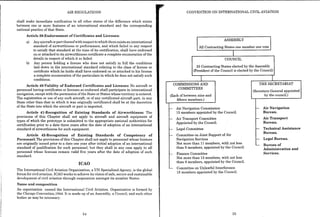
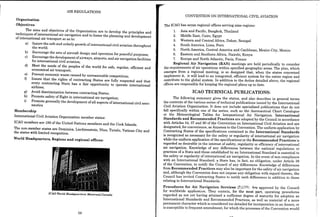
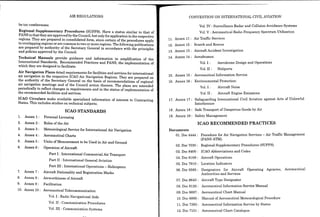
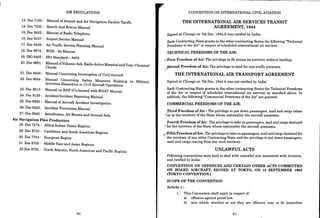
![AIR REGULATIONS
f) Assistant Flight Instructor's rati (f
g) Flight Instructor's ratin for ng or aero~lanes and helicopters),
h) Pilot's Licence (for glide;s( bal~eroPlan:s, ~ehc?Pters: gliders and balloons),
i) Student Flight N' ,', oons an microlight aircraft),
avigator s LIcence
j) Flight Navigator's Licence '
k) Student Flight Engineer's Licence
1) Flight Engineer's Licence
m) FI~ghtRadio Telephone O~erator's Licence,
. . n) Flight Radio Telephone Operator's Licence (Restricted);
Mimmum age for sole control of aircraft _
, No person being under 16 years of a e shall h
motion and no person shall cause ~ ave sole control of an aircraft in
an aircraft in motion unless he k or permhItany other person to have sole control of
h
nows or as reasonable c t b I'
person to ave attained the age of 16years, ause 0 e reve such other
Maximum Age Limit For Professional Pilots _
(1) No person, holding a pilot's licence '
attained the age of sixty-five years ~~S~~d
under ~he~e rules and having
pilot of an aircraft engaged in com' ,aI ~ct as PIlot·m-Command or Co-
(2) N
mercia air transport oper ti
o person holding a pilot' Iicence I a Ions,
attained the 'age of sixty ye:r~ce~~el~ssu:d un,der ,these rules and having
of an aircraft 'engaged in com~ ~ I a~ as PIlot-m-Command or Co-pilot
operated in a multi-crew enviro::~~t :~dtr~nsport o~era!ions unless it is
years of age, t e other pilot ISless than sixty
Pro~ded that the provisions ofthis rule shall no' ,
for smgle pilot operations and not di t apply m respect of aircraft certified
enaazed i excee mg an all up weight f 5700 ki
ngage m commercial air transport oper ti , hi , ,0 ilograms
operating in a multi-crew environment, a IOnsWIt m the territory ofIndia and while
STUDENT PILOT'S LICENCE
. (AEROPLANES/HELICOPTERS/GLIDERS)
Requirements for Issue of Licence -
An applicant for a student Pilot's L' ,
shall satisfy the followingrequirements:- icence (Aero planes/HelIcopters/ Gliders)
a)
1.
b)
Age - the applicant shall be t I h '
application, no ess t an SIxteenyears of age on the date of
Ed,:,"cational Qualification - He shall h v
eqUl~alentexamination from a recognized Bo:r~ passed Class Ten or its
Medical Fitness - He shall produce on a' :
of physical fitness from an approved medi~IescrIb~d,proforma a certificate
a medical examination, during which h ha~thractItIOner,after u~dergoing
e s a ave established hISmedical
c)
86
PERSONNEL LICENSING
fitness on the basis of compliance with the requirements as notified by the
Director-General.
d) Knowledge - He shall pass oral examination in Air Regulations, Air
Navigation, Aviation Meteorology and Aircraft and Engines as per the
syllabus prescribed by the Director-General unless he previously held a
pilot's licence of a higher category, or is able to produce evidence in the
manner prescribed by the Director-General that he is well-versed with the
aforesaid subjects.
2. Validity-
The period of validity shall commence from the date of issue or renewal of the
licence,The licence shall be valid for the period specified in Rule 39C,The licence shall
lapse on the holder obtaining a pilot's licence of a higher category,
3. Renewal-
The licence may be renewed for a period not exceeding twelve months from the
date offresh medical examination as specifiedin para I(C) subject to the total validity
ofthe licence not exceedingtwenty four months from the date ofissue,
4. Aircraft Rating -
The licence shall indicate the class and the types of aeroplanes or helicopters or
gliders the holder is entitled to fly, Only those types of aircraft may be entered in the
licence in respect of which the candidate has passed the examination in Aircraft and
Engines mentioned in Para l(d).
5. Privileges -
Subject to the validity of aircraft ratings in the licence and compliancewith the
relevant provisions of Rules, the privileges of the holder of a Student Pilot's Licence
shall be to fly within Indian territory only, as Pilot-in-Command of any aero plane,
helicopter or glider entered in the aircraft rating ofhis licence :Providedthat.-
a) He shall fly at all times under the authority and supervision of a Flight
Instructor or an Approved Examiner;
b) He shall fly under Visual Flight Rules only;
c)
d)
He shall not carry passengers, animals and goodsor fly for hire, reward or
remuneration ofany kind;
He shall not undertake cross-country flights unless he has a minimum often
hours ofsoloflight time and has passed the examinations in Air Navigation
and Aviation Meteorology,
if:
r1
]1
ri
il
Ii
Note:- The Student Pilot's Licence shall be issued by a Flying Club/Government Flying
Training School specifically authorized in this regard and subject to the conditions as
laid down by the Director-General,
87](https://image.slidesharecdn.com/22843-250519042504-63eea9fa/85/Air-Regulations-for-CPL-ATPL-Wg-Cmdr-Rk-Bali-49-320.jpg)