Skip to main content
Download free for 30 days
Sign in
Upload
Language (EN)
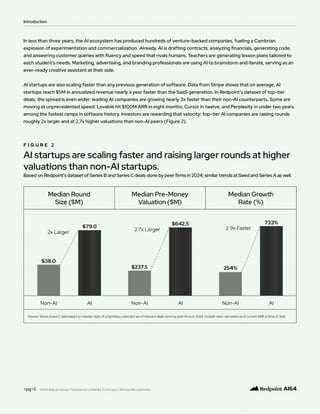
Support
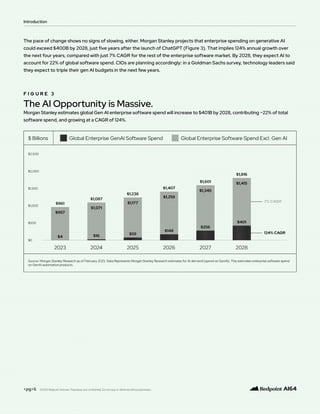
Business
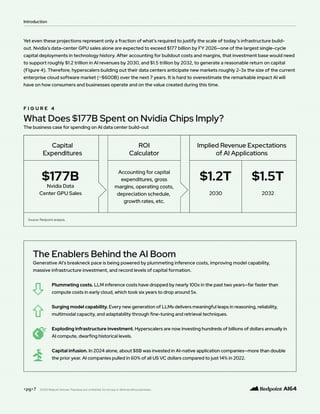
Mobile
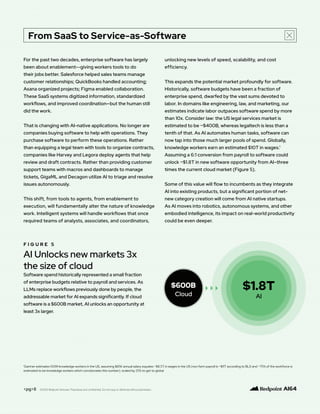
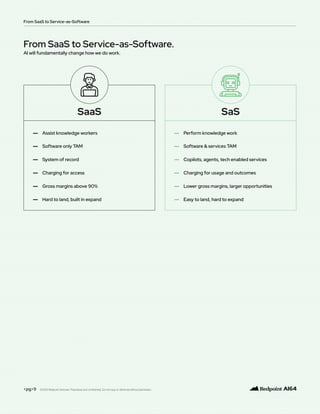
Social Media
Marketing
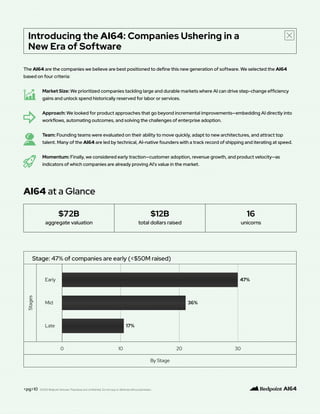
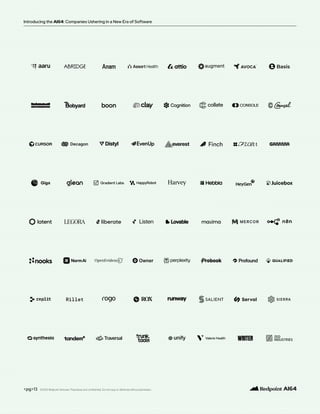
Technology
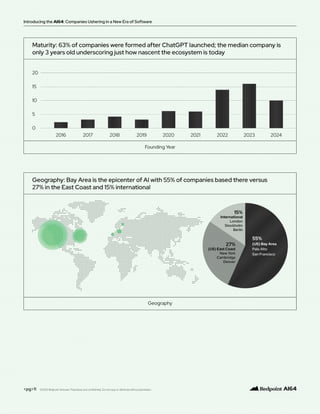
Art & Photos
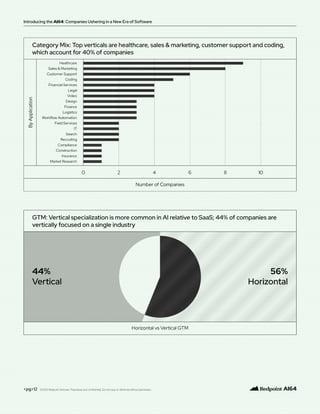
Career
Design
Education
Presentations & Public Speaking
Government & Nonprofit
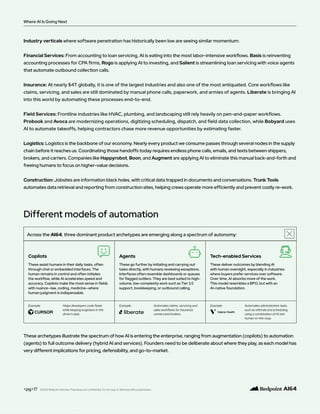
Healthcare
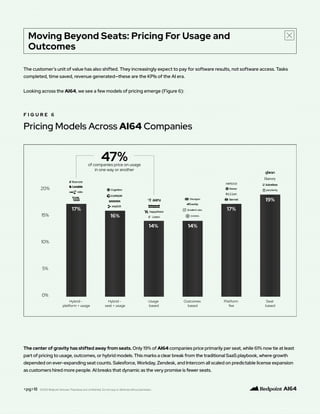
Internet
Law
Leadership & Management
Automotive
Engineering
Software
Recruiting & HR
Retail
Sales
Services
Science
Small Business & Entrepreneurship
Food
Environment
Economy & Finance
Data & Analytics
Investor Relations
Sports
Spiritual
News & Politics
Travel
Self Improvement
Real Estate
Entertainment & Humor
Health & Medicine
Devices & Hardware
Lifestyle
EN
Upload
Download free for 30 days
Sign in
Uploaded by
Razin Mustafiz
225 views
AI64 - Mapping the Next Generation of Enterprise Software | Redpoint Ventures
Source: https://www.redpoint.com/ai64/
Technology
◦
Read more
0
Save
Share
Embed
Save to Drive
Download now
Download to read offline
1
/ 25
2
/ 25
3
/ 25
4
/ 25
5
/ 25
6
/ 25
Most read
7
/ 25
8
/ 25
9
/ 25
10
/ 25
11
/ 25
12
/ 25
13
/ 25
14
/ 25
15
/ 25
16
/ 25
Most read
17
/ 25
18
/ 25
Most read
19
/ 25
20
/ 25
More Related Content
PDF
AI-Driven Transformation in Enterprise Software: Strategies for 2026 and Beyond
by
torain1
32 slides
26 views
PDF
AI in Business - Key drivers and future value
by
APPANION
16 slides
660 views
PDF
The State of the AI Economy - Exponential View
by
Razin Mustafiz
66 slides
149 views
PDF
AIM227-S_Scaling-GenAI-on-AWS-Without-Breaking-the-Bank-through-FinOps-sponso...
by
lewiimmanuel
34 slides
15 views
PDF
What-Every-Tech-Leader-Needs-to-Know-About-AI-in-2025.pdf
by
rishabhxbohra
20 slides
110 views
PDF
Conviction LP Letter - May 2024 [Redacted]
by
Razin Mustafiz
4 slides
137 views
PDF
Top AI Applications Transforming Industries in 2026 and Beyond
by
SoluLab1231
12 slides
13 views
PPTX
study_id163605_tech-tre ccvnds-2024.pptx
by
AkramulBari1
52 slides
52 views
AI-Driven Transformation in Enterprise Software: Strategies for 2026 and Beyond
by
torain1
32 slides
26 views
AI in Business - Key drivers and future value
by
APPANION
16 slides
660 views
The State of the AI Economy - Exponential View
by
Razin Mustafiz
66 slides
149 views
AIM227-S_Scaling-GenAI-on-AWS-Without-Breaking-the-Bank-through-FinOps-sponso...
by
lewiimmanuel
34 slides
15 views
What-Every-Tech-Leader-Needs-to-Know-About-AI-in-2025.pdf
by
rishabhxbohra
20 slides
110 views
Conviction LP Letter - May 2024 [Redacted]
by
Razin Mustafiz
4 slides
137 views
Top AI Applications Transforming Industries in 2026 and Beyond
by
SoluLab1231
12 slides
13 views
study_id163605_tech-tre ccvnds-2024.pptx
by
AkramulBari1
52 slides
52 views
Similar to AI64 - Mapping the Next Generation of Enterprise Software | Redpoint Ventures
PDF
re:cap Generative AI journey with Bedrock
by
PhilipBasford
17 slides
428 views
PDF
2024_Artificial_Intelligence_Machine_Learning_Overview_Preview.pdf
by
HungNguyen372621
10 slides
4 views
PPTX
How Businesses Are Building AI-Powered Mobile Apps in 2026: A Practical Roadm...
by
App Design Glory
17 slides
10 views
PDF
AI Enablement of Business Services
by
Catalyst Investors
9 slides
944 views
PDF
AI in 2026: Navigating the Reckoning and Business Opportunities
by
aiuptalk
91 slides
15 views
PDF
"O Futuro da IA: Oportunidades de Investimento e Transformação Global"
by
Demetrius Brasil Faria da Silva
14 slides
181 views
PPTX
2019 London Data Science Festival. Making Money in AI, Machine Learning and ...
by
Simon Greenman
63 slides
353 views
PDF
Upgrading software business models to thrive in the AI era
by
Razin Mustafiz
12 slides
64 views
PDF
AI Applications across Major Industries
by
venkatvajradhar1
5 slides
88 views
PDF
AI Applications across Major Industries
by
venkatvajradhar1
5 slides
41 views
PDF
The Emergence and Impact of Vertical AI - The Meliora Company
by
Clive Dickens
37 slides
152 views
PDF
Career Building in AI - Technologies, Trends and Opportunities
by
WebStackAcademy
44 slides
341 views
PDF
The 2025 InfraRed Report - Redpoint Ventures
by
Razin Mustafiz
80 slides
320 views
PDF
AI Market Size, Strategy
by
Purpose+
8 slides
350 views
PDF
leewayhertz.com-Cloud AI services A comprehensive guide.pdf
by
alexjohnson7307
19 slides
137 views
PPTX
How to get on the AI journey?
by
Aarthi Srinivasan
31 slides
709 views
PDF
AI as a Service A Comprehensive Guide.pdf
by
SoluLab1231
11 slides
249 views
PDF
Defining a Practical Path to Artificial Intelligence
by
Roman Chanclor
11 slides
254 views
PDF
Artificial Intelligence overview (by impulse)
by
Software in Brussels
28 slides
1.6K views
PDF
66eb856e019e59758ef73759_ICONIQ Analytics + Insights - State of AI Sep24.pdf
by
EnriqueG19
41 slides
181 views
re:cap Generative AI journey with Bedrock
by
PhilipBasford
17 slides
428 views
2024_Artificial_Intelligence_Machine_Learning_Overview_Preview.pdf
by
HungNguyen372621
10 slides
4 views
How Businesses Are Building AI-Powered Mobile Apps in 2026: A Practical Roadm...
by
App Design Glory
17 slides
10 views
AI Enablement of Business Services
by
Catalyst Investors
9 slides
944 views
AI in 2026: Navigating the Reckoning and Business Opportunities
by
aiuptalk
91 slides
15 views
"O Futuro da IA: Oportunidades de Investimento e Transformação Global"
by
Demetrius Brasil Faria da Silva
14 slides
181 views
2019 London Data Science Festival. Making Money in AI, Machine Learning and ...
by
Simon Greenman
63 slides
353 views
Upgrading software business models to thrive in the AI era
by
Razin Mustafiz
12 slides
64 views
AI Applications across Major Industries
by
venkatvajradhar1
5 slides
88 views
AI Applications across Major Industries
by
venkatvajradhar1
5 slides
41 views
The Emergence and Impact of Vertical AI - The Meliora Company
by
Clive Dickens
37 slides
152 views
Career Building in AI - Technologies, Trends and Opportunities
by
WebStackAcademy
44 slides
341 views
The 2025 InfraRed Report - Redpoint Ventures
by
Razin Mustafiz
80 slides
320 views
AI Market Size, Strategy
by
Purpose+
8 slides
350 views
leewayhertz.com-Cloud AI services A comprehensive guide.pdf
by
alexjohnson7307
19 slides
137 views
How to get on the AI journey?
by
Aarthi Srinivasan
31 slides
709 views
AI as a Service A Comprehensive Guide.pdf
by
SoluLab1231
11 slides
249 views
Defining a Practical Path to Artificial Intelligence
by
Roman Chanclor
11 slides
254 views
Artificial Intelligence overview (by impulse)
by
Software in Brussels
28 slides
1.6K views
66eb856e019e59758ef73759_ICONIQ Analytics + Insights - State of AI Sep24.pdf
by
EnriqueG19
41 slides
181 views
More from Razin Mustafiz
PDF
The Agentic Awakening - Bessemer Venture Partners
by
Razin Mustafiz
63 slides
85 views
PDF
Inside the AI Transformation: The Great Renovation
by
Razin Mustafiz
33 slides
25 views
PDF
World Development Report 2026: The Promise of Artificial Intelligence
by
Razin Mustafiz
380 slides
69 views
PDF
AI-Native Firms - Hyunjin Kim and Rembrand Koning
by
Razin Mustafiz
64 slides
28 views
PDF
Delegating to AI: Beliefs and the Organization of Work at New Ventures - Inne...
by
Razin Mustafiz
57 slides
41 views
PDF
CharacterAI Fundraising Deck (Seed Round 2021)
by
Razin Mustafiz
20 slides
28 views
PDF
PwC's 29th CEO Survey— Bangladesh edition
by
Razin Mustafiz
33 slides
19 views
PDF
AI eats the world - Benedict Evans | May 2026
by
Razin Mustafiz
79 slides
299 views
PDF
National Policy Framework for Artificial Intelligence
by
Razin Mustafiz
4 slides
32 views
PDF
Claude Certified Architect – Foundations Certification Exam Guide
by
Razin Mustafiz
40 slides
3.9K views
PDF
Saudi Arabia Startup Ecosystem Handbook 2026
by
Razin Mustafiz
30 slides
154 views
PDF
Contrary Research Tech Trends Report 2026
by
Razin Mustafiz
352 slides
63 views
PDF
Superman (2025) Screenplay / Written by James Gunn
by
Razin Mustafiz
139 slides
138 views
PDF
a16z Culture Document (signed by every new hire)
by
Razin Mustafiz
3 slides
406 views
PDF
Groq Series A Investment Memo - Chamath Palihapitiya
by
Razin Mustafiz
3 slides
1.9K views
PDF
AI Infrastructure and the Compute Gap - Matt Dratch
by
Razin Mustafiz
9 slides
234 views
PDF
The State of AI Report - Battery Ventures
by
Razin Mustafiz
35 slides
343 views
PDF
From Network Effects to Cognitive Effects: The New Rules for Platform Dominan...
by
Razin Mustafiz
5 slides
52 views
PDF
State of the VC Market - Untapped Capital [Redacted]
by
Razin Mustafiz
12 slides
62 views
PDF
Accel 2025 Globalscape: Race for Compute
by
Razin Mustafiz
64 slides
148 views
The Agentic Awakening - Bessemer Venture Partners
by
Razin Mustafiz
63 slides
85 views
Inside the AI Transformation: The Great Renovation
by
Razin Mustafiz
33 slides
25 views
World Development Report 2026: The Promise of Artificial Intelligence
by
Razin Mustafiz
380 slides
69 views
AI-Native Firms - Hyunjin Kim and Rembrand Koning
by
Razin Mustafiz
64 slides
28 views
Delegating to AI: Beliefs and the Organization of Work at New Ventures - Inne...
by
Razin Mustafiz
57 slides
41 views
CharacterAI Fundraising Deck (Seed Round 2021)
by
Razin Mustafiz
20 slides
28 views
PwC's 29th CEO Survey— Bangladesh edition
by
Razin Mustafiz
33 slides
19 views
AI eats the world - Benedict Evans | May 2026
by
Razin Mustafiz
79 slides
299 views
National Policy Framework for Artificial Intelligence
by
Razin Mustafiz
4 slides
32 views
Claude Certified Architect – Foundations Certification Exam Guide
by
Razin Mustafiz
40 slides
3.9K views
Saudi Arabia Startup Ecosystem Handbook 2026
by
Razin Mustafiz
30 slides
154 views
Contrary Research Tech Trends Report 2026
by
Razin Mustafiz
352 slides
63 views
Superman (2025) Screenplay / Written by James Gunn
by
Razin Mustafiz
139 slides
138 views
a16z Culture Document (signed by every new hire)
by
Razin Mustafiz
3 slides
406 views
Groq Series A Investment Memo - Chamath Palihapitiya
by
Razin Mustafiz
3 slides
1.9K views
AI Infrastructure and the Compute Gap - Matt Dratch
by
Razin Mustafiz
9 slides
234 views
The State of AI Report - Battery Ventures
by
Razin Mustafiz
35 slides
343 views
From Network Effects to Cognitive Effects: The New Rules for Platform Dominan...
by
Razin Mustafiz
5 slides
52 views
State of the VC Market - Untapped Capital [Redacted]
by
Razin Mustafiz
12 slides
62 views
Accel 2025 Globalscape: Race for Compute
by
Razin Mustafiz
64 slides
148 views
Recently uploaded
PDF
Comprehensive Guide to Buying Old Gmail Accounts Safely in 2026
by
dariocordova82
22 slides
18 views
PDF
Computer Organization and Design MIPS Edition 6th Edition PDF
by
aminech4407
51 slides
8 views
PPTX
The Dawn of Personalized Pharma: 3D Printed Medicines
by
Shreyash Shriram
7 slides
10 views
DOCX
5 Unique Sites to Buy Old Gmail Accounts 2fa Number.
by
Buy Gmail Accounts in USA
19 slides
27 views
PDF
Mastering Capture the Flag and Cloud Security Fundamentals for Beginners
by
Suresh Peiris
24 slides
88 views
PDF
Pune Meetup - MuleSoft Agent Fabric Inside
by
Prashant271000
22 slides
17 views
PPTX
Comprehensive Azure Migration Readiness Guide: Inventory, Security, Networkin...
by
acaptacloud
10 slides
56 views
DOCX
AI in Application Modernization: How It Works Under the Hood
by
Sergey Laptick
5 slides
6 views
PDF
Top 5 Best Cyberin Alternatives (Compared & Reviewed)
by
Sanjeet Chauhan
14 slides
11 views
PDF
Chapter-I.pdf sia 2025-2026 isbsishs ishsishs ishs
by
arbiedeguzman21
85 slides
14 views
PDF
How Much Does Data Annotation Cost? Pricing Models, Rates & Budget Benchmarks
by
Habile Data
12 slides
44 views
PDF
OhhPro: Enhancing Community Engagement and Connectivity in Residential Societies
by
OhhproJunction
9 slides
13 views
PDF
Invisible Process Hazards: 4 Risks Your Workers Can’t See
by
TECH EHS Solution
6 slides
7 views
PDF
HITCON 2026 Slide- Not Just Spies Anymore: DPRK's Espionage Actors Are Coming...
by
Seong Su Park
36 slides
193 views
PDF
Top 5 Best Dedicated Server in USA (Tested & Compared)
by
Sanjeet Chauhan
17 slides
21 views
PPTX
The MCP Tasks Extension - Vikram Vaswani
by
vvaswani
12 slides
48 views
PDF
Top 6 Sites to Buy Bulk Gmail Accounts in 2026: USA Market Guide
by
Buy Gmail Accounts,
10 slides
12 views
PPTX
How to Make AI-Assisted Writing More Authentic: A Practical Guide to Original...
by
Adeel Ali
16 slides
33 views
PPTX
From APIs to Agents: Rethinking Testing for Dynamic Systems
by
Manoj Kumar
17 slides
13 views
PPTX
BotGentz AI Playbook: Seamless AI Agents Integrated into Your Workflow
by
Zloadr
8 slides
33 views
Comprehensive Guide to Buying Old Gmail Accounts Safely in 2026
by
dariocordova82
22 slides
18 views
Computer Organization and Design MIPS Edition 6th Edition PDF
by
aminech4407
51 slides
8 views
The Dawn of Personalized Pharma: 3D Printed Medicines
by
Shreyash Shriram
7 slides
10 views
5 Unique Sites to Buy Old Gmail Accounts 2fa Number.
by
Buy Gmail Accounts in USA
19 slides
27 views
Mastering Capture the Flag and Cloud Security Fundamentals for Beginners
by
Suresh Peiris
24 slides
88 views
Pune Meetup - MuleSoft Agent Fabric Inside
by
Prashant271000
22 slides
17 views
Comprehensive Azure Migration Readiness Guide: Inventory, Security, Networkin...
by
acaptacloud
10 slides
56 views
AI in Application Modernization: How It Works Under the Hood
by
Sergey Laptick
5 slides
6 views
Top 5 Best Cyberin Alternatives (Compared & Reviewed)
by
Sanjeet Chauhan
14 slides
11 views
Chapter-I.pdf sia 2025-2026 isbsishs ishsishs ishs
by
arbiedeguzman21
85 slides
14 views
How Much Does Data Annotation Cost? Pricing Models, Rates & Budget Benchmarks
by
Habile Data
12 slides
44 views
OhhPro: Enhancing Community Engagement and Connectivity in Residential Societies
by
OhhproJunction
9 slides
13 views
Invisible Process Hazards: 4 Risks Your Workers Can’t See
by
TECH EHS Solution
6 slides
7 views
HITCON 2026 Slide- Not Just Spies Anymore: DPRK's Espionage Actors Are Coming...
by
Seong Su Park
36 slides
193 views
Top 5 Best Dedicated Server in USA (Tested & Compared)
by
Sanjeet Chauhan
17 slides
21 views
The MCP Tasks Extension - Vikram Vaswani
by
vvaswani
12 slides
48 views
Top 6 Sites to Buy Bulk Gmail Accounts in 2026: USA Market Guide
by
Buy Gmail Accounts,
10 slides
12 views
How to Make AI-Assisted Writing More Authentic: A Practical Guide to Original...
by
Adeel Ali
16 slides
33 views
From APIs to Agents: Rethinking Testing for Dynamic Systems
by
Manoj Kumar
17 slides
13 views
BotGentz AI Playbook: Seamless AI Agents Integrated into Your Workflow
by
Zloadr
8 slides
33 views
AI64 - Mapping the Next Generation of Enterprise Software | Redpoint Ventures
1.
M A P
P I N G T H E N E X T G E N E R AT I O N O F E N T E R P R I S E S O F T W A R E
2.
Table of Contents Introduction
4 From SaaS to Service‑as‑Software 8 Introducing the AI64: Companies Ushering in a New Era of Software 10 Where AI Works Today 14 Where AI Is Going Next 16 Moving Beyond Seats: Pricing for Usage and Outcomes 18 AI-Native GTM: Faster to Land, Harder to Expand 20 Building Moats in the AI Era 22 Conclusion 24 <pg>2 ©2025 Redpoint Ventures. Proprietary and confidential. Do not copy or distribute without permission.
3.
<pg>3 History shows that
every platform shift in technology–mainframe to PCs, on-prem to cloud, desktop to mobile–has produced a new wave of market leaders. With large language models (LLMs), we are entering another foundational change. In this report, we examine the burgeoning AI application market, the implications for builders, and the 64 companies Redpoint believes are poised to define this generation. Abstract ©2025 Redpoint Ventures. Proprietary and confidential. Do not copy or distribute without permission.
4.
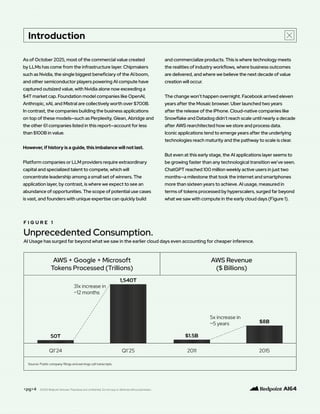
As of October
2025, most of the commercial value created by LLMs has come from the infrastructure layer. Chipmakers such as Nvidia, the single biggest beneficiary of the AI boom, and other semiconductor players powering AI compute have captured outsized value, with Nvidia alone now exceeding a $4T market cap. Foundation model companies like OpenAI, Anthropic, xAI, and Mistral are collectively worth over $700B. In contrast, the companies building the business applications on top of these models—such as Perplexity, Glean, Abridge and the other 61 companies listed in this report—account for less than $100B in value. However, if history is a guide, this imbalance will not last. Platform companies or LLM providers require extraordinary capital and specialized talent to compete, which will concentrate leadership among a small set of winners. The application layer, by contrast, is where we expect to see an abundance of opportunities. The scope of potential use cases is vast, and founders with unique expertise can quickly build and commercialize products. This is where technology meets the realities of industry workflows, where business outcomes are delivered, and where we believe the next decade of value creation will occur. The change won’t happen overnight. Facebook arrived eleven years after the Mosaic browser. Uber launched two years after the release of the iPhone. Cloud-native companies like Snowflake and Datadog didn’t reach scale until nearly a decade after AWS rearchitected how we store and process data. Iconic applications tend to emerge years after the underlying technologies reach maturity and the pathway to scale is clear. But even at this early stage, the AI applications layer seems to be growing faster than any technological transition we’ve seen. ChatGPT reached 100 million weekly active users in just two months—a milestone that took the internet and smartphones more than sixteen years to achieve. AI usage, measured in terms of tokens processed by hyperscalers, surged far beyond what we saw with compute in the early cloud days (Figure 1). F I G U R E 1 Unprecedented Consumption. AI Usage has surged far beyond what we saw in the earlier cloud days even accounting for cheaper inference. <pg>4 ©2025 Redpoint Ventures. Proprietary and confidential. Do not copy or distribute without permission. Introduction
5.
In less than
three years, the AI ecosystem has produced hundreds of venture-backed companies, fueling a Cambrian explosion of experimentation and commercialization. Already, AI is drafting contracts, analyzing financials, generating code, and answering customer queries with fluency and speed that rivals humans. Teachers are generating lesson plans tailored to each student’s needs. Marketing, advertising, and branding professionals are using AI to brainstorm and iterate, serving as an ever-ready creative assistant at their side. AI startups are also scaling faster than any previous generation of software. Data from Stripe shows that on average, AI startups reach $5M in annualized revenue nearly a year faster than the SaaS generation. In Redpoint’s dataset of top-tier deals, the spread is even wider: leading AI companies are growing nearly 3x faster than their non-AI counterparts. Some are moving at unprecedented speed: Lovable hit $100M ARR in eight months, Cursor in twelve, and Perplexity in under two years, among the fastest ramps in software history. Investors are rewarding that velocity: top-tier AI companies are raising rounds roughly 2x larger and at 2.7x higher valuations than non-AI peers (Figure 2). F I G U R E 2 AI startups are scaling faster and raising larger rounds at higher valuations than non-AI startups. Based on Redpoint’s dataset of Series B and Series C deals done by peer firms in 2024; similar trends at Seed and Series A as well. Introduction <pg>5 ©2025 Redpoint Ventures. Proprietary and confidential. Do not copy or distribute without permission.
6.
F I G
U R E 3 The AI Opportunity is Massive. Morgan Stanley estimates global Gen AI enterprise software spend will increase to $401B by 2028, contributing ~22% of total software spend, and growing at a CAGR of 124%. Introduction <pg>6 ©2025 Redpoint Ventures. Proprietary and confidential. Do not copy or distribute without permission. The pace of change shows no signs of slowing, either. Morgan Stanley projects that enterprise spending on generative AI could exceed $400B by 2028, just five years after the launch of ChatGPT (Figure 3). That implies 124% annual growth over the next four years, compared with just 7% CAGR for the rest of the enterprise software market. By 2028, they expect AI to account for 22% of global software spend. CIOs are planning accordingly: in a Goldman Sachs survey, technology leaders said they expect to triple their gen AI budgets in the next few years.
7.
Introduction <pg>7 The Enablers Behind
the AI Boom Generative AI’s breakneck pace is being powered by plummeting inference costs, improving model capability, massive infrastructure investment, and record levels of capital formation. Plummeting costs. LLM inference costs have dropped by nearly 100x in the past two years—far faster than compute costs in early cloud, which took six years to drop around 5x. Surging model capability. Every new generation of LLMs delivers meaningful leaps in reasoning, reliability, multimodal capacity, and adaptability through fine-tuning and retrieval techniques. Exploding infrastructure investment. Hyperscalers are now investing hundreds of billions of dollars annually in AI compute, dwarfing historical levels. Capital infusion. In 2024 alone, about $8B was invested in AI-native application companies—more than double the prior year. AI companies pulled in 60% of all US VC dollars compared to just 14% in 2022. F I G U R E 4 What Does $177B Spent on Nvidia Chips Imply? The business case for spending on AI data center build-out ©2025 Redpoint Ventures. Proprietary and confidential. Do not copy or distribute without permission. Yet even these projections represent only a fraction of what’s required to justify the scale of today’s infrastructure build- out. Nvidia’s data-center GPU sales alone are expected to exceed $177 billion by FY 2026—one of the largest single-cycle capital deployments in technology history. After accounting for buildout costs and margins, that investment base would need to support roughly $1.2 trillion in AI revenues by 2030, and $1.5 trillion by 2032, to generate a reasonable return on capital (Figure 4). Therefore, hyperscalers building out their data centers anticipate new markets roughly 2-3x the size of the current enterprise cloud software market (~$600B) over the next 7 years. It is hard to overestimate the remarkable impact AI will have on how consumers and businesses operate and on the value created during this time.
8.
From SaaS to
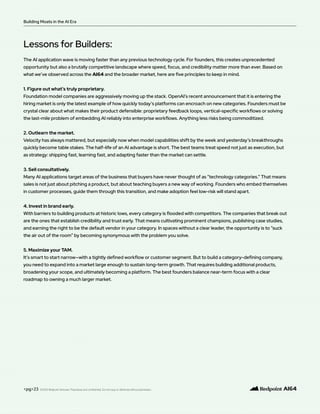
Service‑as‑Software For the past two decades, enterprise software has largely been about enablement--giving workers tools to do their jobs better. Salesforce helped sales teams manage customer relationships; QuickBooks handled accounting; Asana organized projects; Figma enabled collaboration. These SaaS systems digitized information, standardized workflows, and improved coordination—but the human still did the work. That is changing with AI-native applications. No longer are companies buying software to help with operations. They purchase software to perform these operations. Rather than equipping a legal team with tools to organize contracts, companies like Harvey and Legora deploy agents that help review and draft contracts. Rather than providing customer support teams with macros and dashboards to manage tickets, GigaML and Decagon utilize AI to triage and resolve issues autonomously. This shift, from tools to agents, from enablement to execution, will fundamentally alter the nature of knowledge work. Intelligent systems will handle workflows that once required teams of analysts, associates, and coordinators, unlocking new levels of speed, scalability, and cost efficiency. This expands the potential market profoundly for software. Historically, software budgets have been a fraction of enterprise spend, dwarfed by the vast sums devoted to labor. In domains like engineering, law, and marketing, our estimates indicate labor outpaces software spend by more than 10x. Consider law: the US legal services market is estimated to be ~$400B, whereas legaltech is less than a tenth of that. As AI automates human tasks, software can now tap into those much larger pools of spend. Globally, knowledge workers earn an estimated $10T in wages.1 Assuming a 6:1 conversion from payroll to software could unlock ~$1.8T in new software opportunity from AI–three times the current cloud market (Figure 5). Some of this value will flow to incumbents as they integrate AI into existing products, but a significant portion of net- new category creation will come from AI native startups. As AI moves into robotics, autonomous systems, and other embodied intelligence, its impact on real-world productivity could be even deeper. F I G U R E 5 AI Unlocks new markets 3x the size of cloud Software spend historically represented a small fraction of enterprise budgets relative to payroll and services. As LLMs replace workflows previously done by people, the addressable market for AI expands significantly. If cloud software is a $600B market, AI unlocks an opportunity at least 3x larger. <pg>8 $1.8T AI $600B Cloud 1 Gartner estimates 100M knowledge workers in the US, assuming $85K annual salary equates ~$8.5T in wages in the US (non farm payroll is ~$11T according to BLS and ~75% of the workforce is estimated to be knowledge workers which corroborates this number); scaled by 25% to get to global ©2025 Redpoint Ventures. Proprietary and confidential. Do not copy or distribute without permission.
9.
<pg>9 From SaaS to
Service-as-Software. AI will fundamentally change how we do work. SaS SaaS Perform knowledge work Software & services TAM Copilots, agents, tech enabled services Charging for usage and outcomes Lower gross margins, larger opportunities Easy to land, hard to expand Assist knowledge workers Software only TAM System of record Charging for access Gross margins above 90% Hard to land, built in expand From SaaS to Service-as-Software ©2025 Redpoint Ventures. Proprietary and confidential. Do not copy or distribute without permission.
10.
Introducing the AI64:
Companies Ushering in a New Era of Software <pg>10 The AI64 are the companies we believe are best positioned to define this new generation of software. We selected the AI64 based on four criteria: Market Size: We prioritized companies tackling large and durable markets where AI can drive step-change efficiency gains and unlock spend historically reserved for labor or services. Approach: We looked for product approaches that go beyond incremental improvements—embedding AI directly into workflows, automating outcomes, and solving the challenges of enterprise adoption. Team: Founding teams were evaluated on their ability to move quickly, adapt to new architectures, and attract top talent. Many of the AI64 are led by technical, AI-native founders with a track record of shipping and iterating at speed. Momentum: Finally, we considered early traction—customer adoption, revenue growth, and product velocity—as indicators of which companies are already proving AI’s value in the market. AI64 at a Glance ©2025 Redpoint Ventures. Proprietary and confidential. Do not copy or distribute without permission. $72B aggregate valuation $12B total dollars raised 16 unicorns
11.
<pg>11 Introducing the AI64:
Companies Ushering in a New Era of Software ©2025 Redpoint Ventures. Proprietary and confidential. Do not copy or distribute without permission.
12.
<pg>12 Introducing the AI64:
Companies Ushering in a New Era of Software ©2025 Redpoint Ventures. Proprietary and confidential. Do not copy or distribute without permission.
13.
Introducing the AI64:
Companies Ushering in a New Era of Software <pg>13 ©2025 Redpoint Ventures. Proprietary and confidential. Do not copy or distribute without permission.
14.
Where AI Works
Today <pg>14 While AI’s potential applications are vast, adoption so far has clustered in functions where ROI is clear, data is rich, and workflows are repetitive and measurable. Across the AI64, several categories stand out as the earliest proving grounds for AI in the enterprise. Software Development AI has arguably had the most visible early impact in software development not just because of its capabilities, but because of how quickly it has been adopted. Two-thirds of developers now use AI tools, with GitHub Copilot surpassing 20 million users. Meanwhile, Cursor has grown to more than 1 million users in just 16 months, making it the fastest-growing AI-powered code editor in the market. And with the rise of “vibe-coding” platforms like Replit and Lovable, non-engineers—from PMs and designers to hobbyists—are now building and iterating with AI. Together, these shifts mark a fundamental change in who can create software and how fast it can be done. Customer Support Customer support is one of the clearest proving grounds for AI because it combines massive ticket volumes, repetitive workflows, and easily measurable ROI. Enterprises have long treated support as a cost center, with spend dominated by labor- intensive BPOs and in-house teams. AI flips that model—automating common inquiries, scaling elastically, and delivering instant responses that improve CSAT while lowering costs. The appeal is evident: AI can resolve issues end-to-end, adapt to vertical compliance requirements, and operate 24/7 without linear headcount growth. Companies like Sierra and Decagon are leading the way with horizontal support automation, Giga is innovating in voice-based customer support, and others like Gradient are carving out vertical-specific use cases such as financial services. Sales & Marketing AI is remaking sales & marketing by automating the most time-consuming parts of the funnel and enabling far greater personalization. Clay and Unify GTM are redefining outbound by enriching leads from hundreds of data sources and orchestrating tailored outreach at scale. On the inbound side, Qualified’s AI SDR engages and qualifies prospects in real time, ensuring no high-intent lead slips through the cracks. Meanwhile, next-generation CRMs like Attio eliminate manual data entry by automatically capturing interactions and layering in intelligence to help teams prioritize accounts and pipeline. Together, these tools shorten sales cycles, boost productivity, and make personalization at scale a reality. ©2025 Redpoint Ventures. Proprietary and confidential. Do not copy or distribute without permission.
15.
<pg>15 Where AI Works
Today ©2025 Redpoint Ventures. Proprietary and confidential. Do not copy or distribute without permission. Legal Law is language and LLMs are finally well-suited to it. Today’s models excel at drafting, summarization, structured extraction, and research, the very backbone of legal work. Companies like Harvey and Legora are building copilots for elite law firms, already reaching meaningful scale, while EvenUp and Finch are automating consumer law workflows, such as intake and demand letters. With law firms generating more than $400 billion in fees annually in the U.S. alone and nearly 90% reporting plans to increase AI investment, the opportunity extends well beyond copilots, toward AI systems that can replace entire portions of legal labor end- to-end. Healthcare In healthcare, AI is already reshaping the physician’s workflow. Ambient notetakers like Abridge have spread rapidly, with adoption reaching close to a third of physicians, and OpenEvidence is reportedly used daily by almost 40% of physicians. These adoption rates are striking in an industry known for slow technology uptake. Beyond clinical documentation, startups such as Assort, Valerie Health and Tandem are attacking the ballooning costs of administration by automating referrals, front-office tasks, and prior authorizations. Given the disproportionate rise in administrative complexity and staffing costs over recent decades, it’s no surprise that early AI wins are emerging in these pain points.
16.
Where AI Is
Going Next <pg>16 Beyond these early leaders lies the next wave of opportunity—industries and workflows where adoption is nascent but potential is enormous. Horizontal functions include: Finance: Finance teams remain buried under manual reconciliations, journal entries, reporting, and month-end closes. AI can act as a junior accountant automating transaction coding, reconciliations, and forecasting, turning finance professionals into reviewers rather than doers. Companies like Rillet, Everest, and Maxima are tackling some of the largest workflows in the enterprise, targeting not just software budgets but billions in labor spend. IT: IT service management (ITSM) is plagued by ticket backlogs and manual escalations. AI can resolve common tickets instantly, surface root causes, and proactively detect incidents before they impact users. Serval and Console are reimagining ITSM with AI-native workflows that challenge ServiceNow’s dominance, while Traversal is pioneering AI-powered SRE, automating incident detection and response. User Research: Traditional user research is costly, slow, and sample-limited. AI can continuously analyze customer interviews, simulate personas, and surface insights in real time. Listen Labs and Aaru are rethinking how product teams gather feedback, making research faster, cheaper, and scalable across the org. Design: Creative teams spend huge amounts of time on iteration and formatting. AI-driven design tools like Gamma and Flora Fauna make presentation building, prototyping, and content design instant and collaborative, unlocking productivity while broadening who can contribute to creative workflows. Recruiting: Hiring remains one of the most resource-intensive functions, with recruiters spending countless hours sourcing candidates and conducting initial screenings. AI can now automate both—surfacing best-fit talent from vast pools and handling first-round interviews or assessments—so recruiters can focus on closing and relationship-building. Companies like Juicebox are leading this shift, turning recruiting into a scalable, automated process. Compliance: Compliance monitoring has historically been reactive and resource-intensive. AI enables continuous monitoring, real-time alerts, and embedded policy enforcement. Norm is building AI-native compliance infrastructure that reduces risk and cost for regulated industries. ©2025 Redpoint Ventures. Proprietary and confidential. Do not copy or distribute without permission.
17.
<pg>17 Industry verticals where
software penetration has historically been low are seeing similar momentum: Financial Services: From accounting to loan servicing, AI is eating into the most labor-intensive workflows. Basis is reinventing accounting processes for CPA firms, Rogo is applying AI to investing, and Salient is streamlining loan servicing with voice agents that automate outbound collection calls. Insurance: At nearly $4T globally, it is one of the largest industries and also one of the most antiquated. Core workflows like claims, servicing, and sales are still dominated by manual phone calls, paperwork, and armies of agents. Liberate is bringing AI into this world by automating these processes end-to-end. Field Services: Frontline industries like HVAC, plumbing, and landscaping still rely heavily on pen-and-paper workflows. Probook and Avoca are modernizing operations, digitizing scheduling, dispatch, and field data collection, while Bobyard uses AI to automate takeoffs, helping contractors chase more revenue opportunities by estimating faster. Logistics: Logistics is the backbone of our economy. Nearly every product we consume passes through several nodes in the supply chain before it reaches us. Coordinating those handoffs today requires endless phone calls, emails, and texts between shippers, brokers, and carriers. Companies like Happyrobot, Boon, and Augment are applying AI to eliminate this manual back-and-forth and freeing humans to focus on higher-value decisions. Construction: Jobsites are information black holes, with critical data trapped in documents and conversations. Trunk Tools automates data retrieval and reporting from construction sites, helping crews operate more efficiently and prevent costly re-work. These archetypes illustrate the spectrum of how AI is entering the enterprise, ranging from augmentation (copilots) to automation (agents) to full outcome delivery (hybrid AI and services). Founders need to be deliberate about where they play, as each model has very different implications for pricing, defensibility, and go-to-market. Where AI Is Going Next ©2025 Redpoint Ventures. Proprietary and confidential. Do not copy or distribute without permission. Across the AI64, three dominant product archetypes are emerging along a spectrum of autonomy: These assist humans in their daily tasks, often through chat or embedded interfaces. The human remains in control and often initiates the workflow, while AI accelerates speed and accuracy. Copilots make the most sense in fields with nuance—law, coding, medicine—where human judgment is indispensable. Helps developers code faster while keeping engineers in the driver’s seat. Example: Example: Example: Copilots These go further by initiating and carrying out tasks directly, with humans reviewing exceptions. Interfaces often resemble dashboards or queues for flagged outliers. They are best suited to high- volume, low-complexity work such as Tier 1/2 support, bookkeeping, or outbound calling. These deliver outcomes by blending AI with human oversight, especially in industries where buyers prefer services over software. Over time, AI absorbs more of the work. This model resembles a BPO, but with an AI-native foundation. Automates claims, servicing and sales workflows for insurance carriers and brokers. Automates administrative tasks such as referrals and scheduling using a combination of AI and human-in-the-loop. Agents Tech-enabled Services Different models of automation
18.
Moving Beyond Seats:
Pricing For Usage and Outcomes <pg>18 The customer’s unit of value has also shifted. They increasingly expect to pay for software results, not software access. Tasks completed, time saved, revenue generated—these are the KPIs of the AI era. Looking across the AI64, we see a few models of pricing emerge (Figure 6): The center of gravity has shifted away from seats. Only 19% of AI64 companies price primarily per seat, while 61% now tie at least part of pricing to usage, outcomes, or hybrid models. This marks a clear break from the traditional SaaS playbook, where growth depended on ever-expanding seat counts. Salesforce, Workday, Zendesk, and Intercom all scaled on predictable license expansion as customers hired more people. AI breaks that dynamic as the very promise is fewer seats. F I G U R E 6 Pricing Models Across AI64 Companies 47% of companies price on usage in one way or another ©2025 Redpoint Ventures. Proprietary and confidential. Do not copy or distribute without permission.
19.
Usage is the
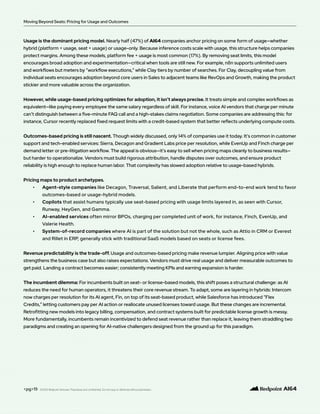
dominant pricing model. Nearly half (47%) of AI64 companies anchor pricing on some form of usage—whether hybrid (platform + usage, seat + usage) or usage-only. Because inference costs scale with usage, this structure helps companies protect margins. Among these models, platform fee + usage is most common (17%). By removing seat limits, this model encourages broad adoption and experimentation—critical when tools are still new. For example, n8n supports unlimited users and workflows but meters by “workflow executions,” while Clay tiers by number of searches. For Clay, decoupling value from individual seats encourages adoption beyond core users in Sales to adjacent teams like RevOps and Growth, making the product stickier and more valuable across the organization. However, while usage-based pricing optimizes for adoption, it isn’t always precise. It treats simple and complex workflows as equivalent—like paying every employee the same salary regardless of skill. For instance, voice AI vendors that charge per minute can’t distinguish between a five-minute FAQ call and a high-stakes claims negotiation. Some companies are addressing this: for instance, Cursor recently replaced fixed request limits with a credit-based system that better reflects underlying compute costs. Outcomes-based pricing is still nascent. Though widely discussed, only 14% of companies use it today. It’s common in customer support and tech-enabled services: Sierra, Decagon and Gradient Labs price per resolution, while EvenUp and Finch charge per demand letter or pre-litigation workflow. The appeal is obvious—it’s easy to sell when pricing maps cleanly to business results— but harder to operationalize. Vendors must build rigorous attribution, handle disputes over outcomes, and ensure product reliability is high enough to replace human labor. That complexity has slowed adoption relative to usage-based hybrids. Pricing maps to product archetypes. • Agent-style companies like Decagon, Traversal, Salient, and Liberate that perform end-to-end work tend to favor outcomes-based or usage-hybrid models. • Copilots that assist humans typically use seat-based pricing with usage limits layered in, as seen with Cursor, Runway, HeyGen, and Gamma. • AI-enabled services often mirror BPOs, charging per completed unit of work, for instance, Finch, EvenUp, and Valerie Health. • System-of-record companies where AI is part of the solution but not the whole, such as Attio in CRM or Everest and Rillet in ERP, generally stick with traditional SaaS models based on seats or license fees. Revenue predictability is the trade-off. Usage and outcomes-based pricing make revenue lumpier. Aligning price with value strengthens the business case but also raises expectations. Vendors must drive real usage and deliver measurable outcomes to get paid. Landing a contract becomes easier; consistently meeting KPIs and earning expansion is harder. The incumbent dilemma: For incumbents built on seat- or license-based models, this shift poses a structural challenge: as AI reduces the need for human operators, it threatens their core revenue stream. To adapt, some are layering in hybrids: Intercom now charges per resolution for its AI agent, Fin, on top of its seat-based product, while Salesforce has introduced “Flex Credits,” letting customers pay per AI action or reallocate unused licenses toward usage. But these changes are incremental. Retrofitting new models into legacy billing, compensation, and contract systems built for predictable license growth is messy. More fundamentally, incumbents remain incentivized to defend seat revenue rather than replace it, leaving them straddling two paradigms and creating an opening for AI-native challengers designed from the ground up for this paradigm. <pg>19 Moving Beyond Seats: Pricing for Usage and Outcomes ©2025 Redpoint Ventures. Proprietary and confidential. Do not copy or distribute without permission.
20.
AI-Native GTM: Faster
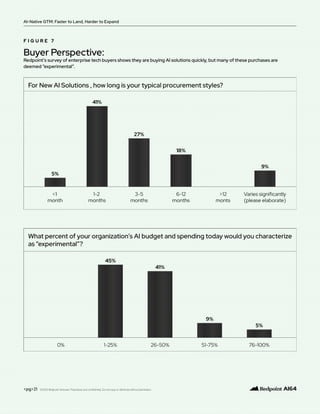
to Land, Harder to Expand <pg>20 If pricing defines how value is captured, GTM defines how it’s proven. AI-native companies are rewriting the SaaS playbook here too. Sales motions are faster, more experimental, and more post-sales intensive—reflecting both buyers’ enthusiasm and the category’s immaturity. The Rise of the Forward-Deployed Engineer (FDE). Selling AI increasingly means deploying it. Many teams embed forward- deployed engineers to scope customer problems, prototype solutions, and iterate in production. This model, borrowed from Palantir, and adopted by players like Sierra and Decagon compresses feedback loops and accelerates time-to-value, but adds operational costs and complexity as it scales. Job postings for “Forward-Deployed AI Engineer” roles have grown roughly 2,700% in the past year, underscoring how widespread the concept is becoming. The open question: is this a temporary necessity born of immature products and buyers, or a lasting feature of how AI software is sold? Sales Cycles Are Compressing: In a Redpoint survey of enterprise tech buyers, 46% reported procurement cycles of under two months for new AI solutions—unusually fast for enterprise software (Figure 7). Top-down mandates to “adopt AI” and growing executive pressure to show progress have accelerated deal velocity, giving vendors quicker entry but also raising expectations for rapid ROI. More Pilots, More Competition: Customers are piloting more AI tools in parallel, often pitting vendors head-to-head within the same workflow. Proof-of-concept performance has become the new competitive arena: products must demonstrate value quickly to survive procurement and earn expansion. With switching costs still low early on, building stickiness through workflow embedding and deep integrations is essential. Post-Sales Becomes the Growth Engine: Signing a deal is no longer the finish line—it’s the starting line. Experimental budgets and outcome-linked pricing lower the barrier to entry: in Redpoint’s survey of enterprise AI buyers, 45% said they set aside at least a quarter of their AI spend for testing (Figure 7). But vendors must now prove value to retain and grow accounts, shifting the onus from pre-sales to post-sales. Iconiq data shows faster-growing AI-native companies dedicate 31–34% of headcount to post-sales roles, roughly 10 percentage points higher than non-AI peers, a signal that sustained growth now depends more on delivery than on acquisition. ©2025 Redpoint Ventures. Proprietary and confidential. Do not copy or distribute without permission.
21.
<pg>21 AI-Native GTM: Faster
to Land, Harder to Expand F I G U R E 7 Buyer Perspective: Redpoint’s survey of enterprise tech buyers shows they are buying AI solutions quickly, but many of these purchases are deemed “experimental”. ©2025 Redpoint Ventures. Proprietary and confidential. Do not copy or distribute without permission.
22.
Building Moats in
the AI Era <pg>22 In the SaaS era, defensibility came from scale—distribution, network effects, and ecosystems that locked customers in. In the AI era, the sources of advantage look different. The same underlying models are available to everyone, switching costs are lower early on, and capital is abundant. Across the AI64, we see moats forming and compounding around context, domain depth, trust, and speed. 1. Context Matters If data was the moat of the cloud era, context is the moat of the AI era. AI is most valuable when it has the right context at the right time. The strongest products make context a by-product of use, not an extra step. Cursor exemplifies this: as the editor itself, it always knows what the developer is seeing, what they’ve just done, and what they’re likely to do next. It tracks the last n actions to predict the (n + 1)th, giving the model a continuous, high-fidelity understanding of user intent. Products that own the workflow own the context, and with it, precision, stickiness, and defensibility. 2. Data Moats Are Evolving As foundation models improve and vendors like Mercor make large-scale datasets more accessible, owning proprietary data is no longer enough. The real defensibility now lies in context-rich feedback loops: continuous signals that come from being deeply embedded in a user’s workflow. When the model is the product, every interaction becomes an opportunity to improve. It’s a break from the SaaS era, where incorporating feedback was slow and manual; in AI, learning can happen seamlessly and in real time. That’s why distribution, i.e. embedding into the flow of work, has become the true data advantage. Abridge’s performance, for instance, improves as it learns from real-world physician interactions across large- scale deployments, capturing the linguistic and contextual nuances that drive clinical accuracy at scale. In AI, the edge is shifting from owning proprietary data to learning from it faster. 3. Vertical Specialization Depth is beating breadth. Nearly half (44%) of the AI64 companies are vertical specialists compared to just 14% in the Bessemer Cloud Index, which tracks leading SaaS companies. This marks a shift toward domain depth over generality. Companies like Legora in law, Liberate in insurance, and Gradient in financial services exemplify this. In AI, workflows often involve agents making decisions or drafting actions. That requires deep domain context. Buyers want solutions that understand their world out of the box, not a generic platform they need to retrofit. Vertical players tailor their solutions to industry nuances, integrate with legacy systems of record, and align with domain-specific regulations and edge cases, creating switching costs that horizontal tools can’t match. 4. Brand and Credibility In a market flooded with hype and “demoware,” brand is a competitive advantage. Enterprises are moving from pilots to production, but they’re cautious. Vendors that prove real ROI through published case studies, measurable outcomes, and reference customers stand out fast. Companies like Sierra and Decagon have leaned into transparency, quantifying results like resolution rates, accuracy, and time-to-value. 5. Capital as a Moat In today’s market, investors are racing to anoint winners in key categories, often ahead of fundamental metrics. That kingmaking effect gives select companies the resources to outspend and outbuild peers, investing aggressively in product, GTM, and undercutting competitors to capture share. In a market moving this fast, perception can quickly become reality, and capital itself becomes the moat. ©2025 Redpoint Ventures. Proprietary and confidential. Do not copy or distribute without permission.
23.
<pg>23 The AI application
wave is moving faster than any previous technology cycle. For founders, this creates unprecedented opportunity but also a brutally competitive landscape where speed, focus, and credibility matter more than ever. Based on what we’ve observed across the AI64 and the broader market, here are five principles to keep in mind. 1. Figure out what’s truly proprietary. Foundation model companies are aggressively moving up the stack. OpenAI’s recent announcement that it is entering the hiring market is only the latest example of how quickly today’s platforms can encroach on new categories. Founders must be crystal clear about what makes their product defensible: proprietary feedback loops, vertical-specific workflows or solving the last-mile problem of embedding AI reliably into enterprise workflows. Anything less risks being commoditized. 2. Outlearn the market. Velocity has always mattered, but especially now when model capabilities shift by the week and yesterday’s breakthroughs quickly become table stakes. The half-life of an AI advantage is short. The best teams treat speed not just as execution, but as strategy: shipping fast, learning fast, and adapting faster than the market can settle. 3. Sell consultatively. Many AI applications target areas of the business that buyers have never thought of as “technology categories.” That means sales is not just about pitching a product, but about teaching buyers a new way of working. Founders who embed themselves in customer processes, guide them through this transition, and make adoption feel low-risk will stand apart. 4. Invest in brand early. With barriers to building products at historic lows, every category is flooded with competitors. The companies that break out are the ones that establish credibility and trust early. That means cultivating prominent champions, publishing case studies, and earning the right to be the default vendor in your category. In spaces without a clear leader, the opportunity is to “suck the air out of the room” by becoming synonymous with the problem you solve. 5. Maximize your TAM. It’s smart to start narrow—with a tightly defined workflow or customer segment. But to build a category-defining company, you need to expand into a market large enough to sustain long-term growth. That requires building additional products, broadening your scope, and ultimately becoming a platform. The best founders balance near-term focus with a clear roadmap to owning a much larger market. Lessons for Builders: Building Moats in the AI Era ©2025 Redpoint Ventures. Proprietary and confidential. Do not copy or distribute without permission.
24.
<pg>24 The last two
years have made one thing clear: the real story of AI is just beginning. Foundation models may power the engines, but it is the companies that reimagine workflows, build trust with enterprises, and deliver measurable outcomes that will create enduring value. At Redpoint, we could not be more energized about the decade ahead. If you’re building in AI—whether as an early founder with a bold idea or a scaling company pushing the frontier forward—we’d love to hear from you. ©2025 Redpoint Ventures. Proprietary and confidential. Do not copy or distribute without permission. Conclusion
25.
M A P
P I N G T H E N E X T G E N E R AT I O N O F E N T E R P R I S E S O F T W A R E

 Most read
 Most read
 Most read