上智大学文学部英文学科
OPEN CAMPUS DEMONSTRATION:
Artificial Intelligence (AI) and Fake
News:
THE AUTHENTICITY ALGORITHM
02/08/25 11:30-12:15 6-205
Dr Richard Pinner
rpinner@sophia.ac.jp
@uniliterate
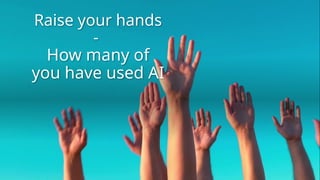
Raise your hands
-
How many of
you have used AI
But what do we
mean by AI?
A vast collection of different technologies,
many of which are so integrated into our
lives we don't even see them. Most of
what we call 'AI' today is, at its heart, a
linguistic prediction engine.
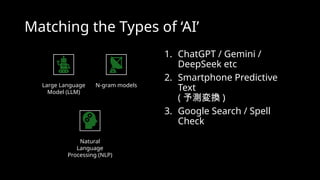
Matching the Types of ‘AI’
Large Language
Model (LLM)
N-gram models
Natural
Language
Processing (NLP)
1. ChatGPT / Gemini /
DeepSeek etc
2. Smartphone Predictive
Text
( 予測変換 )
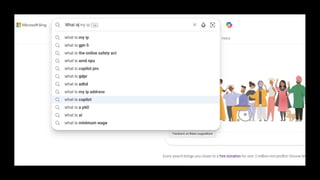
3. Google Search / Spell
Check
Comparing AI Types
Large Language Models
LLMs process massive data sets to generate human-like text
and understand context, enabling advanced conversations.
N-Grams Predictive Models
N-Grams use sequences of words to predict the next word
but often lack deeper language comprehension.
Natural Language Processing
NLP is the wider field that allows computers to interpret,
analyse, and respond to human language in multiple forms.
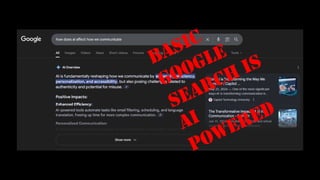
Basic
Google
Search is
AI
powered
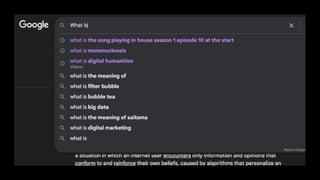
Filter
Bubbles
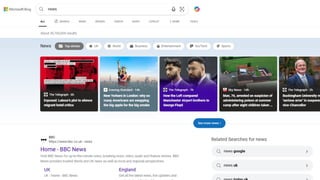
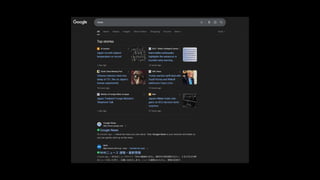
This means that a large amount
of our new information comes
to us FILTERED through AI
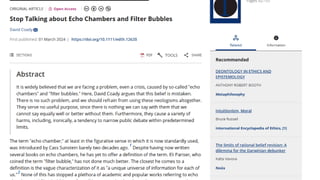
Q: What is a FILTER BUBBLE?
(Cf Echo Chamber)
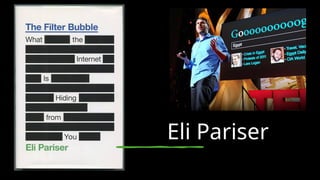
Eli Pariser
Confirmation Bias
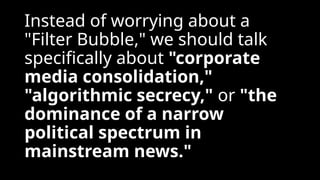
Instead of worrying about a
"Filter Bubble," we should talk
specifically about "corporate
media consolidation,"
"algorithmic secrecy," or "the
dominance of a narrow
political spectrum in
mainstream news."
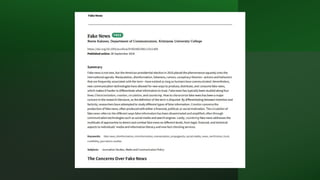
Fake News?
•So, are FILTER BUBBLES
themselves FAKE NEWS?
•What is Fake News?
•Whose name is most strongly
associated with Fake News?
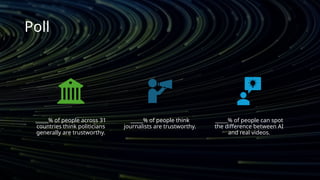
Poll
_____% of people across 31
countries think politicians
generally are trustworthy.
_____% of people think
journalists are trustworthy.
_____% of people can spot
the difference between AI
and real videos.
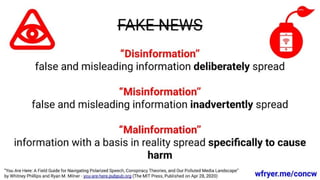
What is Fake News?
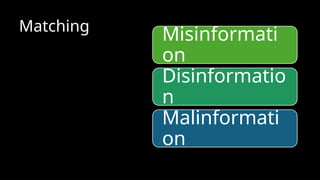
Matching
Misinformati
on
Disinformatio
n
Malinformati
on
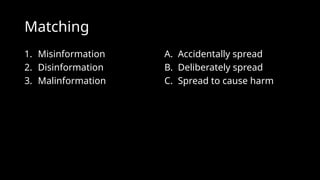
Matching
A. Accidentally spread
B. Deliberately spread
C. Spread to cause harm
1. Misinformation
2. Disinformation
3. Malinformation
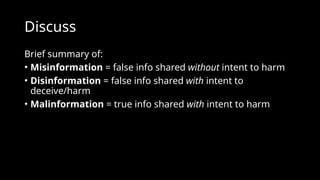
Discuss
Brief summary of:
• Misinformation = false info shared without intent to harm
• Disinformation = false info shared with intent to
deceive/harm
• Malinformation = true info shared with intent to harm
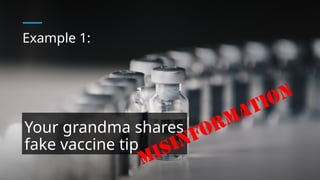
Example 1:
Your grandma shares
fake vaccine tip
MISINFORMATION
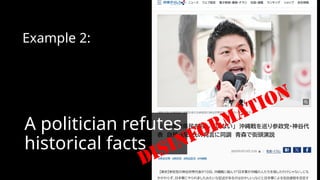
Example 2:
A politician refutes
historical facts
DISINFORMATION
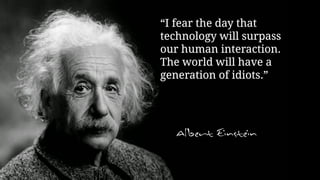
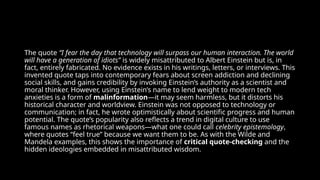
The quote “I fear the day that technology will surpass our human interaction. The world
will have a generation of idiots” is widely misattributed to Albert Einstein but is, in
fact, entirely fabricated. No evidence exists in his writings, letters, or interviews. This
invented quote taps into contemporary fears about screen addiction and declining
social skills, and gains credibility by invoking Einstein’s authority as a scientist and
moral thinker. However, using Einstein’s name to lend weight to modern tech
anxieties is a form of malinformation—it may seem harmless, but it distorts his
historical character and worldview. Einstein was not opposed to technology or
communication; in fact, he wrote optimistically about scientific progress and human
potential. The quote’s popularity also reflects a trend in digital culture to use
famous names as rhetorical weapons—what one could call celebrity epistemology,
where quotes “feel true” because we want them to be. As with the Wilde and
Mandela examples, this shows the importance of critical quote-checking and the
hidden ideologies embedded in misattributed wisdom.
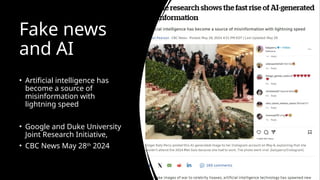
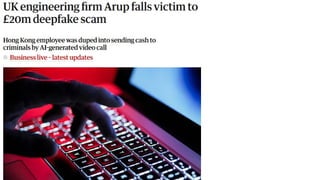
Fake news
and AI
• Artificial intelligence has
become a source of
misinformation with
lightning speed
• Google and Duke University
Joint Research Initiative,
• CBC News May 28th
2024
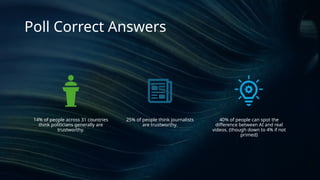
Poll Correct Answers
14% of people across 31 countries
think politicians generally are
trustworthy.
25% of people think journalists
are trustworthy.
40% of people can spot the
difference between AI and real
videos. (though down to 4% if not
primed)
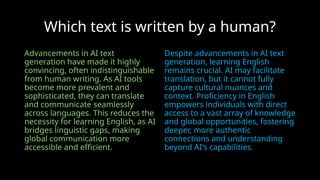
Bot or Not? Lancaster University
Forensic Linguist Clair Hardacre’s
research.
Which text is written by a human?
Advancements in AI text
generation have made it highly
convincing, often indistinguishable
from human writing. As AI tools
become more prevalent and
sophisticated, they can translate
and communicate seamlessly
across languages. This reduces the
necessity for learning English, as AI
bridges linguistic gaps, making
global communication more
accessible and efficient.
Despite advancements in AI text
generation, learning English
remains crucial. AI may facilitate
translation, but it cannot fully
capture cultural nuances and
context. Proficiency in English
empowers individuals with direct
access to a vast array of knowledge
and global opportunities, fostering
deeper, more authentic
connections and understanding
beyond AI's capabilities.
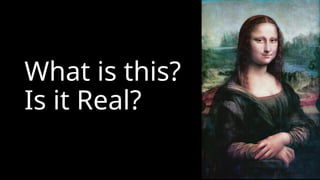
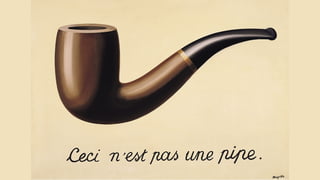
What is this?
Is it Real?
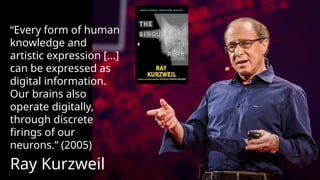
Ray Kurzweil
“Every form of human
knowledge and
artistic expression […]
can be expressed as
digital information.
Our brains also
operate digitally,
through discrete
firings of our
neurons.” (2005)
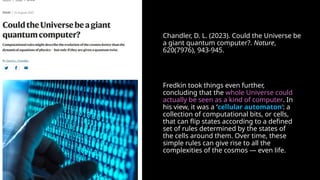
Chandler, D. L. (2023). Could the Universe be
a giant quantum computer?. Nature,
620(7976), 943-945.
Fredkin took things even further,
concluding that the whole Universe could
actually be seen as a kind of computer. In
his view, it was a ‘cellular automaton’: a
collection of computational bits, or cells,
that can flip states according to a defined
set of rules determined by the states of
the cells around them. Over time, these
simple rules can give rise to all the
complexities of the cosmos — even life.
Not all bad…
But are there
any positive
practical uses of
AI being able to
accurately
simulate human
speech?
Can you think of
any examples?
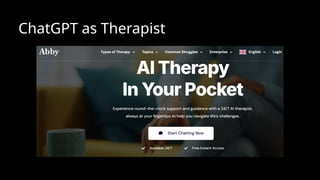
ChatGPT as Therapist
AI Can Improve your writing?
• Agree or Disagree
What year was the first book written by
a computer?
•1984
•1994
•2004
•2014
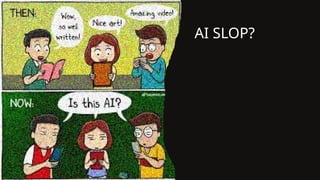
AI SLOP?
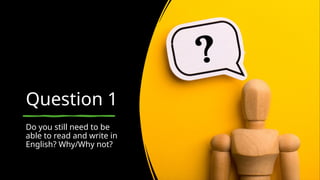
Question 1
Do you still need to be
able to read and write in
English? Why/Why not?
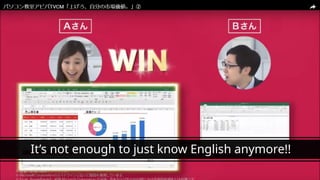
It’s not enough to just know English anymore!!
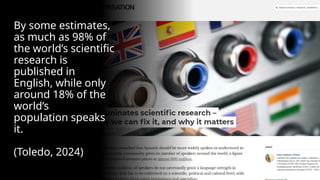
By some estimates,
as much as 98% of
the world’s scientific
research is
published in
English, while only
around 18% of the
world’s
population speaks
it.
(Toledo, 2024)
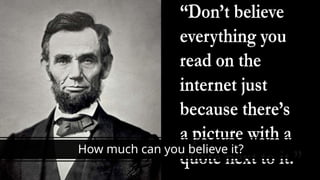
How much can you believe it?
How Fake News Spreads
• https://www.youtube.com/watch?v=cSKGa_7XJkg
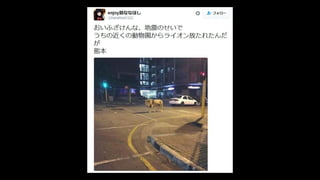
Look at the following stories.
Can you spot which one is
false? Is one of them
obviously a joke?
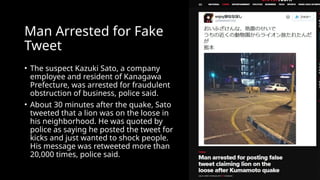
Man Arrested for Fake
Tweet
• The suspect Kazuki Sato, a company
employee and resident of Kanagawa
Prefecture, was arrested for fraudulent
obstruction of business, police said.
• About 30 minutes after the quake, Sato
tweeted that a lion was on the loose in
his neighborhood. He was quoted by
police as saying he posted the tweet for
kicks and just wanted to shock people.
His message was retweeted more than
20,000 times, police said.
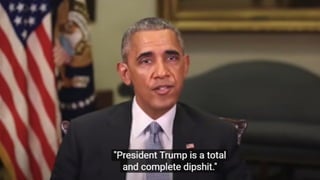
• https://youtu.be/cQ54GDm1eL0?si=DDHw-L_cupT4zlaK
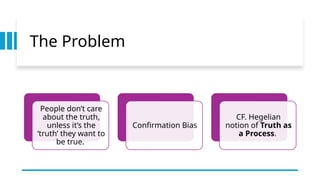
The Problem
People don’t care
about the truth,
unless it’s the
‘truth’ they want to
be true.
Confirmation Bias
CF. Hegelian
notion of Truth as
a Process.
Post-Truth
What is Post-Truth?
Post-truth refers to a situation in contemporary
politics where facts have lost their significance in
public discourse. It is characterized by the
prioritization of personal beliefs over factual accuracy.
Post-truth politics disregards the importance of
truth and instead focuses on appealing to
emotions for political gain.
AI generated definition based on: International Encyclopedia of
Human Geography (Second Edition), 2020
This Photo by Unknown Author is licensed under CC BY-SA
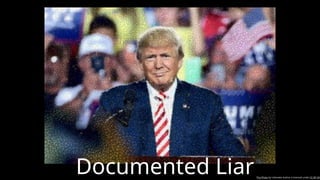
Documented Liar
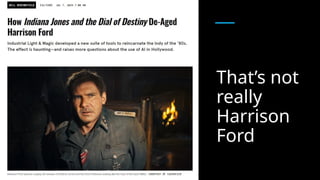
That’s not
really
Harrison
Ford
How can you spot if a
text is written by a
human?
Forensic Linguistics
(which is reliant on computer analysis of a
corpus, very similar to how many LLM and N-
Grams work)
Using AI to
enhance the
learning
process
rather than
bypassing it.
Closing thoughts…
• AI is rapidly evolving and becoming
part of everyday life.
• Our information environment is
increasingly shaped by algorithms.
• Truth and authenticity are harder to
define in the digital age.
• Education must adapt—but language
learning still matters.
• Critical thinking is key to navigating
misinformation and bias.
• Human connection supports deeper,
more meaningful language learning.
• In the age of AI, understanding how
and why we learn is more important
than ever
Understanding
and verifying
authenticity
will be a
crucial skill
more than
ever
Questions?
Thanks for your
attention
Download the slides and
continue the conversation
• www.sophia.ac.jp
• www.uniliterate.com
• rpinner@sophia.ac.jp