What is
Aquaculture?
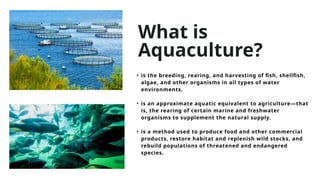
• isthe breeding, rearing, and harvesting of fish, shellfish,
algae, and other organisms in all types of water
environments.
• is an approximate aquatic equivalent to agriculture—that
is, the rearing of certain marine and freshwater
organisms to supplement the natural supply.
• is a method used to produce food and other commercial
products, restore habitat and replenish wild stocks, and
rebuild populations of threatened and endangered
species.
5.
Brief Background
of Aquculturein
the Philippines
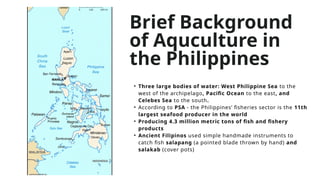
• Three large bodies of water: West Philippine Sea to the
west of the archipelago, Pacific Ocean to the east, and
Celebes Sea to the south.
• According to PSA - the Philippines’ fisheries sector is the 11th
largest seafood producer in the world
• Producing 4.3 million metric tons of fish and fishery
products
• Ancient Filipinos used simple handmade instruments to
catch fish salapang (a pointed blade thrown by hand) and
salakab (cover pots)
6.
Brief Background
of Aquculturein
the Philippines
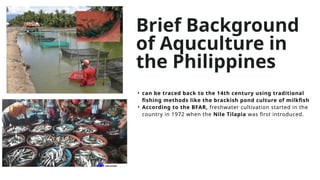
• can be traced back to the 14th century using traditional
fishing methods like the brackish pond culture of milkfish
• According to the BFAR, freshwater cultivation started in the
country in 1972 when the Nile Tilapia was first introduced.
7.
Types of
Aquaculture
Systems inthe
Philippines
Freshwater
System
Today, Filipino fishermen have gone
far. They have used motorized bancas
and many other fishing
paraphernalias to make fishing
convenient and productive.
Aquaculture in the Philippines is now
popular since it has become
controllable and manageable. There
are different types of aquaculture
systems:
Marine System
Brackish System
8.
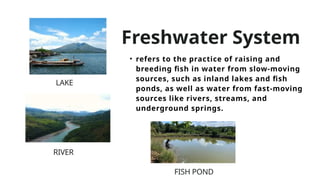
Freshwater System
• refersto the practice of raising and
breeding fish in water from slow-moving
sources, such as inland lakes and fish
ponds, as well as water from fast-moving
sources like rivers, streams, and
underground springs.
LAKE
RIVER
FISH POND
9.
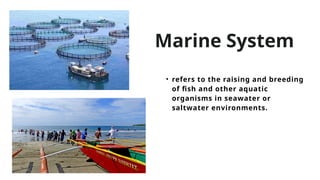
Marine System
• refersto the raising and breeding
of fish and other aquatic
organisms in seawater or
saltwater environments.
11.
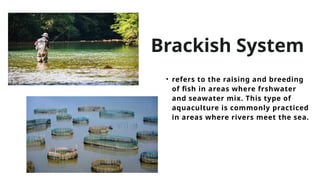
Brackish System
• refersto the raising and breeding
of fish in areas where frshwater
and seawater mix. This type of
aquaculture is commonly practiced
in areas where rivers meet the sea.
12.
Career
Opportunities in
Fishery
• Aquaculturist
•Fishery technician
• Fish Farm Caretaker
• Fish Farm Worker
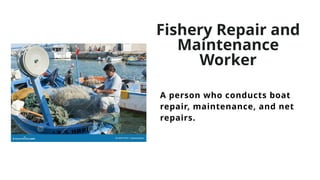
• Fishery Repair and
Maintenance Worker
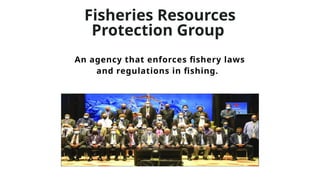
• Fisheries Resources
protection Group
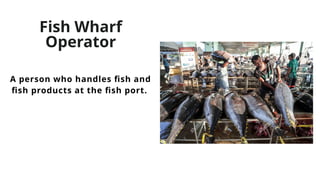
• Fish Wharf Operator
• Fish Research Officer
The fishery sector offers a wide range
of career opportunities for aspiring
students, encompassing fields such
as fish farming, marine conservation,
and research.
13.
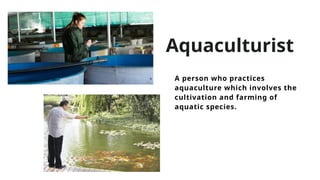
Aquaculturist
A person whopractices
aquaculture which involves the
cultivation and farming of
aquatic species.
14.
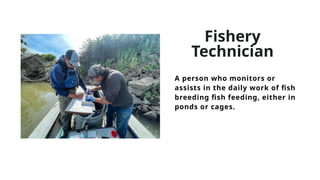
Fishery
Technician
A person whomonitors or
assists in the daily work of fish
breeding fish feeding, either in
ponds or cages.
15.
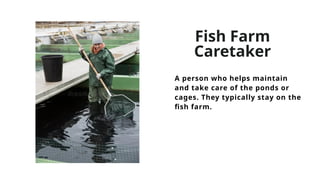
Fish Farm
Caretaker
A personwho helps maintain
and take care of the ponds or
cages. They typically stay on the
fish farm.
16.
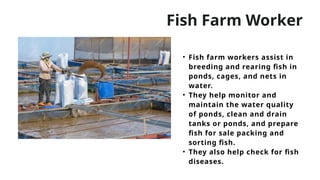
Fish Farm Worker
•Fish farm workers assist in
breeding and rearing fish in
ponds, cages, and nets in
water.
• They help monitor and
maintain the water quality
of ponds, clean and drain
tanks or ponds, and prepare
fish for sale packing and
sorting fish.
• They also help check for fish
diseases.
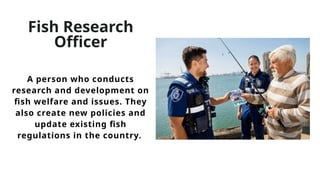
Fish Research
Officer
A personwho conducts
research and development on
fish welfare and issues. They
also create new policies and
update existing fish
regulations in the country.
21.
Business
Opportunities in
Fishery
The fisheryindustry offers business
opportunities, including various roles
that provide a wide range of
entrepeneurial possibilities, from
managing fish farms and hatcheries
to developing innovative solutions in
seafood processing and retail.
Fish Farmer
Owner
Fish Distributor
or Trader
22.
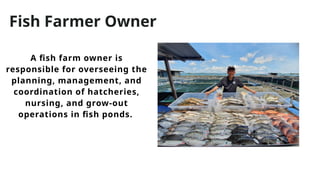
Fish Farmer Owner
Afish farm owner is
responsible for overseeing the
planning, management, and
coordination of hatcheries,
nursing, and grow-out
operations in fish ponds.
23.
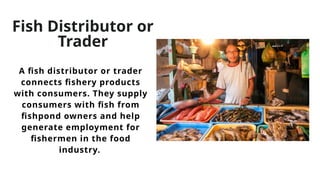
Fish Distributor or
Trader
Afish distributor or trader
connects fishery products
with consumers. They supply
consumers with fish from
fishpond owners and help
generate employment for
fishermen in the food
industry.

 Most read
 Most read
 Most read