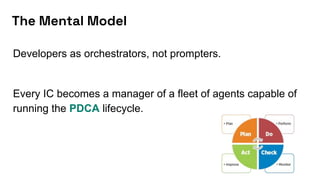
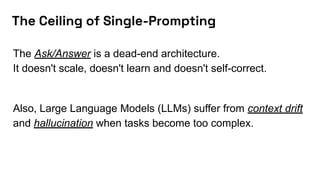
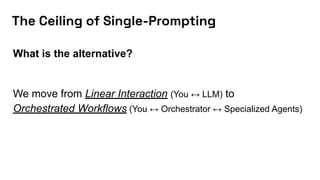
The transition from "Chat-based AI" to "Agentic Workflows" represents a fundamental shift in software engineering. As we move toward AI-Driven Development (AIDD), the primary challenge is no longer just code generation, it is the orchestration, reliability, and safety of autonomous agents operating within complex, enterprise-scale environments.
This presentation provides a technical blueprint for building multi-agent systems that go beyond simple prompting. We explore the architectural patterns required to move AI from a suggestion tool to a functional, distributed workforce capable of managing entire development lifecycles.
Core Technical Discussion:
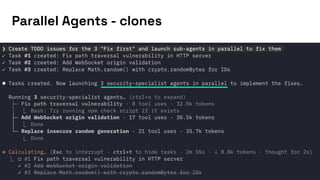
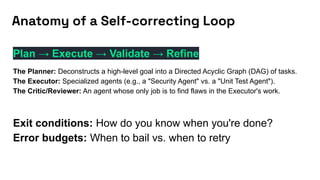
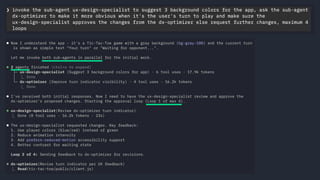
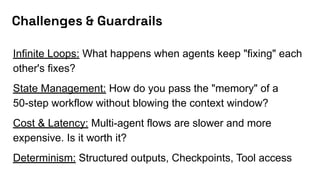
The Agentic Loop: Implementing self-correction and iterative refinement architectures to ensure code integrity and reduce hallucination rates.
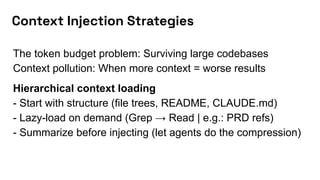
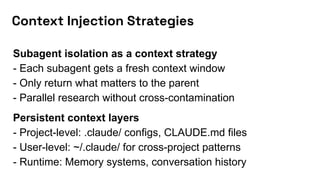
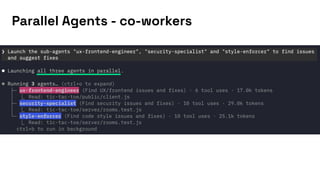
Hierarchical Context Management: Strategies for subagent isolation and "Lazy-load" context injection to maintain high-fidelity reasoning in million-line codebases.
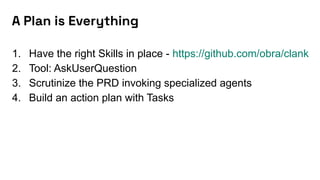
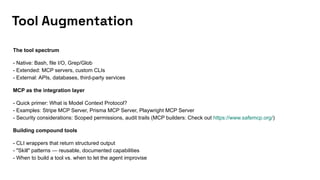
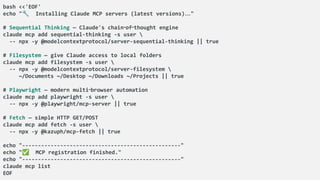
Tool Augmentation & The Model Context Protocol (MCP): A deep dive into allowing agents to interact with file systems and APIs through structured, permissioned tool-use frameworks.
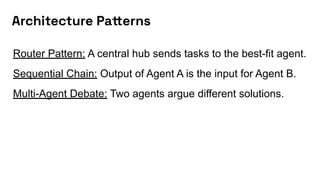
Production-Ready Orchestration: A look at the "Orchestrator-Specialist" pattern, focusing on observability, logging, and failure recovery, essential for deploying autonomous agents in mission-critical environments.
This session was designed for builders and architects focused on the intersection of AI autonomy and system stability. By formalizing these workflows, we move toward a more predictable and secure future for autonomous software engineering.
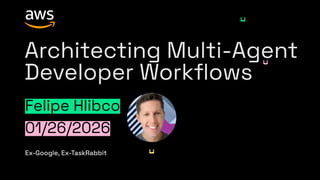
This session was hosted at Amazon AWS Builder Loft in San Francisco, CA — https://luma.com/amazon-hack-day-1-26-2026
 Most read