Running - Bruised Calf
       For Dummies
Symptoms
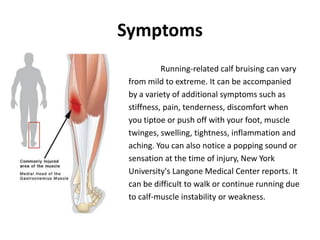
           Running-related calf bruising can vary
 from mild to extreme. It can be accompanied
 by a variety of additional symptoms such as
 stiffness, pain, tenderness, discomfort when
 you tiptoe or push off with your foot, muscle
 twinges, swelling, tightness, inflammation and
 aching. You can also notice a popping sound or
 sensation at the time of injury, New York
 University's Langone Medical Center reports. It
 can be difficult to walk or continue running due
 to calf-muscle instability or weakness.
Causes
          You can develop a bruised calf if
you overuse the tendons, muscles, cartilage
and ligaments in the calf by running
excessively, increasing the intensity of your
routine or by not taking proper breaks.
Running on unpaved roads or loose dirt can
also stress your limbs, resulting in bruising.
Bruising can occur if you strain or tear
muscles or ligaments in the calf by
stretching or stressing them beyond their
capability. Calf bruising can also occur if you
fall or collide with an object while running.
Treatments
        Rest and place an ice pack against your calf to help constrict
the blood vessels and reduce bruising and other symptoms. Compress
your lower leg with an elastic bandage or sleeve. Elevate your calf to
help reduce blood and fluid accumulation and speed up the healing
process. If you have to walk, place a heel pad in your shoe to help raise
your heel and reduce strain from your calf. Seek medical attention if
bruising is chronic or does not subside with home treatment.
Prevention
To prevent additional calf bruising, strengthen your calves with exercises such
as calf raises. This will help them better absorb stress while running. Always
warm up and stretch out your calf muscles before you run. This will help make
the calf muscles stronger, more pliable and less likely to become injured
during exercise. Ask a coach or trainer to teach you the proper way to run to
help decrease stress on the calf muscles.

Running - bruised calf

  • 1.
    Running - BruisedCalf For Dummies
  • 2.
    Symptoms Running-related calf bruising can vary from mild to extreme. It can be accompanied by a variety of additional symptoms such as stiffness, pain, tenderness, discomfort when you tiptoe or push off with your foot, muscle twinges, swelling, tightness, inflammation and aching. You can also notice a popping sound or sensation at the time of injury, New York University's Langone Medical Center reports. It can be difficult to walk or continue running due to calf-muscle instability or weakness.
  • 3.
    Causes You can develop a bruised calf if you overuse the tendons, muscles, cartilage and ligaments in the calf by running excessively, increasing the intensity of your routine or by not taking proper breaks. Running on unpaved roads or loose dirt can also stress your limbs, resulting in bruising. Bruising can occur if you strain or tear muscles or ligaments in the calf by stretching or stressing them beyond their capability. Calf bruising can also occur if you fall or collide with an object while running.
  • 4.
    Treatments Rest and place an ice pack against your calf to help constrict the blood vessels and reduce bruising and other symptoms. Compress your lower leg with an elastic bandage or sleeve. Elevate your calf to help reduce blood and fluid accumulation and speed up the healing process. If you have to walk, place a heel pad in your shoe to help raise your heel and reduce strain from your calf. Seek medical attention if bruising is chronic or does not subside with home treatment.
  • 5.
    Prevention To prevent additionalcalf bruising, strengthen your calves with exercises such as calf raises. This will help them better absorb stress while running. Always warm up and stretch out your calf muscles before you run. This will help make the calf muscles stronger, more pliable and less likely to become injured during exercise. Ask a coach or trainer to teach you the proper way to run to help decrease stress on the calf muscles.