Sponsored by the U.S. Department of State
Bureau of Educational and Cultural Affairs
Understanding Media Literacy
and Managing Misinformation
Damian Radcliffe
Carolyn S. Chambers Professor of Journalism
University of Oregon
20th July 2022
Sponsored by the U.S. Department of State
Bureau of Educational and Cultural Affairs
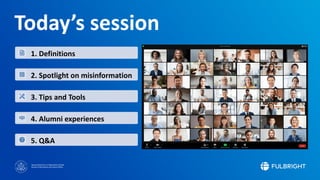
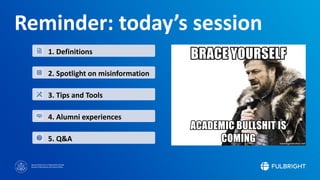
Today’s session
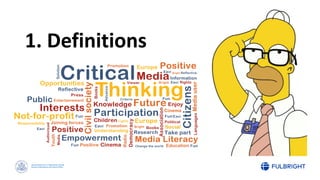
1. Definitions
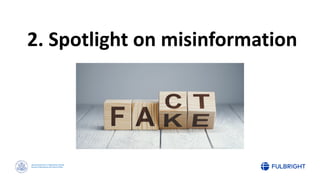
2. Spotlight on misinformation
3. Tips and Tools
4. Alumni experiences
5. Q&A
Sponsored by the U.S. Department of State
Bureau of Educational and Cultural Affairs
I know it’s Day Three….
(But hopefully that sounds good)
Sponsored by the U.S. Department of State
Bureau of Educational and Cultural Affairs
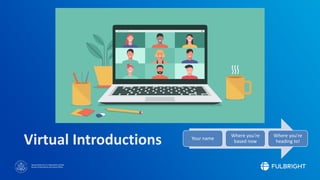
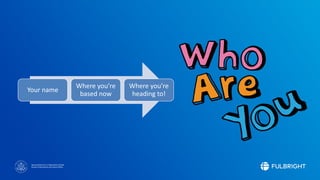
Virtual Introductions Your name
Where you’re
based now
Where you’re
heading to!
Sponsored by the U.S. Department of State
Bureau of Educational and Cultural Affairs
Your name
Where you’re
based now
Where you’re
heading to!
Sponsored by the U.S. Department of State
Bureau of Educational and Cultural Affairs
Sponsored by the U.S. Department of State
Bureau of Educational and Cultural Affairs
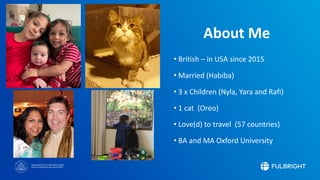
About Me
• British – in USA since 2015
• Married (Habiba)
• 3 x Children (Nyla, Yara and Rafi)
• 1 cat (Oreo)
• Love(d) to travel (57 countries)
• BA and MA Oxford University
Sponsored by the U.S. Department of State
Bureau of Educational and Cultural Affairs
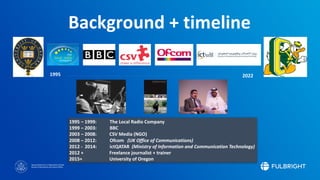
1995 – 1999: The Local Radio Company
1999 – 2003: BBC
2003 – 2008: CSV Media (NGO)
2008 – 2012: Ofcom (UK Office of Communications)
2012 - 2014: ictQATAR (Ministry of Information and Communication Technology)
2012 + Freelance journalist + trainer
2015+ University of Oregon
Background + timeline
1995 2022
Sponsored by the U.S. Department of State
Bureau of Educational and Cultural Affairs
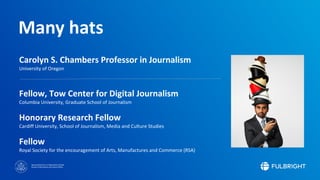
Many hats
Carolyn S. Chambers Professor in Journalism
University of Oregon
Fellow, Tow Center for Digital Journalism
Columbia University, Graduate School of Journalism
Honorary Research Fellow
Cardiff University, School of Journalism, Media and Culture Studies
Fellow
Royal Society for the encouragement of Arts, Manufactures and Commerce (RSA)
Sponsored by the U.S. Department of State
Bureau of Educational and Cultural Affairs
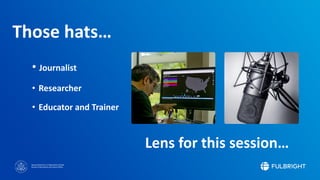
Lens for this session…
• Journalist
• Researcher
• Educator and Trainer
Those hats…
Sponsored by the U.S. Department of State
Bureau of Educational and Cultural Affairs
Sponsored by the U.S. Department of State
Bureau of Educational and Cultural Affairs
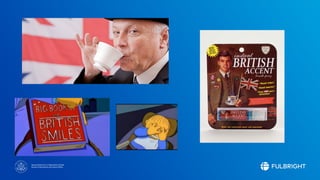
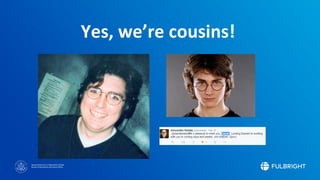
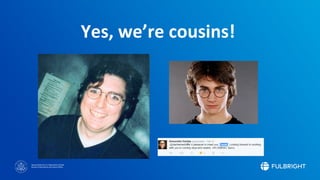
Yes, we’re cousins!
Sponsored by the U.S. Department of State
Bureau of Educational and Cultural Affairs
Sponsored by the U.S. Department of State
Bureau of Educational and Cultural Affairs
Reminder: today’s session
1. Definitions
2. Spotlight on misinformation
3. Tips and Tools
4. Alumni experiences
5. Q&A
Sponsored by the U.S. Department of State
Bureau of Educational and Cultural Affairs
1. Definitions
2. Spotlight on misinformation
3. Tips and Tools
4. Alumni experiences
5. Q&A
Sponsored by the U.S. Department of State
Bureau of Educational and Cultural Affairs
Sponsored by the U.S. Department of State
Bureau of Educational and Cultural Affairs
Sponsored by the U.S. Department of State
Bureau of Educational and Cultural Affairs
1. Definitions
Sponsored by the U.S. Department of State
Bureau of Educational and Cultural Affairs
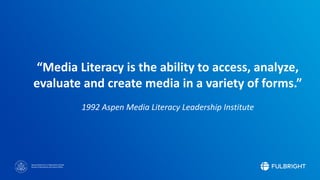
“Media Literacy is the ability to access, analyze,
evaluate and create media in a variety of forms.”
1992 Aspen Media Literacy Leadership Institute
Sponsored by the U.S. Department of State
Bureau of Educational and Cultural Affairs
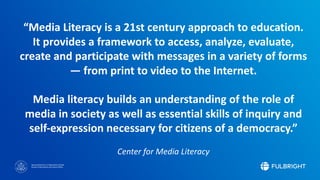
“Media Literacy is a 21st century approach to education.
It provides a framework to access, analyze, evaluate,
create and participate with messages in a variety of forms
— from print to video to the Internet.
Media literacy builds an understanding of the role of
media in society as well as essential skills of inquiry and
self-expression necessary for citizens of a democracy.”
Center for Media Literacy
Sponsored by the U.S. Department of State
Bureau of Educational and Cultural Affairs
Sponsored by the U.S. Department of State
Bureau of Educational and Cultural Affairs
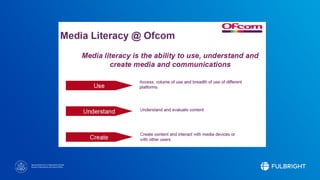
Media literacy enables people to have the skills, knowledge and
understanding to make full use of the opportunities presented by both
traditional and new communications services.
Media literacy also helps people to manage content and
communications, and protect themselves and their families from the
potential risks associated with using these services.
Evolving Ofcom definition
Sponsored by the U.S. Department of State
Bureau of Educational and Cultural Affairs
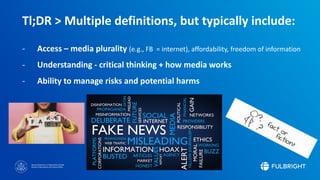
Tl;DR > Multiple definitions, but typically include:
- Access – media plurality (e.g., FB = internet), affordability, freedom of information
- Understanding - critical thinking + how media works
- Ability to manage risks and potential harms
Sponsored by the U.S. Department of State
Bureau of Educational and Cultural Affairs
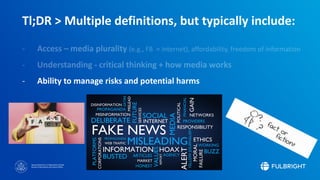
Tl;DR > Multiple definitions, but typically include:
- Ability to manage risks and potential harms
Sponsored by the U.S. Department of State
Bureau of Educational and Cultural Affairs
2. Spotlight on misinformation
Sponsored by the U.S. Department of State
Bureau of Educational and Cultural Affairs
Sponsored by the U.S. Department of State
Bureau of Educational and Cultural Affairs
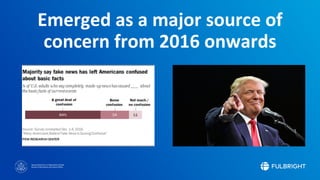
Emerged as a major source of
concern from 2016 onwards
Sponsored by the U.S. Department of State
Bureau of Educational and Cultural Affairs
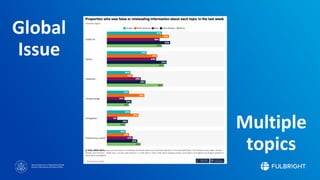
Global
Issue
Multiple
topics
Sponsored by the U.S. Department of State
Bureau of Educational and Cultural Affairs
Sponsored by the U.S. Department of State
Bureau of Educational and Cultural Affairs
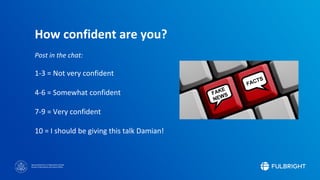
How confident are you?
Post in the chat:
1-3 = Not very confident
4-6 = Somewhat confident
7-9 = Very confident
10 = I should be giving this talk Damian!
Sponsored by the U.S. Department of State
Bureau of Educational and Cultural Affairs
Sponsored by the U.S. Department of State
Bureau of Educational and Cultural Affairs
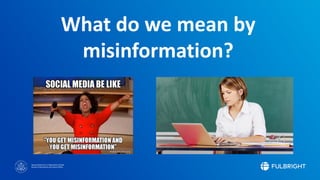
What do we mean by
misinformation?
Sponsored by the U.S. Department of State
Bureau of Educational and Cultural Affairs
Sponsored by the U.S. Department of State
Bureau of Educational and Cultural Affairs
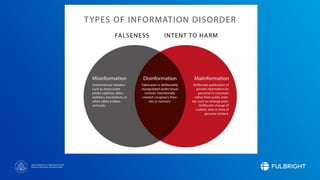
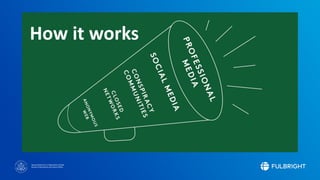
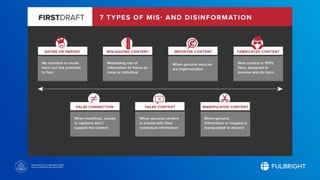
How it works
Sponsored by the U.S. Department of State
Bureau of Educational and Cultural Affairs
Sponsored by the U.S. Department of State
Bureau of Educational and Cultural Affairs
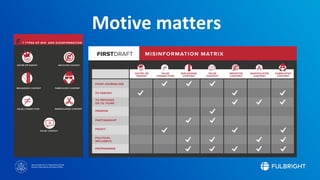
Motive matters
Sponsored by the U.S. Department of State
Bureau of Educational and Cultural Affairs
Examples
Sponsored by the U.S. Department of State
Bureau of Educational and Cultural Affairs
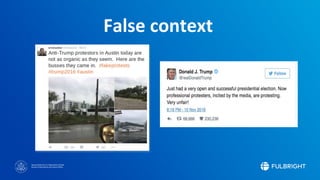
False context
Sponsored by the U.S. Department of State
Bureau of Educational and Cultural Affairs
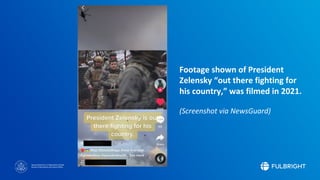
Footage shown of President
Zelensky “out there fighting for
his country,” was filmed in 2021.
(Screenshot via NewsGuard)
Sponsored by the U.S. Department of State
Bureau of Educational and Cultural Affairs
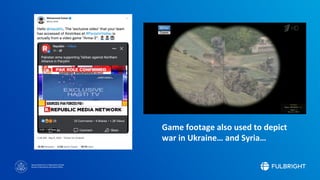
Game footage also used to depict
war in Ukraine… and Syria…
Sponsored by the U.S. Department of State
Bureau of Educational and Cultural Affairs
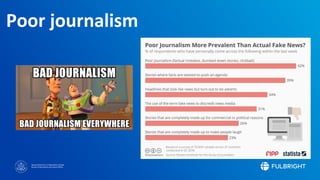
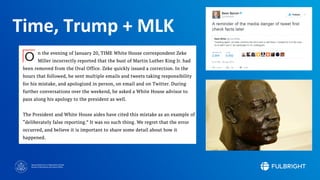
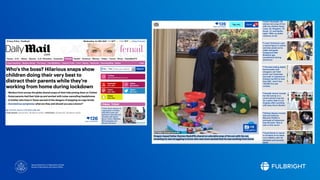
Poor journalism
Sponsored by the U.S. Department of State
Bureau of Educational and Cultural Affairs
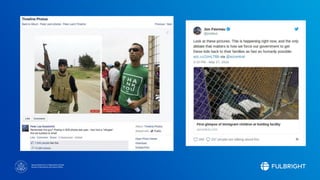
Time, Trump + MLK
Sponsored by the U.S. Department of State
Bureau of Educational and Cultural Affairs
Sponsored by the U.S. Department of State
Bureau of Educational and Cultural Affairs
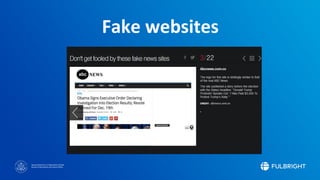
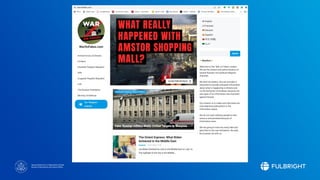
Fake websites
Sponsored by the U.S. Department of State
Bureau of Educational and Cultural Affairs
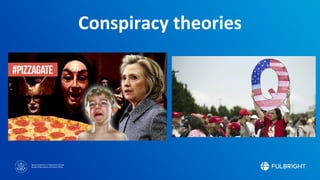
Conspiracy theories
Sponsored by the U.S. Department of State
Bureau of Educational and Cultural Affairs
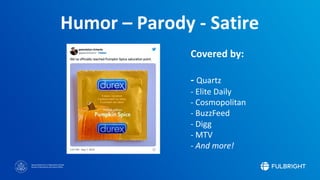
Covered by:
- Quartz
- Elite Daily
- Cosmopolitan
- BuzzFeed
- Digg
- MTV
- And more!
Humor – Parody - Satire
Sponsored by the U.S. Department of State
Bureau of Educational and Cultural Affairs
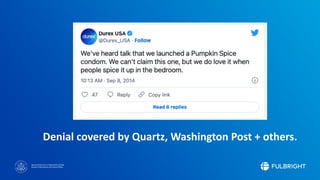
Denial covered by Quartz, Washington Post + others.
Sponsored by the U.S. Department of State
Bureau of Educational and Cultural Affairs
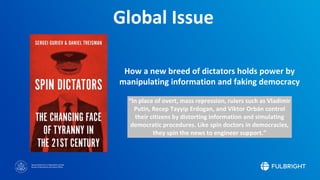
Global Issue
“In place of overt, mass repression, rulers such as Vladimir
Putin, Recep Tayyip Erdogan, and Viktor Orbán control
their citizens by distorting information and simulating
democratic procedures. Like spin doctors in democracies,
they spin the news to engineer support.”
How a new breed of dictators holds power by
manipulating information and faking democracy
Sponsored by the U.S. Department of State
Bureau of Educational and Cultural Affairs
Sponsored by the U.S. Department of State
Bureau of Educational and Cultural Affairs
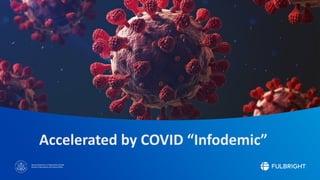
Accelerated by COVID “Infodemic”
Sponsored by the U.S. Department of State
Bureau of Educational and Cultural Affairs
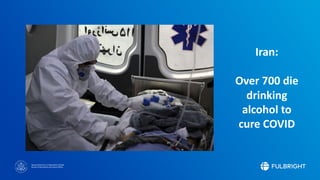
Iran:
Over 700 die
drinking
alcohol to
cure COVID
Sponsored by the U.S. Department of State
Bureau of Educational and Cultural Affairs
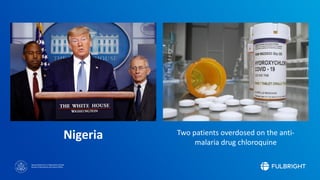
Nigeria Two patients overdosed on the anti-
malaria drug chloroquine
Sponsored by the U.S. Department of State
Bureau of Educational and Cultural Affairs
Sponsored by the U.S. Department of State
Bureau of Educational and Cultural Affairs
Sponsored by the U.S. Department of State
Bureau of Educational and Cultural Affairs
Sponsored by the U.S. Department of State
Bureau of Educational and Cultural Affairs
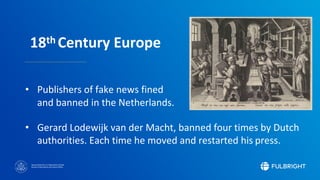
18th Century Europe
• Publishers of fake news fined
and banned in the Netherlands.
• Gerard Lodewijk van der Macht, banned four times by Dutch
authorities. Each time he moved and restarted his press.
Sponsored by the U.S. Department of State
Bureau of Educational and Cultural Affairs
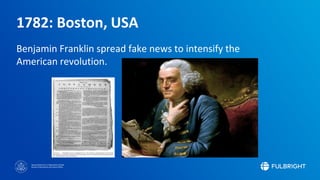
1782: Boston, USA
Benjamin Franklin spread fake news to intensify the
American revolution.
Sponsored by the U.S. Department of State
Bureau of Educational and Cultural Affairs
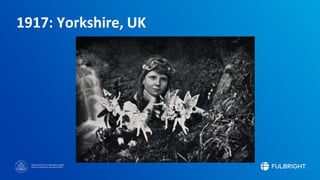
1917: Yorkshire, UK
Sponsored by the U.S. Department of State
Bureau of Educational and Cultural Affairs
Why now?
Sponsored by the U.S. Department of State
Bureau of Educational and Cultural Affairs
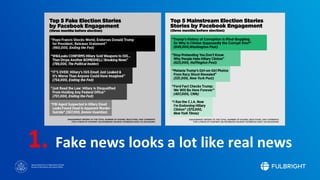
1. Fake news looks a lot like real news
Sponsored by the U.S. Department of State
Bureau of Educational and Cultural Affairs
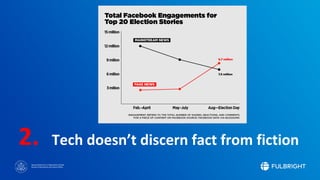
2. Tech doesn’t discern fact from fiction
Sponsored by the U.S. Department of State
Bureau of Educational and Cultural Affairs
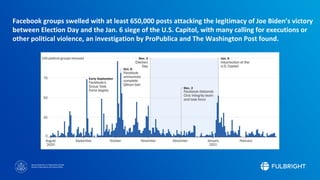
Facebook groups swelled with at least 650,000 posts attacking the legitimacy of Joe Biden’s victory
between Election Day and the Jan. 6 siege of the U.S. Capitol, with many calling for executions or
other political violence, an investigation by ProPublica and The Washington Post found.
Sponsored by the U.S. Department of State
Bureau of Educational and Cultural Affairs
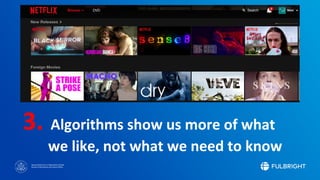
3. Algorithms show us more of what
we like, not what we need to know
Sponsored by the U.S. Department of State
Bureau of Educational and Cultural Affairs
4. Bots + weaponization of the web
Sponsored by the U.S. Department of State
Bureau of Educational and Cultural Affairs
5. Tech has pulled money away
from sources of real reporting
Sponsored by the U.S. Department of State
Bureau of Educational and Cultural Affairs
Five further trends worth noting
Sponsored by the U.S. Department of State
Bureau of Educational and Cultural Affairs
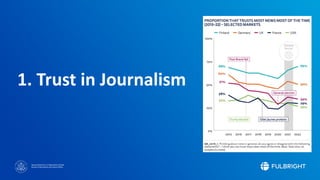
1. Trust in Journalism
Sponsored by the U.S. Department of State
Bureau of Educational and Cultural Affairs
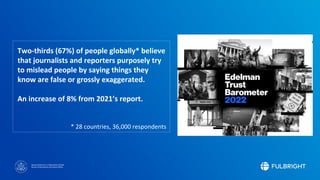
Two-thirds (67%) of people globally* believe
that journalists and reporters purposely try
to mislead people by saying things they
know are false or grossly exaggerated.
An increase of 8% from 2021’s report.
* 28 countries, 36,000 respondents
Sponsored by the U.S. Department of State
Bureau of Educational and Cultural Affairs
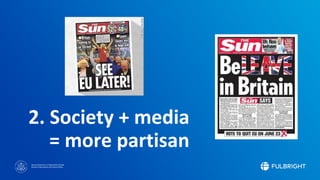
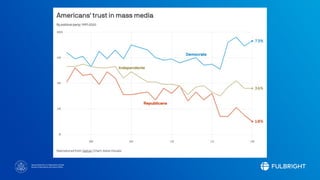
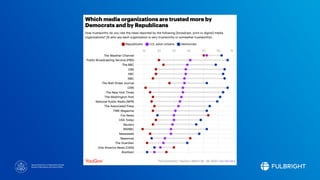
2. Society + media
= more partisan
Sponsored by the U.S. Department of State
Bureau of Educational and Cultural Affairs
Sponsored by the U.S. Department of State
Bureau of Educational and Cultural Affairs
Sponsored by the U.S. Department of State
Bureau of Educational and Cultural Affairs
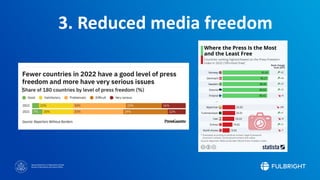
3. Reduced media freedom
Sponsored by the U.S. Department of State
Bureau of Educational and Cultural Affairs
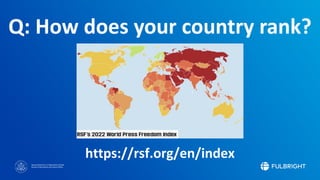
Q: How does your country rank?
https://rsf.org/en/index
Sponsored by the U.S. Department of State
Bureau of Educational and Cultural Affairs
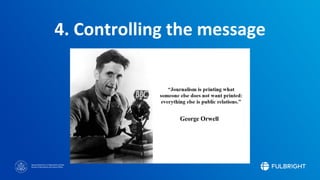
4. Controlling the message
Sponsored by the U.S. Department of State
Bureau of Educational and Cultural Affairs
4b. Media Capture
“In many parts of the world, special interests, from oligarchs and other elites to
governments, are influencing and controlling the media for personal gain.
When media is captured in this way, it is no longer independent.
Captured media loses the ability to reflect the broad interests of the
community and to hold power to account – the classic role of the fourth estate.
Most often, media is captured by governments, plutocrats or corporations or,
in many cases, a mixture of all three.”
Internews, 2017
Sponsored by the U.S. Department of State
Bureau of Educational and Cultural Affairs
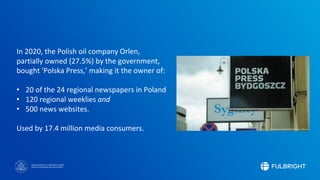
In 2020, the Polish oil company Orlen,
partially owned (27.5%) by the government,
bought 'Polska Press,’ making it the owner of:
• 20 of the 24 regional newspapers in Poland
• 120 regional weeklies and
• 500 news websites.
Used by 17.4 million media consumers.
Sponsored by the U.S. Department of State
Bureau of Educational and Cultural Affairs
5. Becoming more sophisticated
Sponsored by the U.S. Department of State
Bureau of Educational and Cultural Affairs
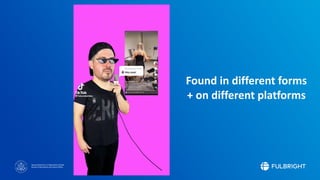
Found in different forms
+ on different platforms
Sponsored by the U.S. Department of State
Bureau of Educational and Cultural Affairs
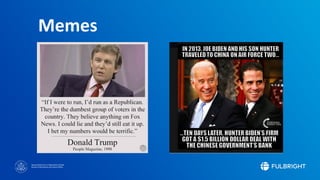
Memes
Sponsored by the U.S. Department of State
Bureau of Educational and Cultural Affairs
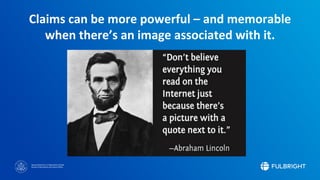
Claims can be more powerful – and memorable
when there’s an image associated with it.
Sponsored by the U.S. Department of State
Bureau of Educational and Cultural Affairs
Sponsored by the U.S. Department of State
Bureau of Educational and Cultural Affairs
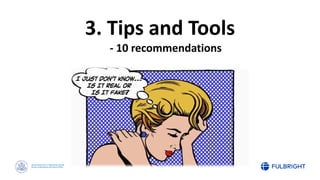
3. Tips and Tools
- 10 recommendations
Sponsored by the U.S. Department of State
Bureau of Educational and Cultural Affairs
Sponsored by the U.S. Department of State
Bureau of Educational and Cultural Affairs
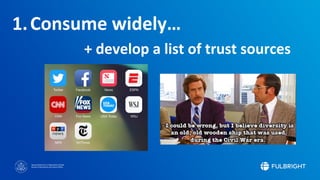
1.Consume widely…
+ develop a list of trust sources
Sponsored by the U.S. Department of State
Bureau of Educational and Cultural Affairs
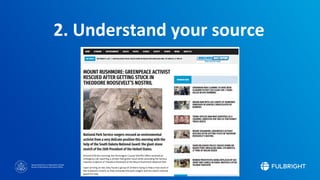
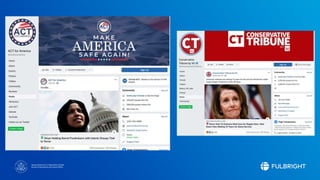
2. Understand your source
Sponsored by the U.S. Department of State
Bureau of Educational and Cultural Affairs
Sponsored by the U.S. Department of State
Bureau of Educational and Cultural Affairs
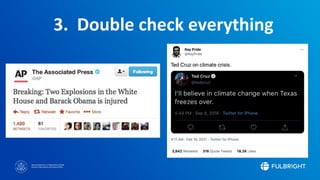
3. Double check everything
Sponsored by the U.S. Department of State
Bureau of Educational and Cultural Affairs
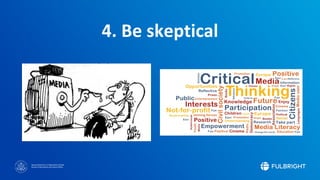
4. Be skeptical
Sponsored by the U.S. Department of State
Bureau of Educational and Cultural Affairs
Sponsored by the U.S. Department of State
Bureau of Educational and Cultural Affairs
Sponsored by the U.S. Department of State
Bureau of Educational and Cultural Affairs
Sponsored by the U.S. Department of State
Bureau of Educational and Cultural Affairs
Sponsored by the U.S. Department of State
Bureau of Educational and Cultural Affairs
Sponsored by the U.S. Department of State
Bureau of Educational and Cultural Affairs
Sponsored by the U.S. Department of State
Bureau of Educational and Cultural Affairs
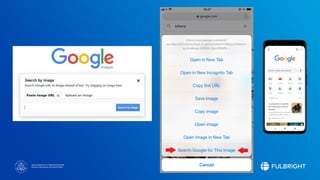
5. Learn how to reverse image search
Sponsored by the U.S. Department of State
Bureau of Educational and Cultural Affairs
Sponsored by the U.S. Department of State
Bureau of Educational and Cultural Affairs
6. Slow Down
Sponsored by the U.S. Department of State
Bureau of Educational and Cultural Affairs
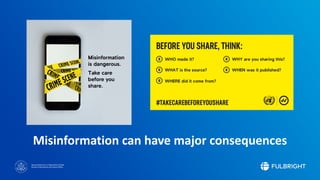
Misinformation can have major consequences
Sponsored by the U.S. Department of State
Bureau of Educational and Cultural Affairs
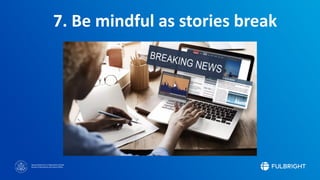
7. Be mindful as stories break
Sponsored by the U.S. Department of State
Bureau of Educational and Cultural Affairs
Sponsored by the U.S. Department of State
Bureau of Educational and Cultural Affairs
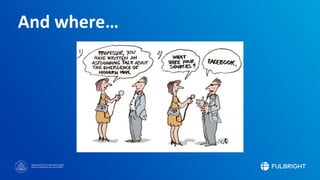
And where…
Sponsored by the U.S. Department of State
Bureau of Educational and Cultural Affairs
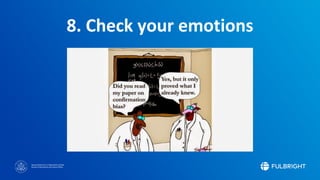
8. Check your emotions
Sponsored by the U.S. Department of State
Bureau of Educational and Cultural Affairs
Sponsored by the U.S. Department of State
Bureau of Educational and Cultural Affairs
Sponsored by the U.S. Department of State
Bureau of Educational and Cultural Affairs
Sponsored by the U.S. Department of State
Bureau of Educational and Cultural Affairs
Sponsored by the U.S. Department of State
Bureau of Educational and Cultural Affairs
Sponsored by the U.S. Department of State
Bureau of Educational and Cultural Affairs
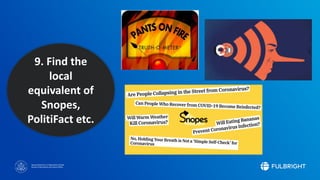
9. Find the
local
equivalent of
Snopes,
PolitiFact etc.
Sponsored by the U.S. Department of State
Bureau of Educational and Cultural Affairs
Sponsored by the U.S. Department of State
Bureau of Educational and Cultural Affairs
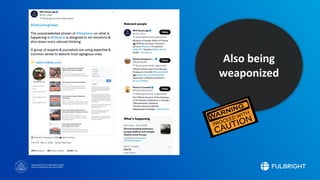
Also being
weaponized
Sponsored by the U.S. Department of State
Bureau of Educational and Cultural Affairs
10. Don’t automatically
trust authority figures
Sponsored by the U.S. Department of State
Bureau of Educational and Cultural Affairs
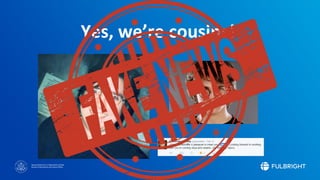
Yes, we’re cousins!
Sponsored by the U.S. Department of State
Bureau of Educational and Cultural Affairs
Yes, we’re cousins!
Sponsored by the U.S. Department of State
Bureau of Educational and Cultural Affairs
“False information spreads just
like accurate information.”
Farida Vis, Sheffield University research fellow
Remember!
Sponsored by the U.S. Department of State
Bureau of Educational and Cultural Affairs
Email: damianr@uoregon.edu
Twitter: @damianradcliffe
Web: www.damianradcliffe.com
Thanks for listening

Understanding Media Literacy and Misinformation

  • 1.
    Sponsored by theU.S. Department of State Bureau of Educational and Cultural Affairs Understanding Media Literacy and Managing Misinformation Damian Radcliffe Carolyn S. Chambers Professor of Journalism University of Oregon 20th July 2022
  • 2.
    Sponsored by theU.S. Department of State Bureau of Educational and Cultural Affairs Today’s session 1. Definitions 2. Spotlight on misinformation 3. Tips and Tools 4. Alumni experiences 5. Q&A
  • 3.
    Sponsored by theU.S. Department of State Bureau of Educational and Cultural Affairs I know it’s Day Three…. (But hopefully that sounds good)
  • 4.
    Sponsored by theU.S. Department of State Bureau of Educational and Cultural Affairs Virtual Introductions Your name Where you’re based now Where you’re heading to!
  • 5.
    Sponsored by theU.S. Department of State Bureau of Educational and Cultural Affairs Your name Where you’re based now Where you’re heading to!
  • 6.
    Sponsored by theU.S. Department of State Bureau of Educational and Cultural Affairs
  • 7.
    Sponsored by theU.S. Department of State Bureau of Educational and Cultural Affairs About Me • British – in USA since 2015 • Married (Habiba) • 3 x Children (Nyla, Yara and Rafi) • 1 cat (Oreo) • Love(d) to travel (57 countries) • BA and MA Oxford University
  • 8.
    Sponsored by theU.S. Department of State Bureau of Educational and Cultural Affairs 1995 – 1999: The Local Radio Company 1999 – 2003: BBC 2003 – 2008: CSV Media (NGO) 2008 – 2012: Ofcom (UK Office of Communications) 2012 - 2014: ictQATAR (Ministry of Information and Communication Technology) 2012 + Freelance journalist + trainer 2015+ University of Oregon Background + timeline 1995 2022

  • 9.
    Sponsored by theU.S. Department of State Bureau of Educational and Cultural Affairs Many hats Carolyn S. Chambers Professor in Journalism University of Oregon Fellow, Tow Center for Digital Journalism Columbia University, Graduate School of Journalism Honorary Research Fellow Cardiff University, School of Journalism, Media and Culture Studies Fellow Royal Society for the encouragement of Arts, Manufactures and Commerce (RSA)
  • 10.
    Sponsored by theU.S. Department of State Bureau of Educational and Cultural Affairs Lens for this session… • Journalist • Researcher • Educator and Trainer Those hats…
  • 11.
    Sponsored by theU.S. Department of State Bureau of Educational and Cultural Affairs
  • 12.
    Sponsored by theU.S. Department of State Bureau of Educational and Cultural Affairs Yes, we’re cousins!
  • 13.
    Sponsored by theU.S. Department of State Bureau of Educational and Cultural Affairs
  • 14.
    Sponsored by theU.S. Department of State Bureau of Educational and Cultural Affairs Reminder: today’s session 1. Definitions 2. Spotlight on misinformation 3. Tips and Tools 4. Alumni experiences 5. Q&A
  • 15.
    Sponsored by theU.S. Department of State Bureau of Educational and Cultural Affairs 1. Definitions 2. Spotlight on misinformation 3. Tips and Tools 4. Alumni experiences 5. Q&A
  • 16.
    Sponsored by theU.S. Department of State Bureau of Educational and Cultural Affairs
  • 17.
    Sponsored by theU.S. Department of State Bureau of Educational and Cultural Affairs
  • 18.
    Sponsored by theU.S. Department of State Bureau of Educational and Cultural Affairs 1. Definitions
  • 19.
    Sponsored by theU.S. Department of State Bureau of Educational and Cultural Affairs “Media Literacy is the ability to access, analyze, evaluate and create media in a variety of forms.” 1992 Aspen Media Literacy Leadership Institute
  • 20.
    Sponsored by theU.S. Department of State Bureau of Educational and Cultural Affairs “Media Literacy is a 21st century approach to education. It provides a framework to access, analyze, evaluate, create and participate with messages in a variety of forms — from print to video to the Internet. Media literacy builds an understanding of the role of media in society as well as essential skills of inquiry and self-expression necessary for citizens of a democracy.” Center for Media Literacy
  • 21.
    Sponsored by theU.S. Department of State Bureau of Educational and Cultural Affairs
  • 22.
    Sponsored by theU.S. Department of State Bureau of Educational and Cultural Affairs Media literacy enables people to have the skills, knowledge and understanding to make full use of the opportunities presented by both traditional and new communications services. Media literacy also helps people to manage content and communications, and protect themselves and their families from the potential risks associated with using these services. Evolving Ofcom definition
  • 23.
    Sponsored by theU.S. Department of State Bureau of Educational and Cultural Affairs Tl;DR > Multiple definitions, but typically include: - Access – media plurality (e.g., FB = internet), affordability, freedom of information - Understanding - critical thinking + how media works - Ability to manage risks and potential harms
  • 24.
    Sponsored by theU.S. Department of State Bureau of Educational and Cultural Affairs Tl;DR > Multiple definitions, but typically include: - Ability to manage risks and potential harms
  • 25.
    Sponsored by theU.S. Department of State Bureau of Educational and Cultural Affairs 2. Spotlight on misinformation
  • 26.
    Sponsored by theU.S. Department of State Bureau of Educational and Cultural Affairs
  • 27.
    Sponsored by theU.S. Department of State Bureau of Educational and Cultural Affairs Emerged as a major source of concern from 2016 onwards
  • 28.
    Sponsored by theU.S. Department of State Bureau of Educational and Cultural Affairs Global Issue Multiple topics
  • 29.
    Sponsored by theU.S. Department of State Bureau of Educational and Cultural Affairs
  • 30.
    Sponsored by theU.S. Department of State Bureau of Educational and Cultural Affairs How confident are you? Post in the chat: 1-3 = Not very confident 4-6 = Somewhat confident 7-9 = Very confident 10 = I should be giving this talk Damian!
  • 31.
    Sponsored by theU.S. Department of State Bureau of Educational and Cultural Affairs
  • 32.
    Sponsored by theU.S. Department of State Bureau of Educational and Cultural Affairs What do we mean by misinformation?
  • 33.
    Sponsored by theU.S. Department of State Bureau of Educational and Cultural Affairs
  • 34.
    Sponsored by theU.S. Department of State Bureau of Educational and Cultural Affairs How it works
  • 35.
    Sponsored by theU.S. Department of State Bureau of Educational and Cultural Affairs
  • 36.
    Sponsored by theU.S. Department of State Bureau of Educational and Cultural Affairs Motive matters
  • 37.
    Sponsored by theU.S. Department of State Bureau of Educational and Cultural Affairs Examples
  • 38.
    Sponsored by theU.S. Department of State Bureau of Educational and Cultural Affairs False context
  • 39.
    Sponsored by theU.S. Department of State Bureau of Educational and Cultural Affairs Footage shown of President Zelensky “out there fighting for his country,” was filmed in 2021. (Screenshot via NewsGuard)
  • 40.
    Sponsored by theU.S. Department of State Bureau of Educational and Cultural Affairs Game footage also used to depict war in Ukraine… and Syria…
  • 41.
    Sponsored by theU.S. Department of State Bureau of Educational and Cultural Affairs Poor journalism
  • 42.
    Sponsored by theU.S. Department of State Bureau of Educational and Cultural Affairs Time, Trump + MLK
  • 43.
    Sponsored by theU.S. Department of State Bureau of Educational and Cultural Affairs
  • 44.
    Sponsored by theU.S. Department of State Bureau of Educational and Cultural Affairs Fake websites
  • 45.
    Sponsored by theU.S. Department of State Bureau of Educational and Cultural Affairs Conspiracy theories
  • 46.
    Sponsored by theU.S. Department of State Bureau of Educational and Cultural Affairs Covered by: - Quartz - Elite Daily - Cosmopolitan - BuzzFeed - Digg - MTV - And more! Humor – Parody - Satire
  • 47.
    Sponsored by theU.S. Department of State Bureau of Educational and Cultural Affairs Denial covered by Quartz, Washington Post + others.
  • 48.
    Sponsored by theU.S. Department of State Bureau of Educational and Cultural Affairs Global Issue “In place of overt, mass repression, rulers such as Vladimir Putin, Recep Tayyip Erdogan, and Viktor Orbán control their citizens by distorting information and simulating democratic procedures. Like spin doctors in democracies, they spin the news to engineer support.” How a new breed of dictators holds power by manipulating information and faking democracy
  • 49.
    Sponsored by theU.S. Department of State Bureau of Educational and Cultural Affairs
  • 50.
    Sponsored by theU.S. Department of State Bureau of Educational and Cultural Affairs Accelerated by COVID “Infodemic”
  • 51.
    Sponsored by theU.S. Department of State Bureau of Educational and Cultural Affairs Iran: Over 700 die drinking alcohol to cure COVID
  • 52.
    Sponsored by theU.S. Department of State Bureau of Educational and Cultural Affairs Nigeria Two patients overdosed on the anti- malaria drug chloroquine
  • 53.
    Sponsored by theU.S. Department of State Bureau of Educational and Cultural Affairs
  • 54.
    Sponsored by theU.S. Department of State Bureau of Educational and Cultural Affairs
  • 55.
    Sponsored by theU.S. Department of State Bureau of Educational and Cultural Affairs
  • 56.
    Sponsored by theU.S. Department of State Bureau of Educational and Cultural Affairs 18th Century Europe • Publishers of fake news fined and banned in the Netherlands. • Gerard Lodewijk van der Macht, banned four times by Dutch authorities. Each time he moved and restarted his press.
  • 57.
    Sponsored by theU.S. Department of State Bureau of Educational and Cultural Affairs 1782: Boston, USA Benjamin Franklin spread fake news to intensify the American revolution.
  • 58.
    Sponsored by theU.S. Department of State Bureau of Educational and Cultural Affairs 1917: Yorkshire, UK
  • 59.
    Sponsored by theU.S. Department of State Bureau of Educational and Cultural Affairs Why now?
  • 60.
    Sponsored by theU.S. Department of State Bureau of Educational and Cultural Affairs 1. Fake news looks a lot like real news
  • 61.
    Sponsored by theU.S. Department of State Bureau of Educational and Cultural Affairs 2. Tech doesn’t discern fact from fiction
  • 62.
    Sponsored by theU.S. Department of State Bureau of Educational and Cultural Affairs Facebook groups swelled with at least 650,000 posts attacking the legitimacy of Joe Biden’s victory between Election Day and the Jan. 6 siege of the U.S. Capitol, with many calling for executions or other political violence, an investigation by ProPublica and The Washington Post found.
  • 63.
    Sponsored by theU.S. Department of State Bureau of Educational and Cultural Affairs 3. Algorithms show us more of what we like, not what we need to know
  • 64.
    Sponsored by theU.S. Department of State Bureau of Educational and Cultural Affairs 4. Bots + weaponization of the web
  • 65.
    Sponsored by theU.S. Department of State Bureau of Educational and Cultural Affairs 5. Tech has pulled money away from sources of real reporting
  • 66.
    Sponsored by theU.S. Department of State Bureau of Educational and Cultural Affairs Five further trends worth noting
  • 67.
    Sponsored by theU.S. Department of State Bureau of Educational and Cultural Affairs 1. Trust in Journalism
  • 68.
    Sponsored by theU.S. Department of State Bureau of Educational and Cultural Affairs Two-thirds (67%) of people globally* believe that journalists and reporters purposely try to mislead people by saying things they know are false or grossly exaggerated. An increase of 8% from 2021’s report. * 28 countries, 36,000 respondents
  • 69.
    Sponsored by theU.S. Department of State Bureau of Educational and Cultural Affairs 2. Society + media = more partisan
  • 70.
    Sponsored by theU.S. Department of State Bureau of Educational and Cultural Affairs
  • 71.
    Sponsored by theU.S. Department of State Bureau of Educational and Cultural Affairs
  • 72.
    Sponsored by theU.S. Department of State Bureau of Educational and Cultural Affairs 3. Reduced media freedom
  • 73.
    Sponsored by theU.S. Department of State Bureau of Educational and Cultural Affairs Q: How does your country rank? https://rsf.org/en/index
  • 74.
    Sponsored by theU.S. Department of State Bureau of Educational and Cultural Affairs 4. Controlling the message
  • 75.
    Sponsored by theU.S. Department of State Bureau of Educational and Cultural Affairs 4b. Media Capture “In many parts of the world, special interests, from oligarchs and other elites to governments, are influencing and controlling the media for personal gain. When media is captured in this way, it is no longer independent. Captured media loses the ability to reflect the broad interests of the community and to hold power to account – the classic role of the fourth estate. Most often, media is captured by governments, plutocrats or corporations or, in many cases, a mixture of all three.” Internews, 2017
  • 76.
    Sponsored by theU.S. Department of State Bureau of Educational and Cultural Affairs In 2020, the Polish oil company Orlen, partially owned (27.5%) by the government, bought 'Polska Press,’ making it the owner of: • 20 of the 24 regional newspapers in Poland • 120 regional weeklies and • 500 news websites. Used by 17.4 million media consumers.
  • 77.
    Sponsored by theU.S. Department of State Bureau of Educational and Cultural Affairs 5. Becoming more sophisticated
  • 78.
    Sponsored by theU.S. Department of State Bureau of Educational and Cultural Affairs Found in different forms + on different platforms
  • 79.
    Sponsored by theU.S. Department of State Bureau of Educational and Cultural Affairs Memes
  • 80.
    Sponsored by theU.S. Department of State Bureau of Educational and Cultural Affairs Claims can be more powerful – and memorable when there’s an image associated with it.
  • 81.
    Sponsored by theU.S. Department of State Bureau of Educational and Cultural Affairs
  • 82.
    Sponsored by theU.S. Department of State Bureau of Educational and Cultural Affairs 3. Tips and Tools - 10 recommendations
  • 83.
    Sponsored by theU.S. Department of State Bureau of Educational and Cultural Affairs
  • 84.
    Sponsored by theU.S. Department of State Bureau of Educational and Cultural Affairs 1.Consume widely… + develop a list of trust sources
  • 85.
    Sponsored by theU.S. Department of State Bureau of Educational and Cultural Affairs 2. Understand your source
  • 86.
    Sponsored by theU.S. Department of State Bureau of Educational and Cultural Affairs
  • 87.
    Sponsored by theU.S. Department of State Bureau of Educational and Cultural Affairs 3. Double check everything
  • 88.
    Sponsored by theU.S. Department of State Bureau of Educational and Cultural Affairs 4. Be skeptical
  • 89.
    Sponsored by theU.S. Department of State Bureau of Educational and Cultural Affairs
  • 90.
    Sponsored by theU.S. Department of State Bureau of Educational and Cultural Affairs
  • 91.
    Sponsored by theU.S. Department of State Bureau of Educational and Cultural Affairs
  • 92.
    Sponsored by theU.S. Department of State Bureau of Educational and Cultural Affairs
  • 93.
    Sponsored by theU.S. Department of State Bureau of Educational and Cultural Affairs
  • 94.
    Sponsored by theU.S. Department of State Bureau of Educational and Cultural Affairs
  • 95.
    Sponsored by theU.S. Department of State Bureau of Educational and Cultural Affairs 5. Learn how to reverse image search
  • 96.
    Sponsored by theU.S. Department of State Bureau of Educational and Cultural Affairs
  • 97.
    Sponsored by theU.S. Department of State Bureau of Educational and Cultural Affairs 6. Slow Down
  • 98.
    Sponsored by theU.S. Department of State Bureau of Educational and Cultural Affairs Misinformation can have major consequences
  • 99.
    Sponsored by theU.S. Department of State Bureau of Educational and Cultural Affairs 7. Be mindful as stories break
  • 100.
    Sponsored by theU.S. Department of State Bureau of Educational and Cultural Affairs
  • 101.
    Sponsored by theU.S. Department of State Bureau of Educational and Cultural Affairs And where…
  • 102.
    Sponsored by theU.S. Department of State Bureau of Educational and Cultural Affairs 8. Check your emotions
  • 103.
    Sponsored by theU.S. Department of State Bureau of Educational and Cultural Affairs
  • 104.
    Sponsored by theU.S. Department of State Bureau of Educational and Cultural Affairs
  • 105.
    Sponsored by theU.S. Department of State Bureau of Educational and Cultural Affairs
  • 106.
    Sponsored by theU.S. Department of State Bureau of Educational and Cultural Affairs
  • 107.
    Sponsored by theU.S. Department of State Bureau of Educational and Cultural Affairs
  • 108.
    Sponsored by theU.S. Department of State Bureau of Educational and Cultural Affairs 9. Find the local equivalent of Snopes, PolitiFact etc.
  • 109.
    Sponsored by theU.S. Department of State Bureau of Educational and Cultural Affairs
  • 110.
    Sponsored by theU.S. Department of State Bureau of Educational and Cultural Affairs Also being weaponized
  • 111.
    Sponsored by theU.S. Department of State Bureau of Educational and Cultural Affairs 10. Don’t automatically trust authority figures
  • 112.
    Sponsored by theU.S. Department of State Bureau of Educational and Cultural Affairs Yes, we’re cousins!
  • 113.
    Sponsored by theU.S. Department of State Bureau of Educational and Cultural Affairs Yes, we’re cousins!
  • 114.
    Sponsored by theU.S. Department of State Bureau of Educational and Cultural Affairs “False information spreads just like accurate information.” Farida Vis, Sheffield University research fellow Remember!
  • 115.
    Sponsored by theU.S. Department of State Bureau of Educational and Cultural Affairs Email: damianr@uoregon.edu Twitter: @damianradcliffe Web: www.damianradcliffe.com Thanks for listening