How to Keep Food Frozen when Traveling
Cheap and Easy Tricks to Keep Frozen Food from Thawing
➢ For campers – it means keeping foods
viable for a longer period of time under
cool conditions.
Traveling with frozen foods can mean
different things to different people.
➢ For nursing mamas – it means keeping
the breast milk frozen for your infant as
you make an overnight trip with your
family.
Fortunately, there are a number of tricks for
ensuring that frozen food remain so for a
considerable amount of time.
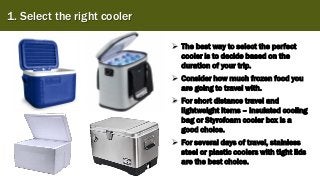
1. Select the right cooler
➢ The best way to select the perfect
cooler is to decide based on the
duration of your trip.
➢ Consider how much frozen food you
are going to travel with.
➢ For short distance travel and
lightweight items – insulated cooling
bag or Styrofoam cooler box is a
good choice.
➢ For several days of travel, stainless
steel or plastic coolers with tight lids
are the best choice.
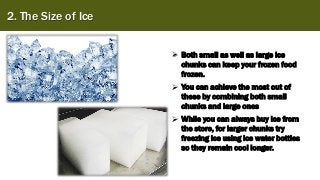
2. The Size of Ice
➢ Both small as well as large ice
chunks can keep your frozen food
frozen.
➢ You can achieve the most out of
these by combining both small
chunks and large ones
➢ While you can always buy ice from
the store, for larger chunks try
freezing ice using ice water bottles
so they remain cool longer.
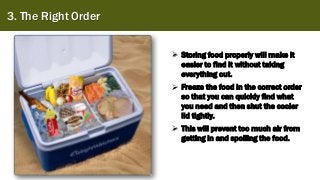
3. The Right Order
➢ Storing food properly will make it
easier to find it without taking
everything out.
➢ Freeze the food in the correct order
so that you can quickly find what
you need and then shut the cooler
lid tightly.
➢ This will prevent too much air from
getting in and spoiling the food.
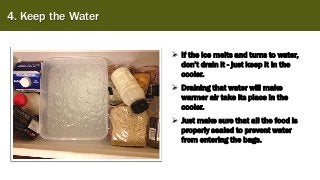
4. Keep the Water
➢ If the ice melts and turns to water,
don’t drain it - just keep it in the
cooler.
➢ Draining that water will make
warmer air take its place in the
cooler.
➢ Just make sure that all the food is
properly sealed to prevent water
from entering the bags.
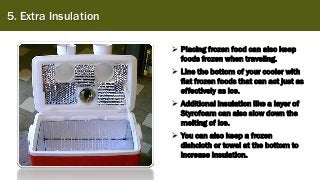
5. Extra Insulation
➢ Placing frozen food can also keep
foods frozen when traveling.
➢ Line the bottom of your cooler with
flat frozen foods that can act just as
effectively as ice.
➢ Additional insulation like a layer of
Styrofoam can also slow down the
melting of ice.
➢ You can also keep a frozen
dishcloth or towel at the bottom to
increase insulation.
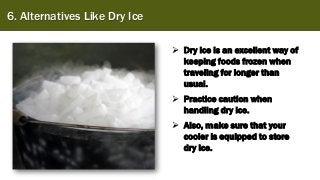
6. Alternatives Like Dry Ice
➢ Dry ice is an excellent way of
keeping foods frozen when
traveling for longer than
usual.
➢ Practice caution when
handling dry ice.
➢ Also, make sure that your
cooler is equipped to store
dry ice.
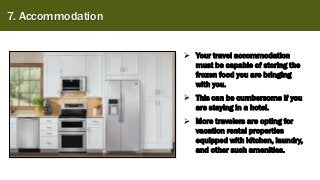
7. Accommodation
➢ Your travel accommodation
must be capable of storing the
frozen food you are bringing
with you.
➢ This can be cumbersome if you
are staying in a hotel.
➢ More travelers are opting for
vacation rental properties
equipped with kitchen, laundry,
and other such amenities.
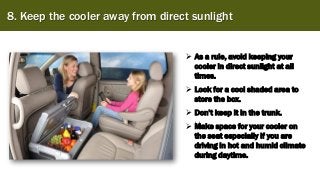
8. Keep the cooler away from direct sunlight
➢ As a rule, avoid keeping your
cooler in direct sunlight at all
times.
➢ Look for a cool shaded area to
store the box.
➢ Don’t keep it in the trunk.
➢ Make space for your cooler on
the seat especially if you are
driving in hot and humid climate
during daytime.
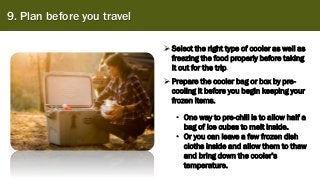
9. Plan before you travel
➢Select the right type of cooler as well as
freezing the food properly before taking
it out for the trip.
➢Prepare the cooler bag or box by pre-
cooling it before you begin keeping your
frozen items.
• One way to pre-chill is to allow half a
bag of ice cubes to melt inside.
• Or you can leave a few frozen dish
cloths inside and allow them to thaw
and bring down the cooler’s
temperature.
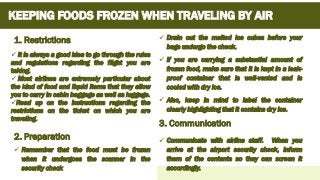
KEEPING FOODS FROZEN WHEN TRAVELING BY AIR
Add time and number of servings
✓ It is always a good idea to go through the rules
and regulations regarding the flight you are
taking.
✓ Most airlines are extremely particular about
the kind of food and liquid items that they allow
you to carry in cabin baggage as well as luggage.
✓Read up on the instructions regarding the
restrictions on the ticket on which you are
traveling.
1. Restrictions
2. Preparation
✓ Drain out the melted ice cubes before your
bags undergo the check.
✓ If you are carrying a substantial amount of
frozen food, make sure that it is kept in a leak-
proof container that is well-vented and is
cooled with dry ice.
✓ Also, keep in mind to label the container
clearly highlighting that it contains dry ice.
✓ Remember that the food must be frozen
when it undergoes the scanner in the
security check
3. Communication
✓ Communicate with airline staff. When you
arrive at the airport security check, inform
them of the contents so they can screen it
accordingly.
Our frozen food travel tips are aimed at helping you travel with your favorite
foods, stress free.
But where you stay during your travels can make a world of difference to
how well your food is stored.
Rental accommodations offer the perfect answer for traveling comfortably.
At rentaltrader.com you can select from a number of properties depending
on your preference and convenience. You can search our properties and
book instantly or ask questions of the prospective host.
Thank you! Please visit RentalTrader.com to book your
next vacation experience

How to Keep Food Frozen when Traveling

  • 1.
    How to KeepFood Frozen when Traveling Cheap and Easy Tricks to Keep Frozen Food from Thawing
  • 2.
    ➢ For campers– it means keeping foods viable for a longer period of time under cool conditions. Traveling with frozen foods can mean different things to different people. ➢ For nursing mamas – it means keeping the breast milk frozen for your infant as you make an overnight trip with your family. Fortunately, there are a number of tricks for ensuring that frozen food remain so for a considerable amount of time.
  • 3.
    1. Select theright cooler ➢ The best way to select the perfect cooler is to decide based on the duration of your trip. ➢ Consider how much frozen food you are going to travel with. ➢ For short distance travel and lightweight items – insulated cooling bag or Styrofoam cooler box is a good choice. ➢ For several days of travel, stainless steel or plastic coolers with tight lids are the best choice.
  • 4.
    2. The Sizeof Ice ➢ Both small as well as large ice chunks can keep your frozen food frozen. ➢ You can achieve the most out of these by combining both small chunks and large ones ➢ While you can always buy ice from the store, for larger chunks try freezing ice using ice water bottles so they remain cool longer.
  • 5.
    3. The RightOrder ➢ Storing food properly will make it easier to find it without taking everything out. ➢ Freeze the food in the correct order so that you can quickly find what you need and then shut the cooler lid tightly. ➢ This will prevent too much air from getting in and spoiling the food.
  • 6.
    4. Keep theWater ➢ If the ice melts and turns to water, don’t drain it - just keep it in the cooler. ➢ Draining that water will make warmer air take its place in the cooler. ➢ Just make sure that all the food is properly sealed to prevent water from entering the bags.
  • 7.
    5. Extra Insulation ➢Placing frozen food can also keep foods frozen when traveling. ➢ Line the bottom of your cooler with flat frozen foods that can act just as effectively as ice. ➢ Additional insulation like a layer of Styrofoam can also slow down the melting of ice. ➢ You can also keep a frozen dishcloth or towel at the bottom to increase insulation.
  • 8.
    6. Alternatives LikeDry Ice ➢ Dry ice is an excellent way of keeping foods frozen when traveling for longer than usual. ➢ Practice caution when handling dry ice. ➢ Also, make sure that your cooler is equipped to store dry ice.
  • 9.
    7. Accommodation ➢ Yourtravel accommodation must be capable of storing the frozen food you are bringing with you. ➢ This can be cumbersome if you are staying in a hotel. ➢ More travelers are opting for vacation rental properties equipped with kitchen, laundry, and other such amenities.
  • 10.
    8. Keep thecooler away from direct sunlight ➢ As a rule, avoid keeping your cooler in direct sunlight at all times. ➢ Look for a cool shaded area to store the box. ➢ Don’t keep it in the trunk. ➢ Make space for your cooler on the seat especially if you are driving in hot and humid climate during daytime.
  • 11.
    9. Plan beforeyou travel ➢Select the right type of cooler as well as freezing the food properly before taking it out for the trip. ➢Prepare the cooler bag or box by pre- cooling it before you begin keeping your frozen items. • One way to pre-chill is to allow half a bag of ice cubes to melt inside. • Or you can leave a few frozen dish cloths inside and allow them to thaw and bring down the cooler’s temperature.
  • 12.
    KEEPING FOODS FROZENWHEN TRAVELING BY AIR Add time and number of servings ✓ It is always a good idea to go through the rules and regulations regarding the flight you are taking. ✓ Most airlines are extremely particular about the kind of food and liquid items that they allow you to carry in cabin baggage as well as luggage. ✓Read up on the instructions regarding the restrictions on the ticket on which you are traveling. 1. Restrictions 2. Preparation ✓ Drain out the melted ice cubes before your bags undergo the check. ✓ If you are carrying a substantial amount of frozen food, make sure that it is kept in a leak- proof container that is well-vented and is cooled with dry ice. ✓ Also, keep in mind to label the container clearly highlighting that it contains dry ice. ✓ Remember that the food must be frozen when it undergoes the scanner in the security check 3. Communication ✓ Communicate with airline staff. When you arrive at the airport security check, inform them of the contents so they can screen it accordingly.
  • 13.
    Our frozen foodtravel tips are aimed at helping you travel with your favorite foods, stress free. But where you stay during your travels can make a world of difference to how well your food is stored. Rental accommodations offer the perfect answer for traveling comfortably. At rentaltrader.com you can select from a number of properties depending on your preference and convenience. You can search our properties and book instantly or ask questions of the prospective host. Thank you! Please visit RentalTrader.com to book your next vacation experience