Nordic keyhole
Experience and challenges
Sweden, Norway, Denmark, Iceland
Healthy choices made easy
Kristina Lagestrand Sjölin
B.Sc., RD, Principal Regulatory Officer
Swedish National Food Agency (NFA)
NFA is the owner of the trademark
Charlottetown 16 May 2013
FAO/WHO Information Meeting on Front of
Pack Nutrition Labelling
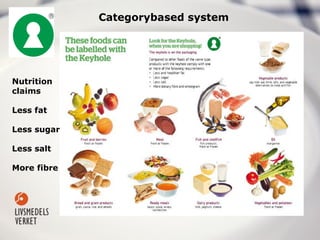
Categorybased system
Nutrition
claims
Less fat
Less sugar
Less salt
More fibre
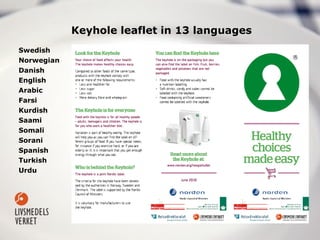
Keyhole leaflet in 13 languages
Swedish
Norwegian
Danish
English
Arabic
Farsi
Kurdish
Saami
Somali
Sorani
Spanish
Turkish
Urdu
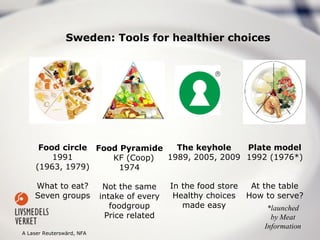
Sweden: Tools for healthier choices
Food circle
1991
(1963, 1979)
What to eat?
Seven groups
The keyhole
1989, 2005, 2009
In the food store
Healthy choices
made easy
Plate model
1992 (1976*)
At the table
How to serve?
Food Pyramide
KF (Coop)
1974
Not the same
intake of every
foodgroup
Price related
*launched
by Meat
Information
A Laser Reuterswärd, NFA
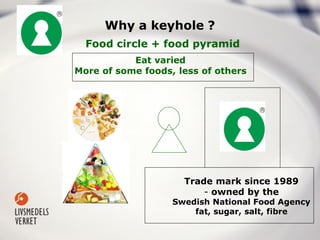
Why a keyhole ?
Food circle + food pyramid
Eat varied
More of some foods, less of others
Trade mark since 1989
- owned by the
Swedish National Food Agency
fat, sugar, salt, fibre
General features
• The Keyhole makes it easier for consumers
Healthy choices made easy
• Labelling with the symbol is voluntary and
free of charge
• Food manufacturers using the keyhole label
are responsible for observing the
regulations
• Joint conditions set by four Nordic
countries (SE NO DK IS)
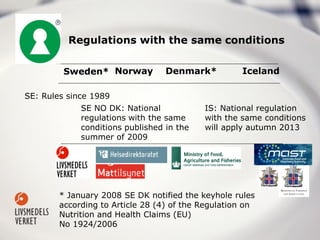
Regulations with the same conditions
Sweden* Norway Denmark* Iceland
SE NO DK: National
regulations with the same
conditions published in the
summer of 2009
SE: Rules since 1989
IS: National regulation
with the same conditions
will apply autumn 2013
* January 2008 SE DK notified the keyhole rules
according to Article 28 (4) of the Regulation on
Nutrition and Health Claims (EU)
No 1924/2006
Experiences from the Nordic work
• Constructive dialogue with the industry is important
• Quick, simple and positive tool for consumers
• Consumer and quality aspects are important as well
as food safety aspects when setting criteria
• Positive green symbol is of big interest for the
industry
• Impact on product development
"Standard" for product development at several
Research and Development units
• In December 2011: over 1500 unique products in
Sweden, Norway and Denmark respectively
9
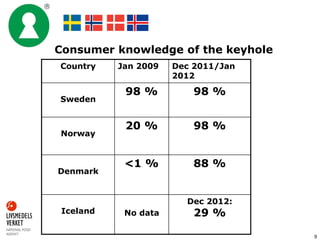
Consumer knowledge of the keyhole
Country Jan 2009 Dec 2011/Jan
2012
Sweden
98 % 98 %
Norway
20 % 98 %
Denmark
<1 % 88 %
Iceland No data
Dec 2012:
29 %
Challenges
• Keep keyhole attraction and consumer interest in
relation to other food messages
• Setting of criteria: not too high, not too low
• Revision of joint criteria 2013-2014:
Salt
Other conditions for different categories
New categories? E.g. gluten-free alternatives
• 2014: 25 years since the first Swedish keyhole
ordinance was published (March)
5 years since regulations with common conditions
were published (June) in SE NO DK
Links for further information
http://www.slv.se/nyckelhalet
http://www.nokkelhullsmerket.no/
http://noeglehullet.dk

Nordic Keyhole FOP Labelling_2013

  • 1.
    Nordic keyhole Experience andchallenges Sweden, Norway, Denmark, Iceland Healthy choices made easy Kristina Lagestrand Sjölin B.Sc., RD, Principal Regulatory Officer Swedish National Food Agency (NFA) NFA is the owner of the trademark Charlottetown 16 May 2013 FAO/WHO Information Meeting on Front of Pack Nutrition Labelling
  • 2.
  • 3.
    Keyhole leaflet in13 languages Swedish Norwegian Danish English Arabic Farsi Kurdish Saami Somali Sorani Spanish Turkish Urdu
  • 4.
    Sweden: Tools forhealthier choices Food circle 1991 (1963, 1979) What to eat? Seven groups The keyhole 1989, 2005, 2009 In the food store Healthy choices made easy Plate model 1992 (1976*) At the table How to serve? Food Pyramide KF (Coop) 1974 Not the same intake of every foodgroup Price related *launched by Meat Information A Laser Reuterswärd, NFA
  • 5.
    Why a keyhole? Food circle + food pyramid Eat varied More of some foods, less of others Trade mark since 1989 - owned by the Swedish National Food Agency fat, sugar, salt, fibre
  • 6.
    General features • TheKeyhole makes it easier for consumers Healthy choices made easy • Labelling with the symbol is voluntary and free of charge • Food manufacturers using the keyhole label are responsible for observing the regulations • Joint conditions set by four Nordic countries (SE NO DK IS)
  • 7.
    Regulations with thesame conditions Sweden* Norway Denmark* Iceland SE NO DK: National regulations with the same conditions published in the summer of 2009 SE: Rules since 1989 IS: National regulation with the same conditions will apply autumn 2013 * January 2008 SE DK notified the keyhole rules according to Article 28 (4) of the Regulation on Nutrition and Health Claims (EU) No 1924/2006
  • 8.
    Experiences from theNordic work • Constructive dialogue with the industry is important • Quick, simple and positive tool for consumers • Consumer and quality aspects are important as well as food safety aspects when setting criteria • Positive green symbol is of big interest for the industry • Impact on product development "Standard" for product development at several Research and Development units • In December 2011: over 1500 unique products in Sweden, Norway and Denmark respectively
  • 9.
    9 Consumer knowledge ofthe keyhole Country Jan 2009 Dec 2011/Jan 2012 Sweden 98 % 98 % Norway 20 % 98 % Denmark <1 % 88 % Iceland No data Dec 2012: 29 %
  • 10.
    Challenges • Keep keyholeattraction and consumer interest in relation to other food messages • Setting of criteria: not too high, not too low • Revision of joint criteria 2013-2014: Salt Other conditions for different categories New categories? E.g. gluten-free alternatives • 2014: 25 years since the first Swedish keyhole ordinance was published (March) 5 years since regulations with common conditions were published (June) in SE NO DK
  • 11.
    Links for furtherinformation http://www.slv.se/nyckelhalet http://www.nokkelhullsmerket.no/ http://noeglehullet.dk