Dr. Robert Sprague - Research

Loading...

Flash Player 9 (or above) is needed to view presentations.
We have detected that you do not have it on your computer. To install it, go here.

0 comments

Post a comment

    Post a comment
    Embed Video
    Edit your comment Cancel

    1 Favorite

    Dr. Robert Sprague - Research - Presentation Transcript

    1. What does research tell us? What research is needed? Robert Sprague Assistant Professor University of Wyoming College of Business Connect. Public Relations & Social Media Conference University of Georgia Grady College October 19-20, 2007
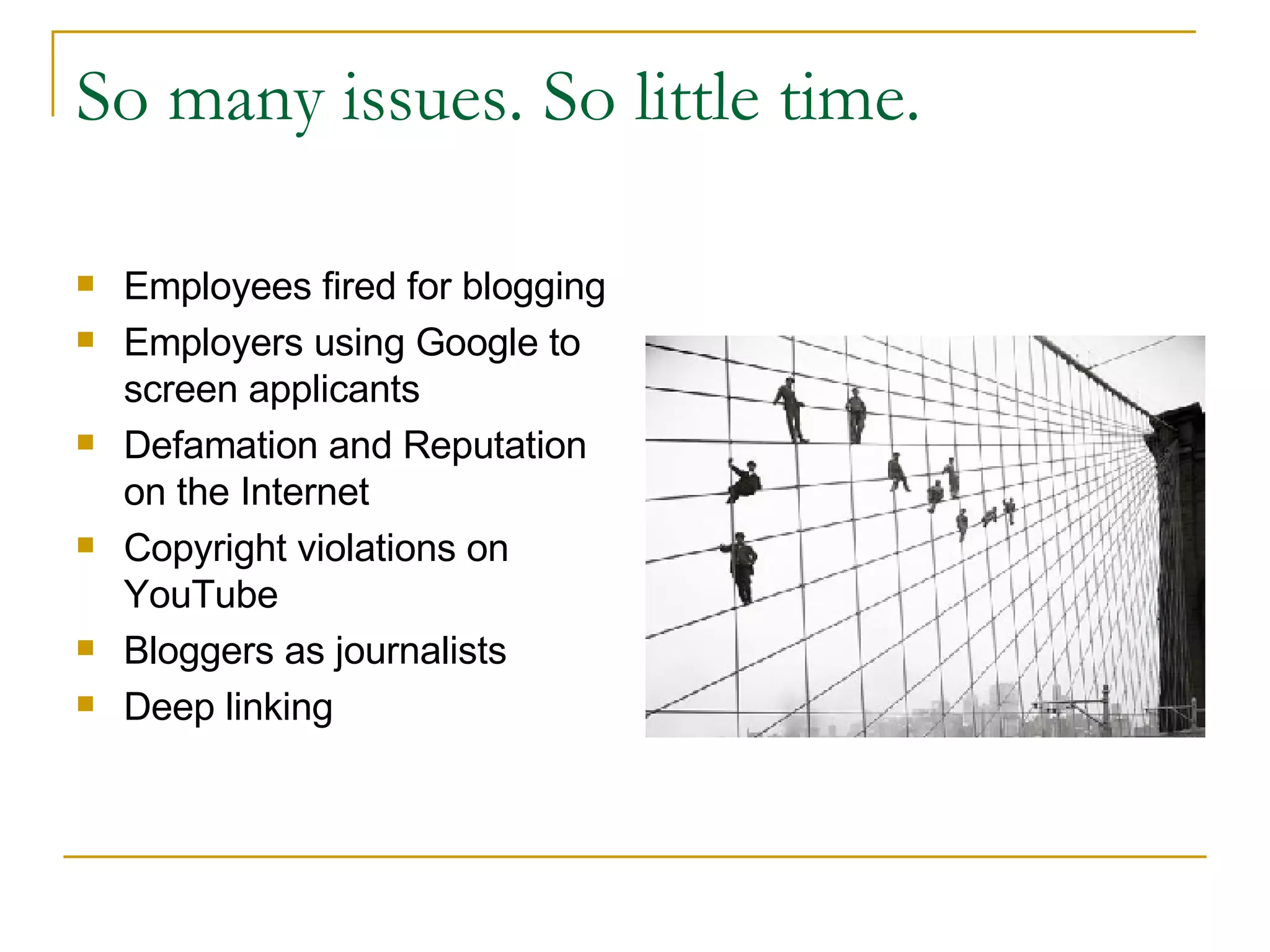
    2. So many issues. So little time.
      • Employees fired for blogging
      • Employers using Google to screen applicants
      • Defamation and Reputation on the Internet
      • Copyright violations on YouTube
      • Bloggers as journalists
      • Deep linking
    3. Public Relations & Social Media
      • Legal issues
        • Commercial speech
        • Deceptive trade practices
        • Liability for content
    4. Commercial speech
      • Commercial speech is granted limited constitutional protection
        • Subject to regulation
          • Time, place, and content
      • What is commercial speech?
        • Never really defined by the courts
        • But, courts “know it when they see it”
    5. Commercial speech doctrine
      • Originally used to help communities restrict/prevent door-to-door peddlers
      • Traditional concept
        • Communication to propose a commercial transaction
          • I will sell you “X” product for “Y” price
      • Concept has been expanding
        • Statements encouraging a future economic transaction
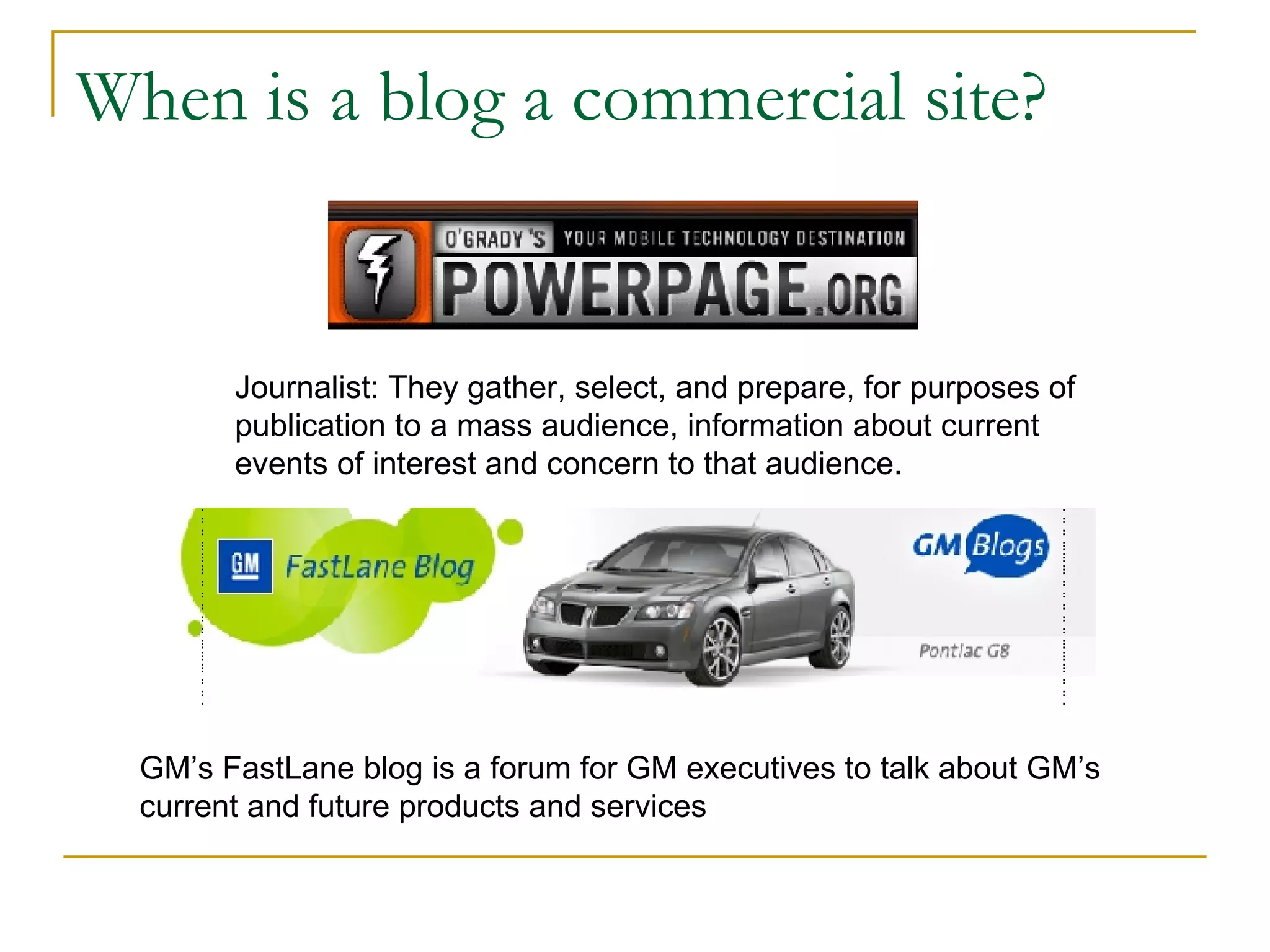
    6. When is a blog a commercial site? Journalist: They gather, select, and prepare, for purposes of publication to a mass audience, information about current events of interest and concern to that audience. GM’s FastLane blog is a forum for GM executives to talk about GM’s current and future products and services
    7. Walmarting Across America
      • Oops!
        • Should Richard Edelman have known better?
      • Desire to control the message
        • blends independence with commercial backing
          • Is this deceptive?
    8. Deceptive speech
      • Commercial speech doctrine allows the government to prohibit deceptive speech
      • An act or practice is deceptive under federal law if there is a representation or omission of material information that is likely to mislead consumers
        • A representation or omission is material if it is likely to affect consumers’ choice of, or conduct regarding a product
    9. Buzz marketing
      • Buzz marketing is a major area of concern
      • The FTC is particularly concerned with “sponsored” consumers
      • Is it deceptive to fail to disclose that a marketer is paying a sponsored consumer to make claims to other consumers about the marketer’s product?
      • Consumers may reasonably give more weight to statements that sponsored consumers may make about their opinions or experiences with a product based on their assumed independence from the marketer
    10. No definitive guidelines
      • FTC has declined to issue specific guidelines
        • Will make determinations on a case-by-case basis
        • Where there exists a connection between the endorser and seller of the advertised product which might materially affect the weight or credibility of the endorsement, such connection must be fully disclosed
          • Must there be an “advertisement?”
    11. Buzz marketing on the Internet
      • Fake peers
      • Hidden sponsors
      • Pay-to-post
      • Sock puppets
      • Sponsored consumers
      • Assume FTC approach to “traditional” buzz marketing will apply to blogs and social media
      • Sock puppets will be illegal in the EU in 2008
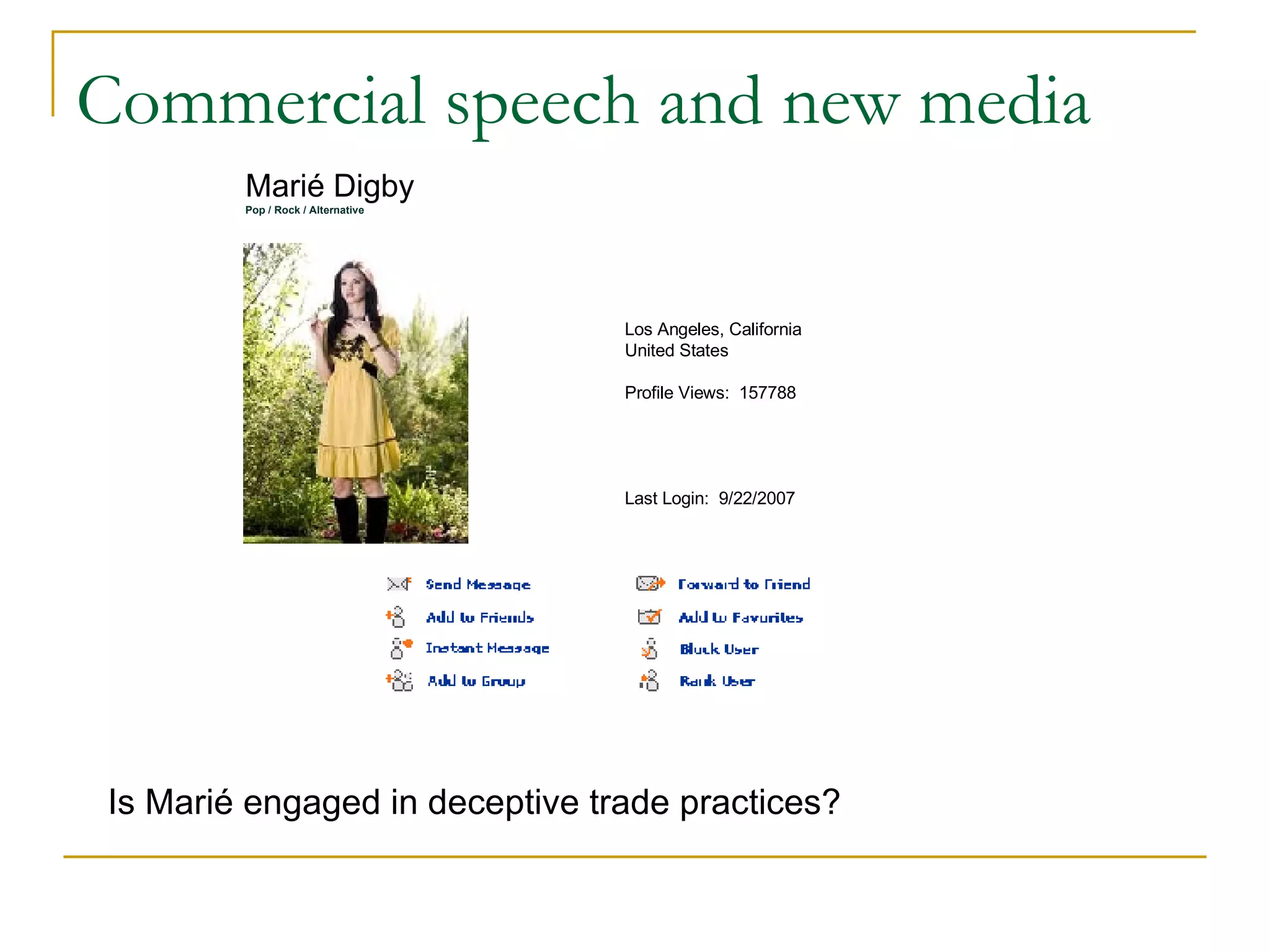
    12. Commercial speech and new media Is Marié engaged in deceptive trade practices? Marié Digby Pop / Rock / Alternative Los Angeles, California United States Profile Views:  157788 Last Login:  9/22/2007                               
    13. Defamation
      • Another restriction on speech
      • A false statement that harms an individual’s reputation in the eyes of the community
        • Accusations of dishonesty, criminality, adultery
      • Historically, publishers have been held immune from liability arising from third party content
        • Bloggers assume they are immune from liability for linking to outside content
    14. New trend in publisher liability
      • What are the risks?
      • Courts are beginning to differentiate between “provider” and “publisher”
        • A provider merely reproduces material without alteration
          • Immunity preserved
        • New view of publisher
          • Making editorial decisions
          • Growing risk that minor editing of third party content may destroy immunity
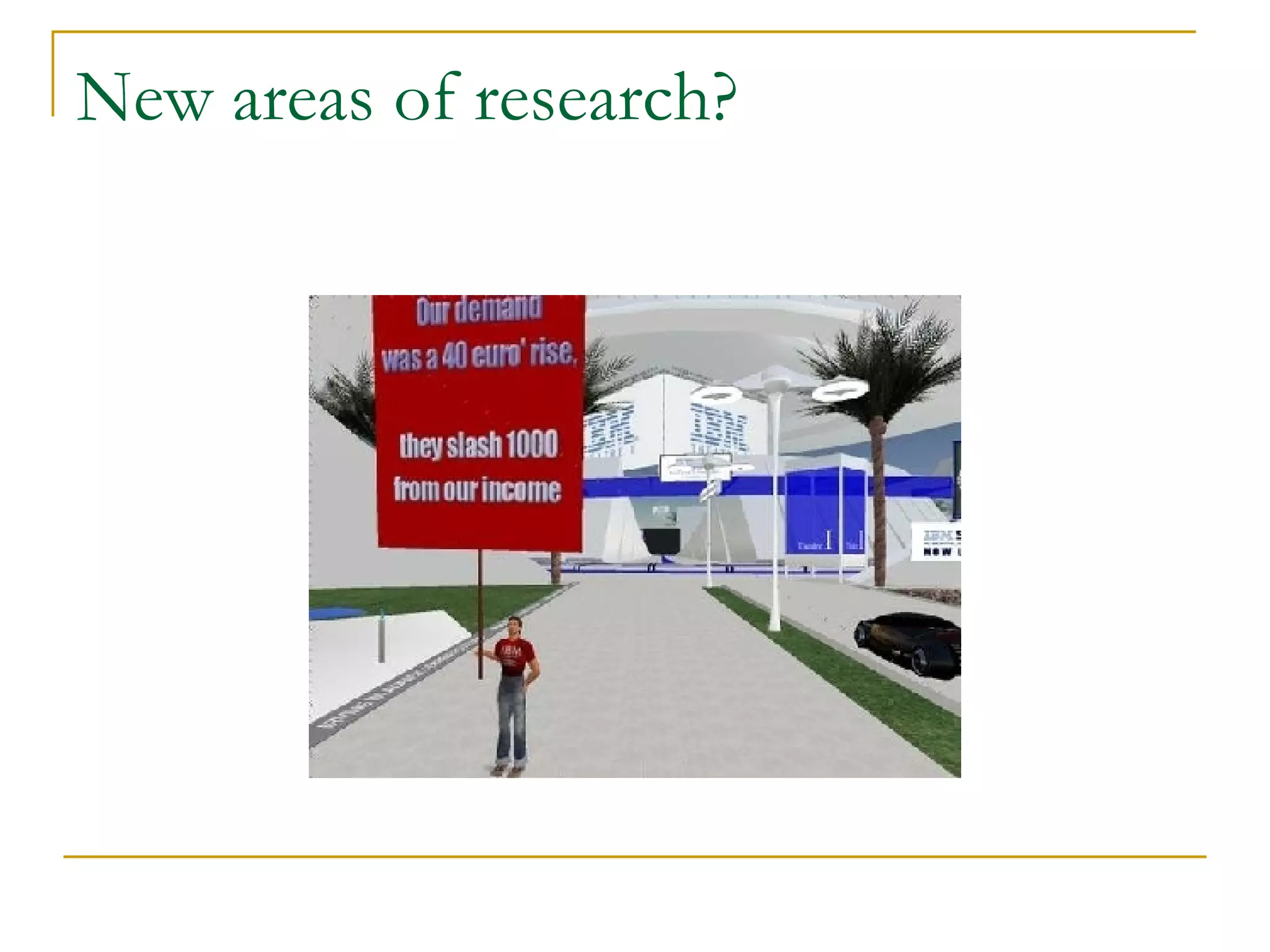
    15. New areas of research?

    + kaye sweetserkaye sweetser, 3 years ago

    custom

    1448 views, 1 favs, 0 embeds more stats

    The changing face of communication law in the rise more

    More info about this document

    © All Rights Reserved

    Go to text version

    • Total Views 1448
      • 1448 on SlideShare
      • 0 from embeds
    • Comments 0
    • Favorites 1
    • Downloads 19
    Most viewed embeds

    more

    All embeds

    less

    Flagged as inappropriate Flag as inappropriate
    Flag as inappropriate

    Select your reason for flagging this presentation as inappropriate. If needed, use the feedback form to let us know more details.

    Cancel
    File a copyright complaint
    Having problems? Go to our helpdesk?

    Categories