The Agile PMP: Teaching An Old Dog New Tricks (90 minutes)

Loading...

Flash Player 9 (or above) is needed to view presentations.
We have detected that you do not have it on your computer. To install it, go here.

0 comments

Post a comment

    Post a comment
    Embed Video
    Edit your comment Cancel

    Notes on slide 1

    1/8/2008

    9 Favorites

    The Agile PMP: Teaching An Old Dog New Tricks (90 minutes) - Presentation Transcript

    1. The Agile PMP Teaching an Old Dog New Tricks
    2. Introductions
      • Product consultant and agile evangelist for VersionOne
      • Previously a Senior Project Manager for CheckFree and John Harland Company
      • PMP, CSM, DSDM Agile Project Leader
      • Board member of APLN and the current Treasurer. Founder APLN Atlanta
    3. Why are we here today ?
    4. What is Agile?
      • Umbrella term to describe a family of methodologies
      • Engineering best practices
      • Leadership philosophy
      • Project management methodology
    5. What is Project Management?
      • When will the project be done?
      • How much will it cost?
      • Do we all agree on what done looks like?
      • What are the risks to delivering time and on schedule?
      • How will we mitigate these risks so we can get done
    6. Let’s take a look at Traditional Project Management
    7. Balancing the Triple Constraints
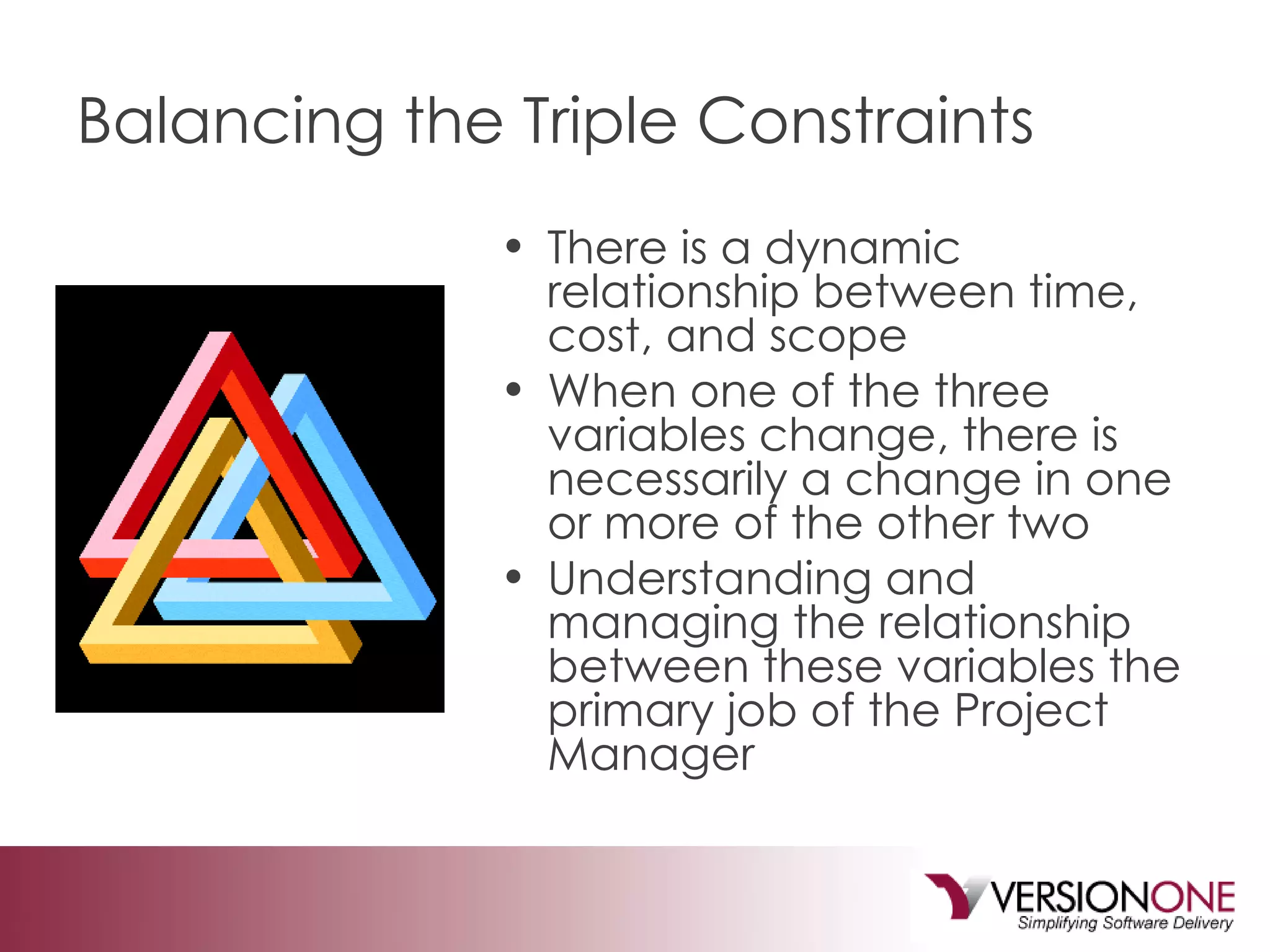
      • There is a dynamic relationship between time, cost, and scope
      • When one of the three variables change, there is necessarily a change in one or more of the other two
      • Understanding and managing the relationship between these variables the primary job of the Project Manager
    8. Managing Project Scope
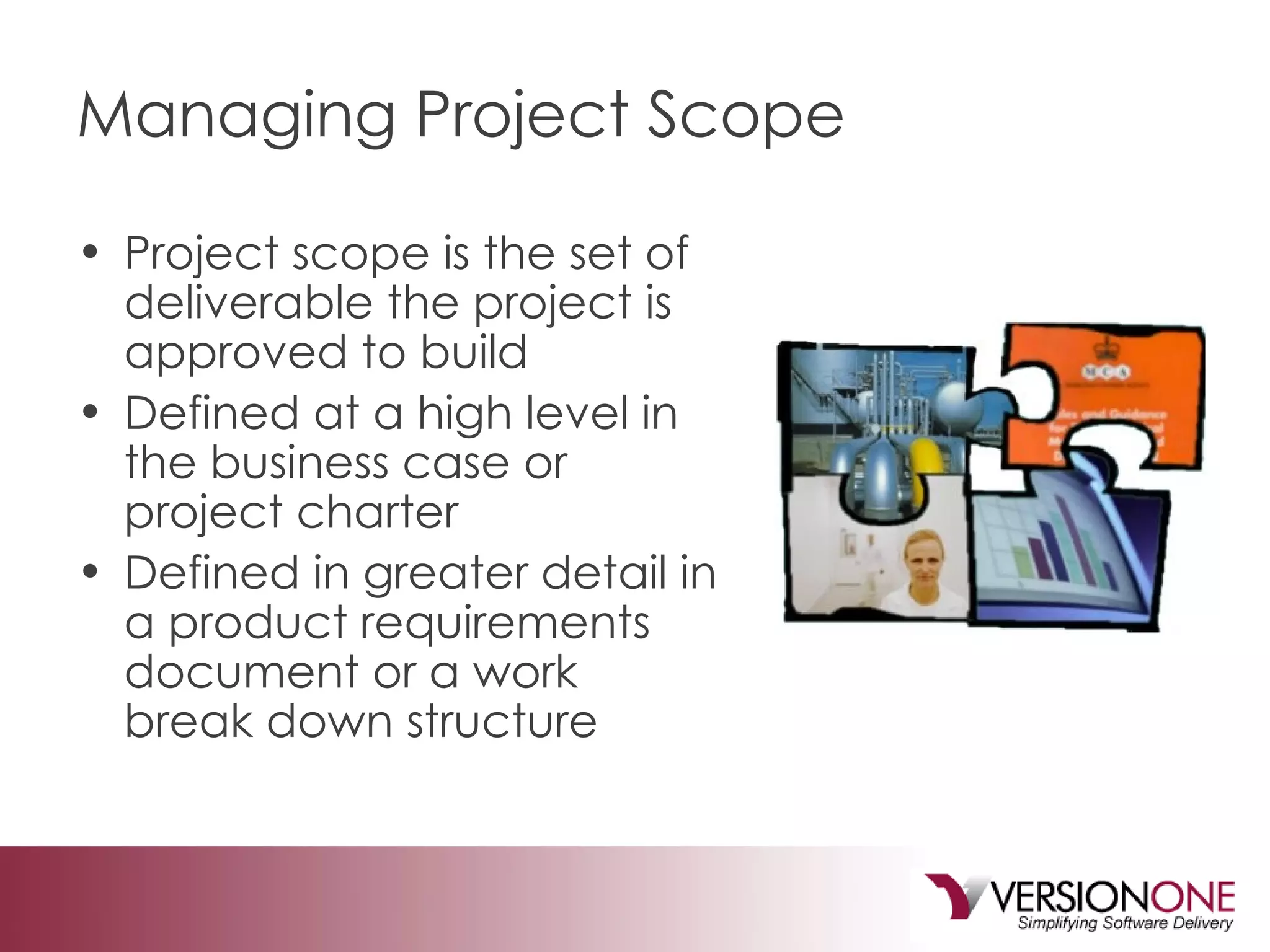
      • Project scope is the set of deliverable the project is approved to build
      • Defined at a high level in the business case or project charter
      • Defined in greater detail in a product requirements document or a work break down structure
    9. Managing Project Costs
      • Project cost is the sum of all capital expenditures, contractor expenses, and internal cost of labor
      • Project managers track project expenses in relationship to the budget
      • Responsible for making sure the project is spending money at the right rate and time
    10. Managing the Schedule
      • The project schedule defines when all the deliverables should be completed and who is going to do them
      • The project schedule also defines the order of the deliverables and is used to track physical percent complete.
    11. Building the Project Schedule
      • Scope for the project is defined and the size of the deliverables are estimated
      • Deliverables are sequenced and resource needs are calculated
      • Based on the size, available budget, dependencies, and constraints; the project timeline can be calculated
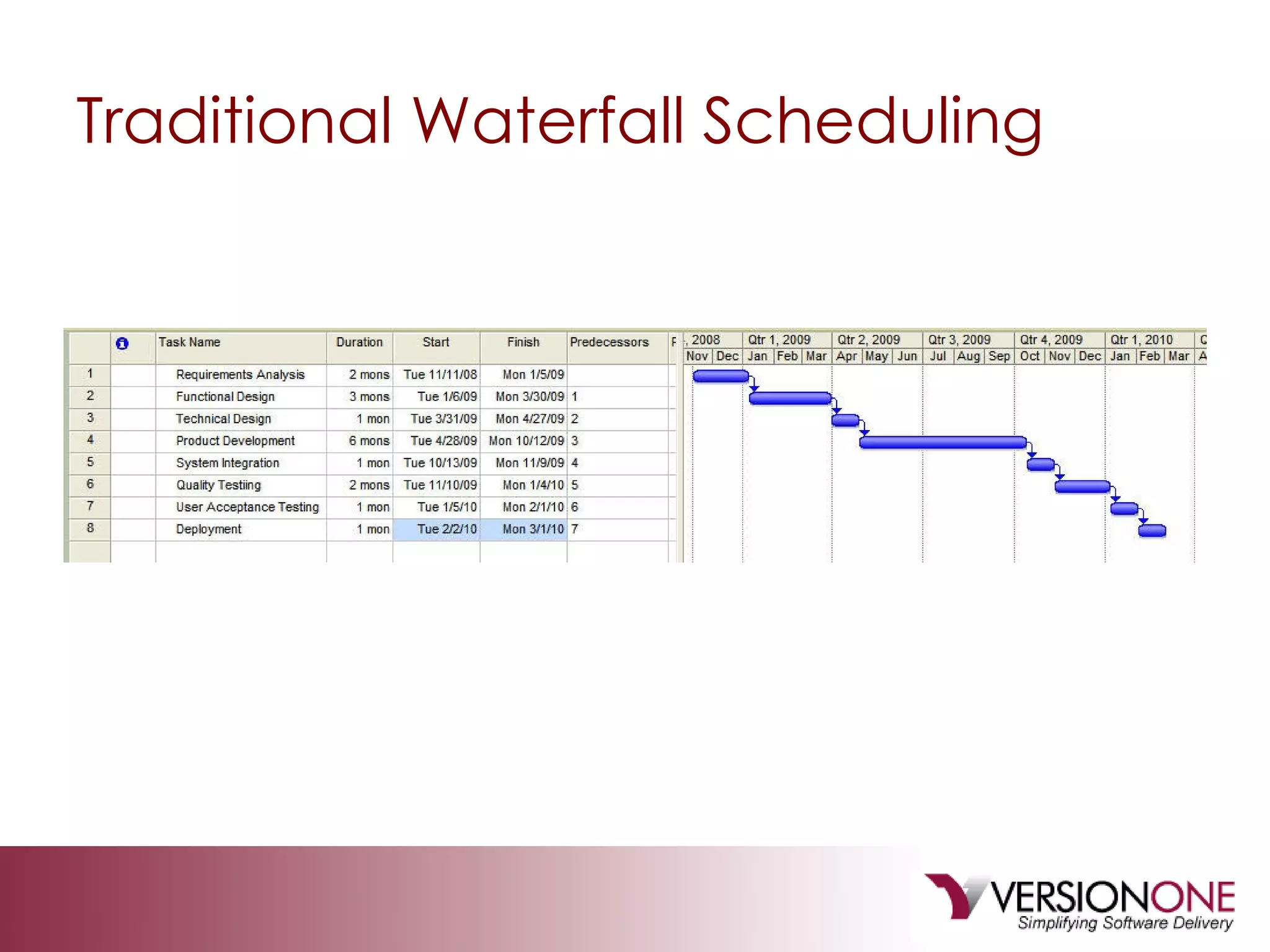
    12. Traditional Waterfall Scheduling
    13. What always happens when we approach the business with our project schedule ?
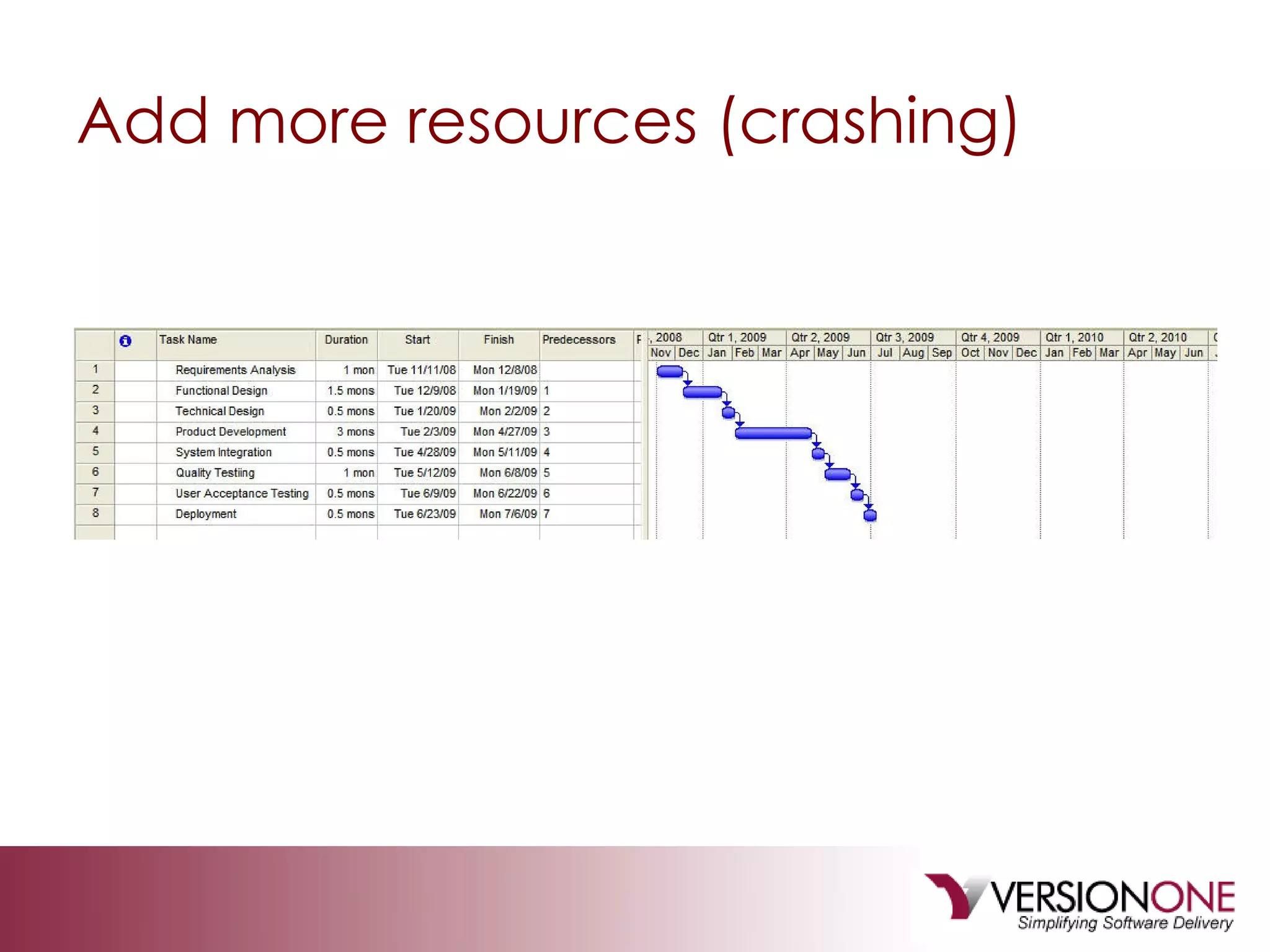
    14. Add more resources (crashing)
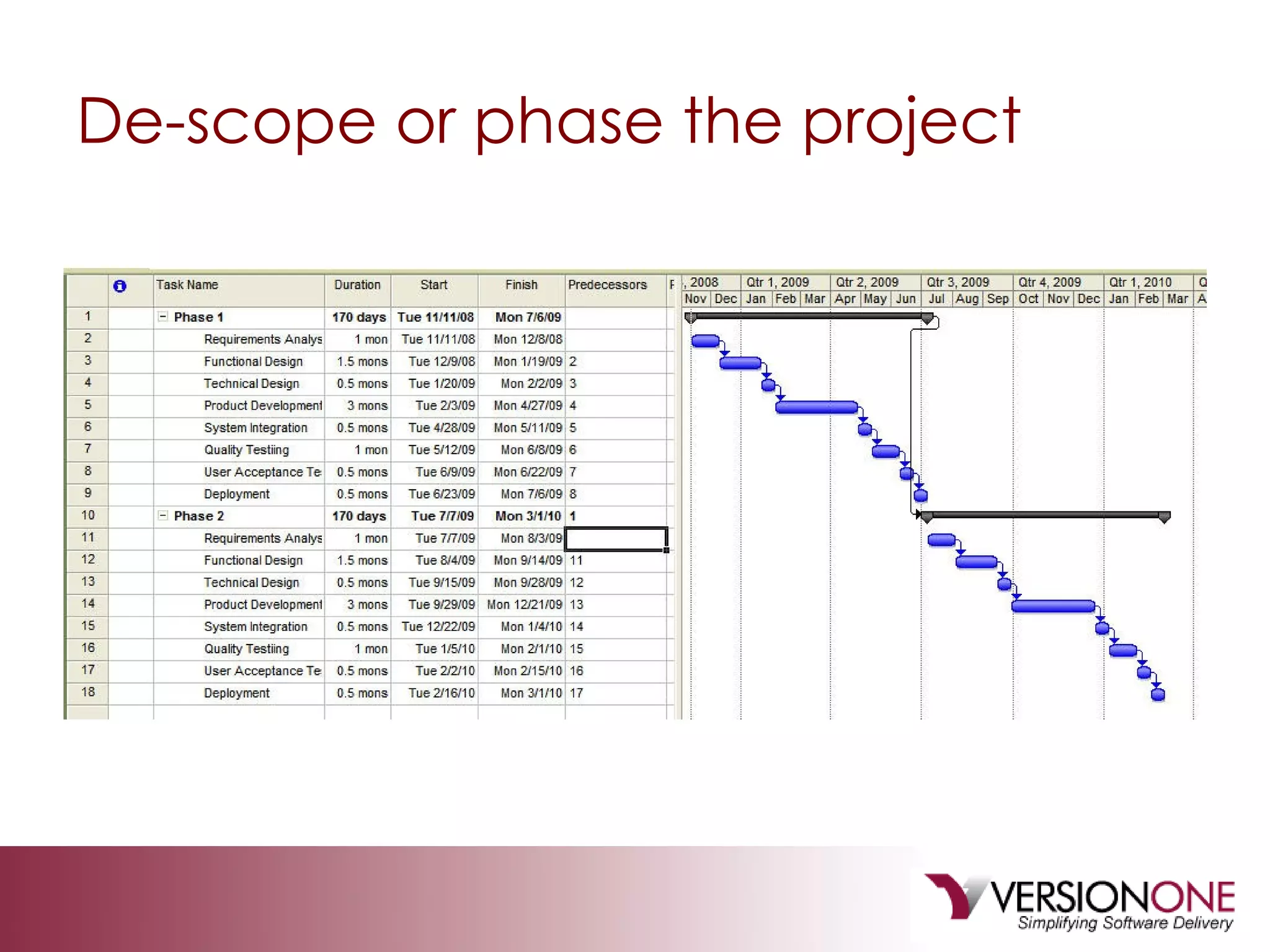
    15. De-scope or phase the project
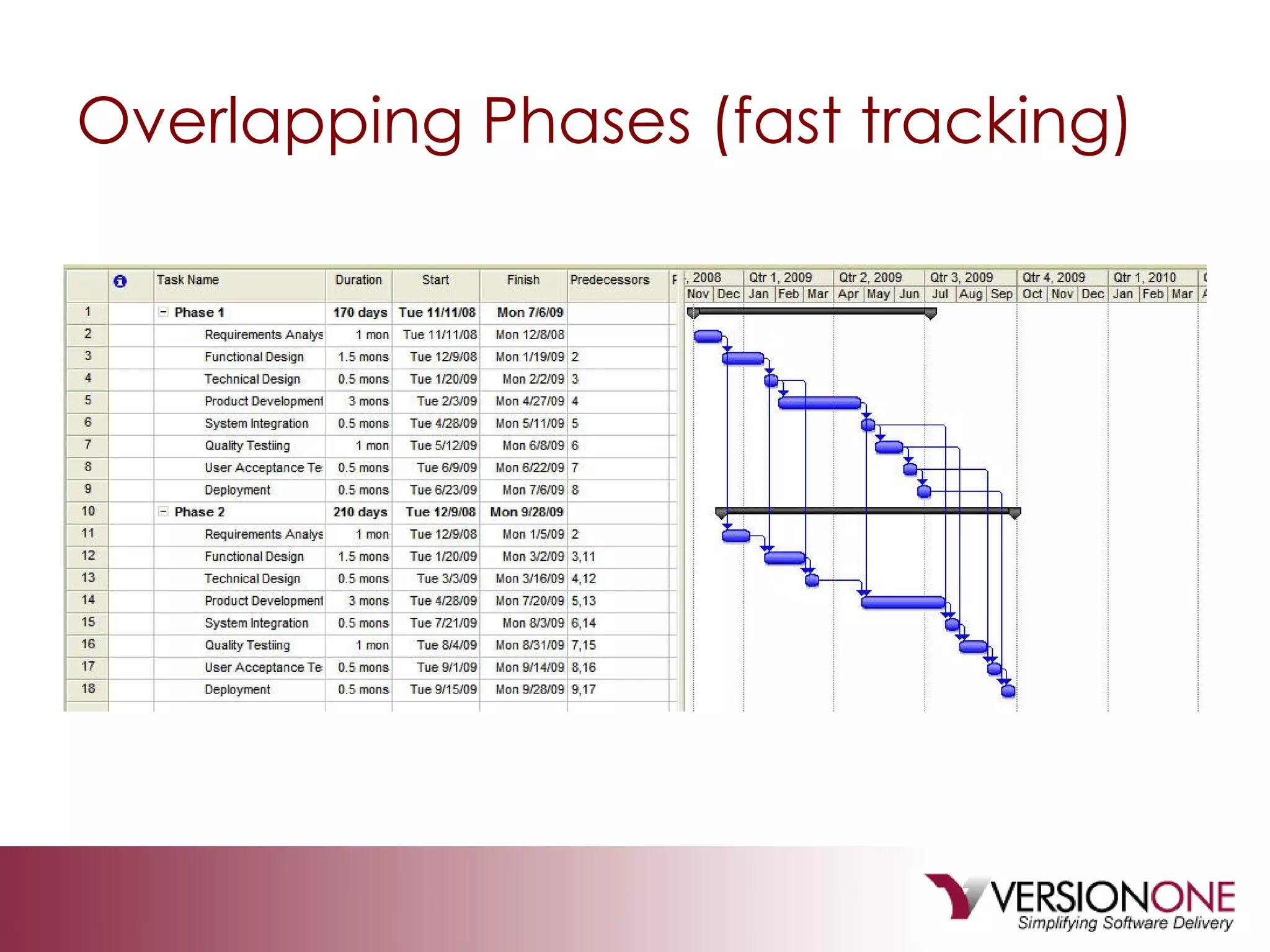
    16. Overlapping Phases (fast tracking)
    17. Project Baseline and Critical Path
      • Once the project sponsors agree to the schedule, the schedule is locked and becomes the baseline
      • Once the project has a baseline, the project manager will calculate the critical path and begin tracking earned value
      • Earned value measures how much the project is spending relative to time and deliverables
    18. What about uncertainty ?
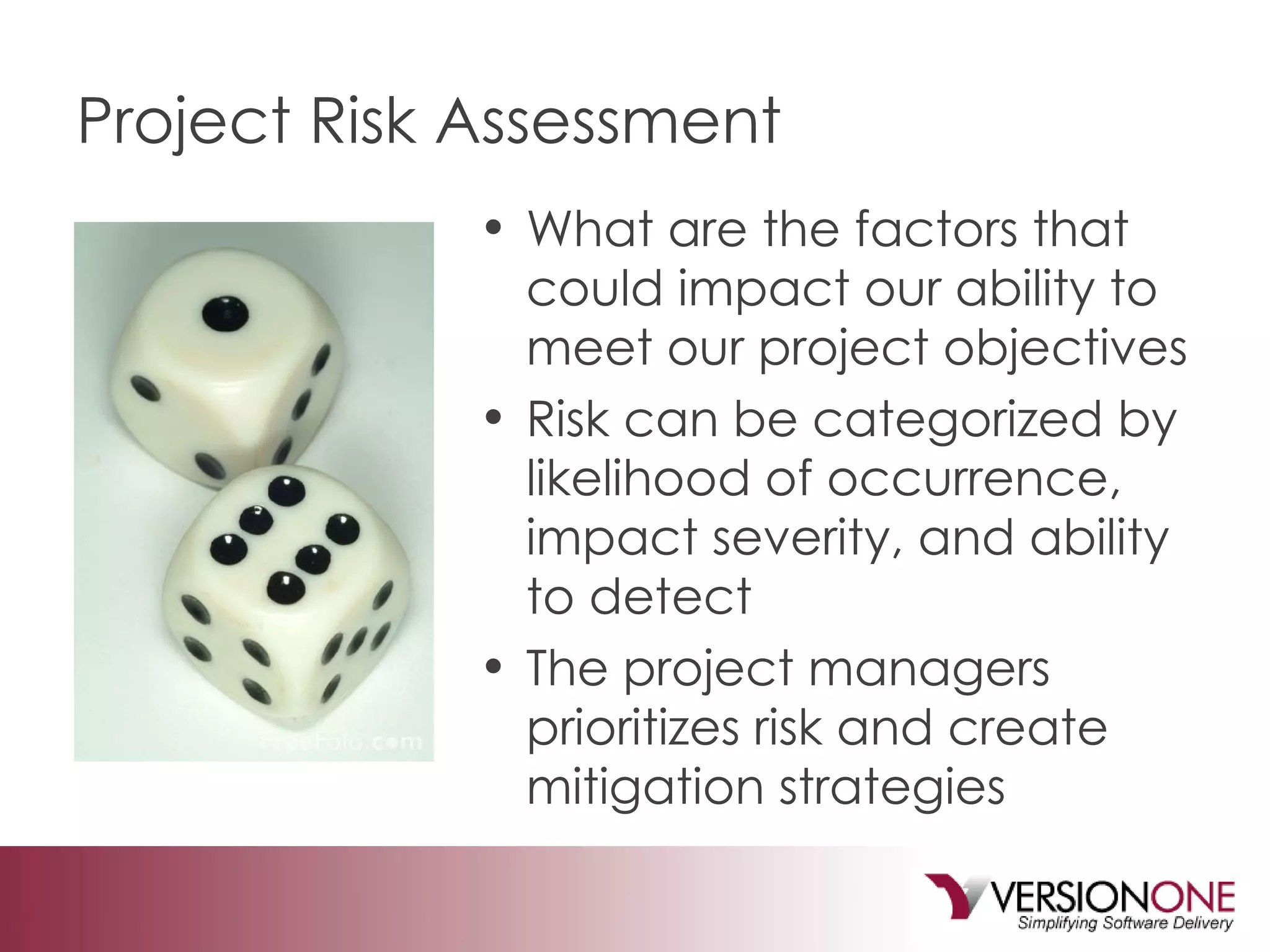
    19. Project Risk Assessment
      • What are the factors that could impact our ability to meet our project objectives
      • Risk can be categorized by likelihood of occurrence, impact severity, and ability to detect
      • The project managers prioritizes risk and create mitigation strategies
    20. Primary Traditional Project Constraints
      • Scope is typically the primary driver… time and cost are calculated based on the size of the project
      • Assumes an ability to accurately predict scope, cost, and schedule
    21. So… what’s new about Agile Project Management?
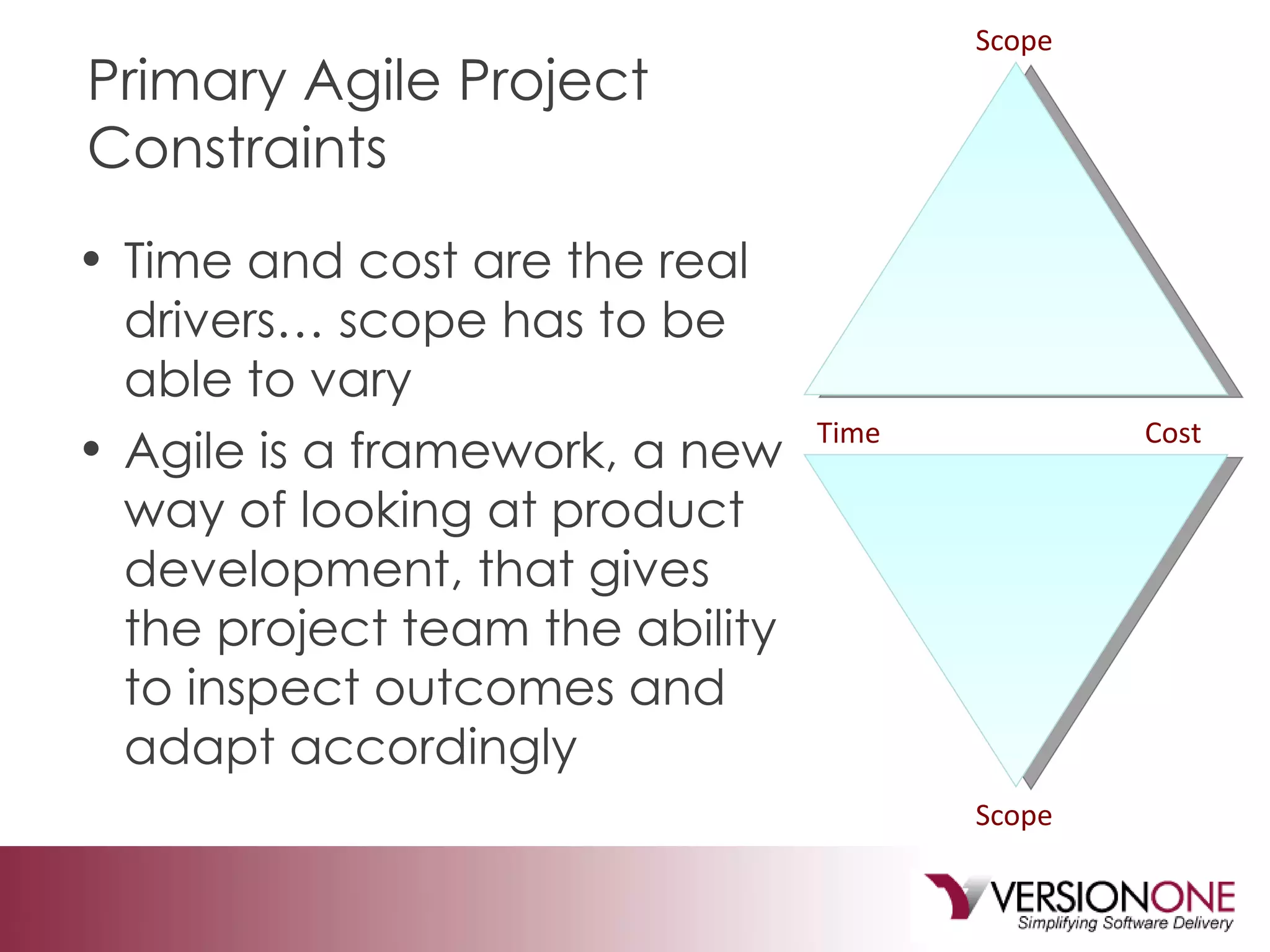
    22. Primary Agile Project Constraints
      • Time and cost are the real drivers… scope has to be able to vary
      • Agile is a framework, a new way of looking at product development, that gives the project team the ability to inspect outcomes and adapt accordingly
      Scope Time Cost Scope
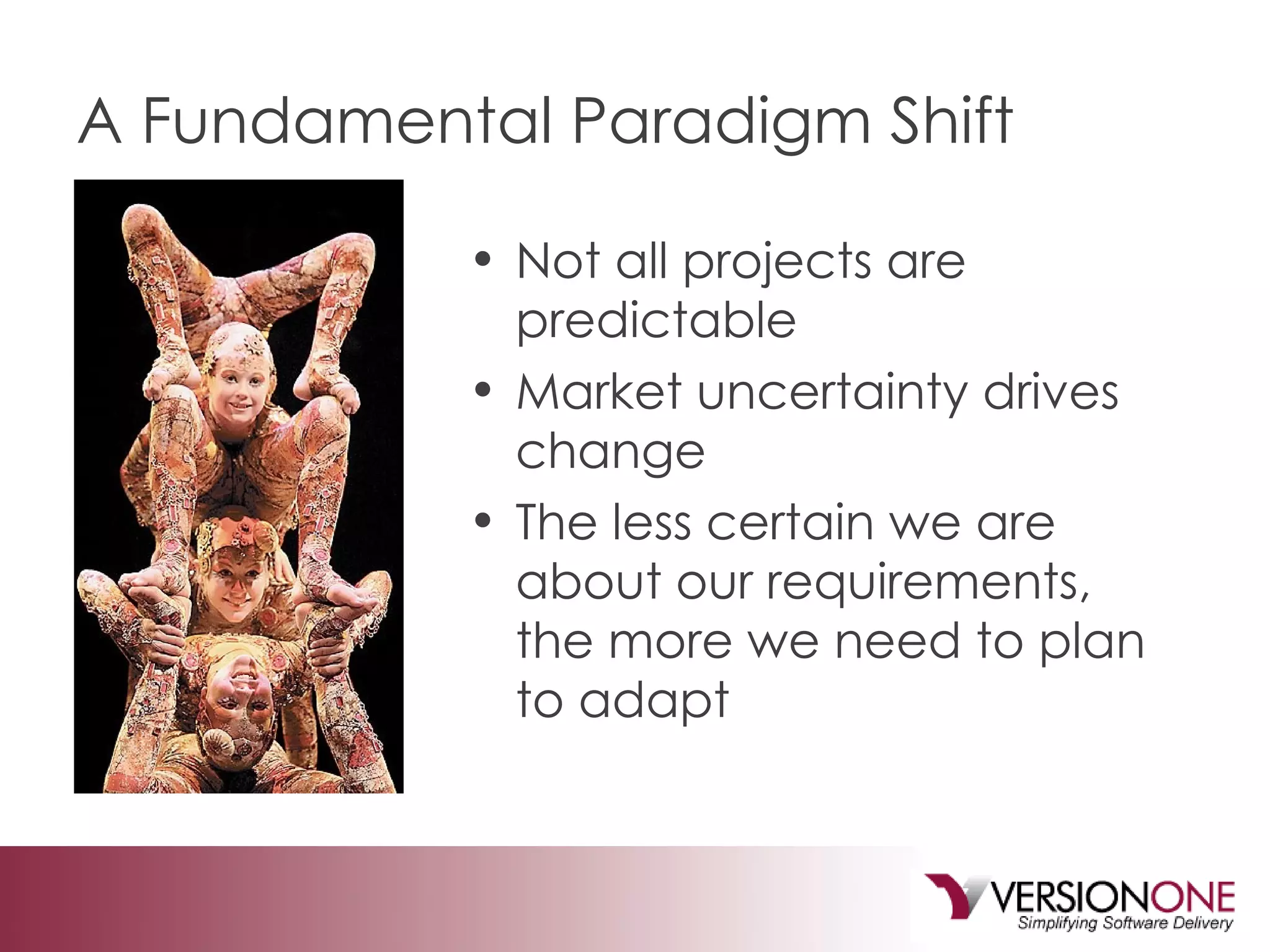
    23. A Fundamental Paradigm Shift
      • Not all projects are predictable
      • Market uncertainty drives change
      • The less certain we are about our requirements, the more we need to plan to adapt
    24. Agile embraces uncertainty !
    25. Agile is a risk mitigation technique when our assumptions about predictability do not hold
    26. The Cost of Change
      • Cost of traditional change management is too high in many project contexts
      • Change control is bureaucratic and slow
      • We become resistant to change when we should embrace change
    27. How often to we really take process cost into consideration when planning our projects ?
    28. Still answering the five questions…
      • When will the project be done?
      • How much will it cost?
      • Do we all agree on what done looks like?
      • What are the risks to getting done on time and on schedule?
      • How will we mitigate these risks so we can get done
    29. … but taking a difference approach
      • Deliver working product in short cycles
      • Keep the evolving product highly visible
      • Inspect outcomes frequently
      • Change our product or processes as we learn more to ensure acceptable outcomes
      • Do less work that will change
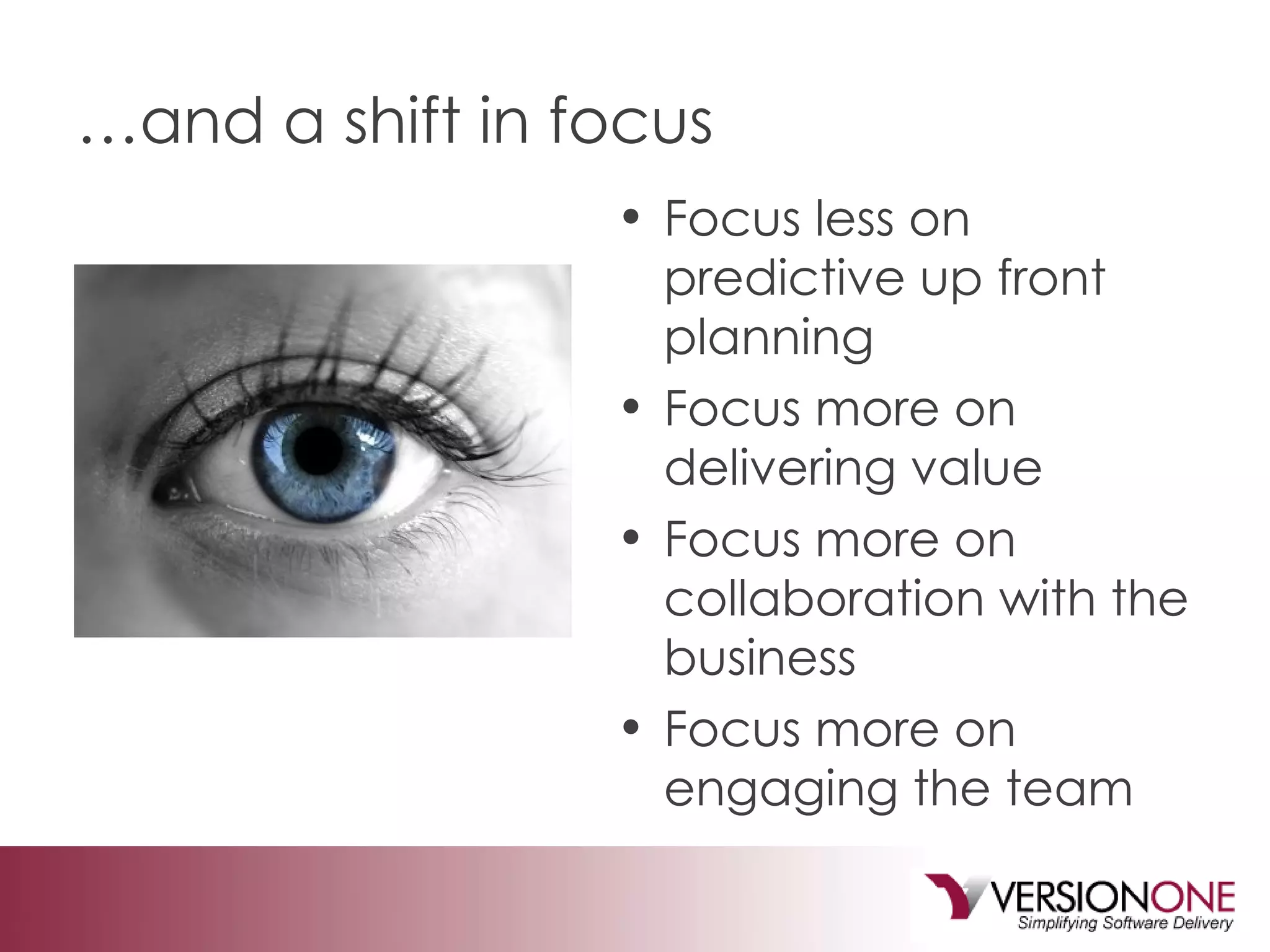
    30. … and a shift in focus
      • Focus less on predictive up front planning
      • Focus more on delivering value
      • Focus more on collaboration with the business
      • Focus more on engaging the team
    31. Moving away from activity based Project Management toward value based Project Management …
    32. Not all value based project management is agile …
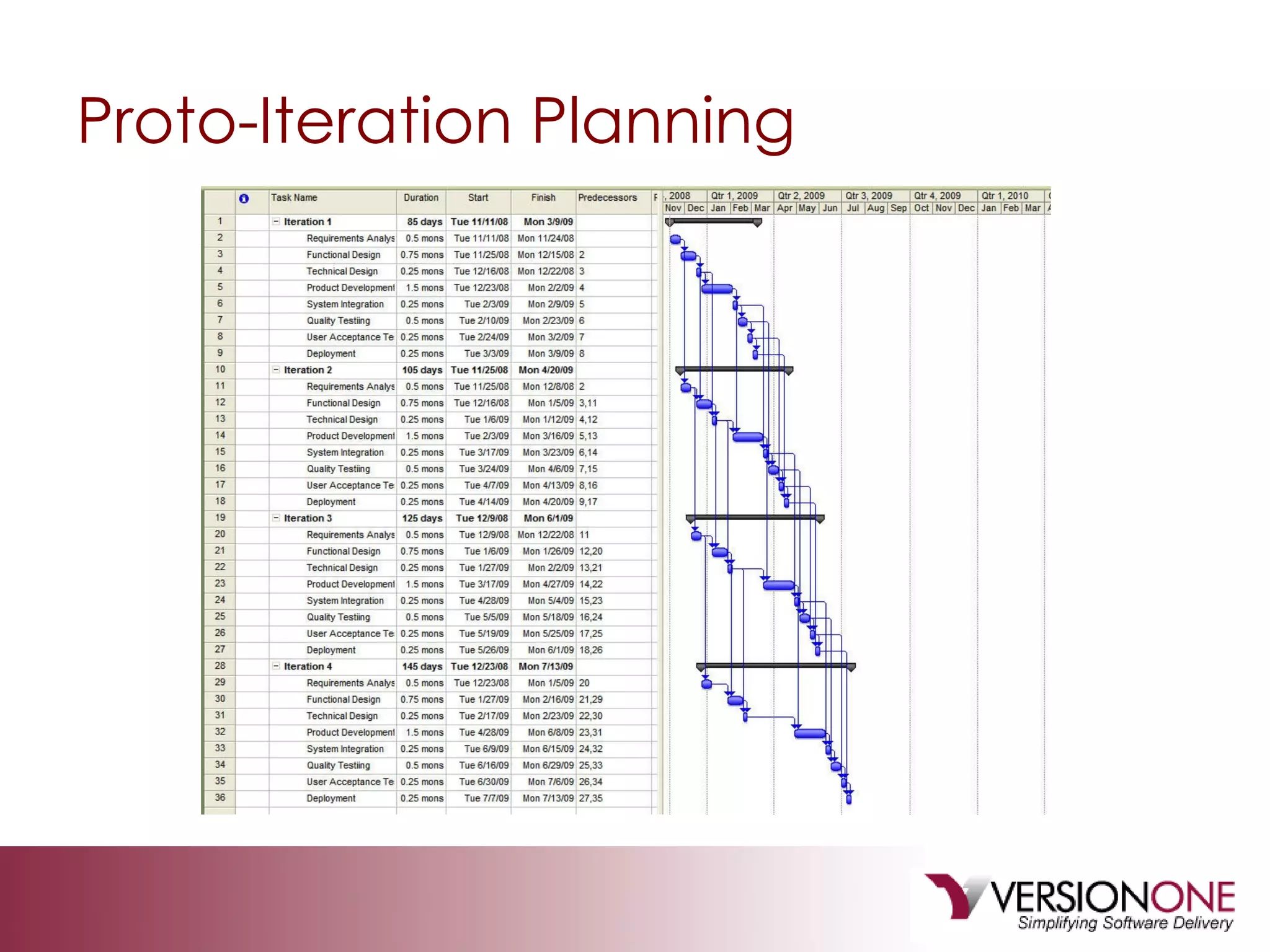
    33. Proto-Iteration Planning
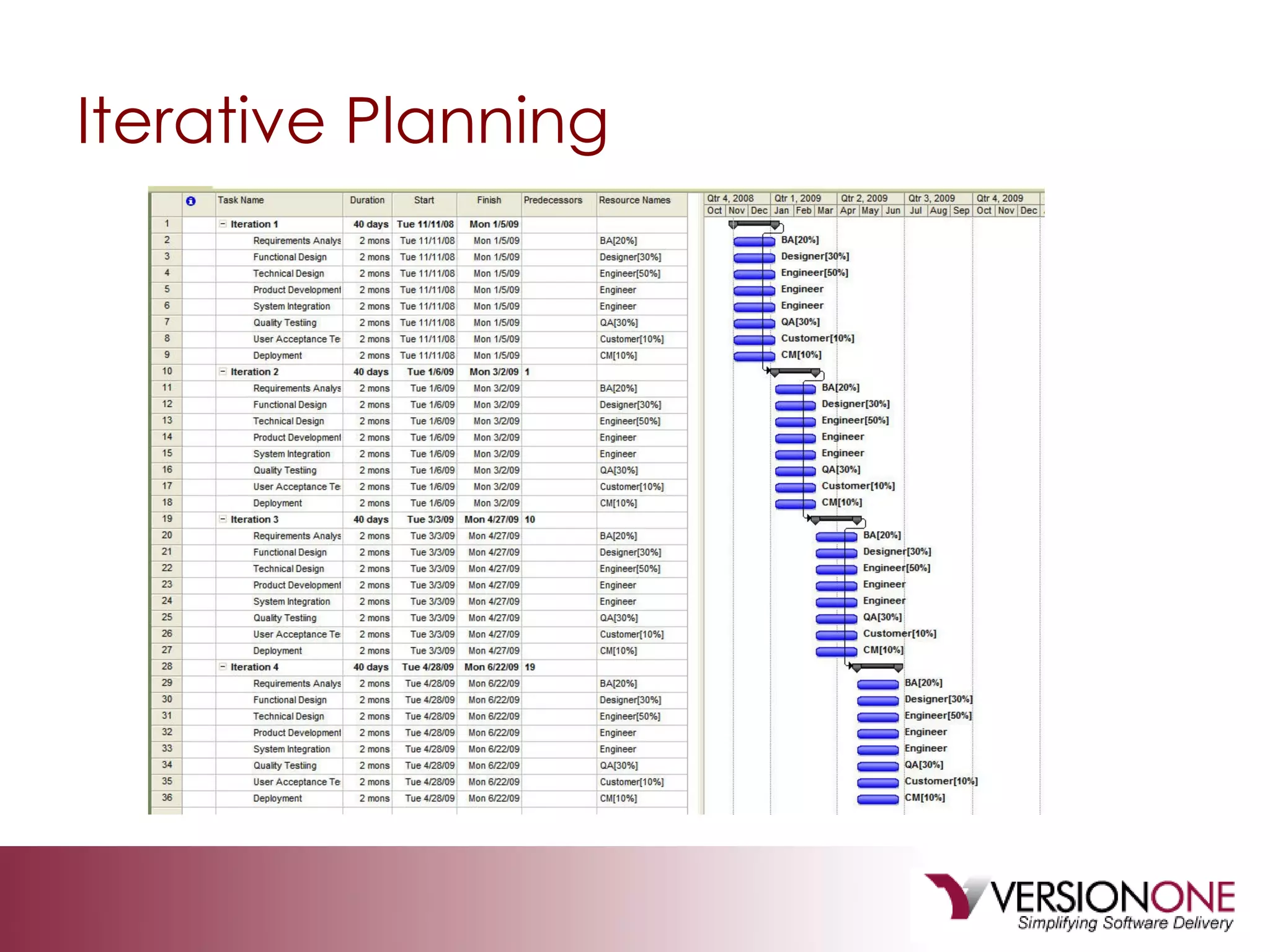
    34. Iterative Planning
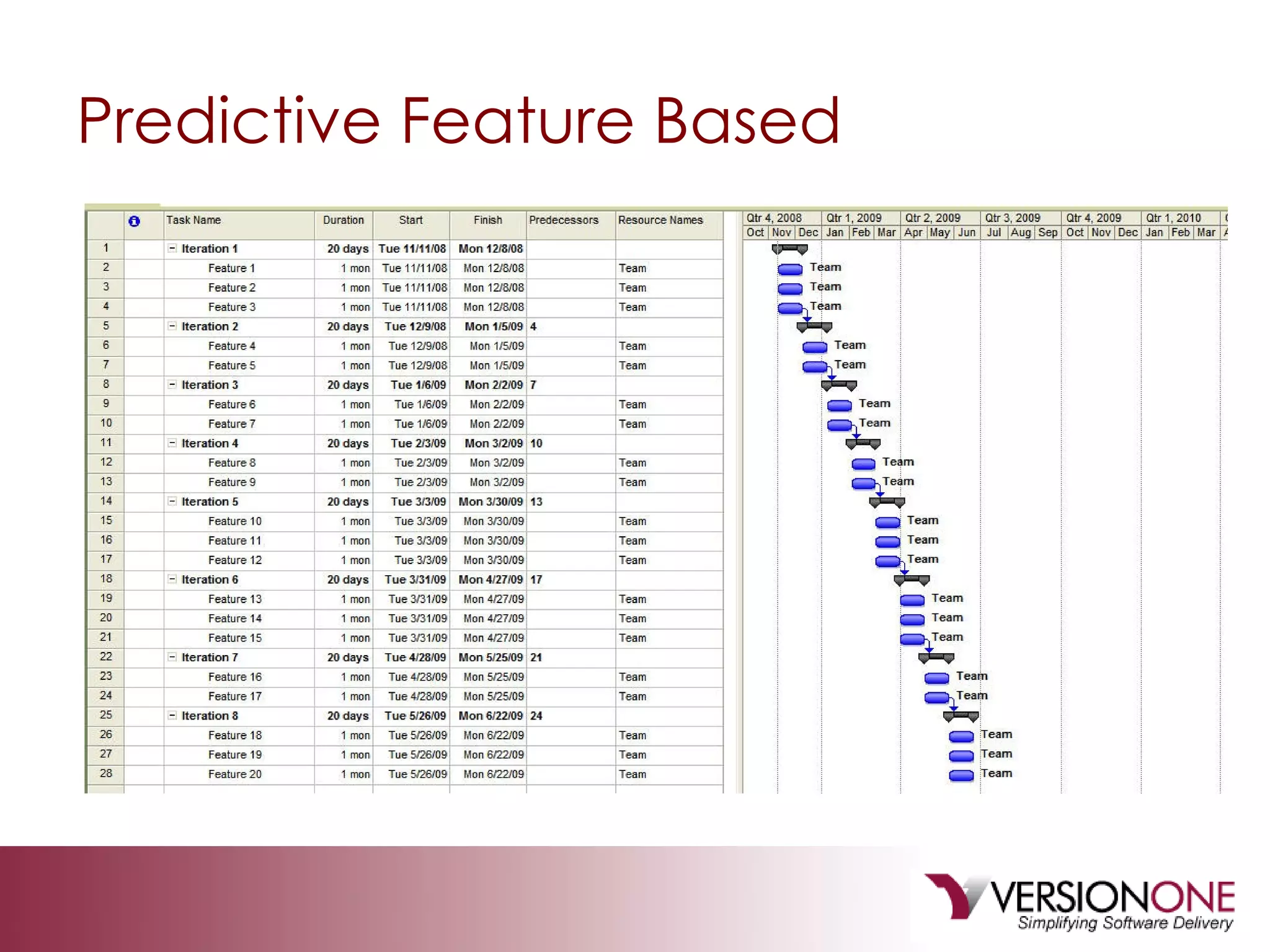
    35. Predictive Feature Based
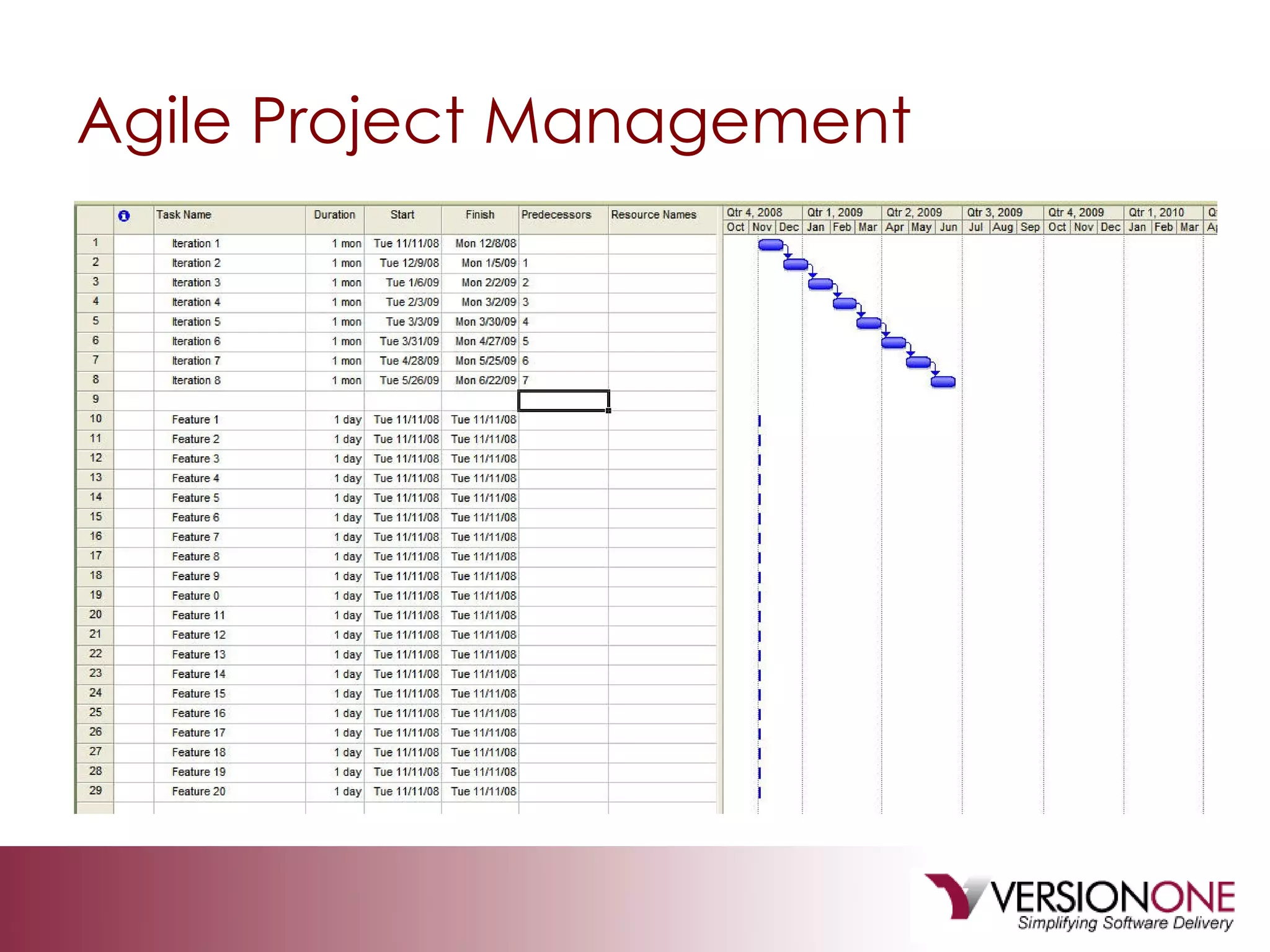
    36. Agile Project Management
    37. Agile and the PMBOK
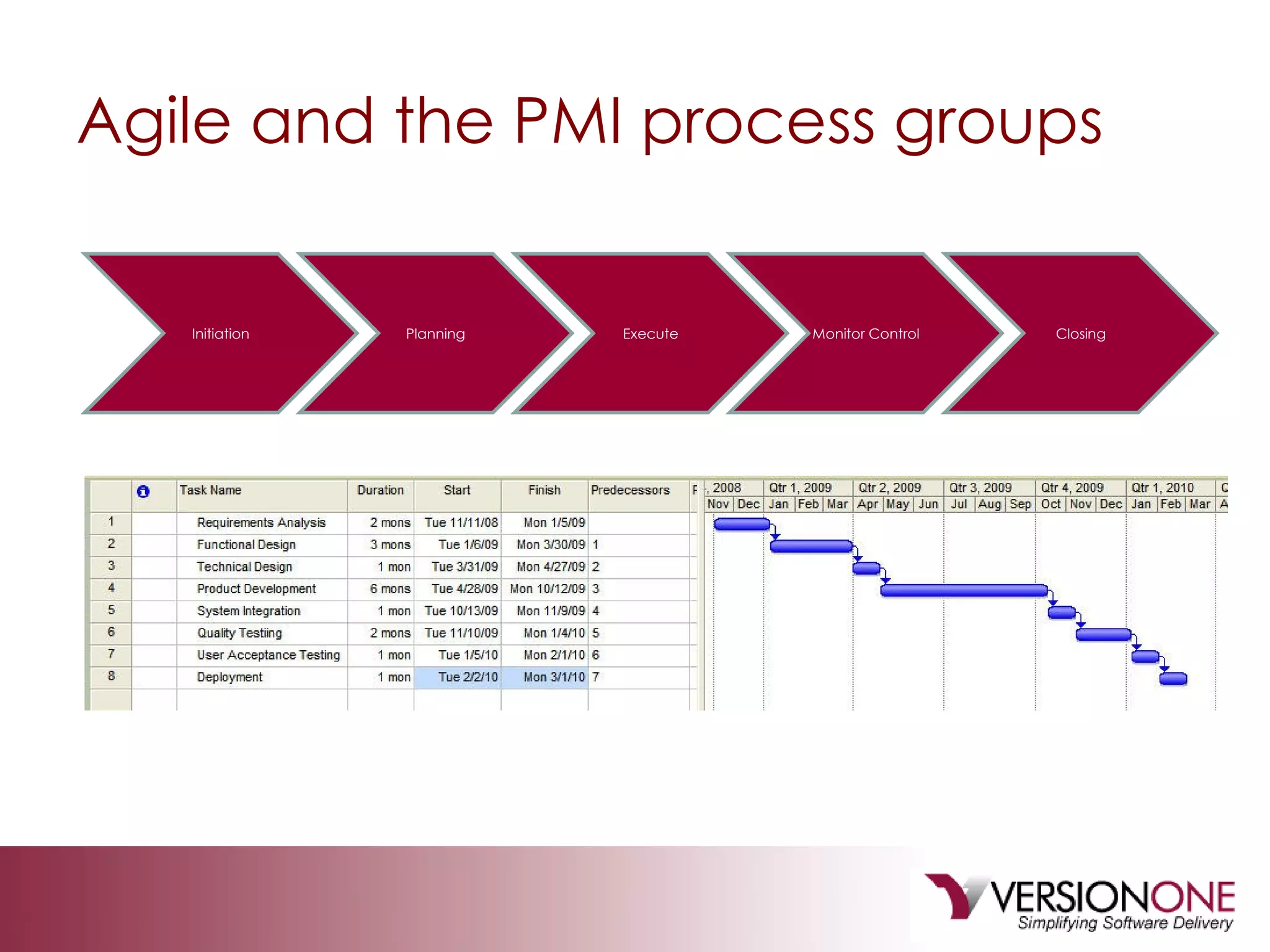
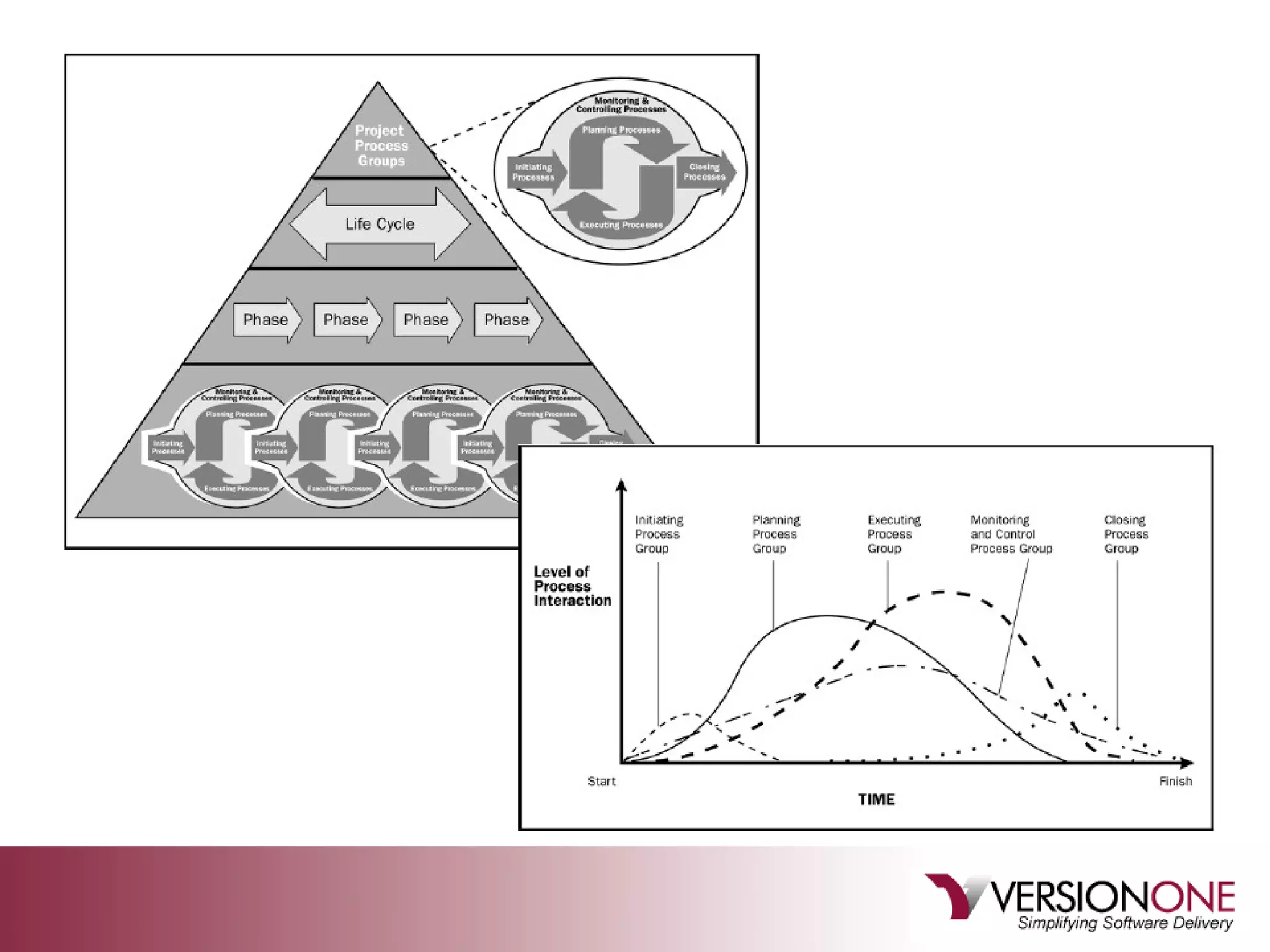
    38. Agile and the PMI process groups Initiation Planning Execute Monitor Control Closing
    39.  
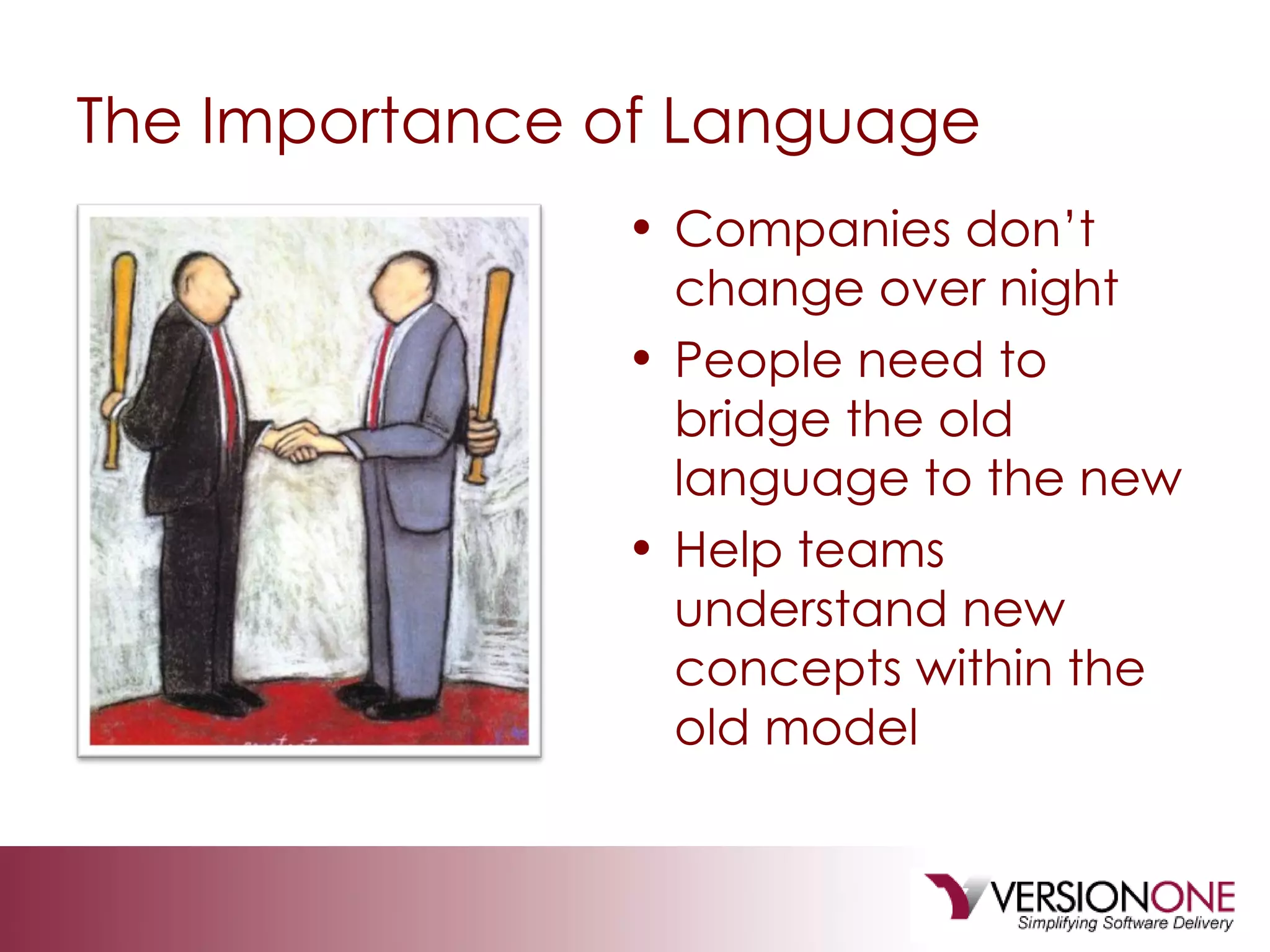
    40. The Importance of Language
      • Companies don’t change over night
      • People need to bridge the old language to the new
      • Help teams understand new concepts within the old model
    41. Understanding Agile in the context of the PMI knowledge areas…
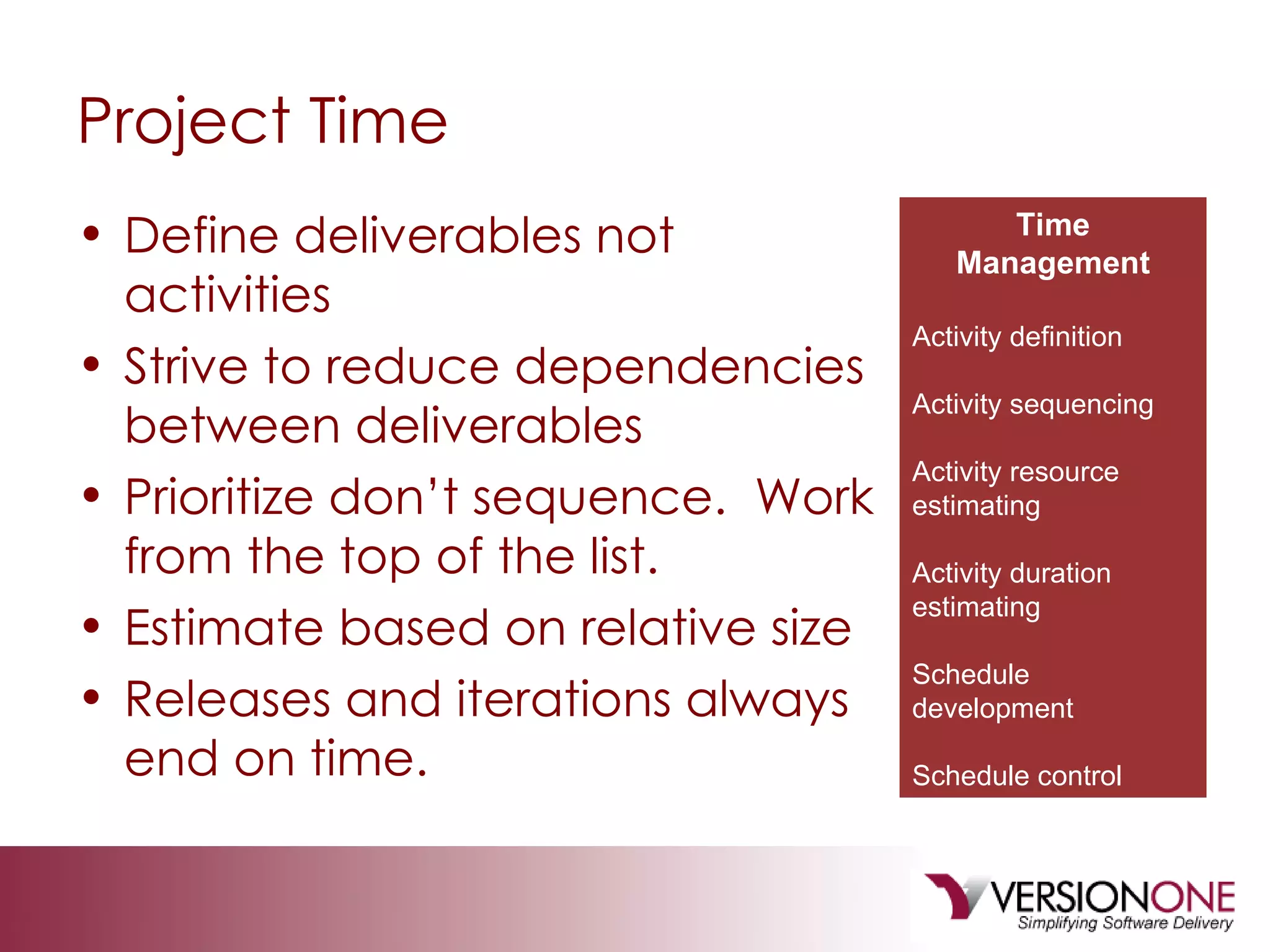
    42. Project Time
      • Define deliverables not activities
      • Strive to reduce dependencies between deliverables
      • Prioritize don’t sequence. Work from the top of the list.
      • Estimate based on relative size
      • Releases and iterations always end on time.
      Time Management Activity definition Activity sequencing Activity resource estimating Activity duration estimating Schedule development Schedule control
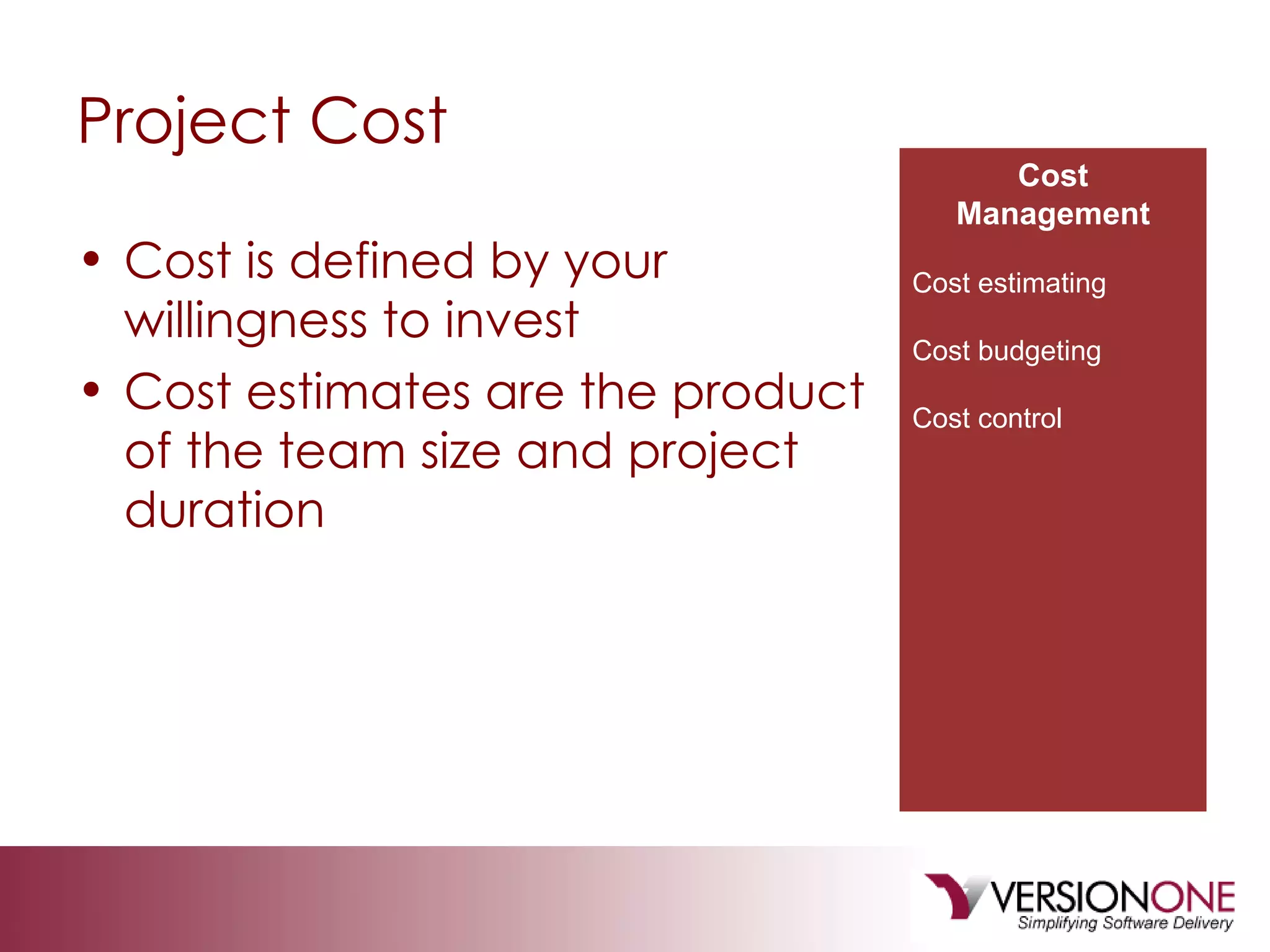
    43. Project Cost
      • Cost is defined by your willingness to invest
      • Cost estimates are the product of the team size and project duration
      Cost Management Cost estimating Cost budgeting Cost control
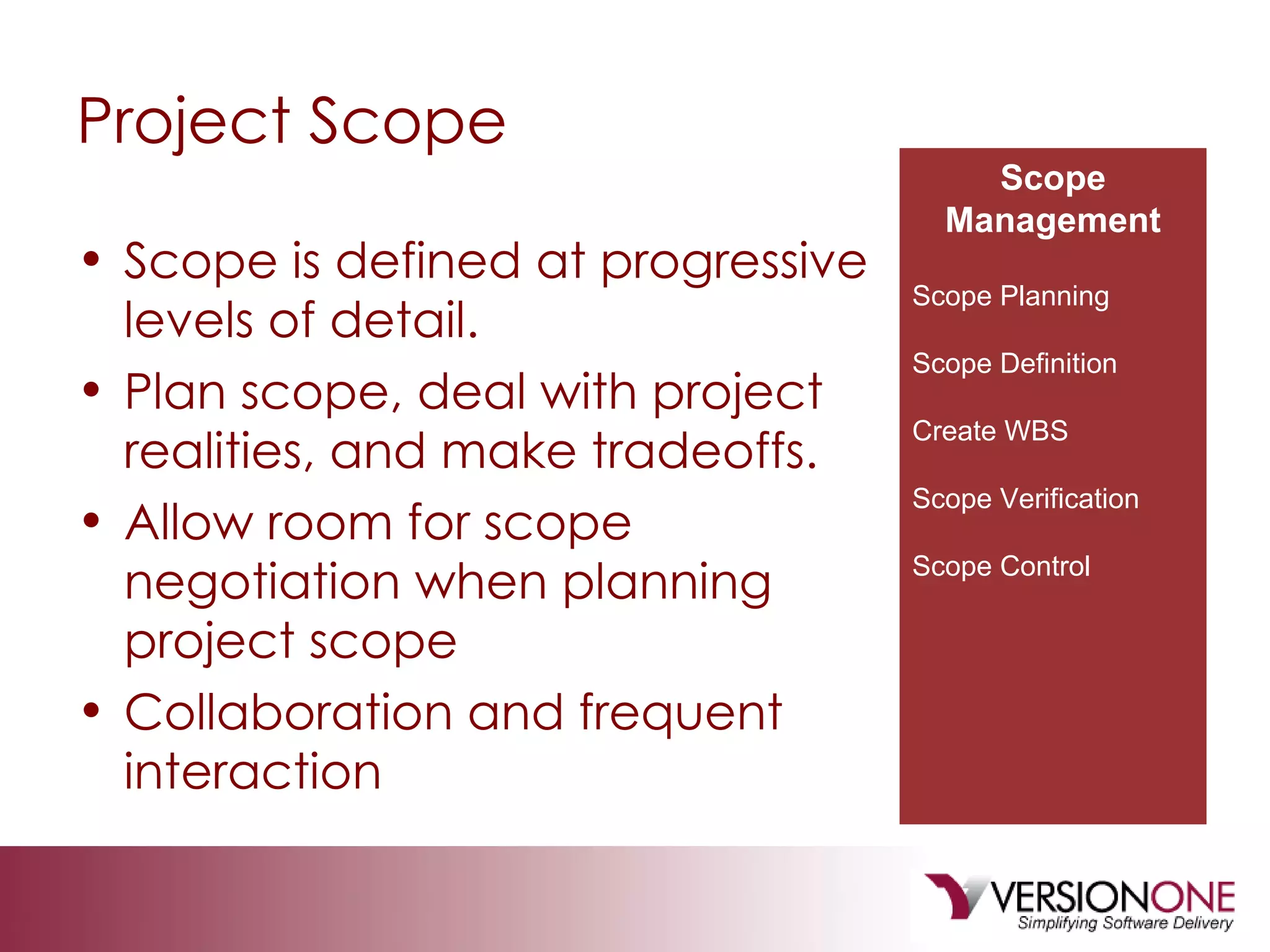
    44. Project Scope
      • Scope is defined at progressive levels of detail.
      • Plan scope, deal with project realities, and make tradeoffs.
      • Allow room for scope negotiation when planning project scope
      • Collaboration and frequent interaction
      Scope Management Scope Planning Scope Definition Create WBS Scope Verification Scope Control
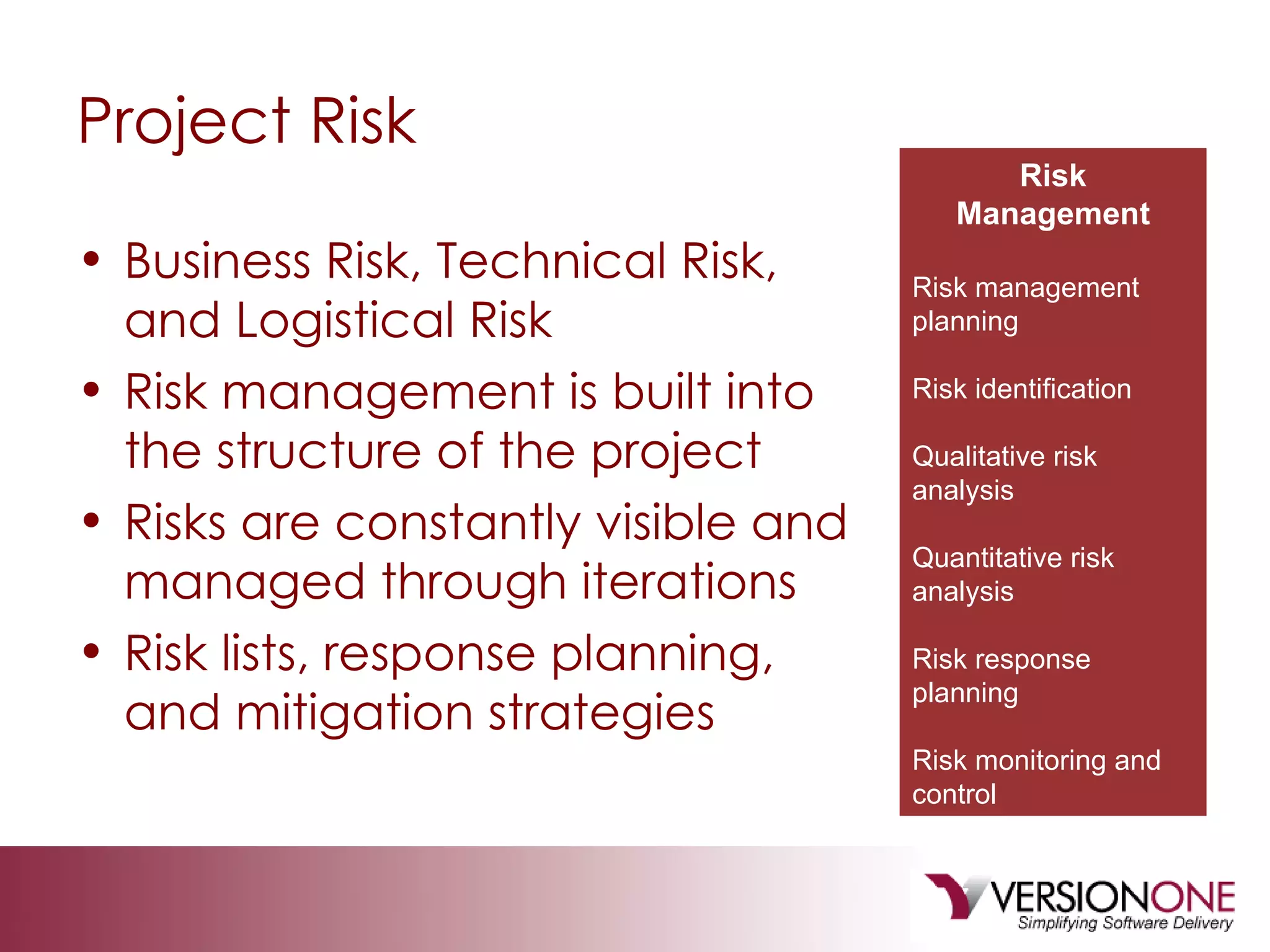
    45. Project Risk
      • Business Risk, Technical Risk, and Logistical Risk
      • Risk management is built into the structure of the project
      • Risks are constantly visible and managed through iterations
      • Risk lists, response planning, and mitigation strategies
      Risk Management Risk management planning Risk identification Qualitative risk analysis Quantitative risk analysis Risk response planning Risk monitoring and control
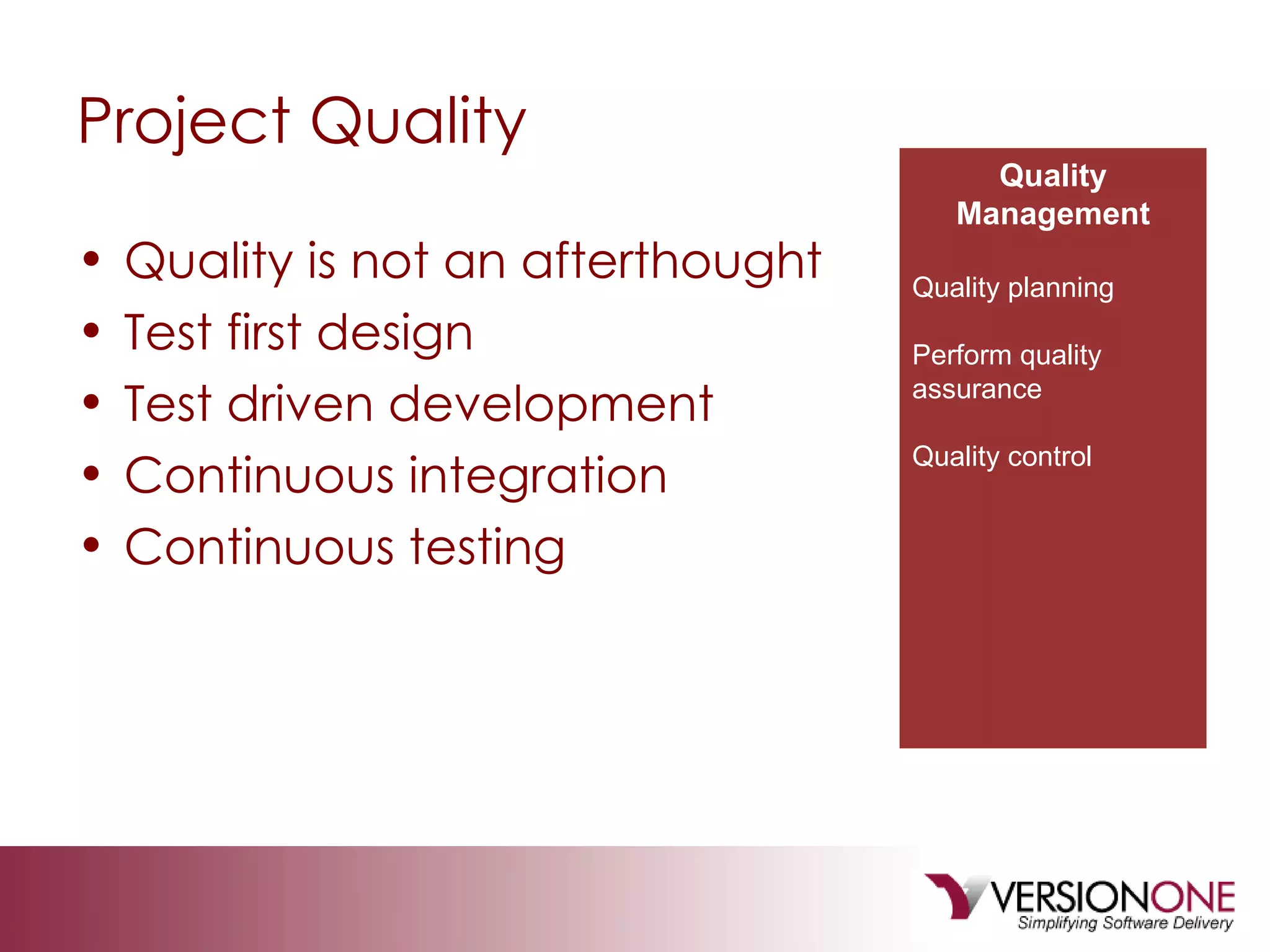
    46. Project Quality
      • Quality is not an afterthought
      • Test first design
      • Test driven development
      • Continuous integration
      • Continuous testing
      Quality Management Quality planning Perform quality assurance Quality control
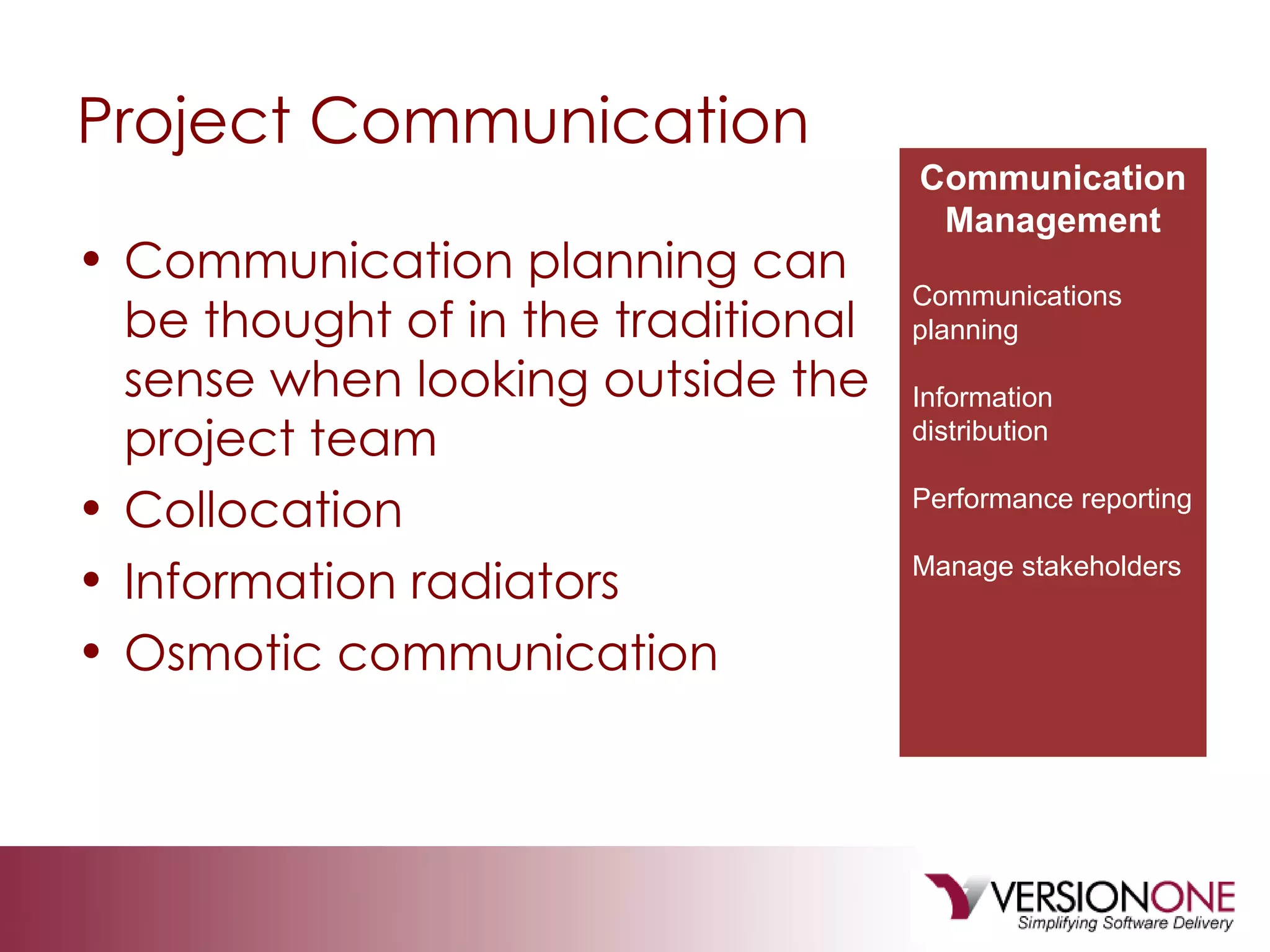
    47. Project Communication
      • Communication planning can be thought of in the traditional sense when looking outside the project team
      • Collocation
      • Information radiators
      • Osmotic communication
      Communication Management Communications planning Information distribution Performance reporting Manage stakeholders
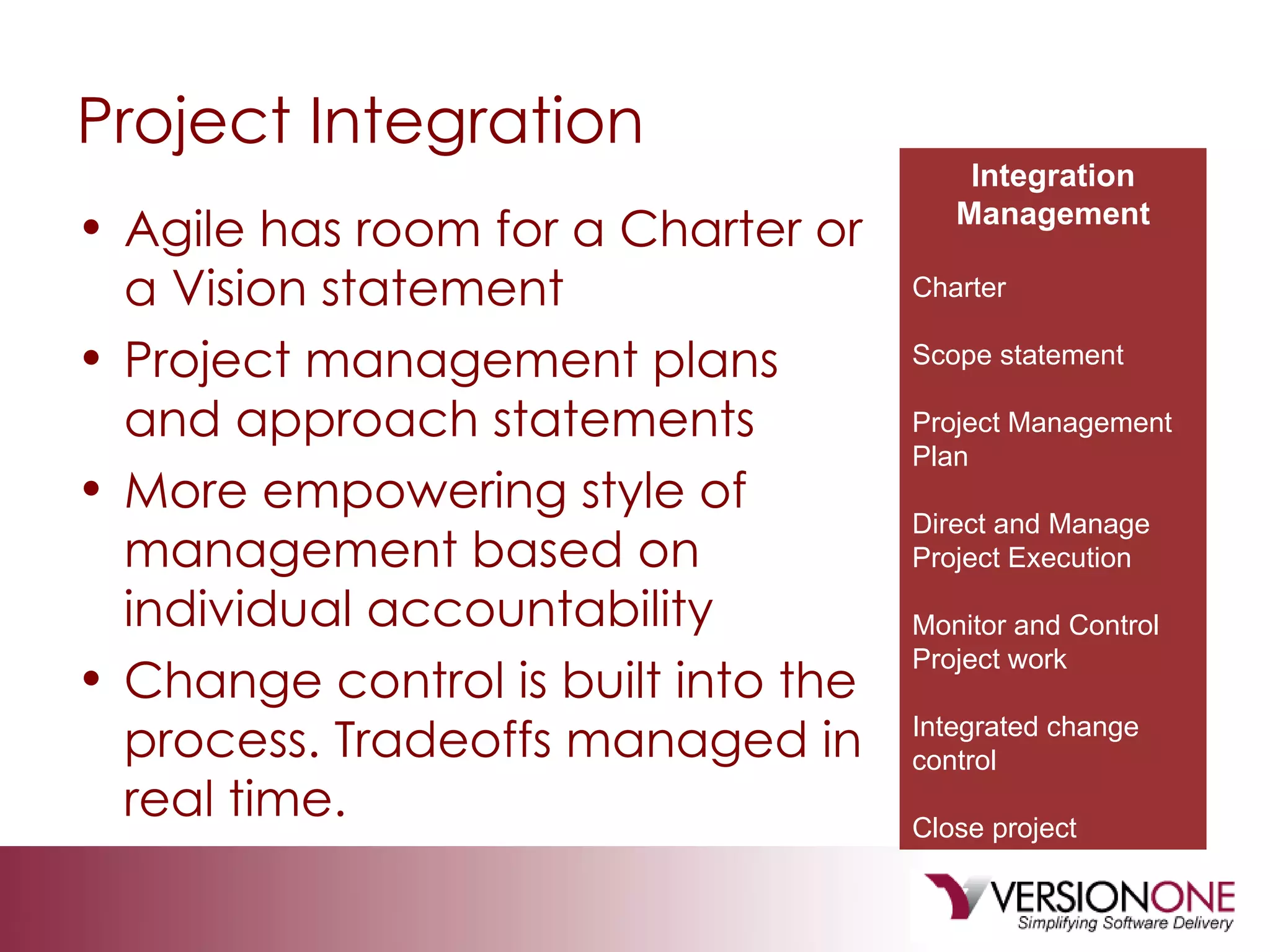
    48. Project Integration
      • Agile has room for a Charter or a Vision statement
      • Project management plans and approach statements
      • More empowering style of management based on individual accountability
      • Change control is built into the process. Tradeoffs managed in real time.
      Integration Management Charter Scope statement Project Management Plan Direct and Manage Project Execution Monitor and Control Project work Integrated change control Close project
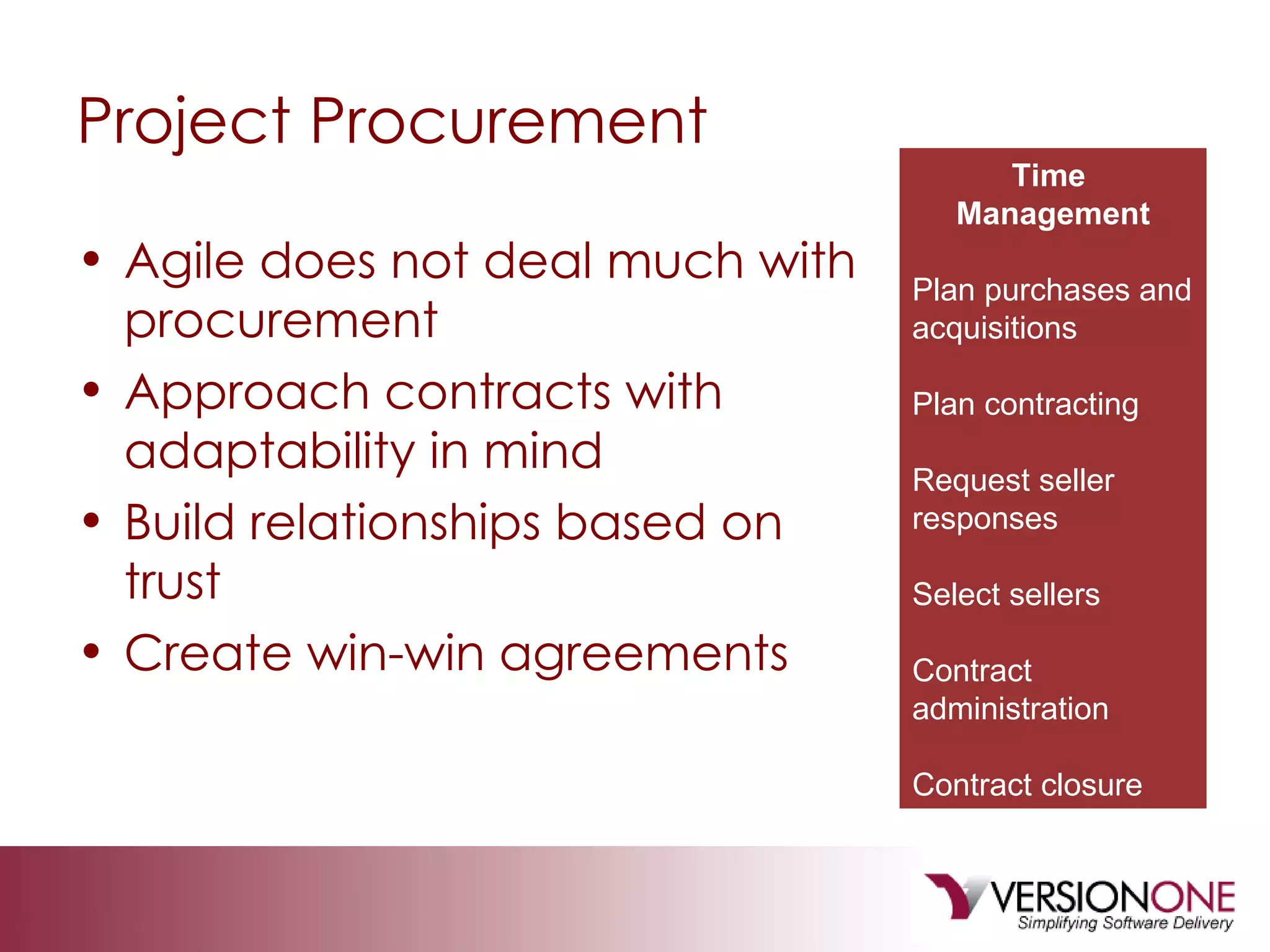
    49. Project Procurement
      • Agile does not deal much with procurement
      • Approach contracts with adaptability in mind
      • Build relationships based on trust
      • Create win-win agreements
      Time Management Plan purchases and acquisitions Plan contracting Request seller responses Select sellers Contract administration Contract closure
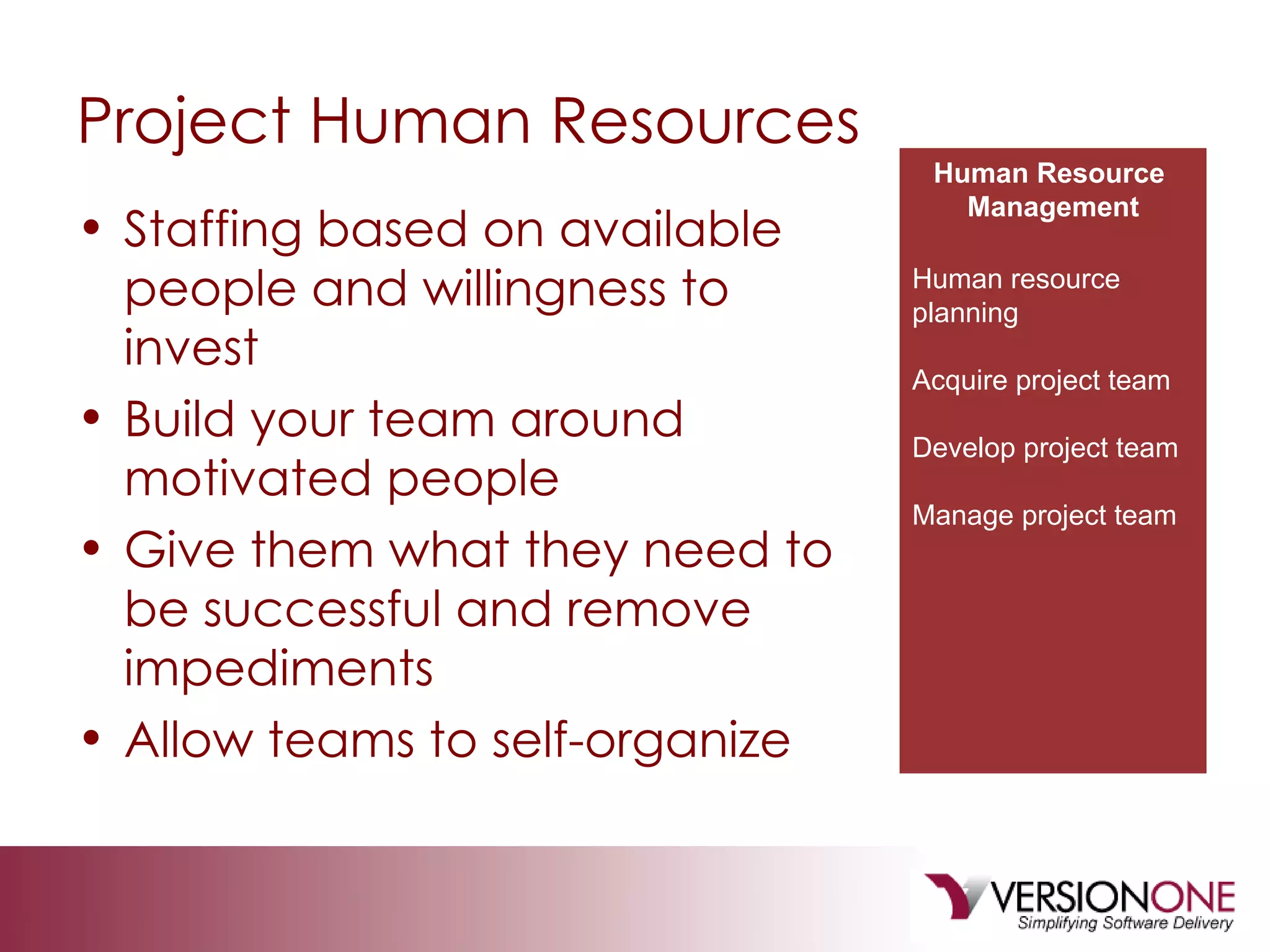
    50. Project Human Resources
      • Staffing based on available people and willingness to invest
      • Build your team around motivated people
      • Give them what they need to be successful and remove impediments
      • Allow teams to self-organize
      Human Resource Management Human resource planning Acquire project team Develop project team Manage project team
    51. What Can I Do Today ?
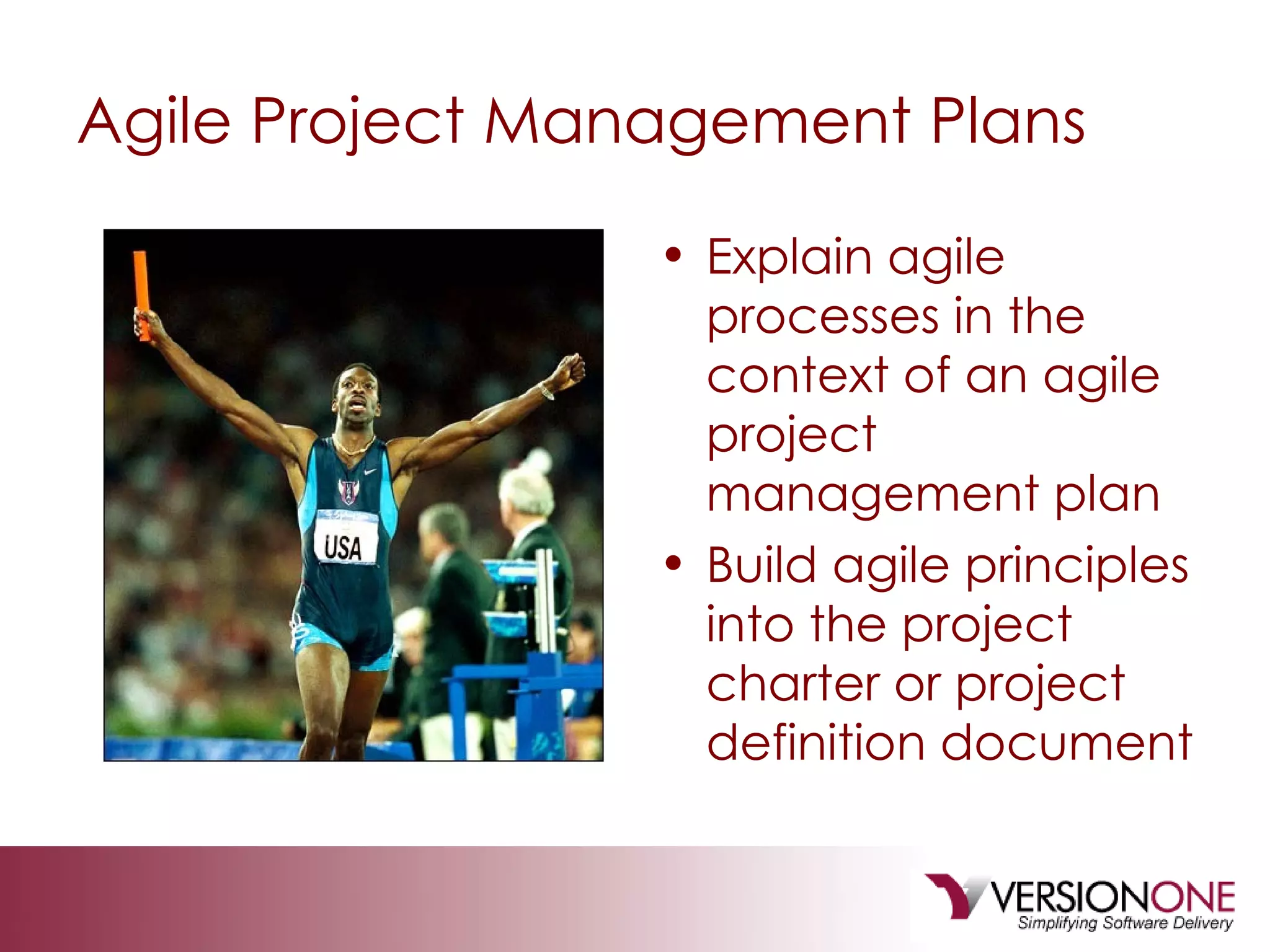
    52. Agile Project Management Plans
      • Explain agile processes in the context of an agile project management plan
      • Build agile principles into the project charter or project definition document
    53. Feature Based Deliverables
      • Stop putting activities in your project plan
      • Focus on outcomes… what are we going to build?
      • What capabilities need to be in the system by when?
      • Let’s start actually Earning Value
    54. Iterative Planning
      • Do detailed planning on iterative cycles
      • Use the data gathered in the planning to do a reality check on your schedule
      • Keep a higher level plan, maybe a milestone plan in a traditional PM tool
    55. Daily Stand-up Meetings
      • Increase visibility
      • Establish a sense of team work and collaboration
      • Shared accountability
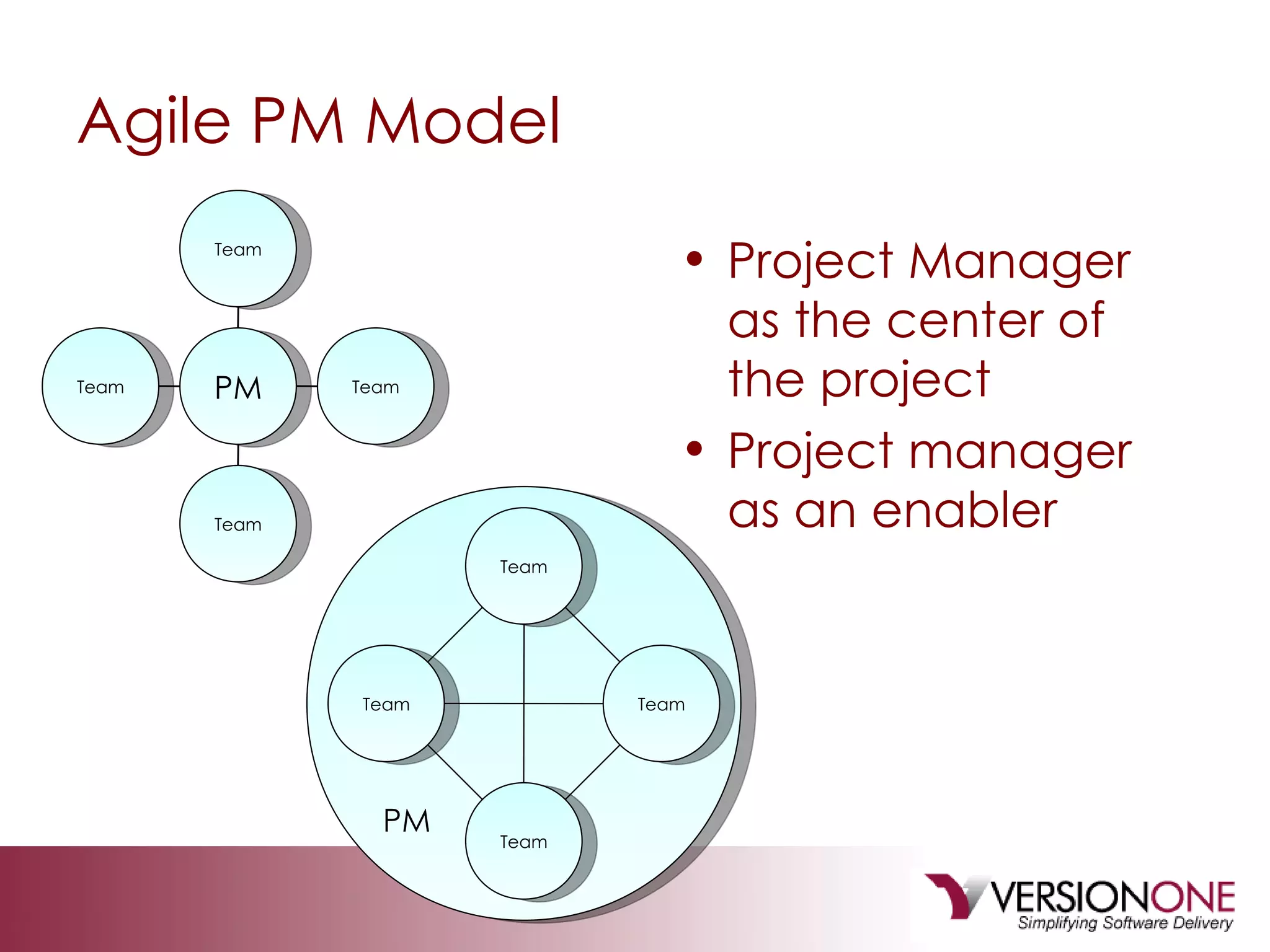
    56. Agile PM Model
      • Project Manager as the center of the project
      • Project manager as an enabler
      PM Team Team Team Team Team Team Team Team PM
    57. Incorporate agile values and principles
    58. Empowerment
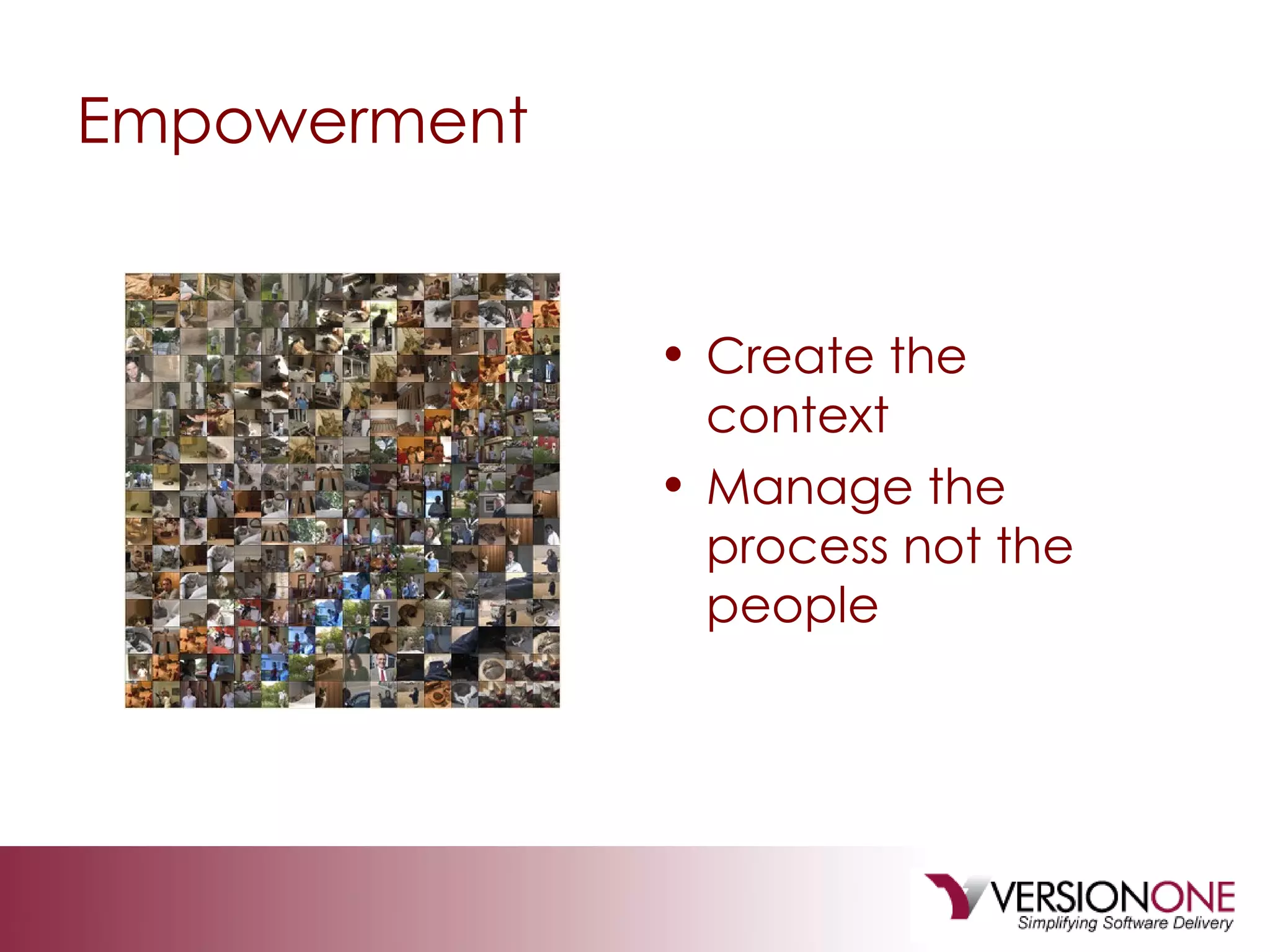
      • Create the context
      • Manage the process not the people
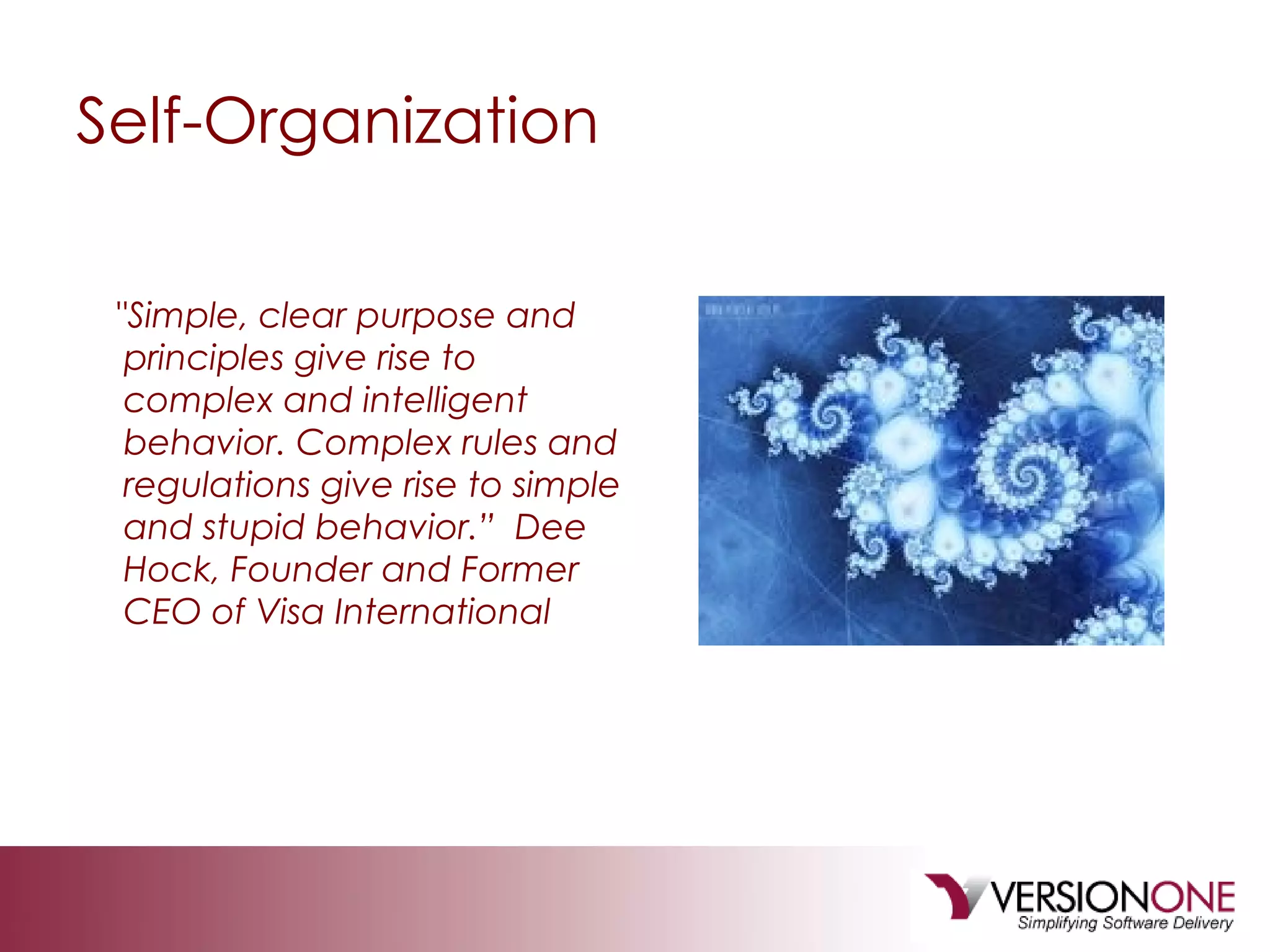
    59. Self-Organization " Simple, clear purpose and principles give rise to complex and intelligent behavior. Complex rules and regulations give rise to simple and stupid behavior.” Dee Hock, Founder and Former CEO of Visa International
    60. Trust
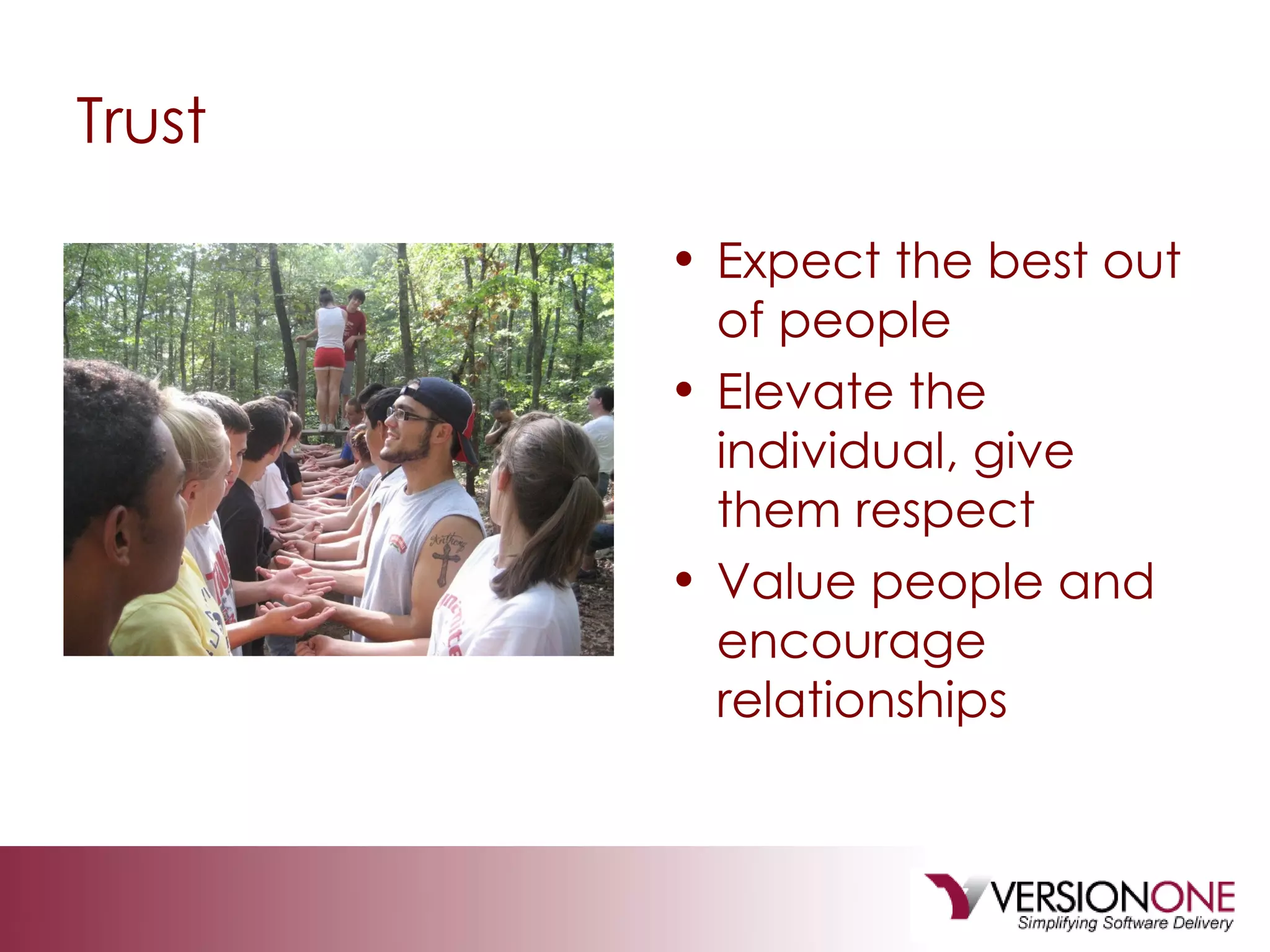
      • Expect the best out of people
      • Elevate the individual, give them respect
      • Value people and encourage relationships
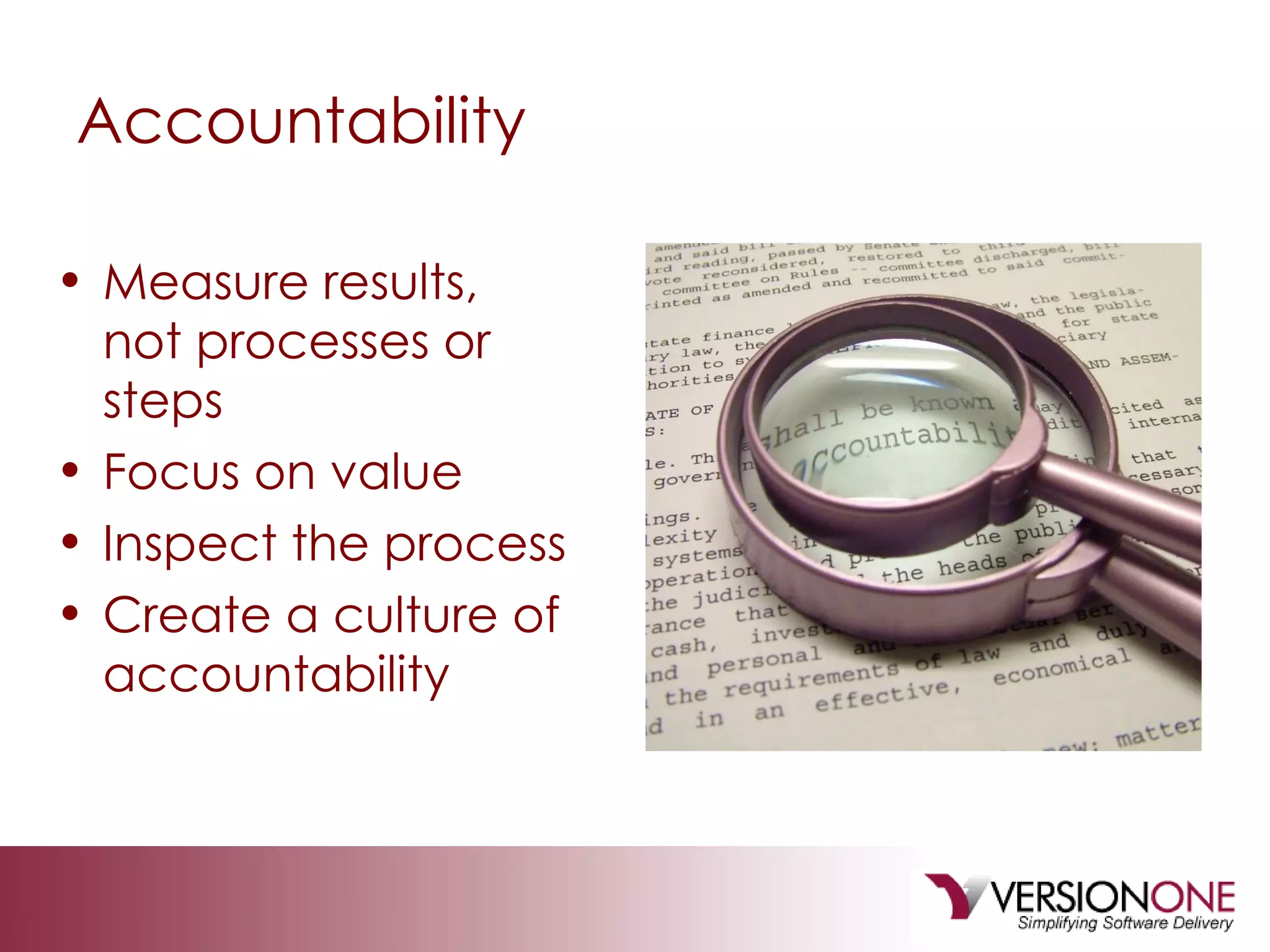
    61. Accountability
      • Measure results, not processes or steps
      • Focus on value
      • Inspect the process
      • Create a culture of accountability
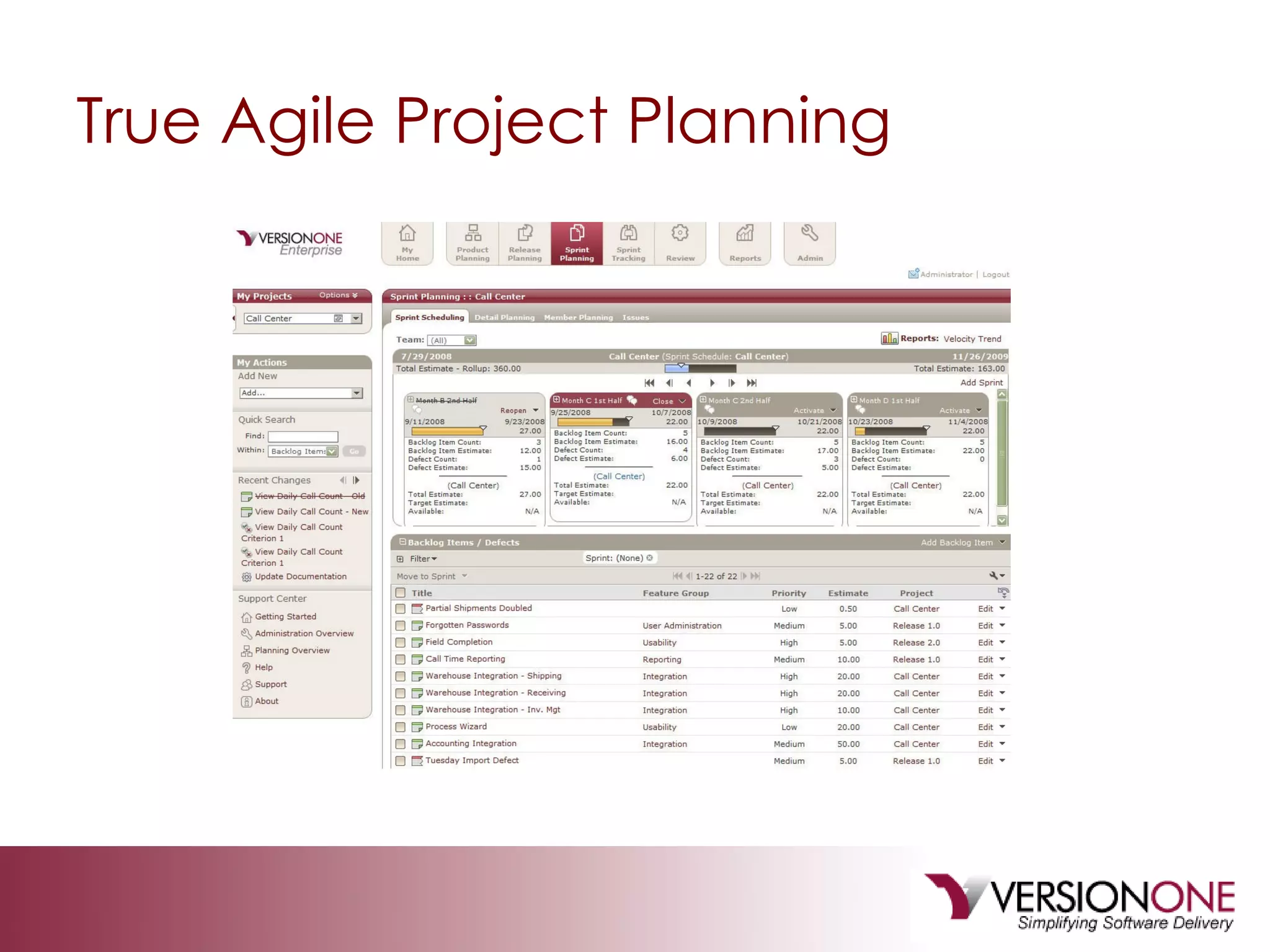
    62. True Agile Project Planning
    63. Know where you are … Know where you are going … Know what else you need to do to get there…
    64. Great Project Managers take input from reality and deal with it
    65. Resources
      • Traditional Project Management
        • http://www.pmi.org
      • Agile Project Management and Leadership
        • http://www.versionone.com
        • http://www.apln.org
        • http://www.agilealliance.org
        • http://www.scrumalliance.org
        • http://www.dsdm.org
        • http://www.agilemanifesto.org
      • How to contact me
        • email: [email_address]
        • Blog: http://blog.versionone.com
        • Blog: http://www.leadingagile.com
        • Presentation: http://www.linkedin.com/in/cottmeyer
    66. Simplifying Software Delivery

    + Mike CottmeyerMike Cottmeyer, 2 years ago

    custom

    2317 views, 9 favs, 2 embeds more stats

    This is a 90 minute presentation that helps traditi more

    More info about this document

    © All Rights Reserved

    Go to text version

    • Total Views 2317
      • 2249 on SlideShare
      • 68 from embeds
    • Comments 0
    • Favorites 9
    • Downloads 191
    Most viewed embeds
    • 67 views on http://www.leadingagile.com
    • 1 views on http://feeds.feedburner.com

    more

    All embeds
    • 67 views on http://www.leadingagile.com
    • 1 views on http://feeds.feedburner.com

    less

    Flagged as inappropriate Flag as inappropriate
    Flag as inappropriate

    Select your reason for flagging this presentation as inappropriate. If needed, use the feedback form to let us know more details.

    Cancel
    File a copyright complaint
    Having problems? Go to our helpdesk?

    Categories