Downloaded 11 times


![The Startup Pyramid (Sean Ellis, Startup-Marketing.com) [email_address] Blog: startup-marketing.com](https://image.slidesharecdn.com/startupmetrics4pirates-rethinkhawaii-nov2009-091102123926-phpapp01/75/Startup-Metrics-for-Pirates-Startonomics-Hawaii-Nov-2009-12-2048.jpg)



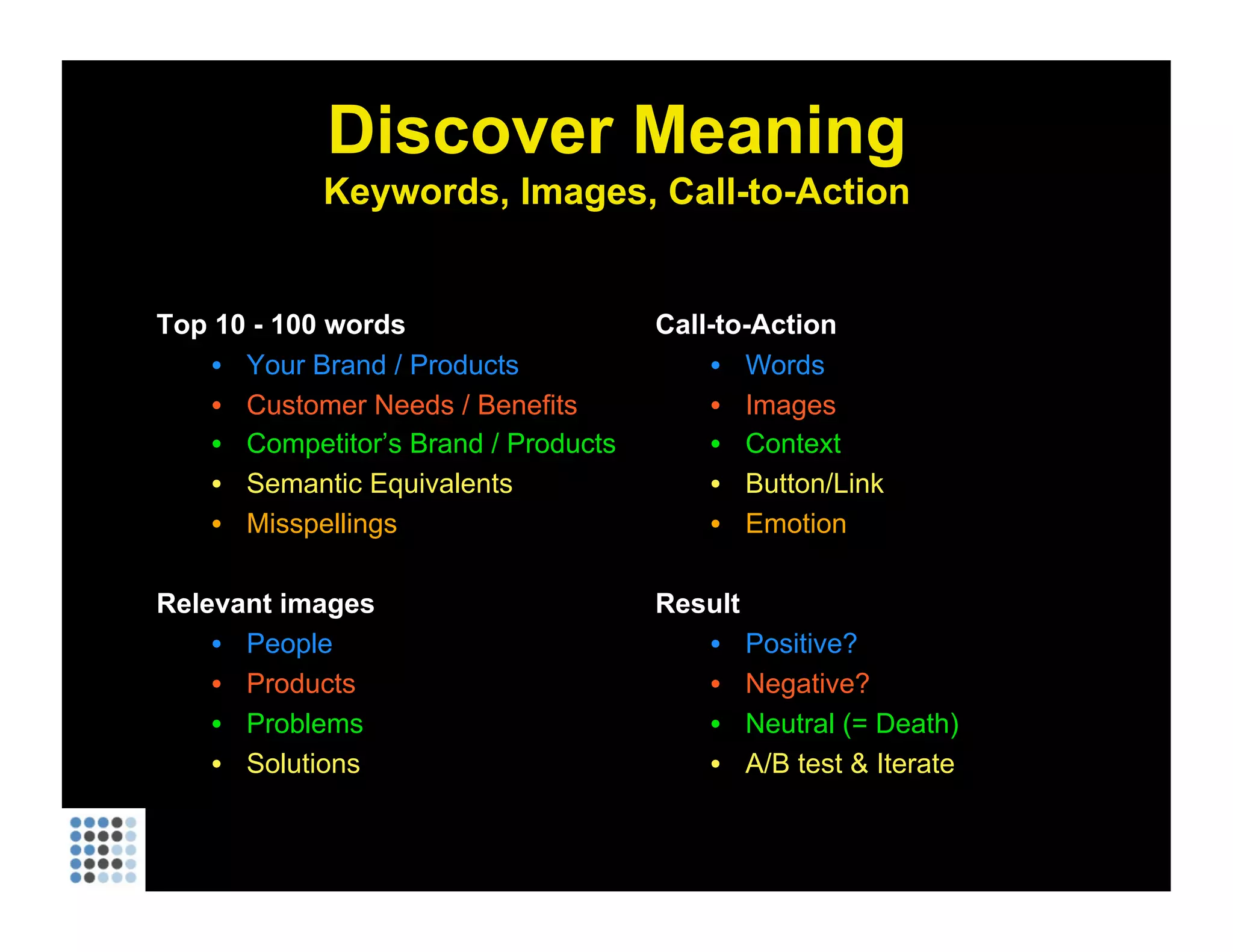
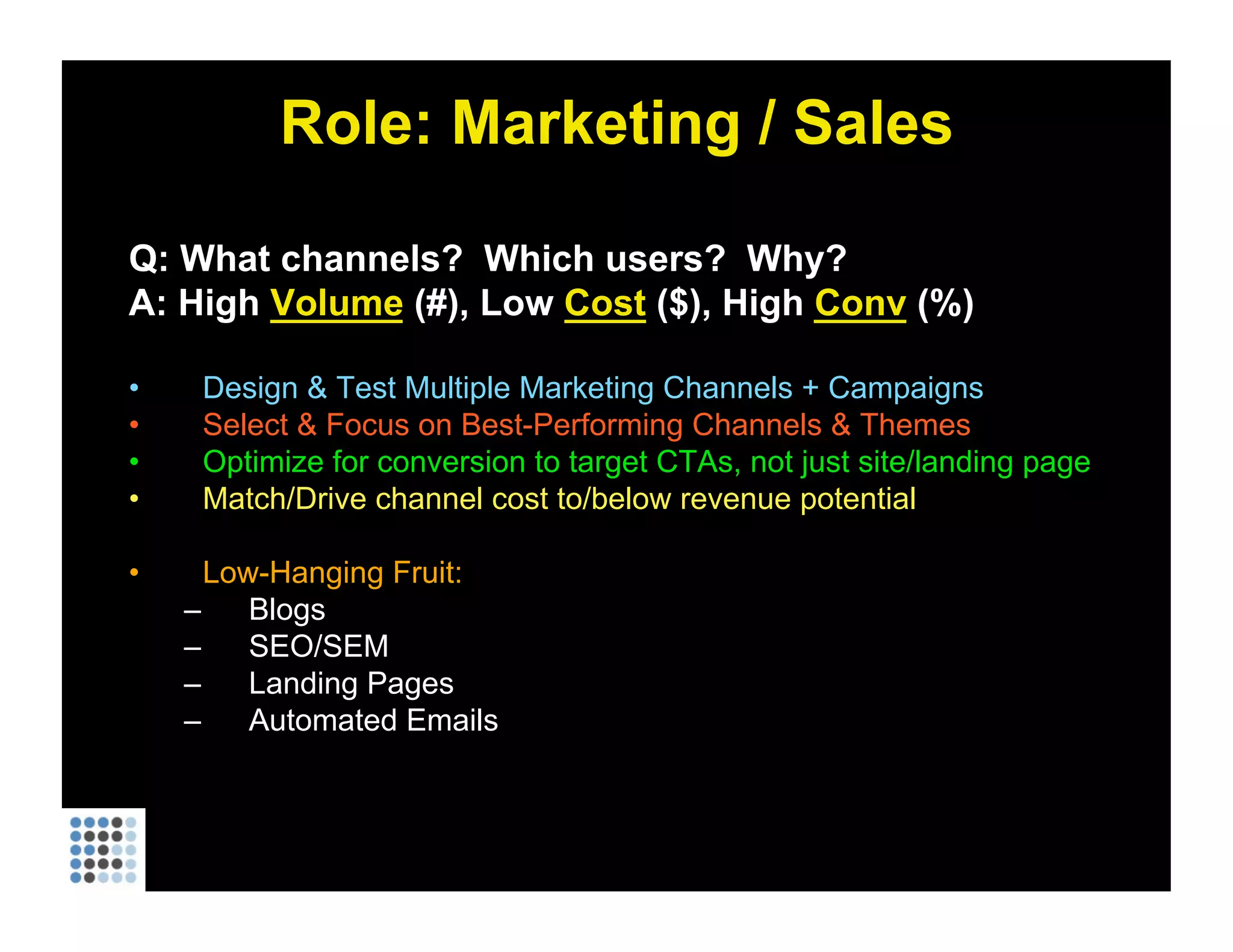
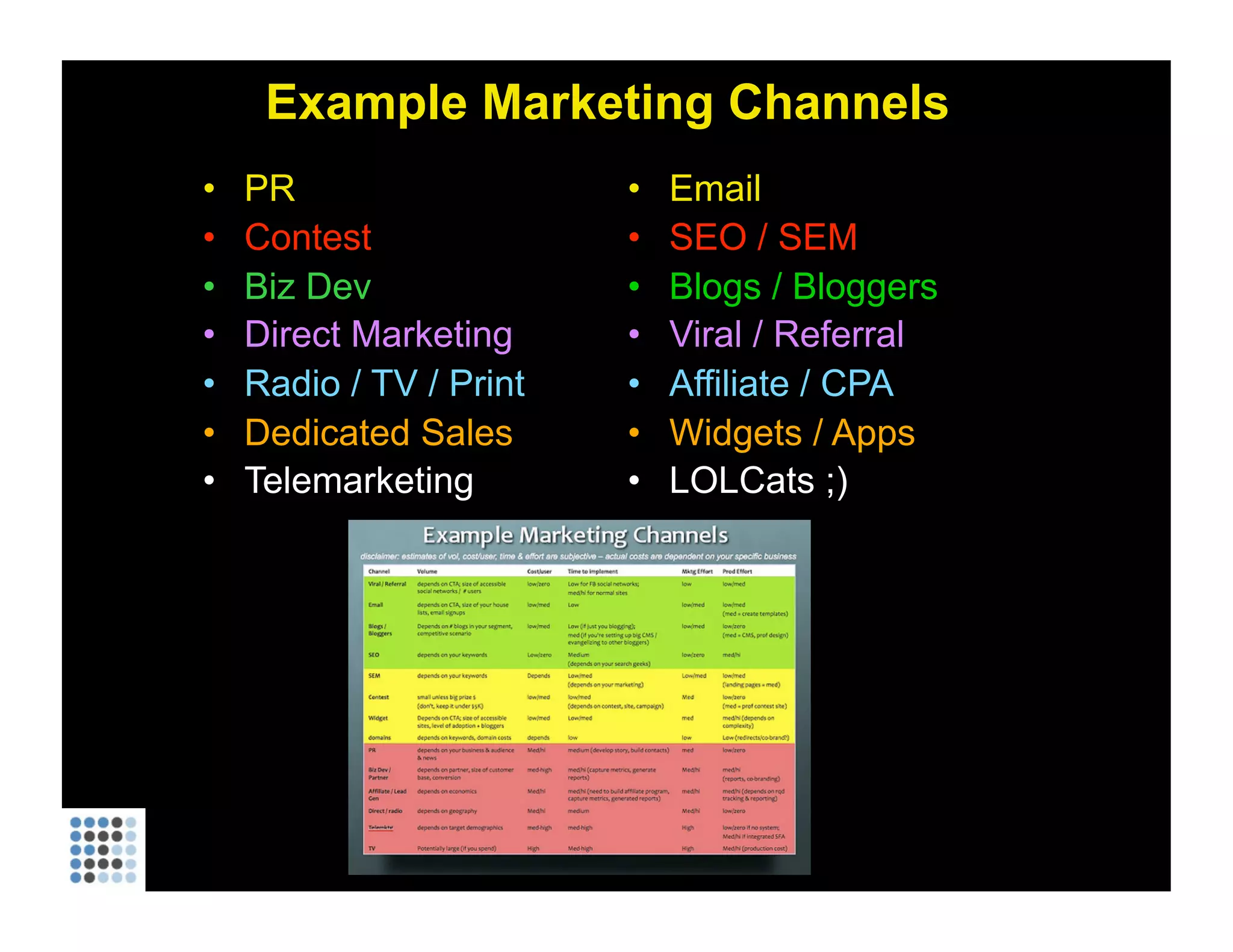
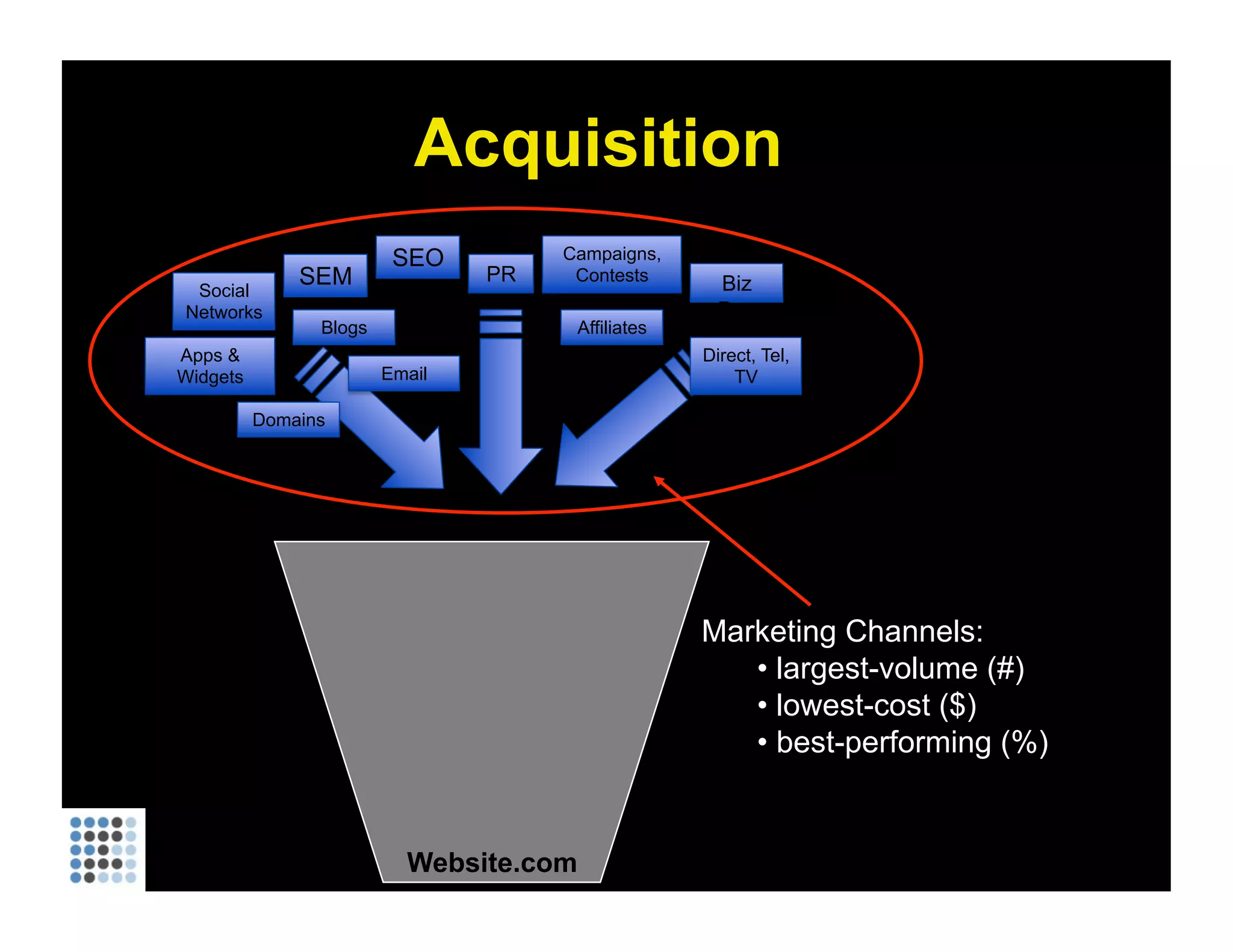
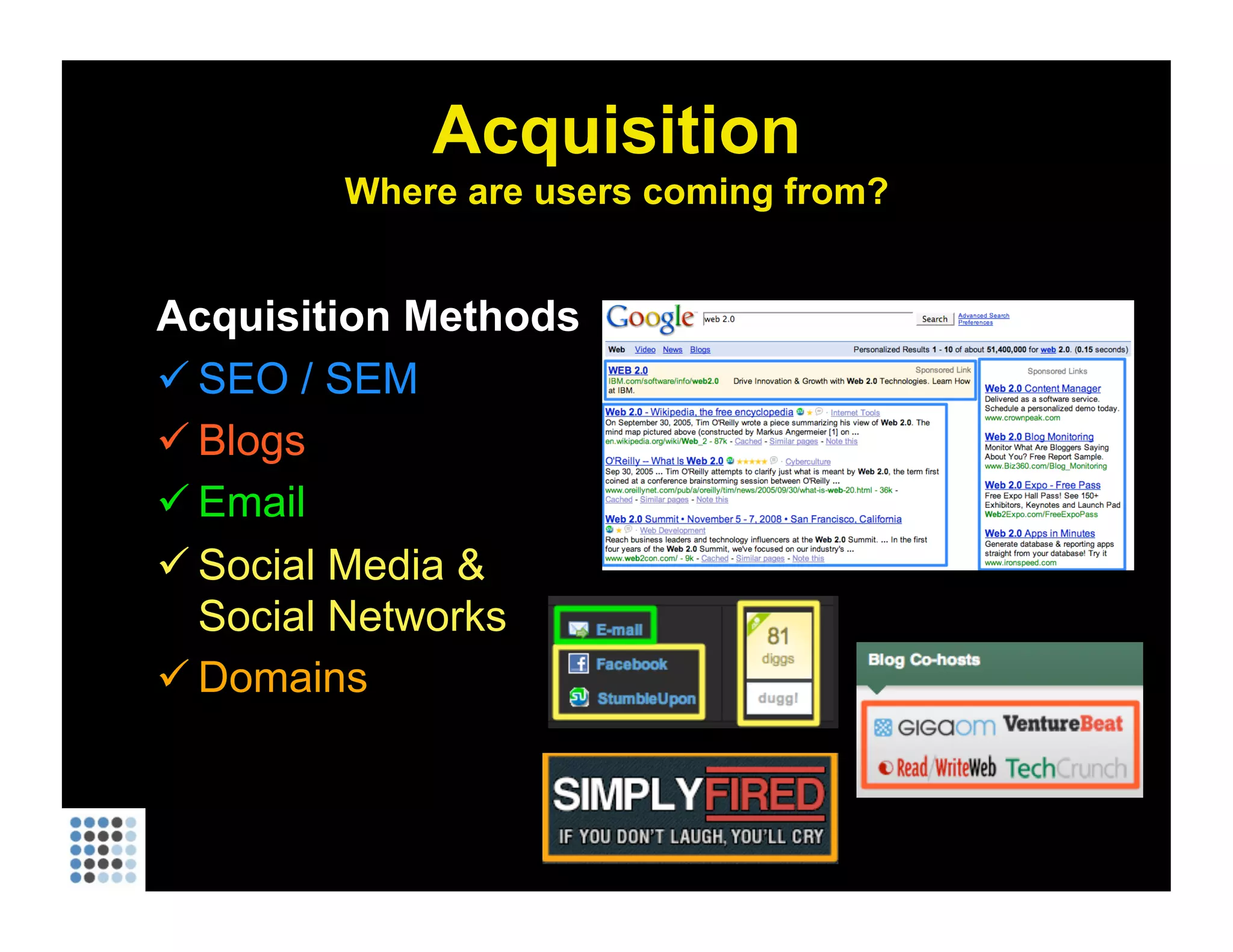
![M AARRR keting Plan Marketing Plan = Target Customer Acquisition Channels 3 Important Factors = Volume (#), Cost ($), Conversion (%) Measure conversion to target customer actions Test audience segments, campaign themes, Call-To-Action ( CTA s) [Gradually] Match Channel Costs => Revenue Potential Increase Vol. & Conversion, Decrease Cost, Optimize for Revenue Potential Avg Txn Value ( ATV ), Ann Rev Per User ( ARPU ), Cust Lifetime Value ( CLV ) Design channels that (eventually) cost <20-50% of target ATV, ARPU, CLV Consider Costs, Scarce Resource Tradeoffs Actual $ expenses Marketing time & resources Product/Engineering time & resources Cashflow timing of expense vs. revenue, profit](https://image.slidesharecdn.com/startupmetrics4pirates-rethinkhawaii-nov2009-091102123926-phpapp01/75/Startup-Metrics-for-Pirates-Startonomics-Hawaii-Nov-2009-30-2048.jpg)
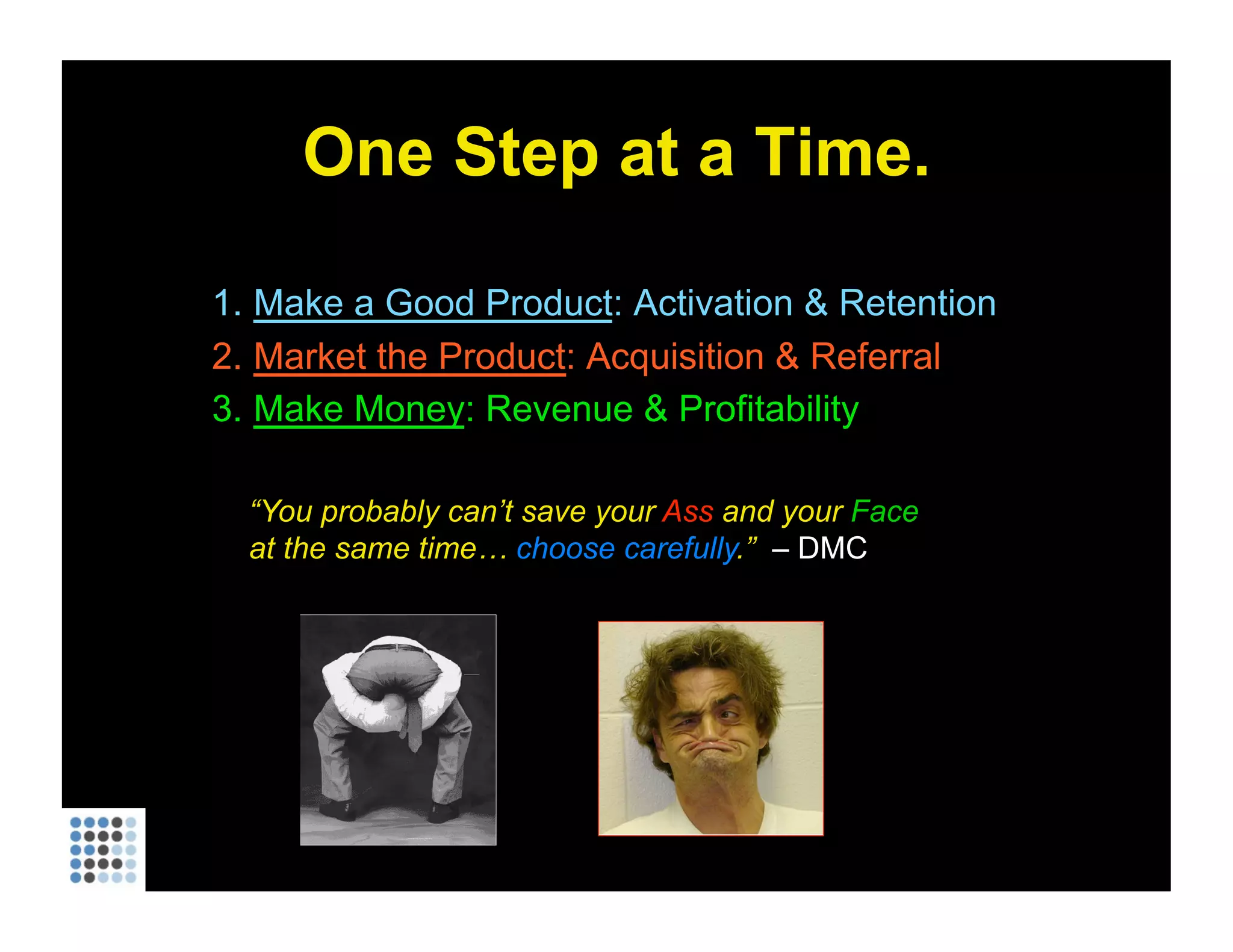
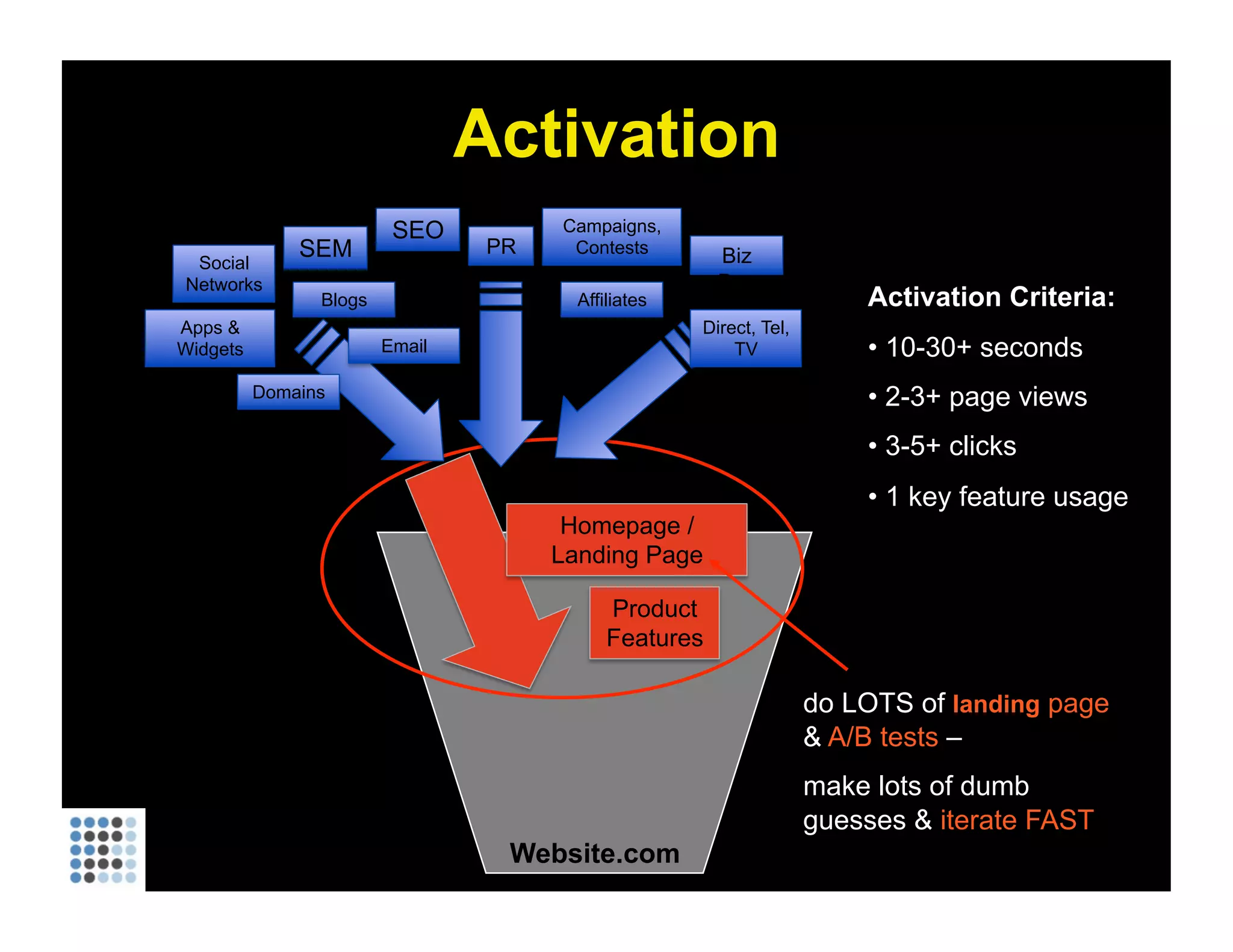
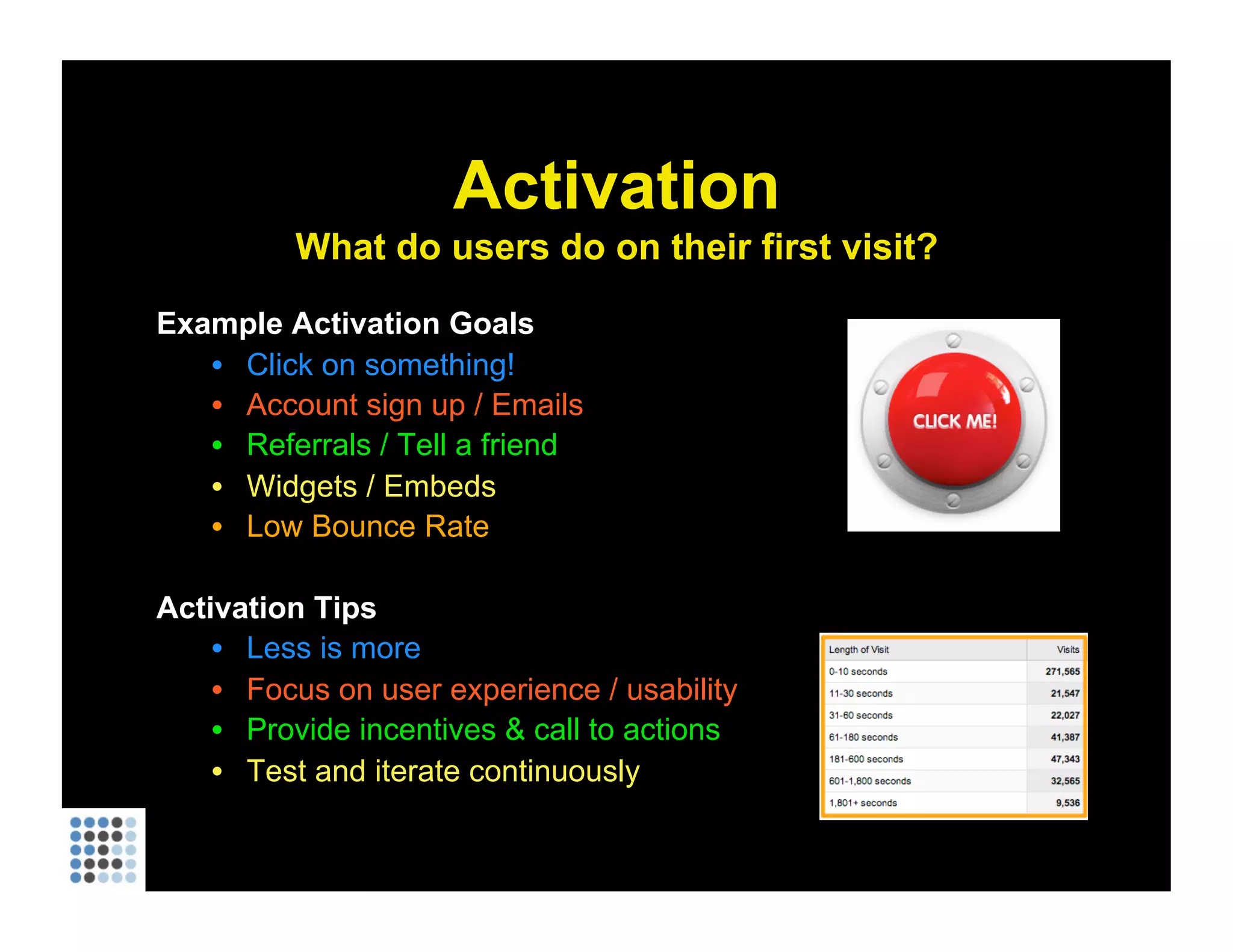

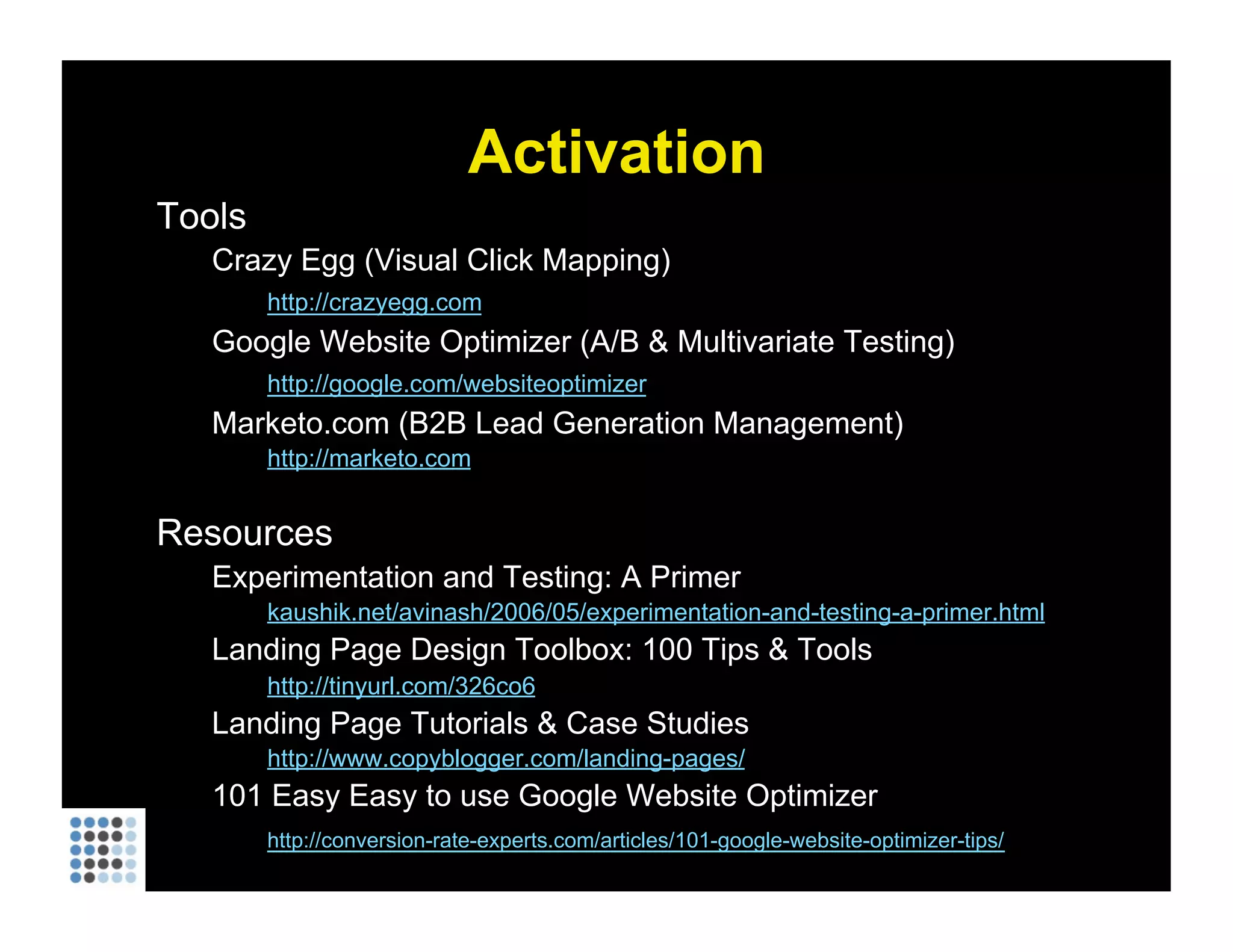
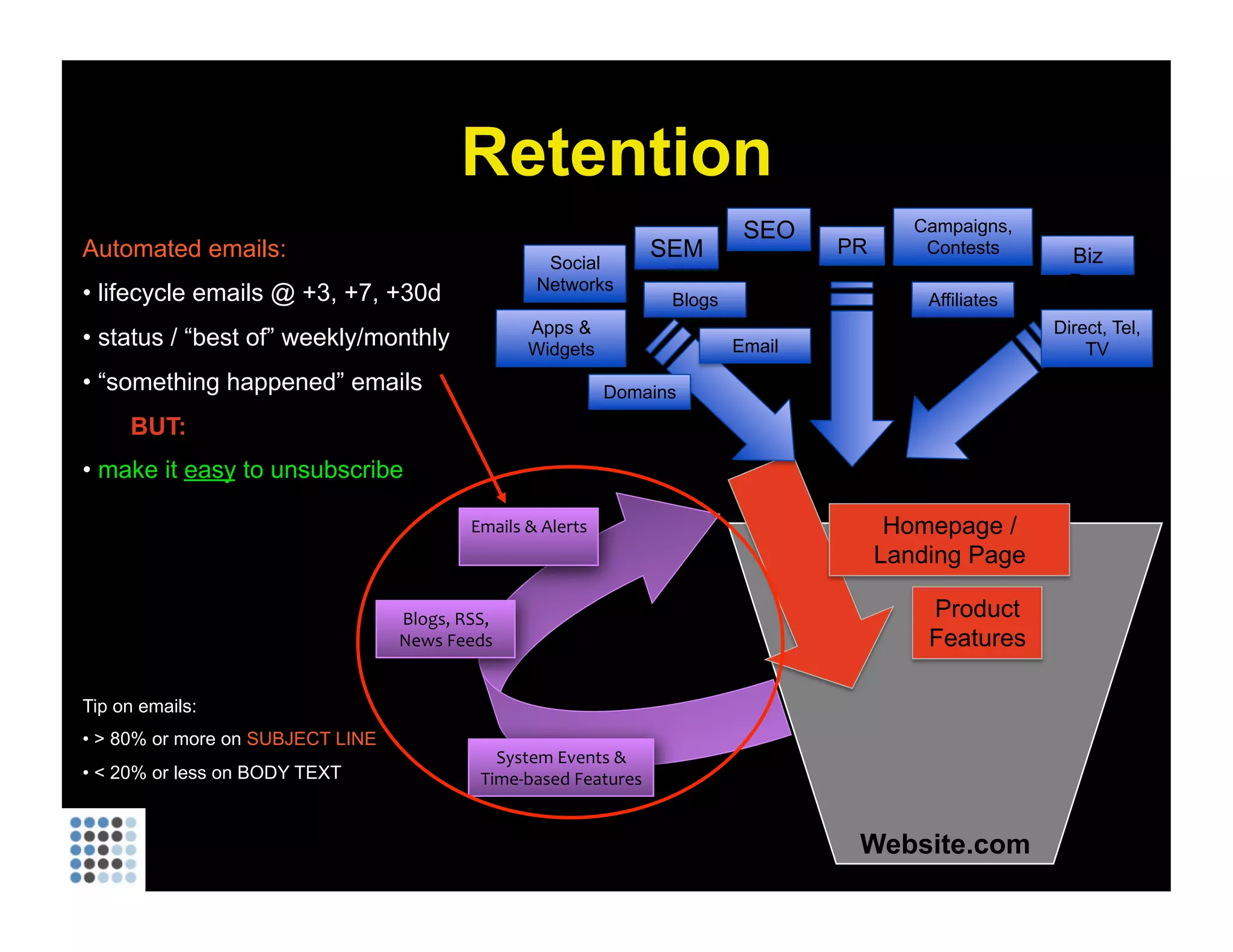
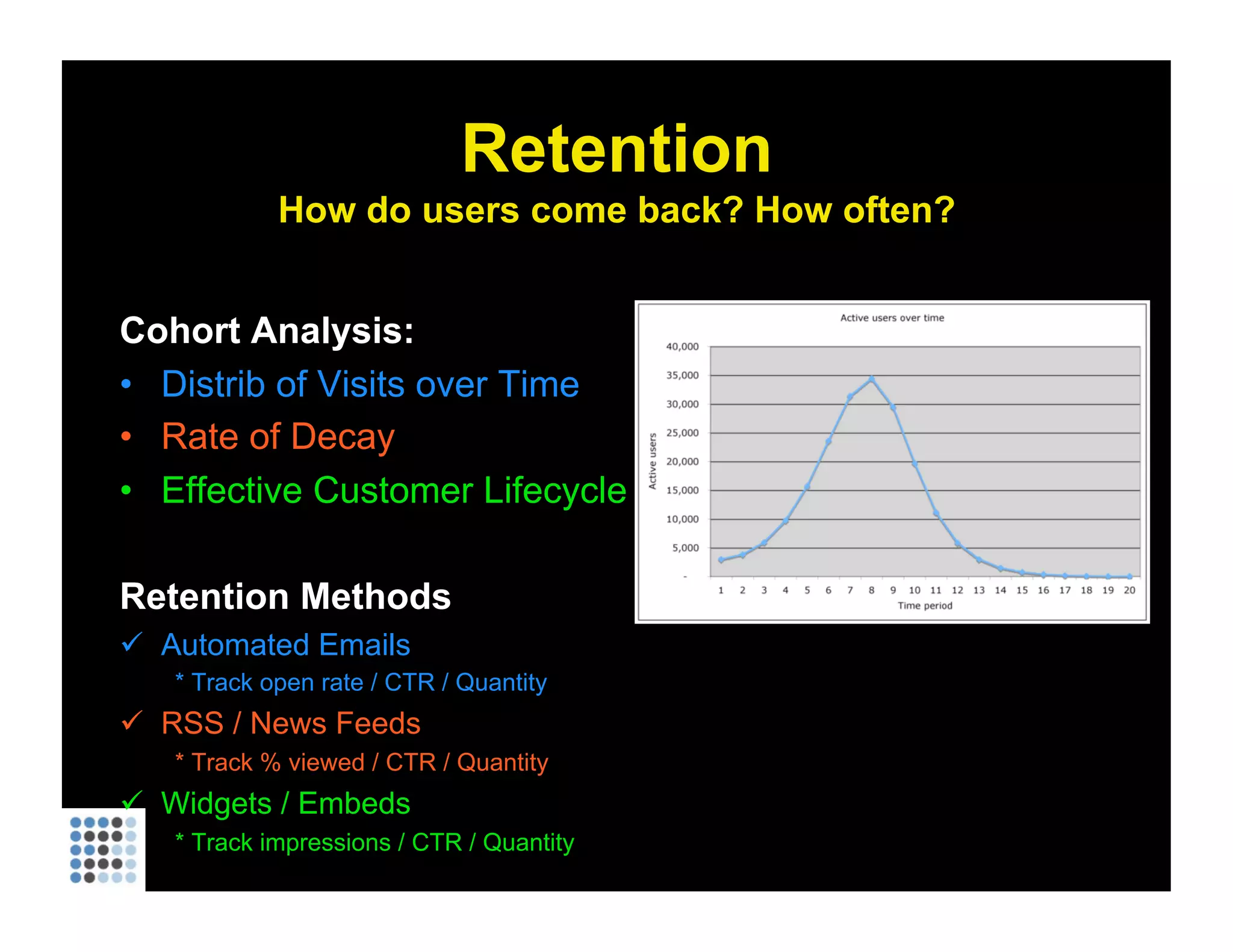
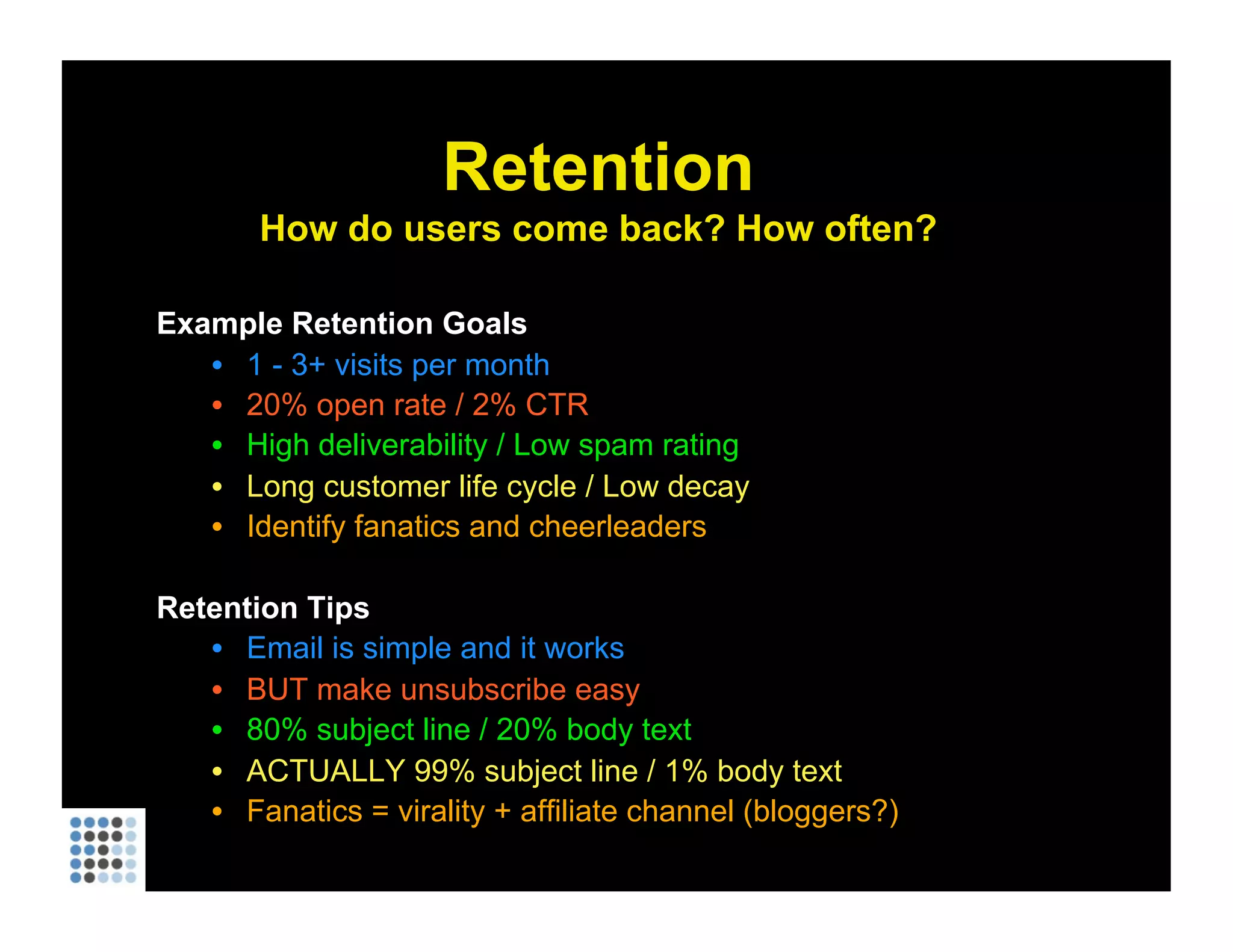
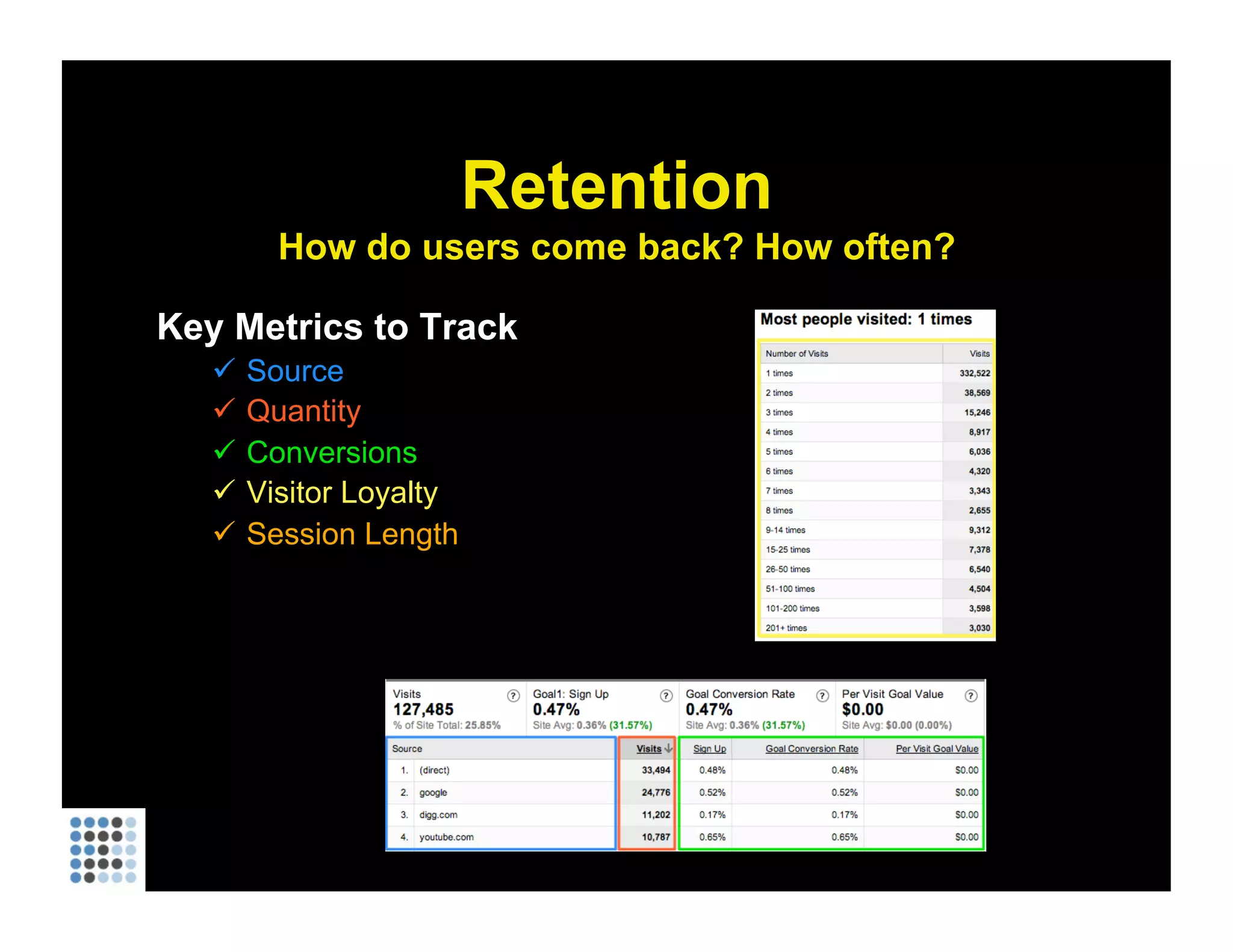
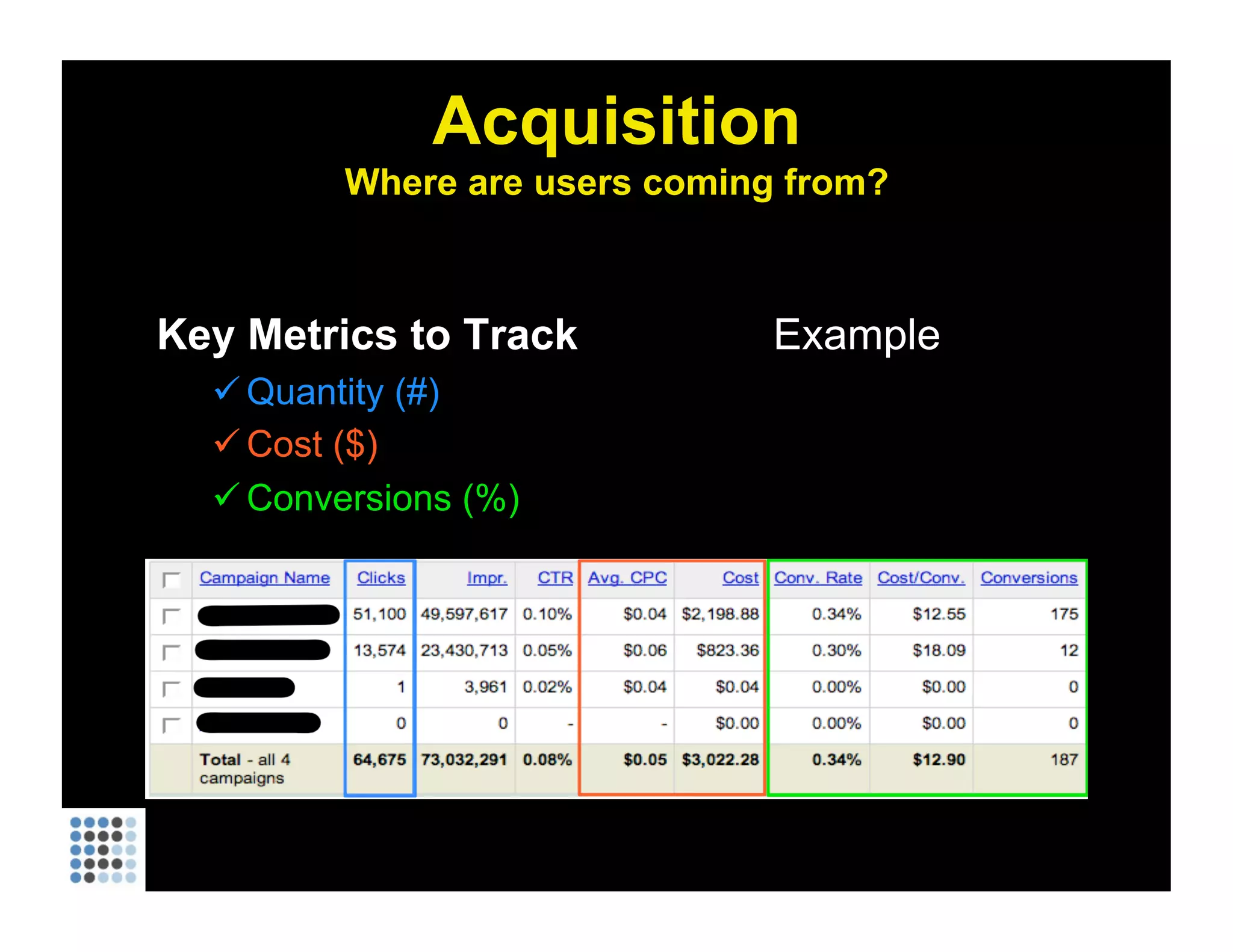
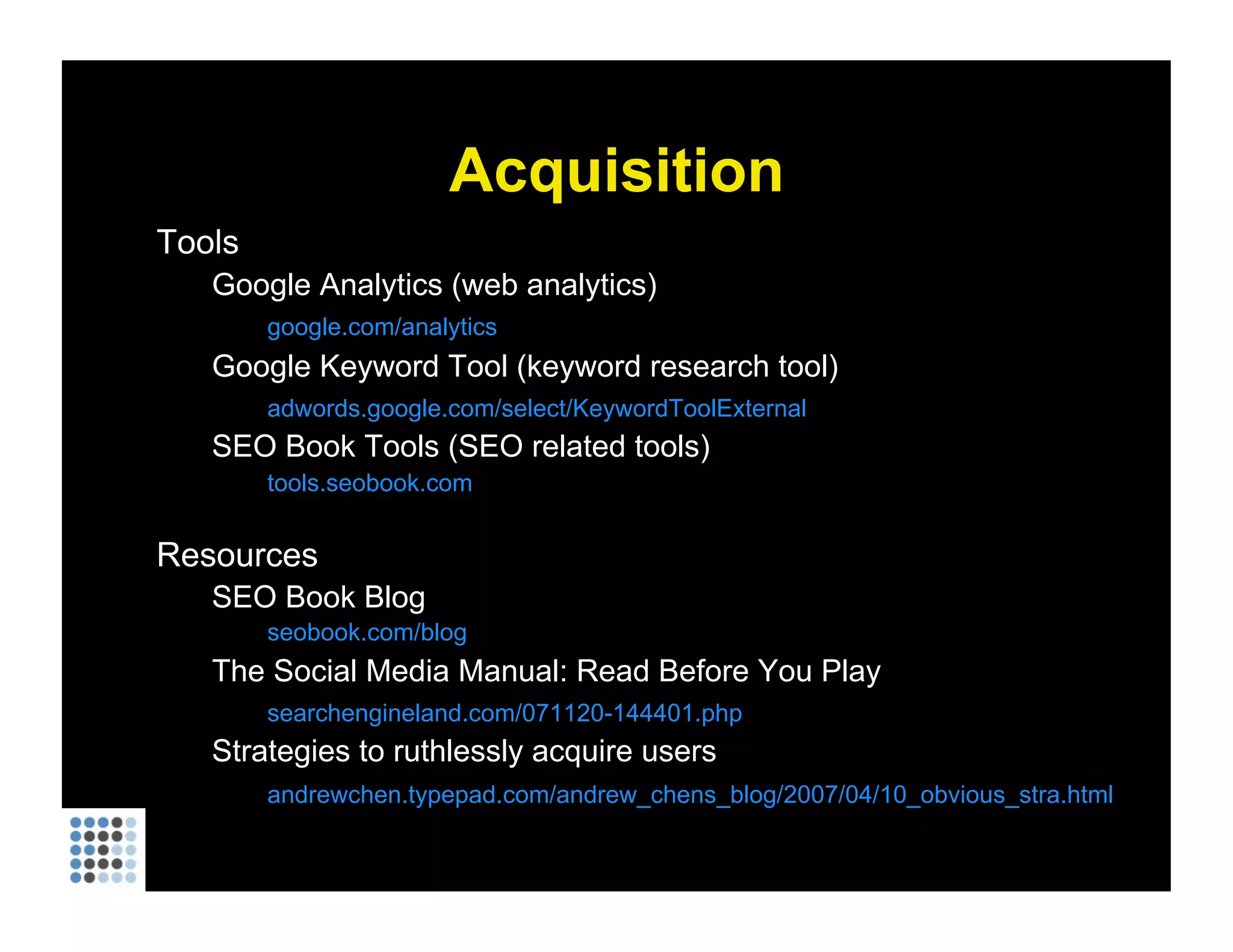
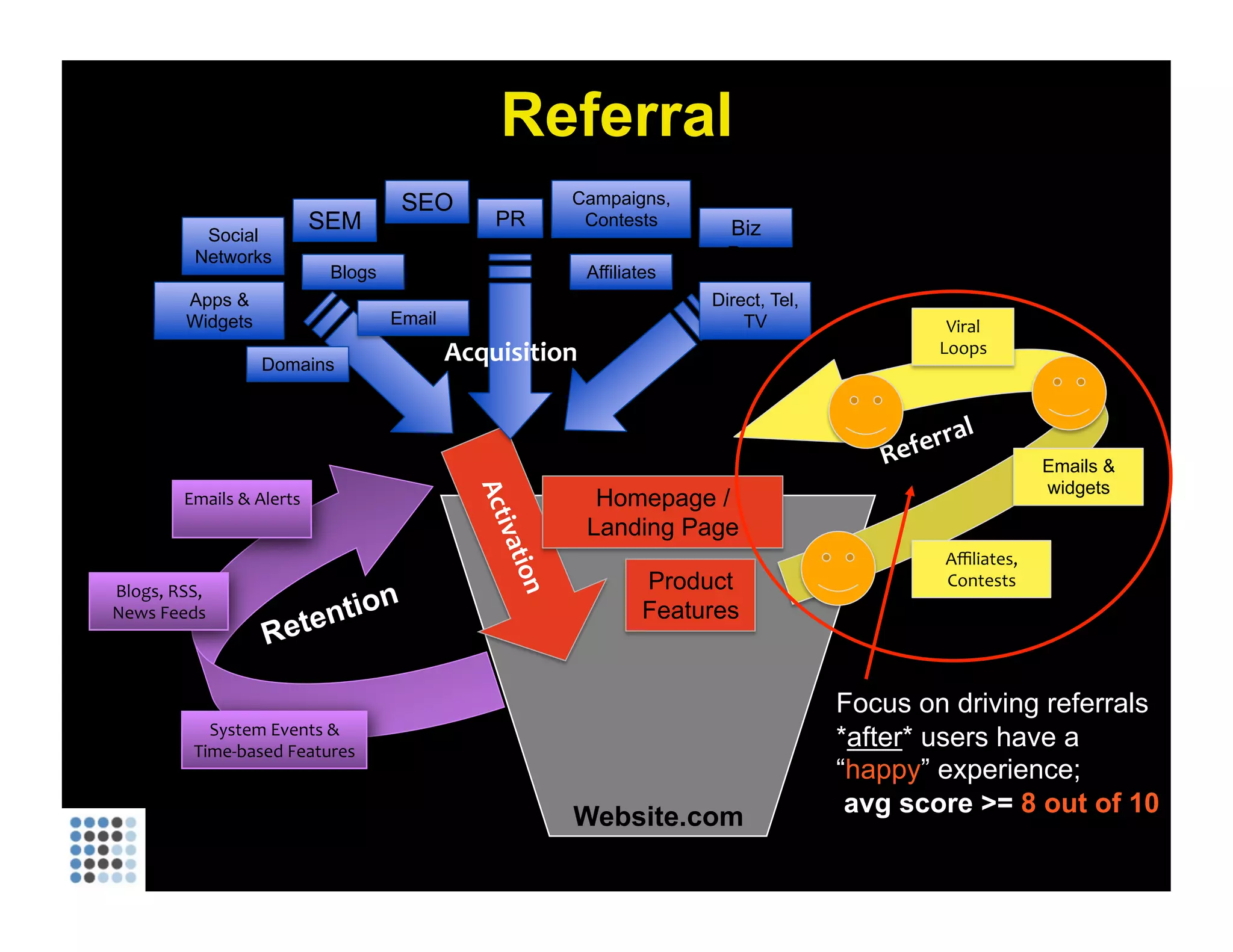
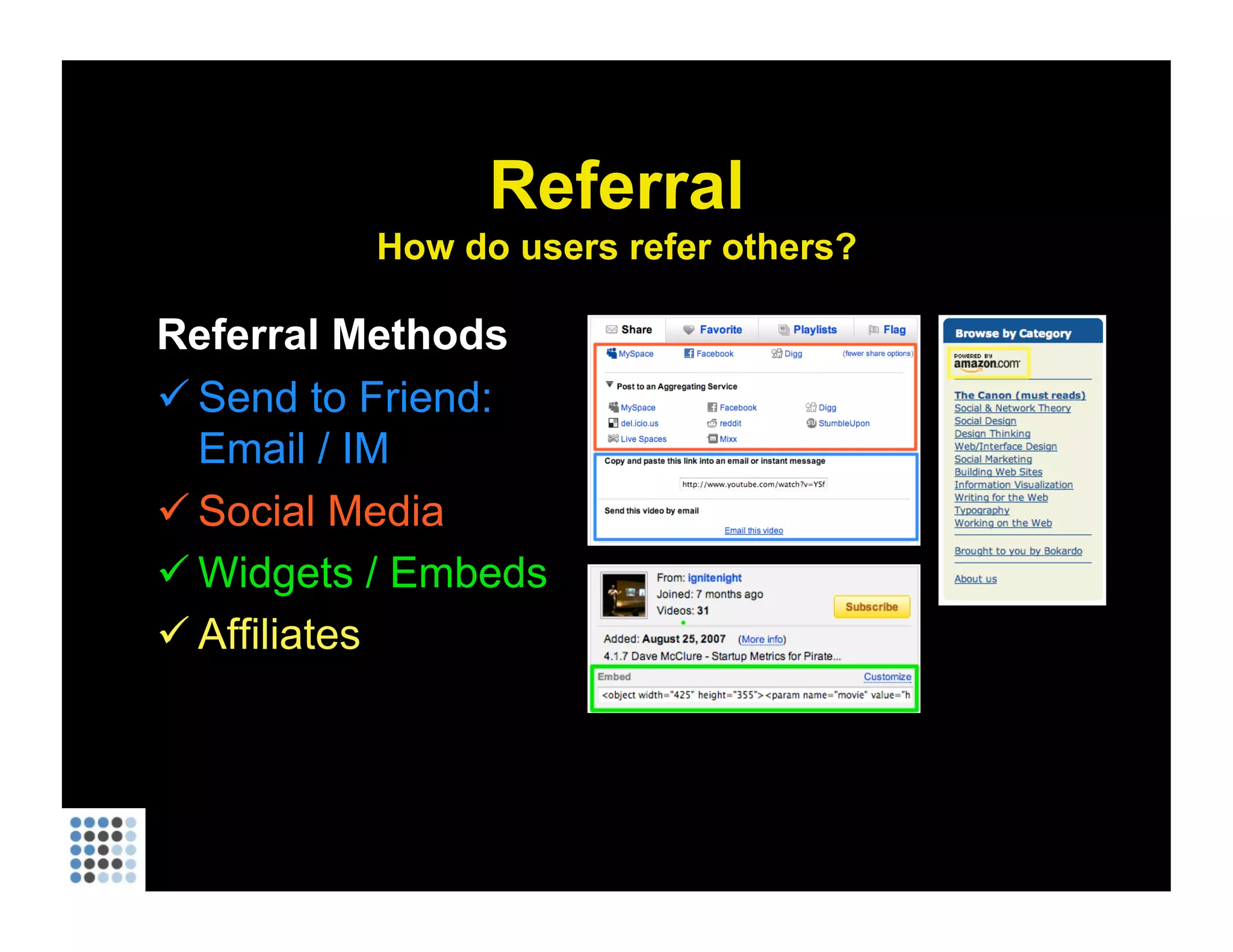
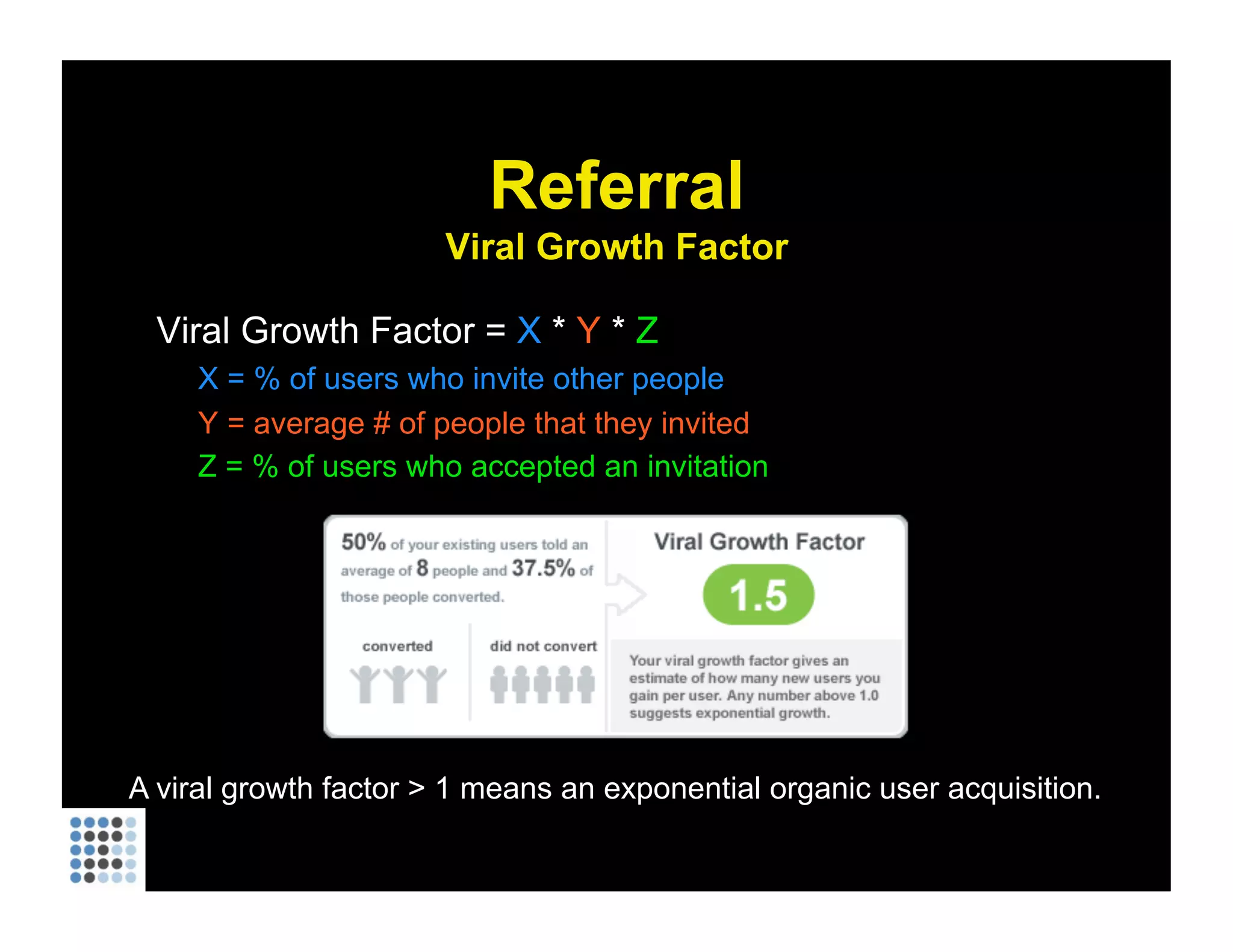
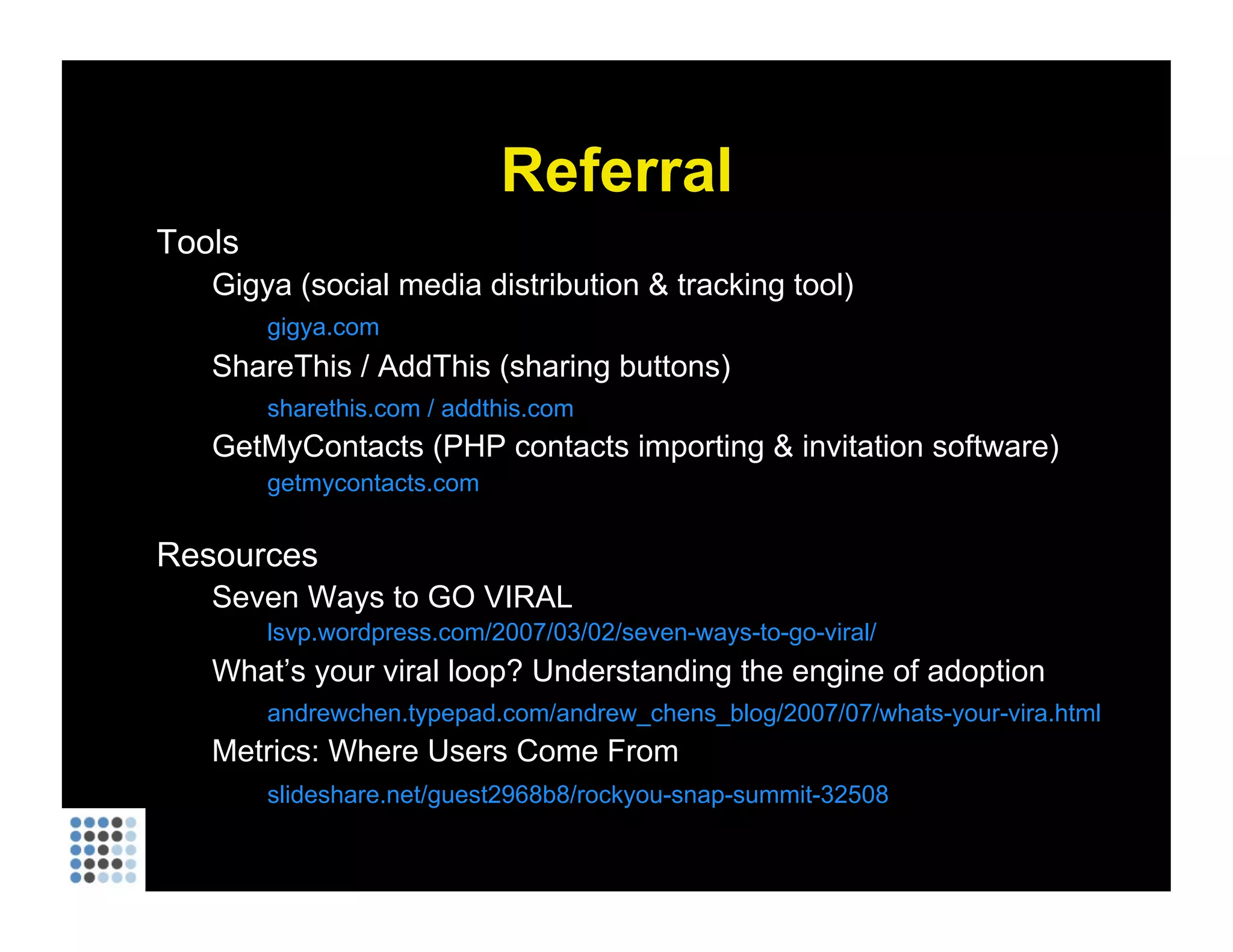


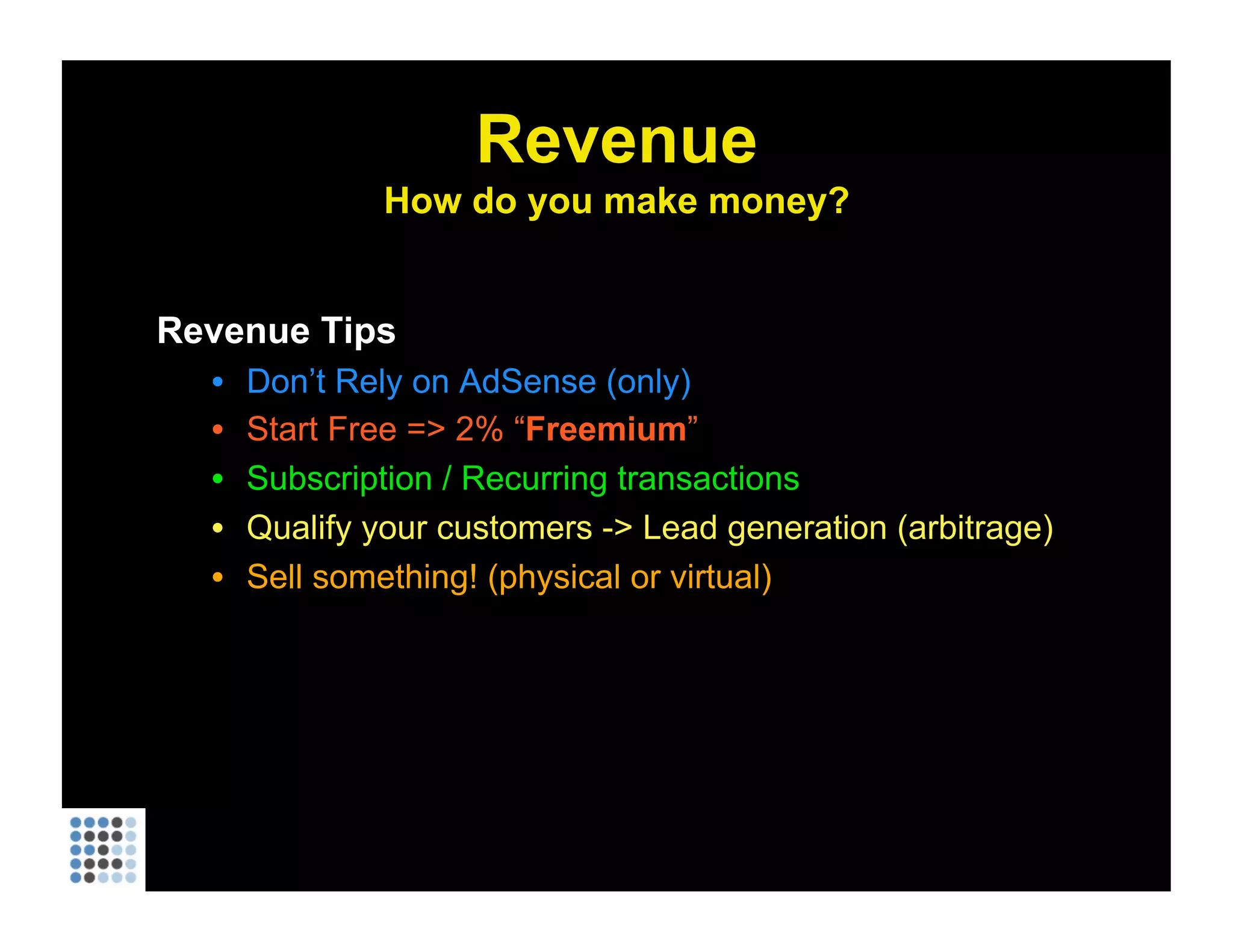


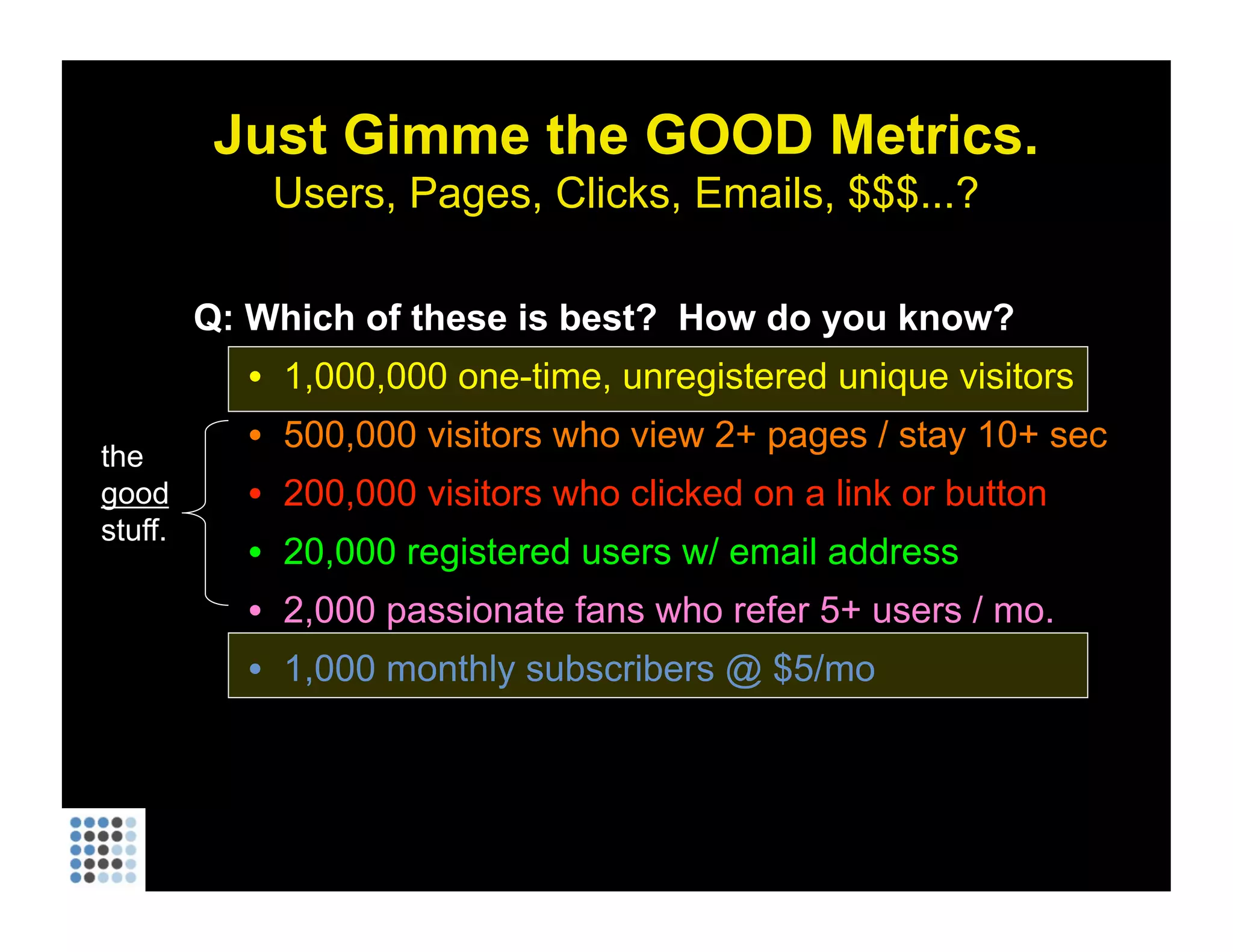
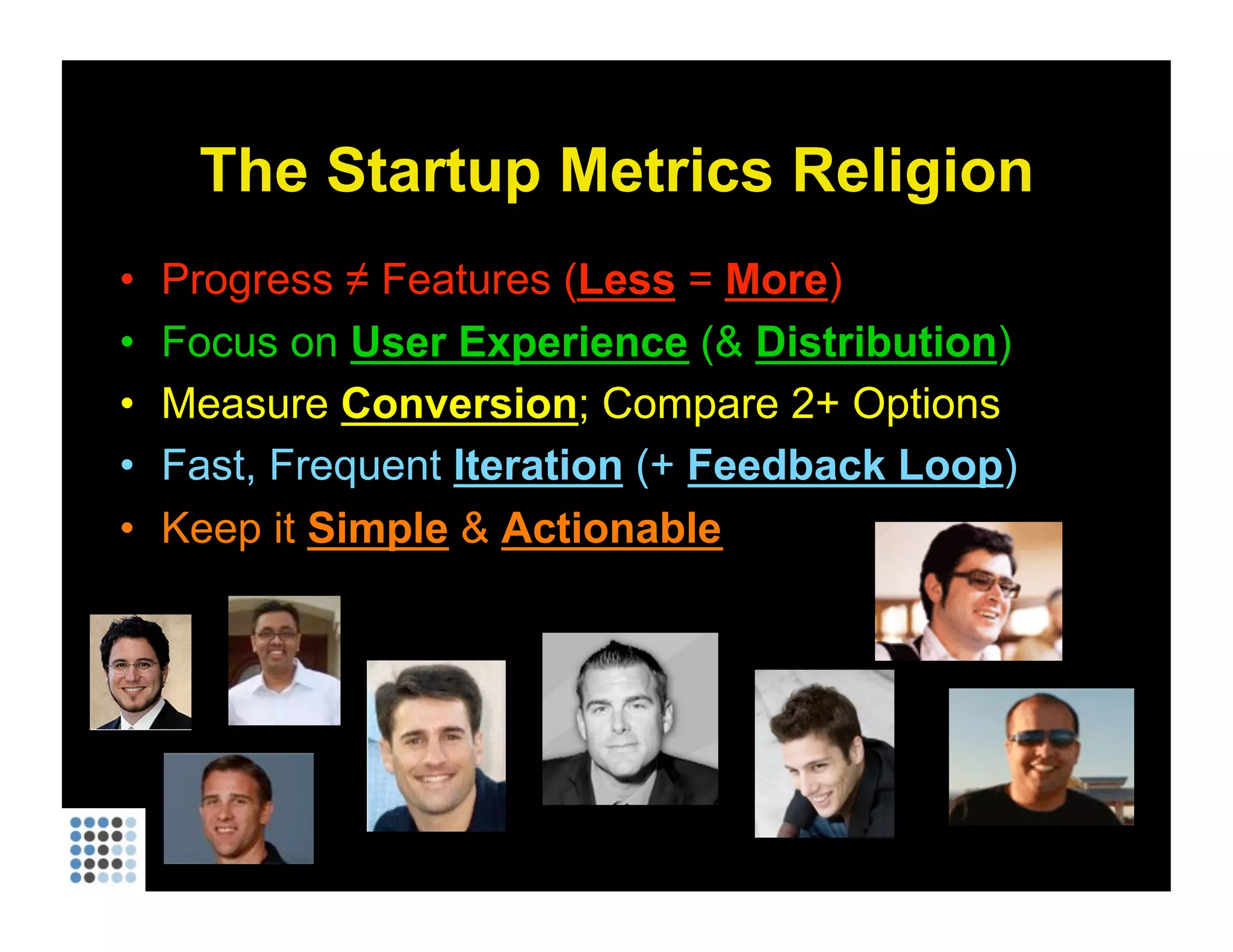
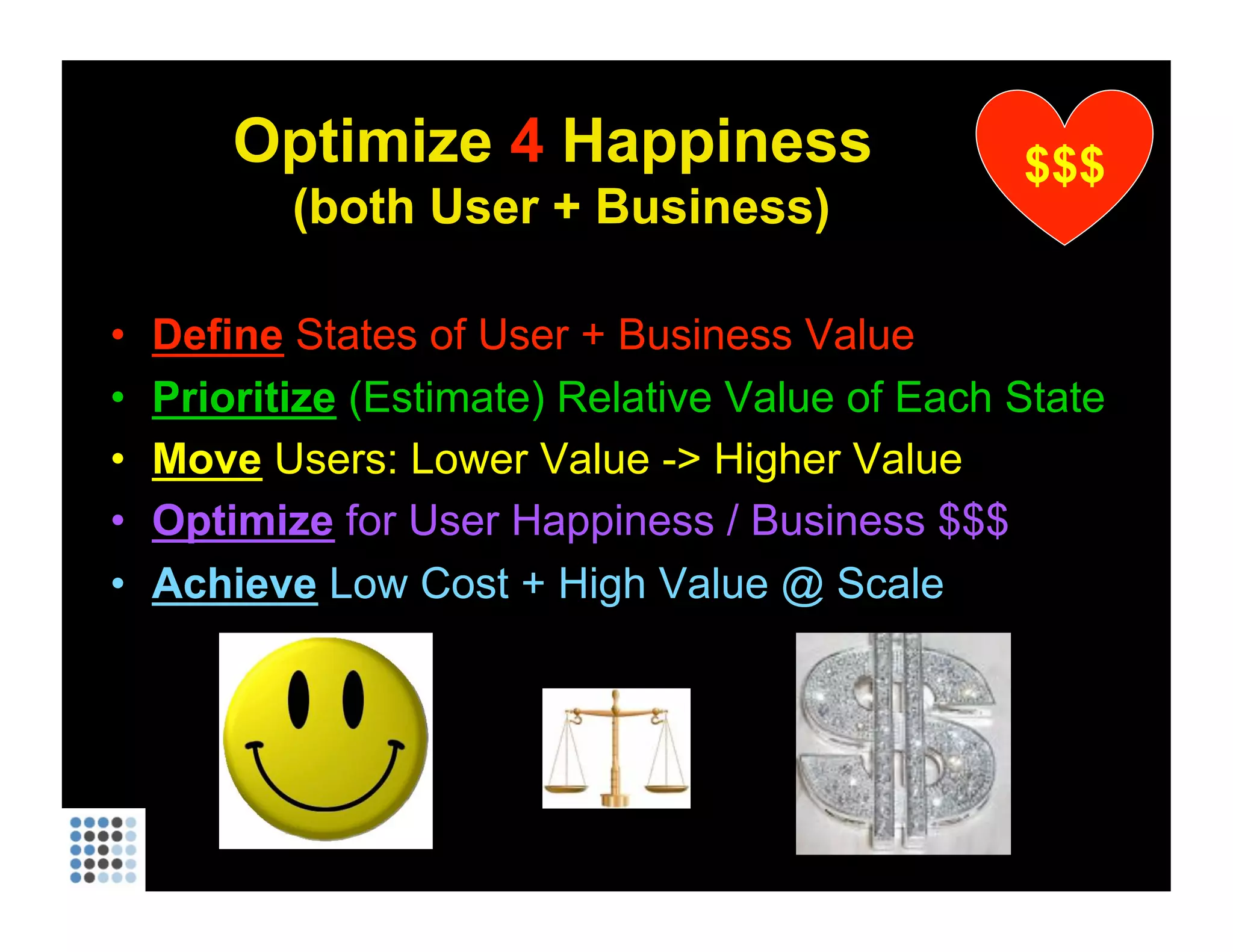
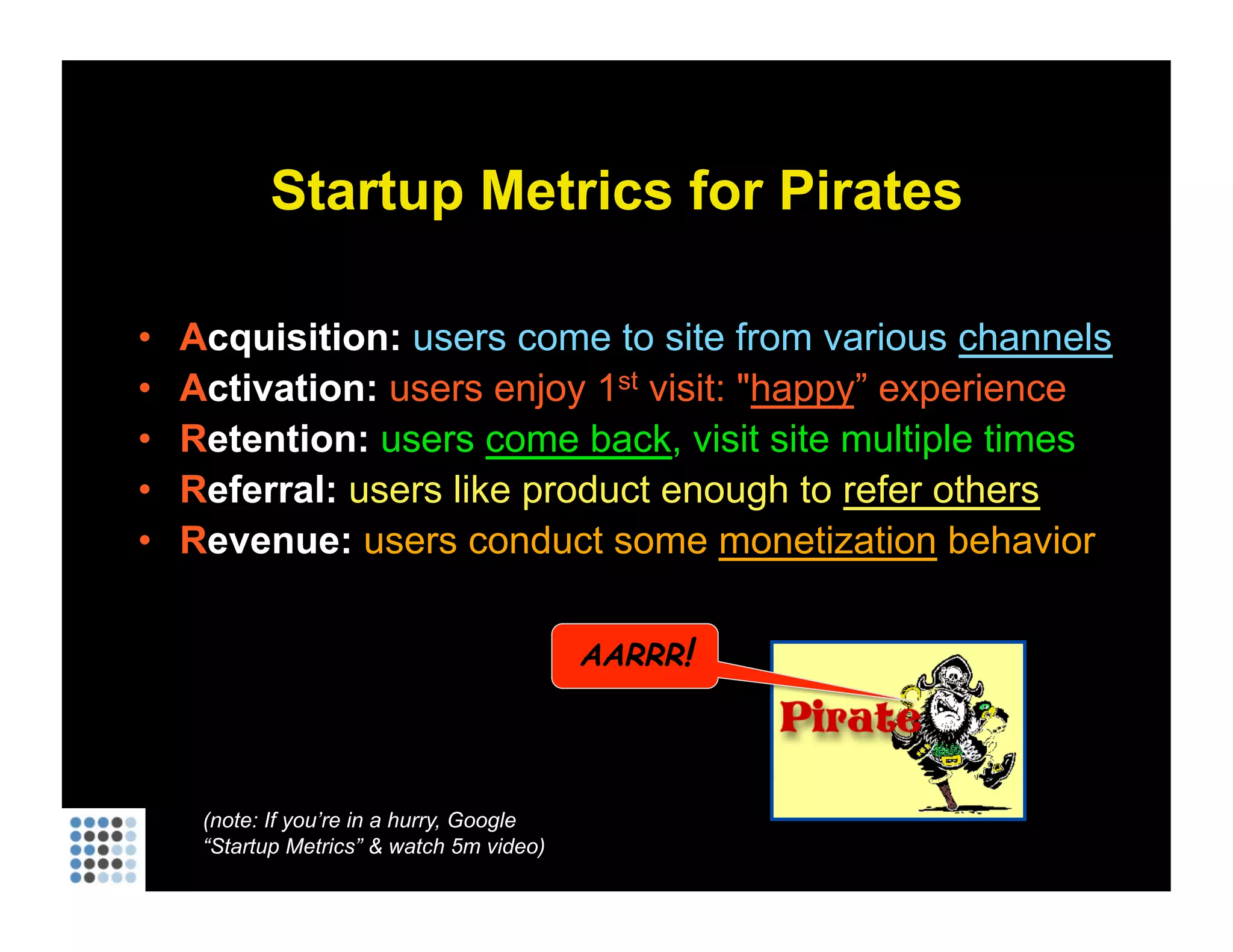
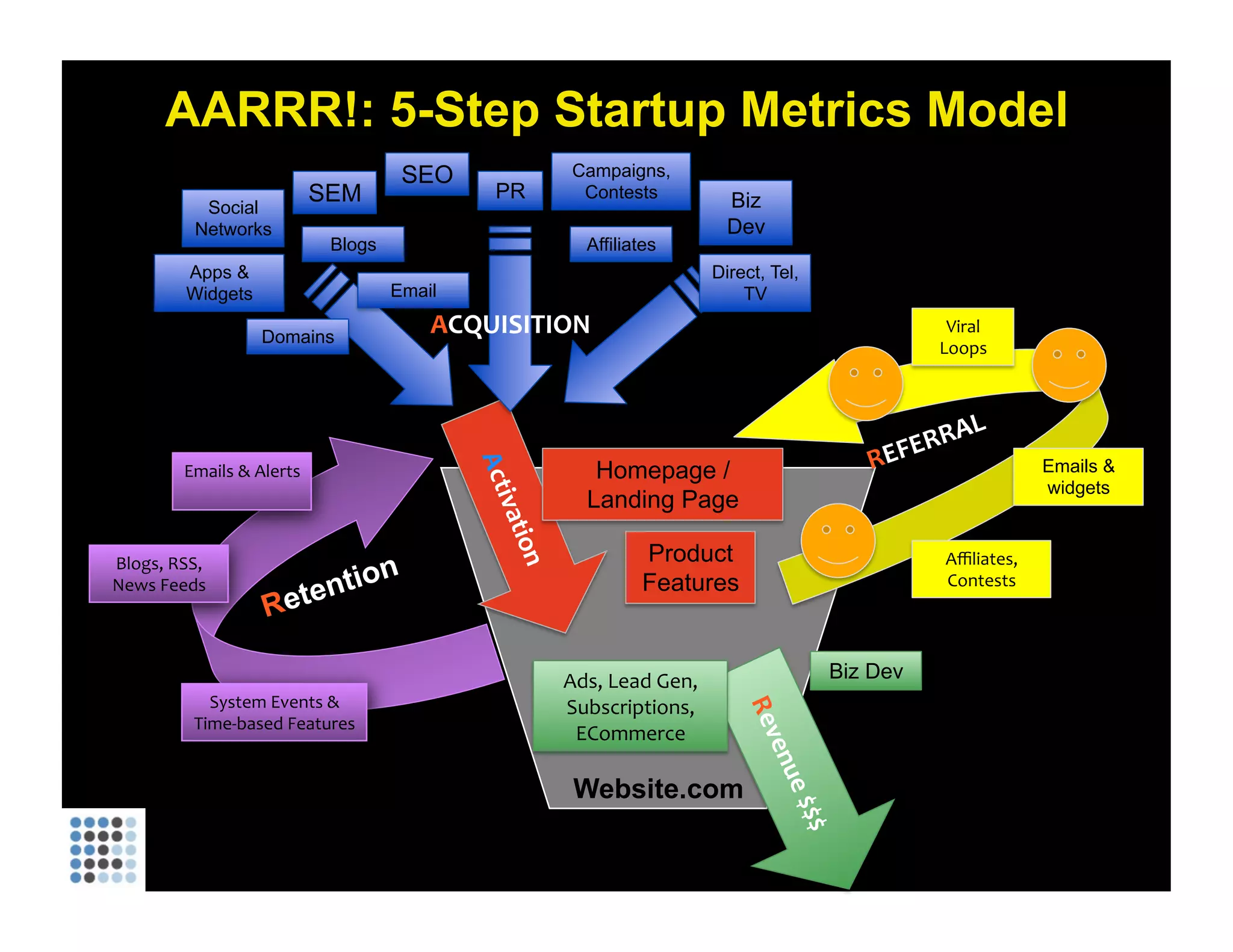
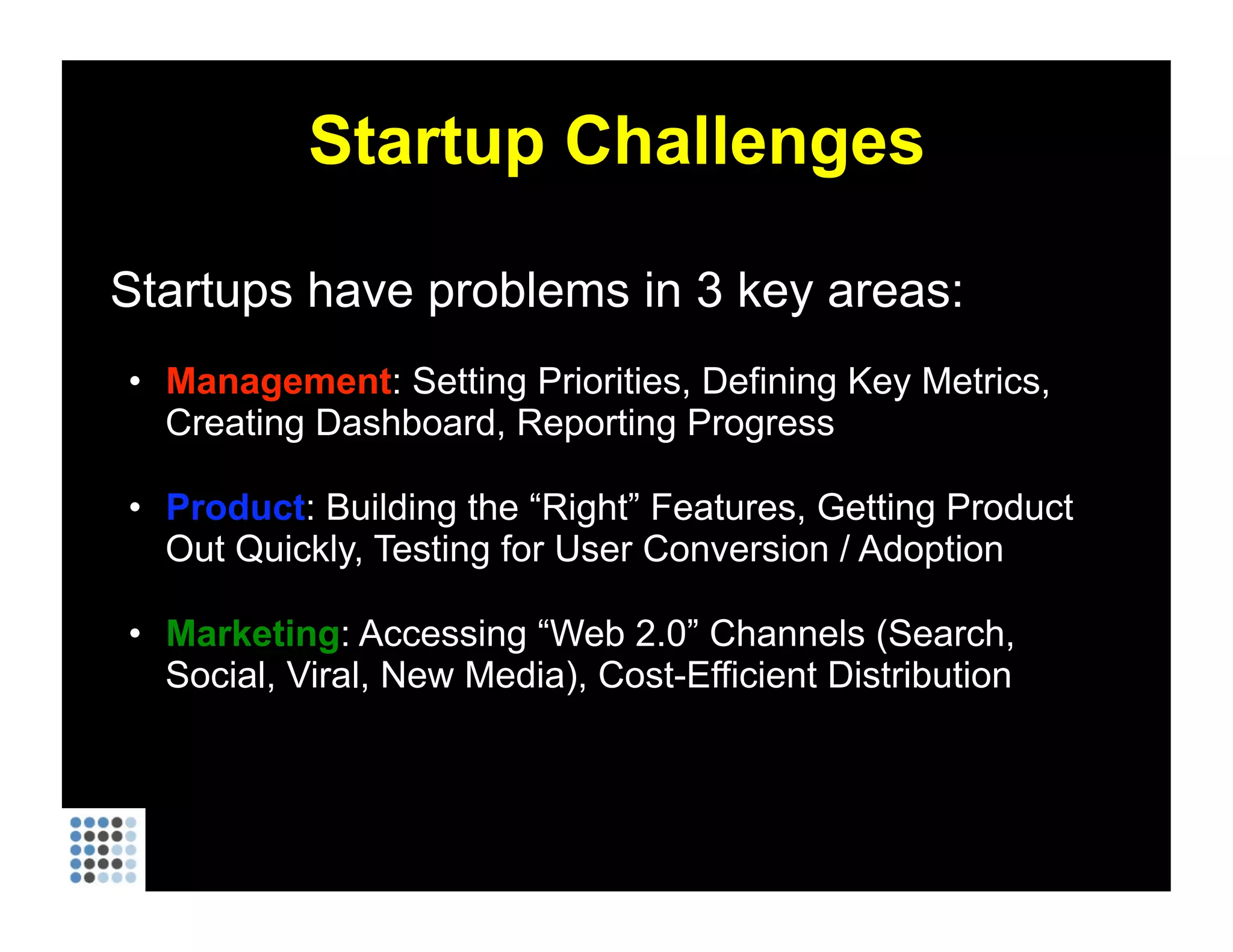
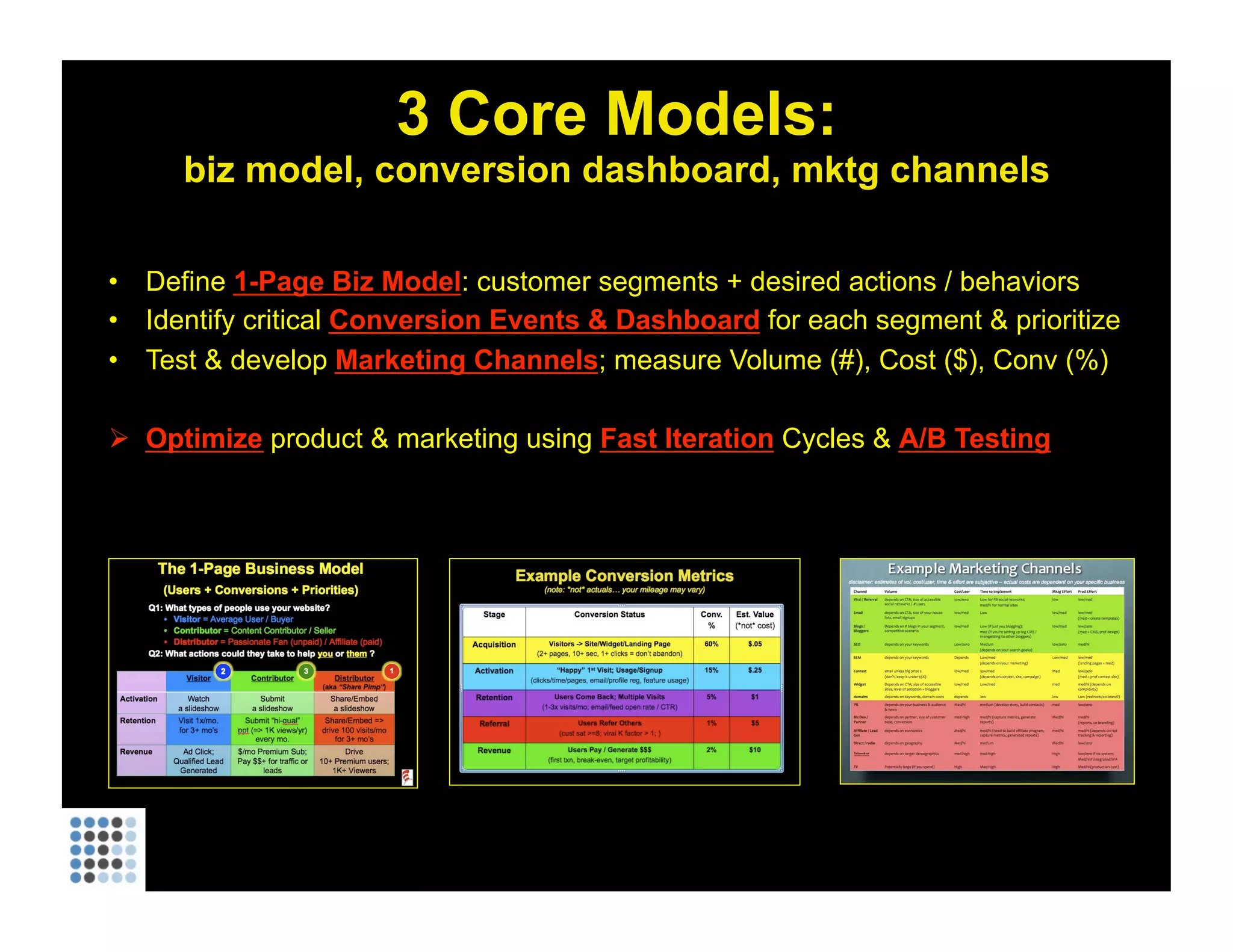
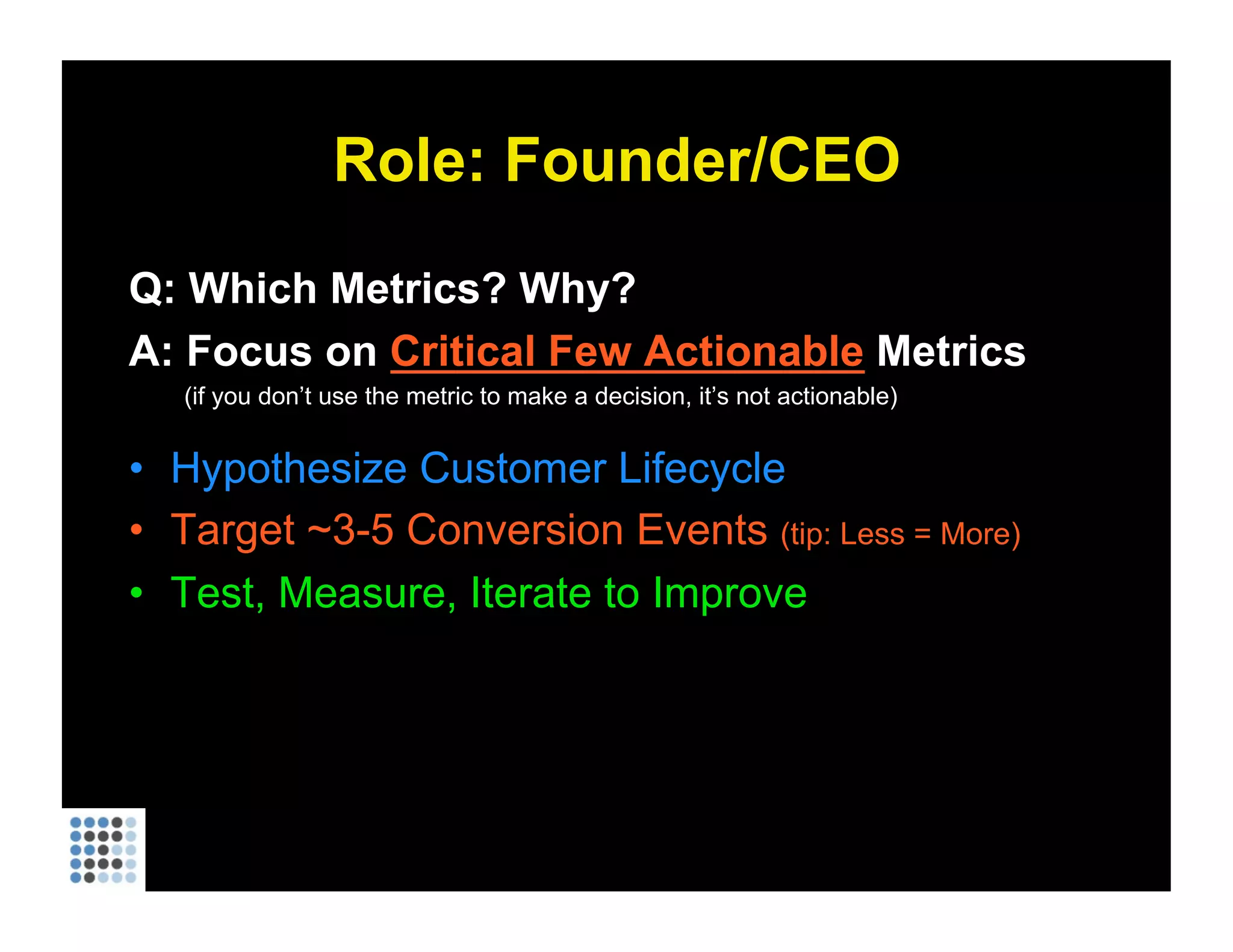
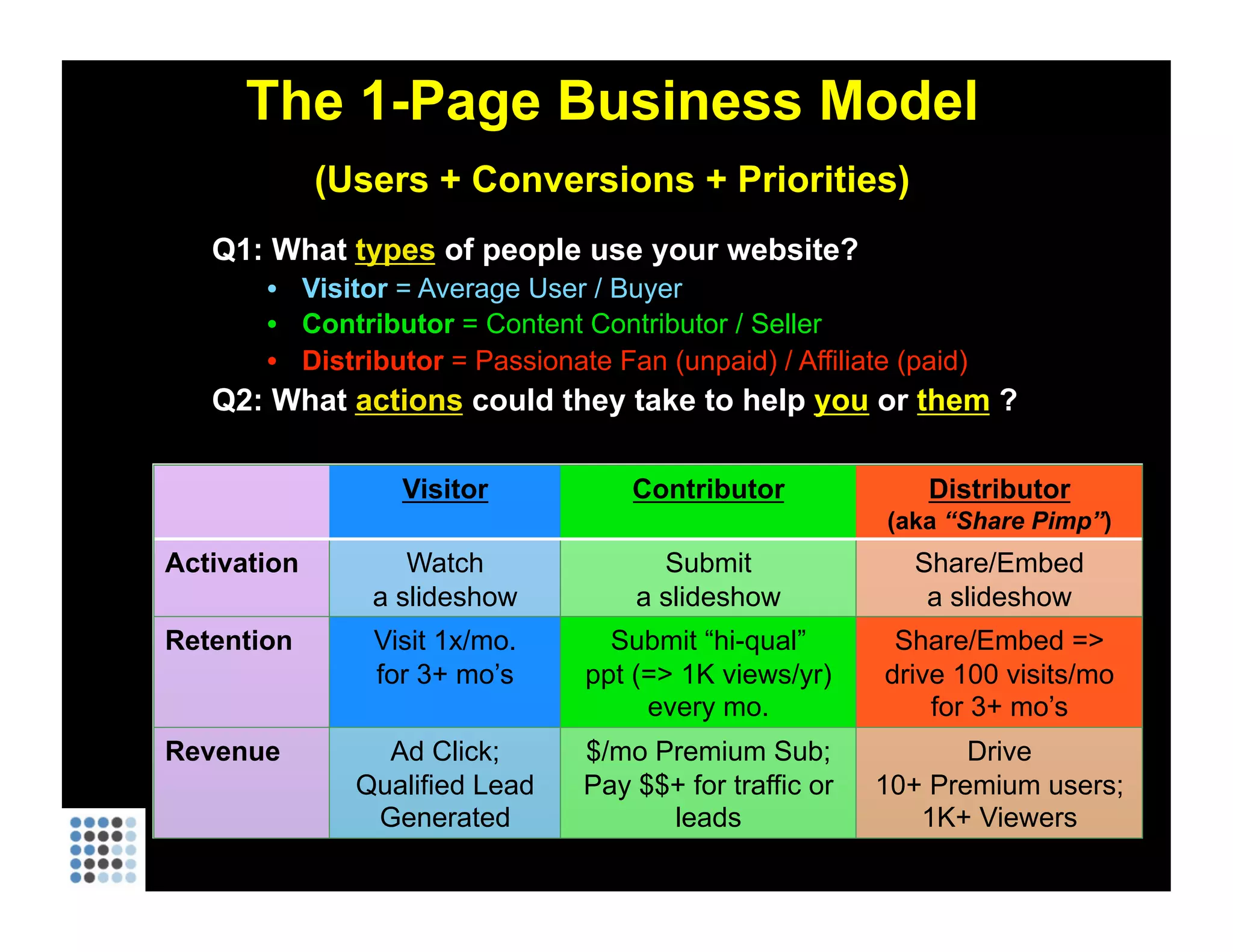
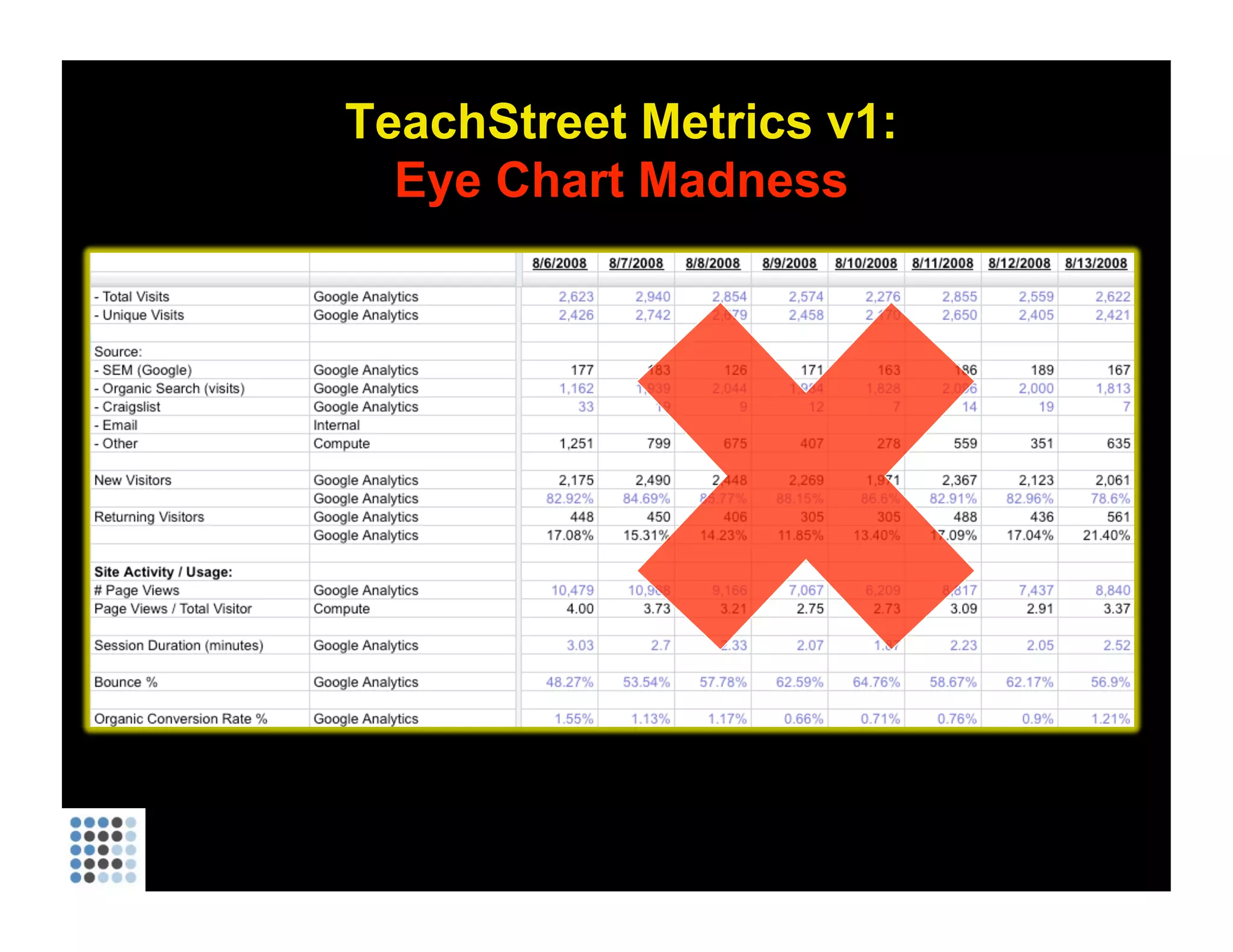
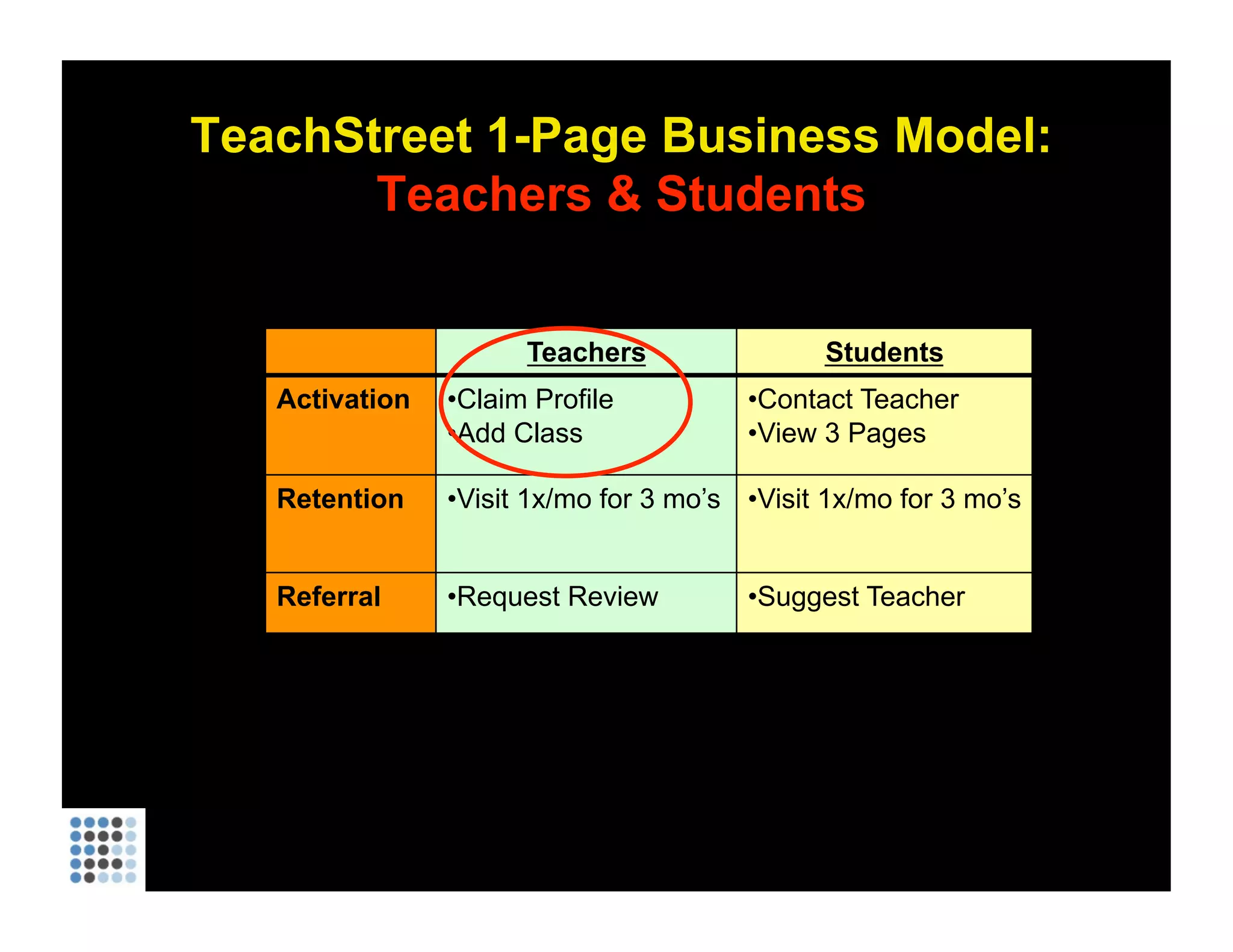
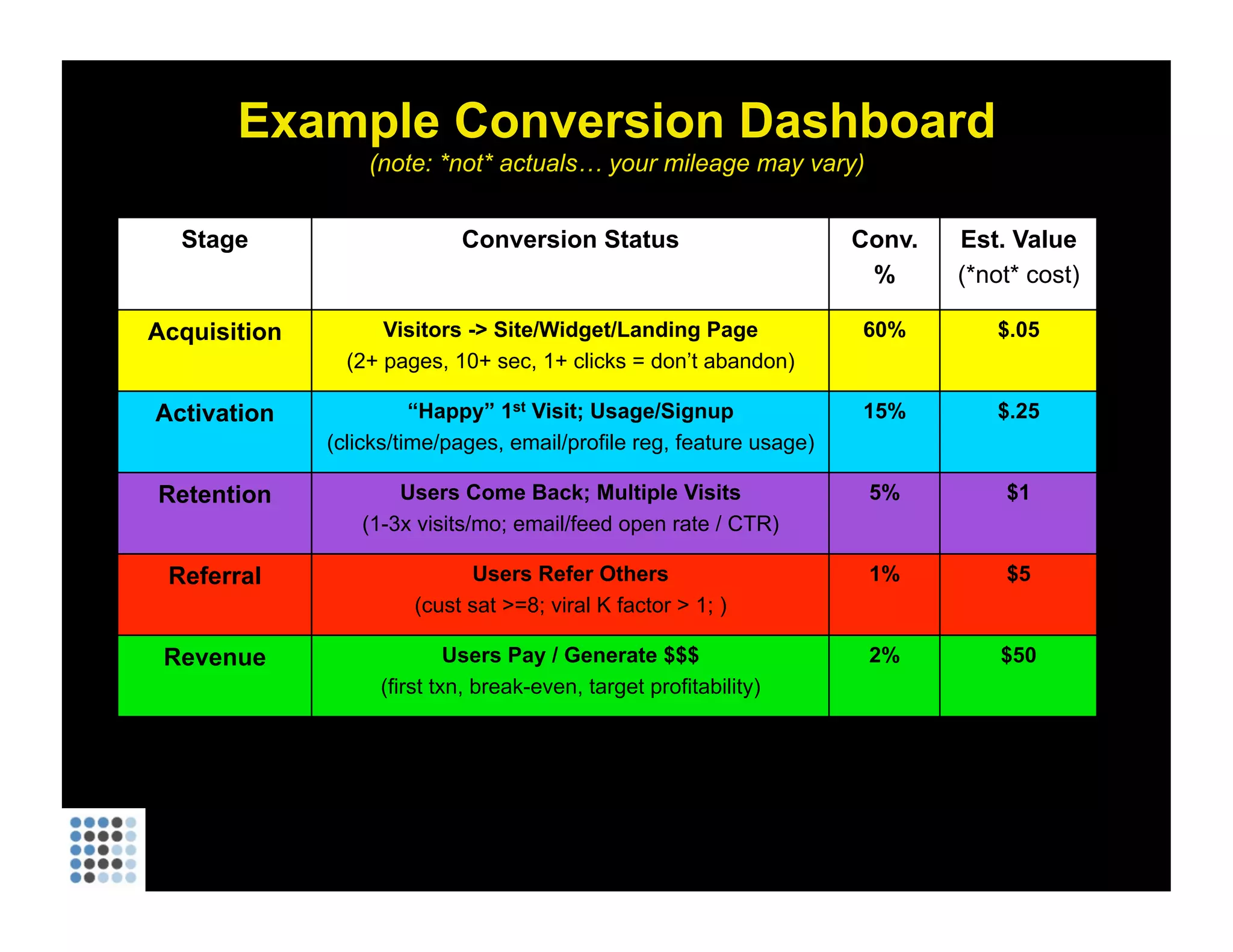
The document discusses startup metrics and provides a 5-step model called AARRR for measuring key metrics. The model focuses on Acquisition, Activation, Retention, Referral, and Revenue. It emphasizes measuring user behavior, testing features and marketing channels, optimizing for conversions, and iterating quickly based on data. The overall message is that startups should focus on measuring the right metrics and using data to continuously improve the product, user experience and business model.


![[BDD 2025 - Full-Stack Development] Digital Accessibility: Why Developers nee...](https://cdn.slidesharecdn.com/ss_thumbnails/fs-digitalaccessibilitywhydevelopersneedtoknowandcarein2025-251127011019-0674441d-thumbnail.jpg?width=640&height=640&fit=bounds)


![[BDD 2025 - Mobile Development] Mobile Engineer and Software Engineer: Are we...](https://cdn.slidesharecdn.com/ss_thumbnails/md-mobileengineerandsoftwareengineerarewestillrelevantsidiqpermana-251127010650-55224ef1-thumbnail.jpg?width=640&height=640&fit=bounds)


![[BDD 2025 - Full-Stack Development] Agentic AI Architecture: Redefining Syste...](https://cdn.slidesharecdn.com/ss_thumbnails/fs-agenticaiarchitectureredefiningsystemcommunication-251124030838-e6c70cc2-thumbnail.jpg?width=640&height=640&fit=bounds)
![[BDD 2025 - Artificial Intelligence] AI for the Underdogs: Innovation for Sma...](https://cdn.slidesharecdn.com/ss_thumbnails/ai-aifortheunderdogsinnovationforsmallbusinesses-251124030839-72a599a4-thumbnail.jpg?width=640&height=640&fit=bounds)
![[BDD 2025 - Mobile Development] Crafting Immersive UI with E2E and AGSL Shade...](https://cdn.slidesharecdn.com/ss_thumbnails/md-craftingimmersiveuiwithe2eandagslshaderveronicaputrianggraini-251124030840-0c677f44-thumbnail.jpg?width=640&height=640&fit=bounds)

