0736 Research on System of Rice intensification - Initial Experiences

Loading...

Flash Player 9 (or above) is needed to view presentations.
We have detected that you do not have it on your computer. To install it, go here.

0 comments

Post a comment

    Post a comment
    Embed Video
    Edit your comment Cancel

    Favorites, Groups & Events

    0736 Research on System of Rice intensification - Initial Experiences - Presentation Transcript

    1. Research on System of Rice Intensification – Initial Experiences . B. C. Viraktamath Project Director Directorate of Rice Research, Hyderabad ______________________________ E- mail: bcvmath@drricar.org
    2. Rice in India
      • It is the staple food for > 70% Indians, and it holds the key for food security.
      • Grown in 42.5 m.ha with a production of 88 m.t.
      • Occupies 25% of cropped area and contributes about 24% to AGDP.
      • Earns about 7000 crores of foreign exchange.
      • It is a source of livelihood for millions of farm families.
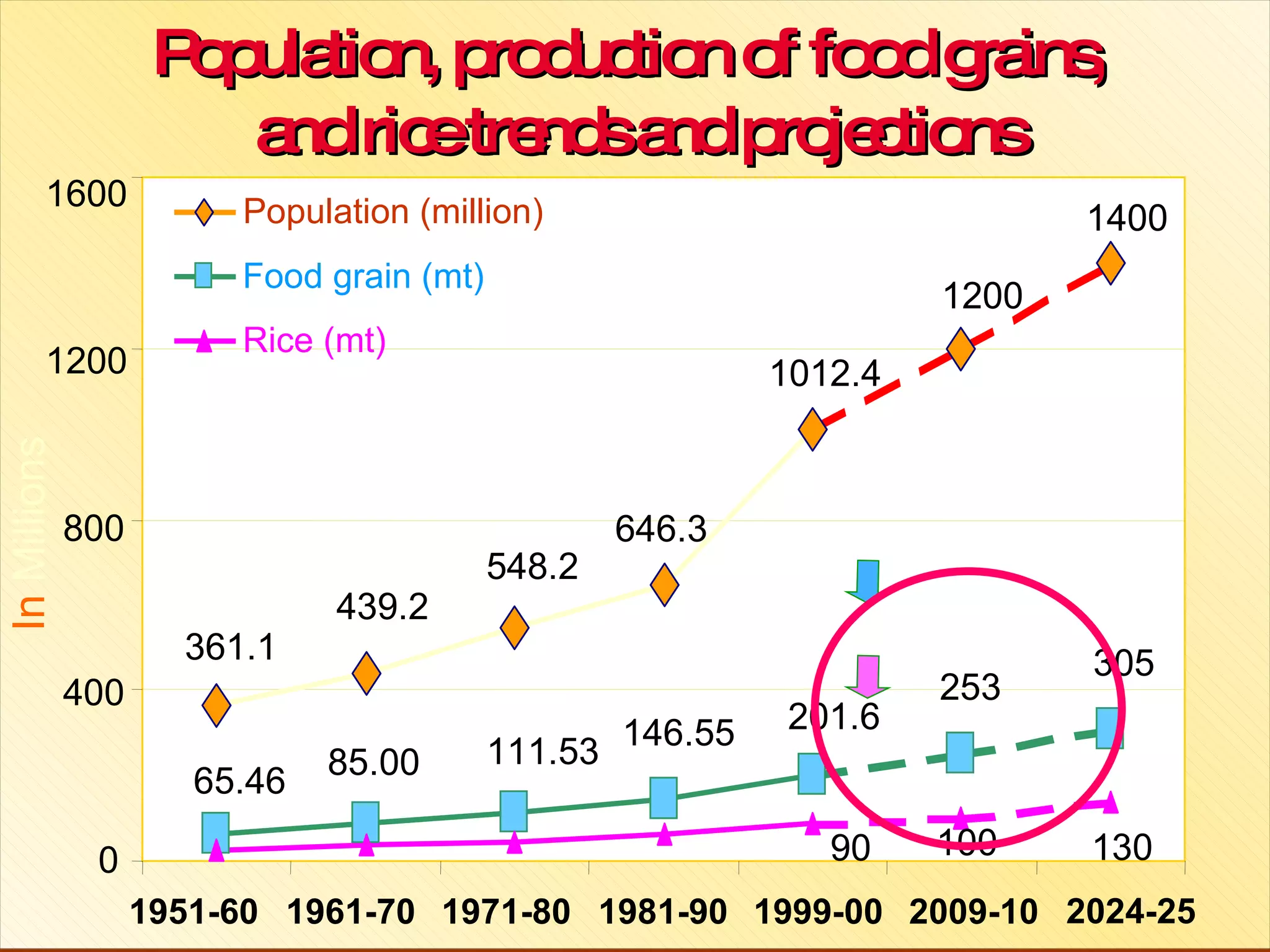
    3. 361.1 439.2 548.2 646.3 1012.4 1200 1400 65.46 85.00 111.53 146.55 201.6 253 305 90 130 100 In Millions Population (million) Food grain (mt) Rice (mt) Population, production of food grains, and rice trends and projections Rice Food grains 0 400 800 1200 1600 1951-60 1961-70 1971-80 1981-90 1999-00 2009-10 2024-25 211.3 (2002) 93.3 (2002)
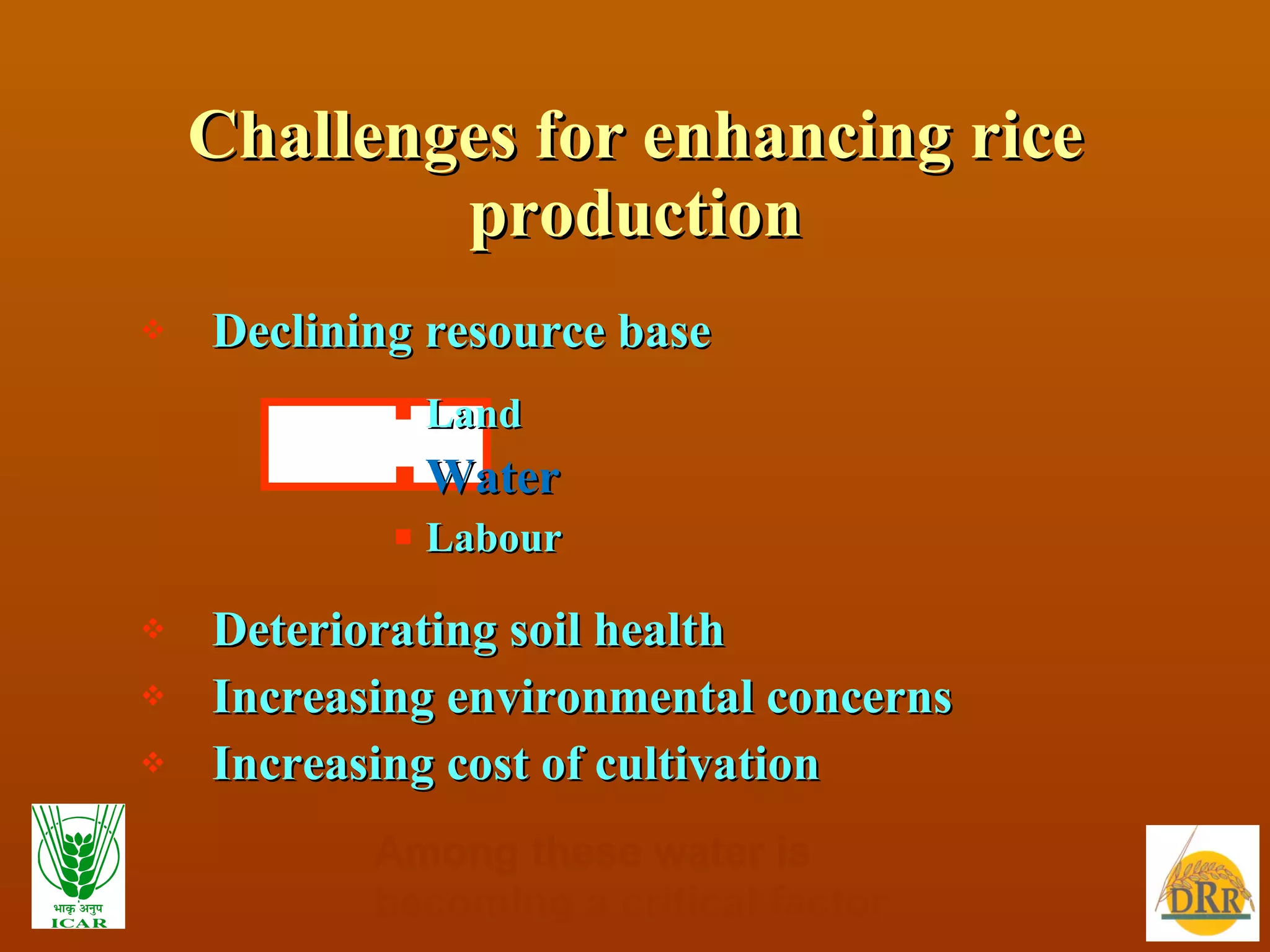
    4. Challenges for enhancing rice production
      • Declining resource base
              • Land
              • Water
              • Labour
      • Deteriorating soil health
      • Increasing environmental concerns
      • Increasing cost of cultivation
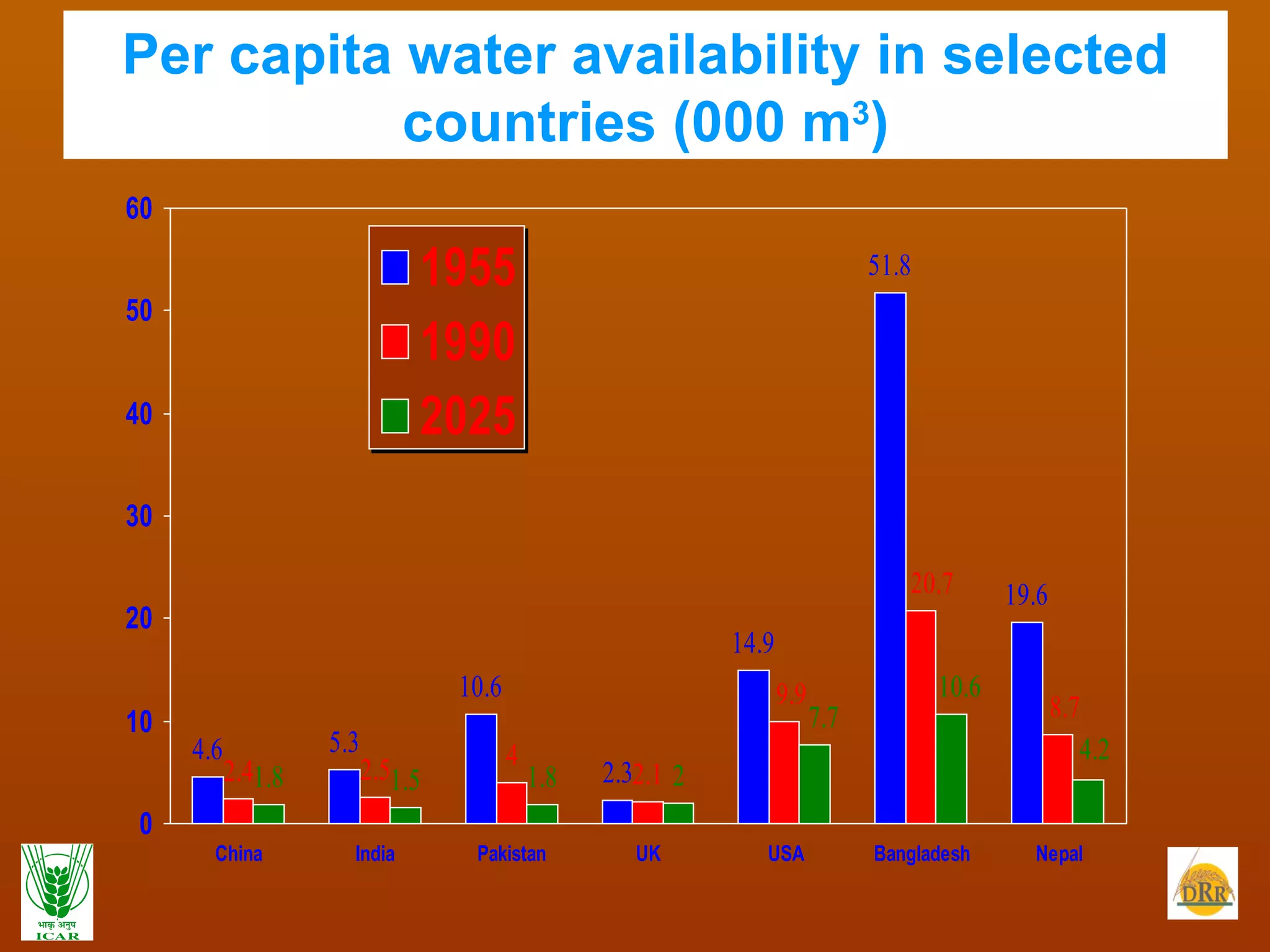
      Among these water is becoming a critical factor
    5. Per capita water availability in selected countries (000 m 3 )
    6. Rice and Water
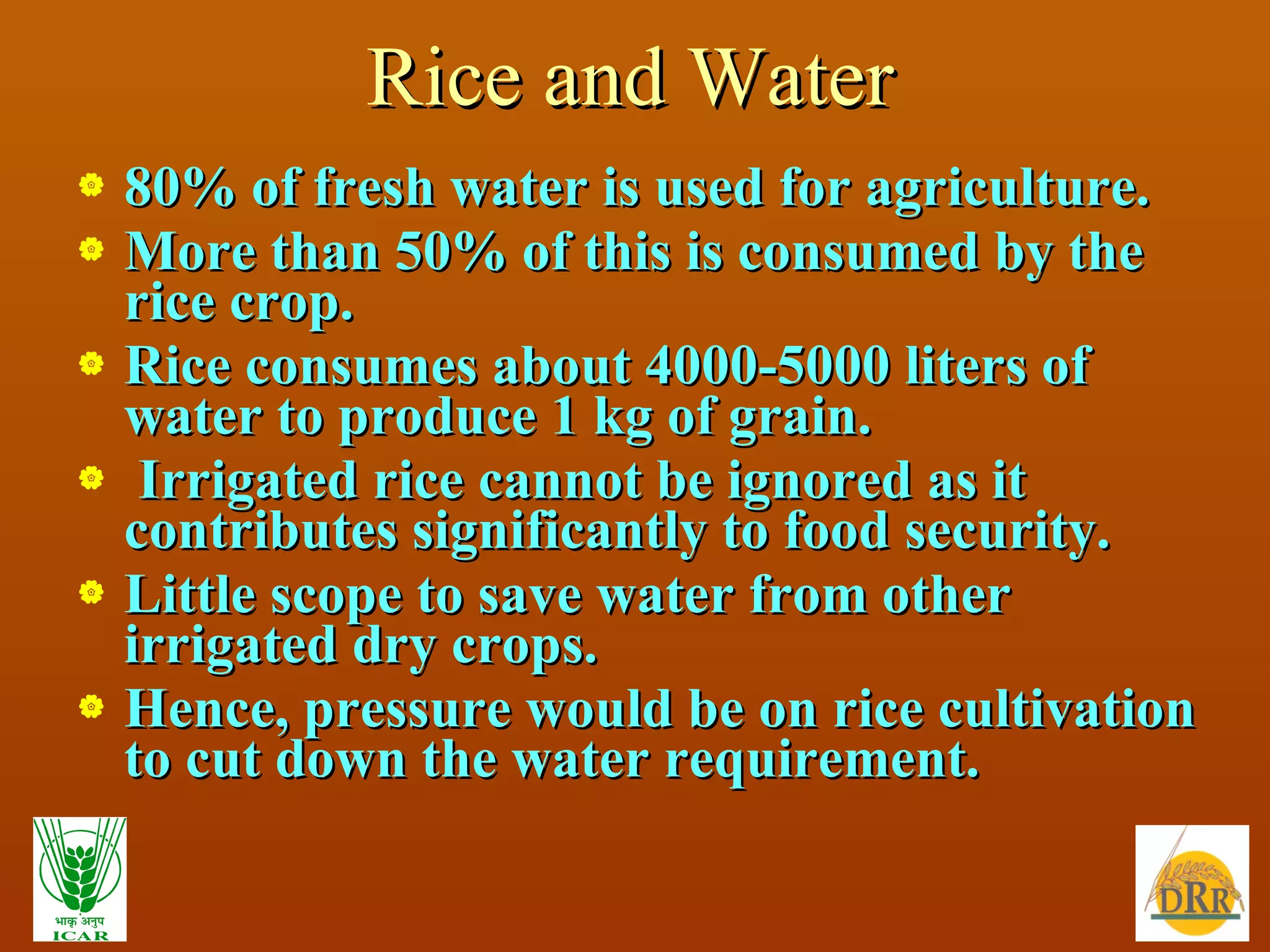
      • 80% of fresh water is used for agriculture.
      • More than 50% of this is consumed by the rice crop.
      • Rice consumes about 4000-5000 liters of water to produce 1 kg of grain.
      • Irrigated rice cannot be ignored as it contributes significantly to food security.
      • Little scope to save water from other irrigated dry crops.
      • Hence, pressure would be on rice cultivation to cut down the water requirement.
    7. What is SRI ?
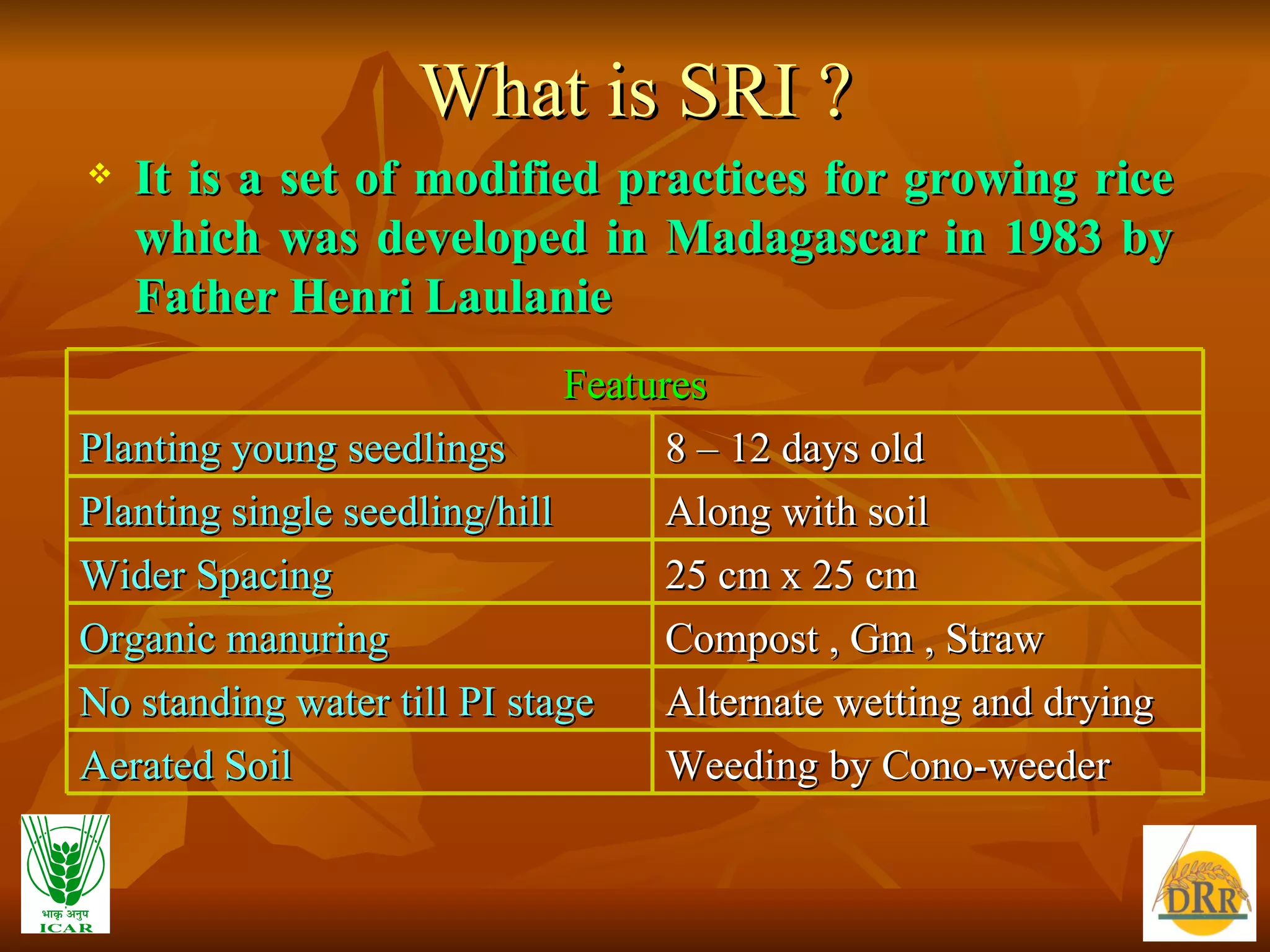
      • It is a set of modified practices for growing rice which was developed in Madagascar in 1983 by Father Henri Laulanie
      Features Planting young seedlings 8 – 12 days old Planting single seedling/hill Along with soil Wider Spacing 25 cm x 25 cm Organic manuring Compost , Gm , Straw No standing water till PI stage Alternate wetting and drying Aerated Soil Weeding by Cono-weeder
    8. Claims of SRI method
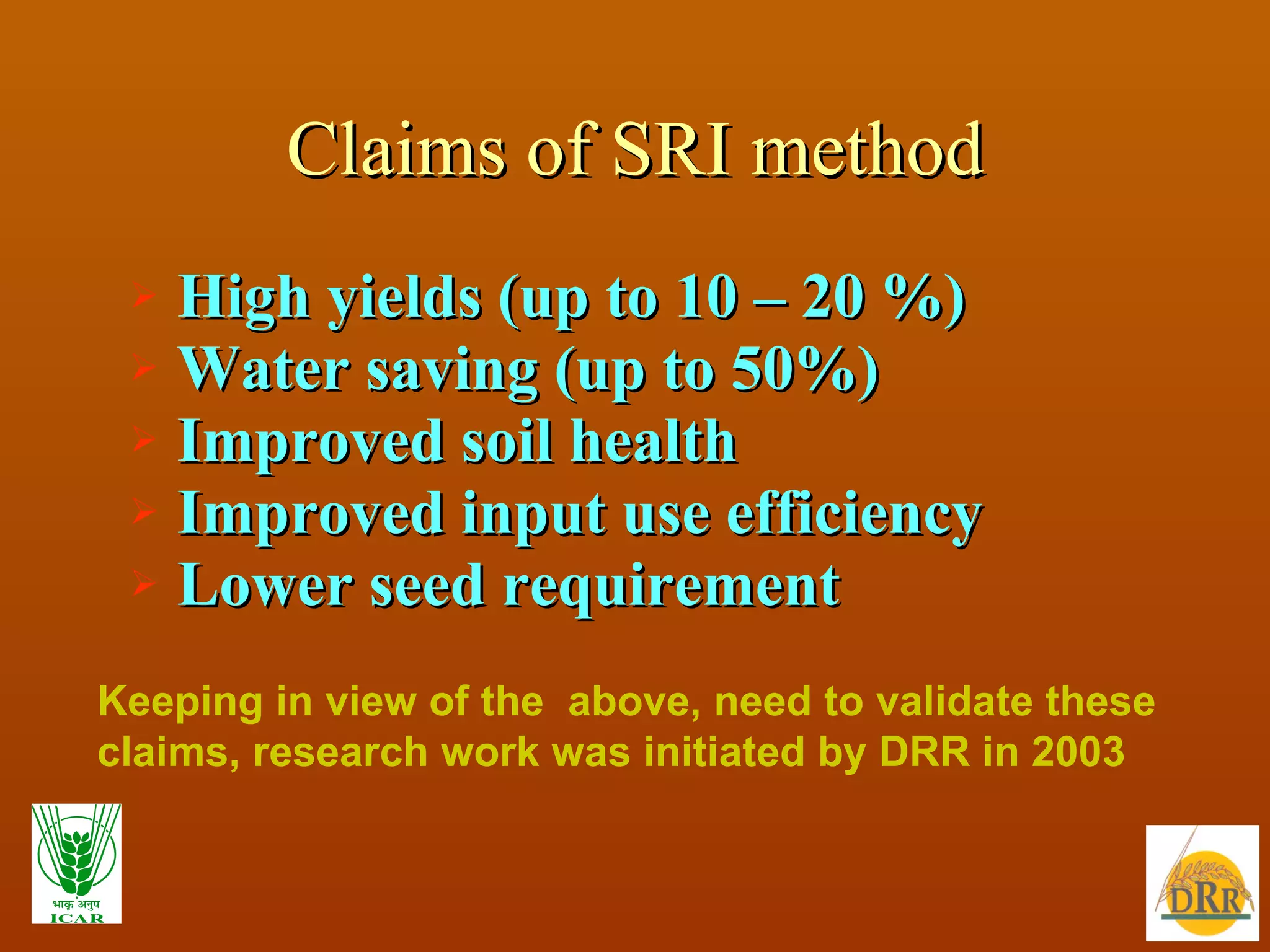
      • High yields (up to 10 – 20 %)
      • Water saving (up to 50%)
      • Improved soil health
      • Improved input use efficiency
      • Lower seed requirement
      Keeping in view of the above, need to validate these claims, research work was initiated by DRR in 2003
    9. DRR trial - A prelude to multi-location trials Results:
      • Yields in SRI were higher in SRI by 16.6%
      • Planting young seedlings is beneficial
          • Hybrids performed better than varieties
          • Hybrids – Yield increase 46 - 48%
          • Varieties – Yield increase 5 – 17%
      • Pusa Basmati did not perform well under SRI.
      Season - Rabi 2003 Treatments - Normal transplanting, SRI with 12d old seedlings, SRI with 25d old seedlings, normal planting with wider spacing (25 x 25 cm).
      • Multi-location trials on SRI under AICRIP were conducted during kharif 2004 , 2005 and 2006 seasons (21 locations)
      Contd…. State (2005) Location Andhra Pradesh Rajendranagar (Hyderabad) Assam Karimgunj, Titabar Bihar Patna, Sabour Chhattisgarh Jagdalpur Gujarat Nawagam Himachal Pradesh Malan Jharkhand Ranchi Karnataka Mandya, Siriguppa State (2006) Location Orissa Chiplima Punjab Kapurthala Pondicherry Karaikal Tamil Nadu Aduthurai, Coimbatore Tripura Arundhatinagar Uttar pradesh Varanasi Uttaranchal Pantnagar, Almora Meghalaya Umiam
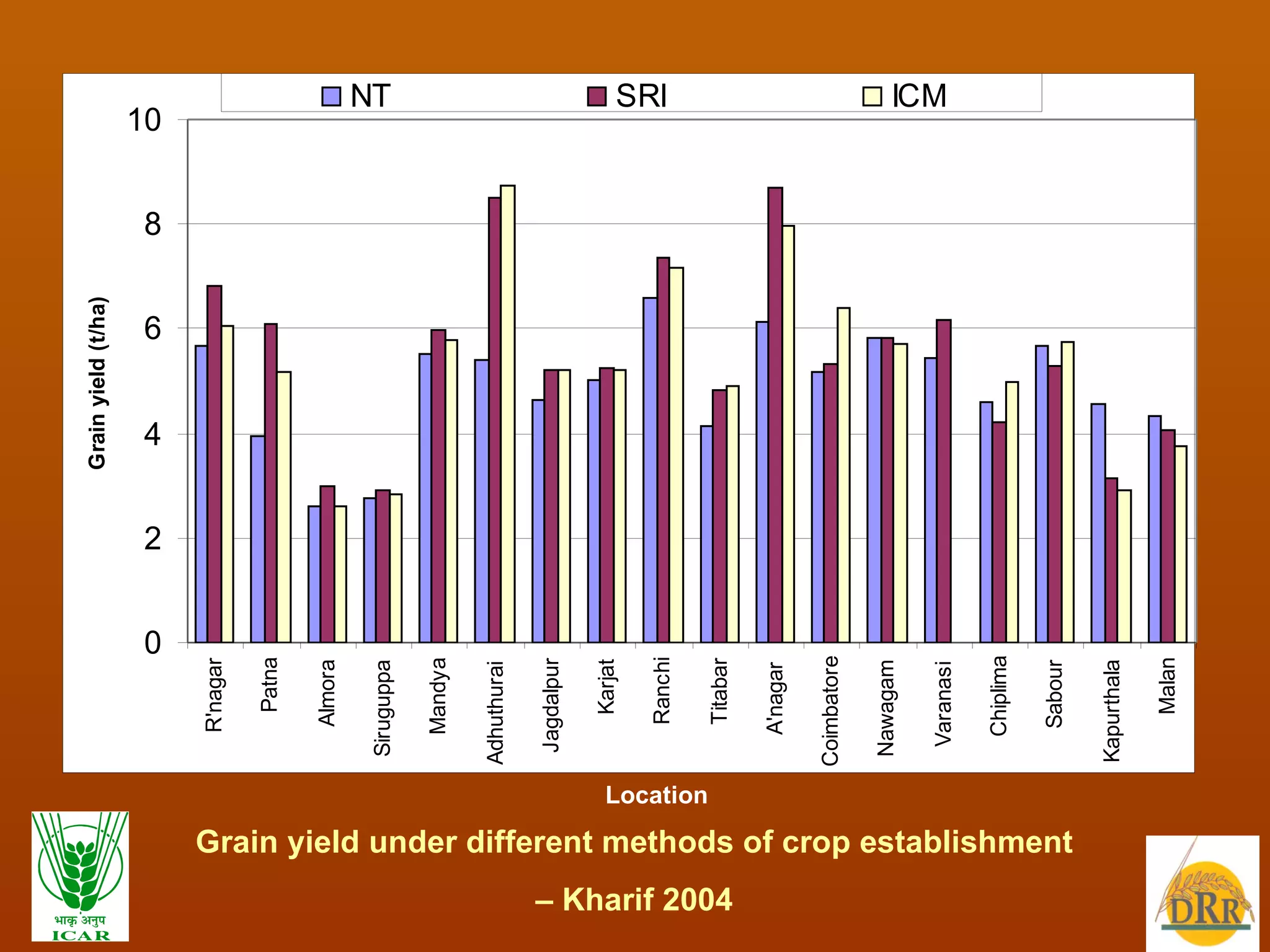
    10. Results of Multi-location Trials Kharif 2004 -- Locations :21
      • Performance of SRI varied from location to location
      • SRI gave higher yield (7-42 %) than control at 11 locations with mean of 12 %
      • Varieties responded differently
      • SRI and ICM were on par at 4 locations
      • At Kapurthala and Malan, normal method was better than SRI
      • KRH-2 performed better
      • Increased yield was due to increased no. of panicles.
      Contd….
    11. Grain yield under different methods of crop establishment – Kharif 2004 Location SRI<NT SRI=NT SRI>NT SRI>ICM>NT SRI=ICM
    12. Multi-location Evaluation of SRI Results of Kharif 2005
      • SRI was significantly better than normal transplanting at 10 locations (Yield increase -5.0-69 .9 % with a mean of 25%
      • SRI and ICM were on par at 7 locations.
      • SRI performed better in southern and central India
      • SRI recorded lower yields than normal planting at 4 locations (Karaikal, Kapurthala , Pusa, Malan )
      • Yield increase of SRI was higher in acidic soils as compared to alkaline soils
      Contd….
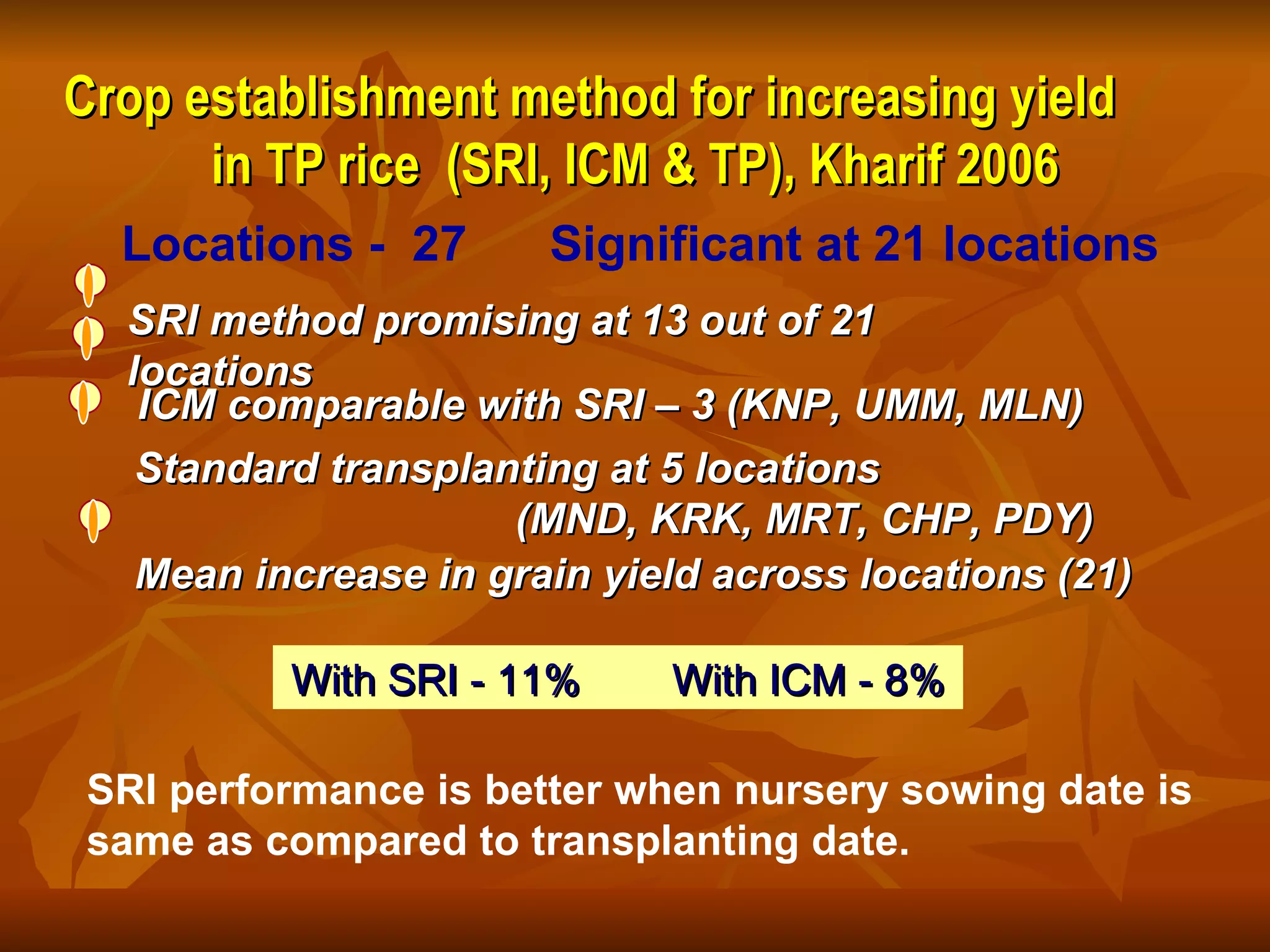
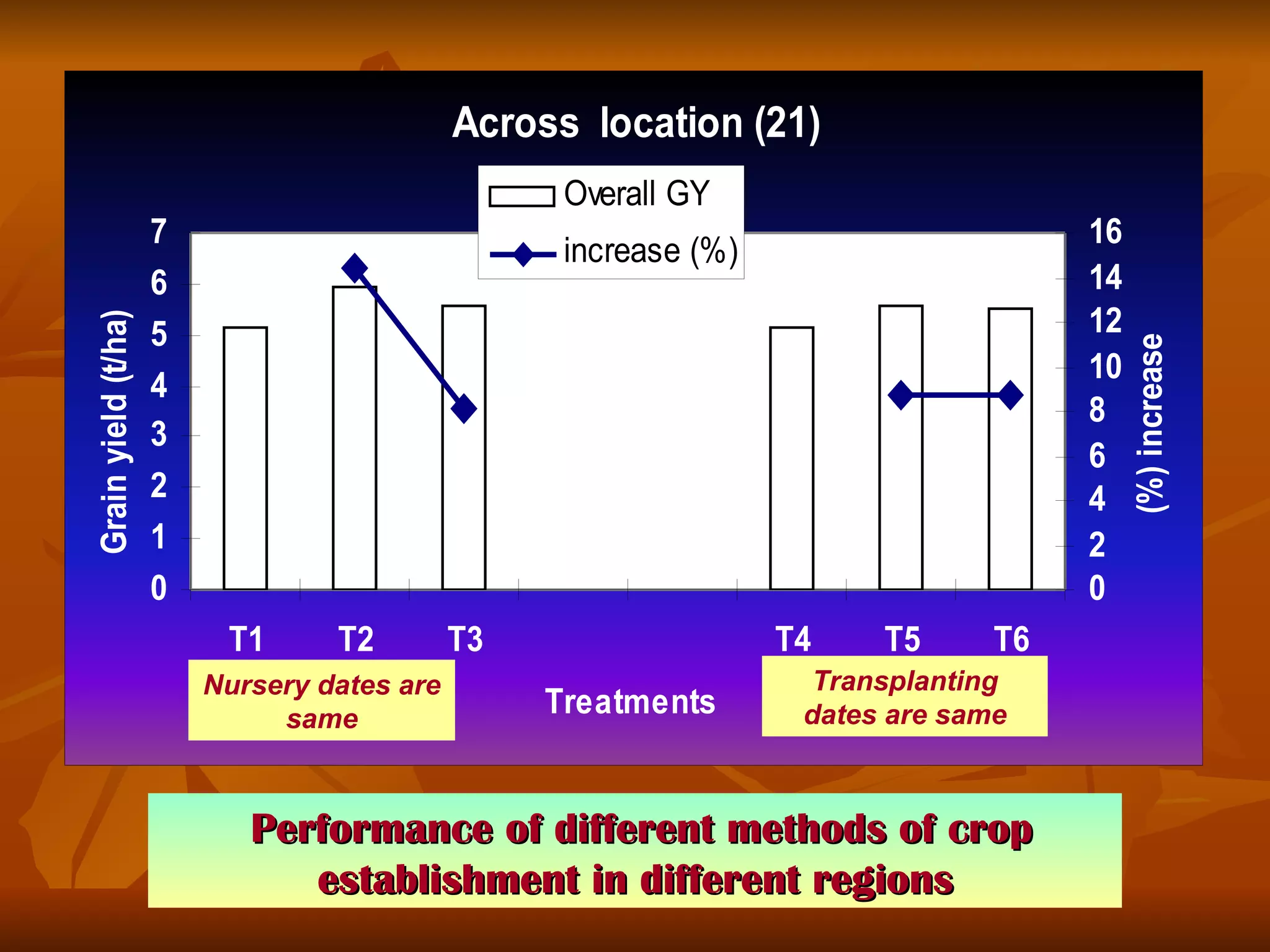
    13. Crop establishment method for increasing yield in TP rice (SRI, ICM & TP), Kharif 2006 Locations - 27 Significant at 21 locations SRI method promising at 13 out of 21 locations ICM comparable with SRI – 3 (KNP, UMM, MLN) Standard transplanting at 5 locations (MND, KRK, MRT, CHP, PDY) Mean increase in grain yield across locations (21) With SRI - 11% With ICM - 8% SRI performance is better when nursery sowing date is same as compared to transplanting date.
    14. Nursery dates are same Transplanting dates are same Performance of different methods of crop establishment in different regions
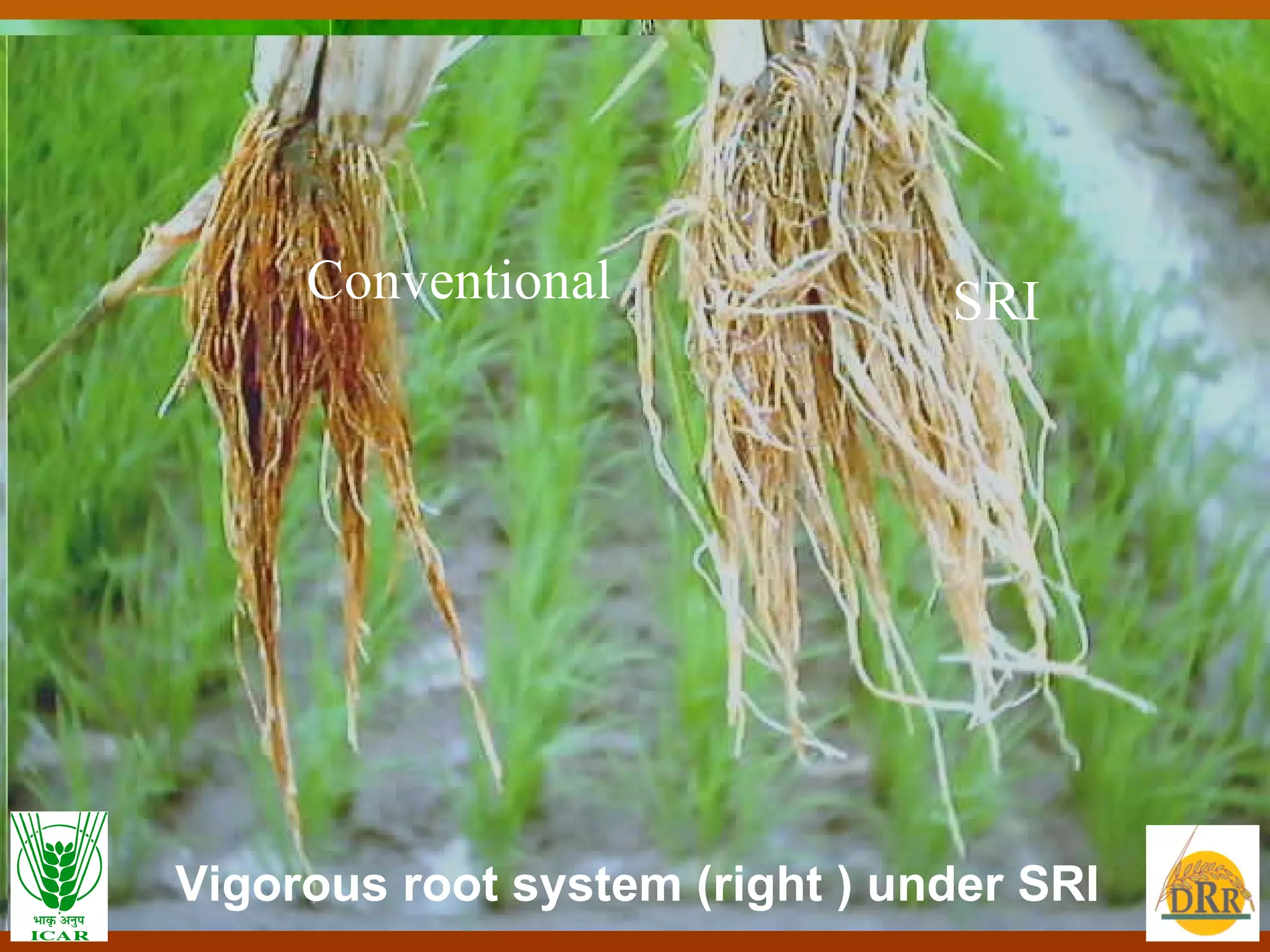
    15. Vigorous root system (right ) under SRI SRI Conventional
    16. 60 d old plants under SRI and normal TP
    17. Collaborative research by DRR and ICRISAT
      • Treatments were SRI, ECO-SRI (fully organic methods) and normal transplanting
      • Water supplied to each plot was measured with water meters
      • Nutrients added to all treatments were calculated on N basis
      • No pesticides were applied, as there was no serious pest attack
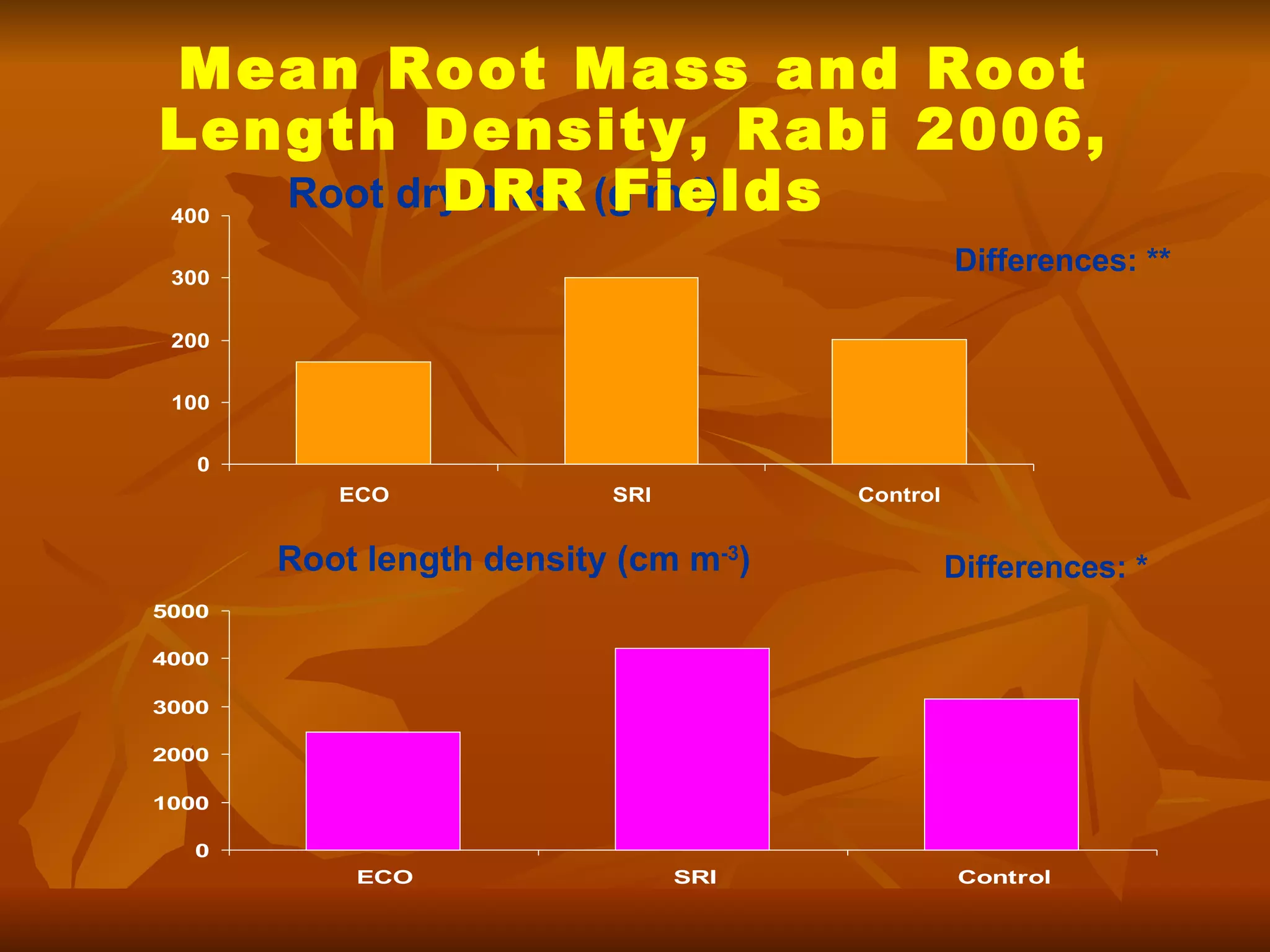
    18. Root dry mass (g m -3 ) Root length density (cm m -3 ) Mean Root Mass and Root Length Density, Rabi 2006, DRR Fields Differences: ** Differences: *
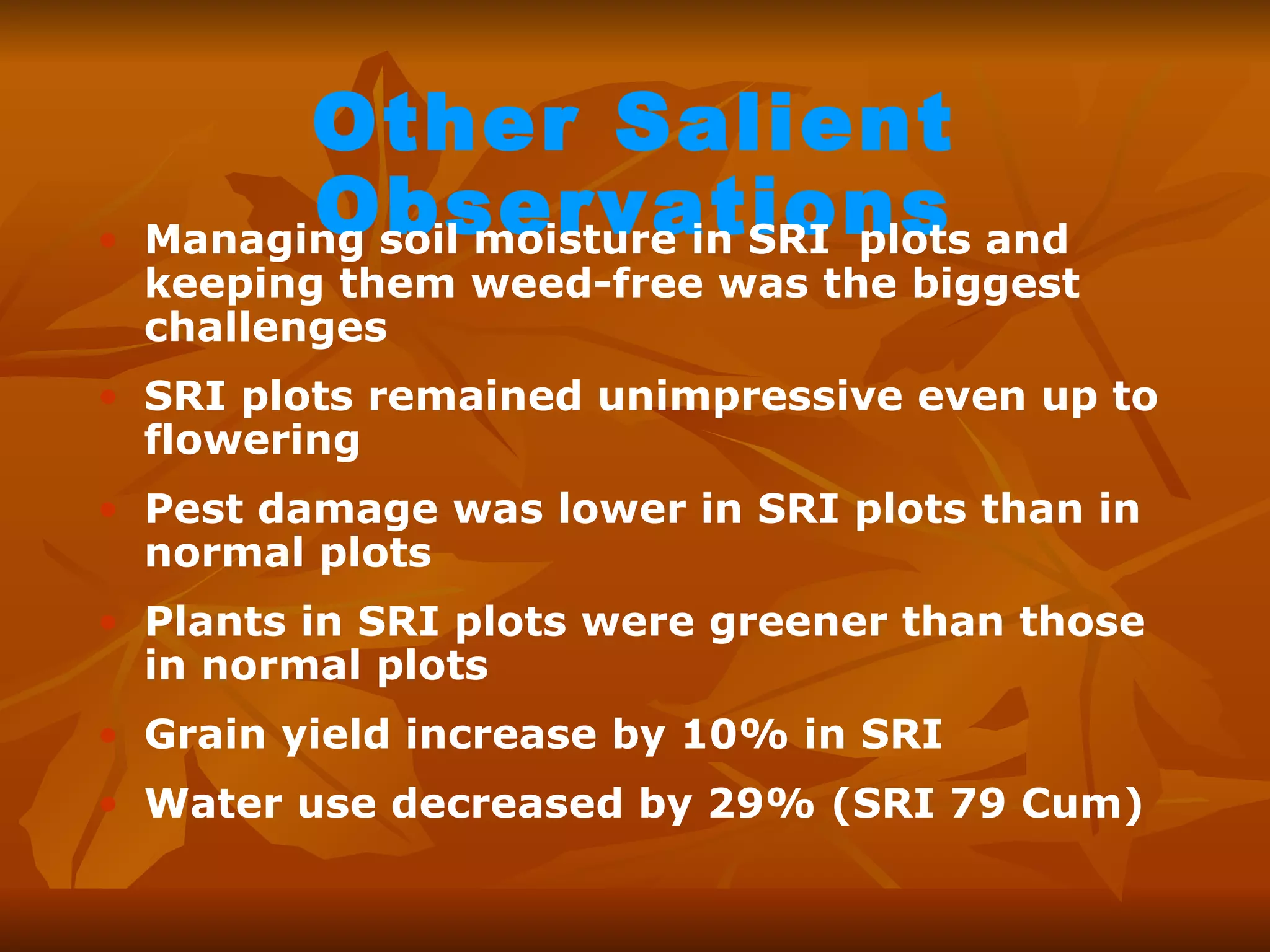
    19. Other Salient Observations
      • Managing soil moisture in SRI plots and keeping them weed-free was the biggest challenges
      • SRI plots remained unimpressive even up to flowering
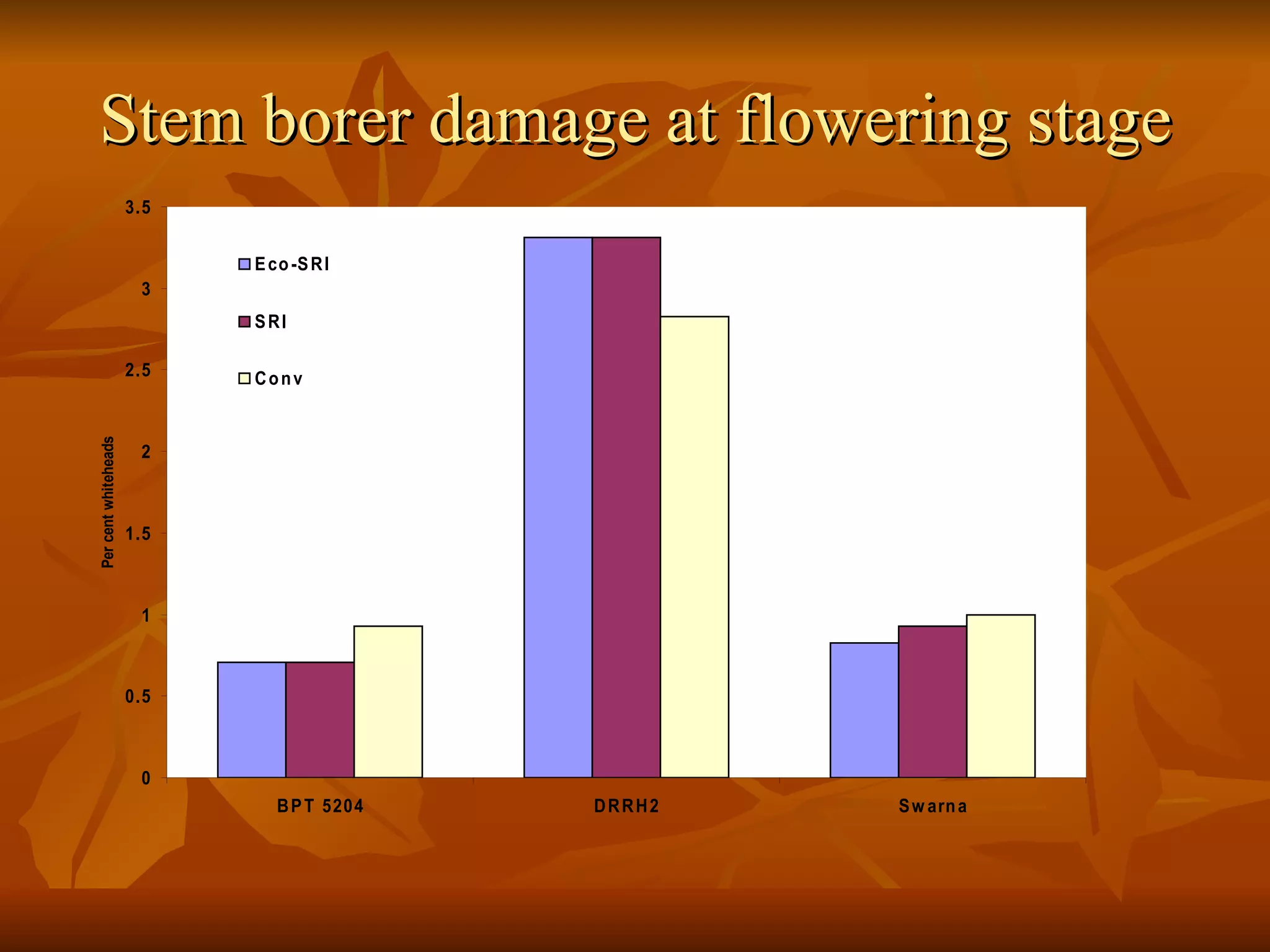
      • Pest damage was lower in SRI plots than in normal plots
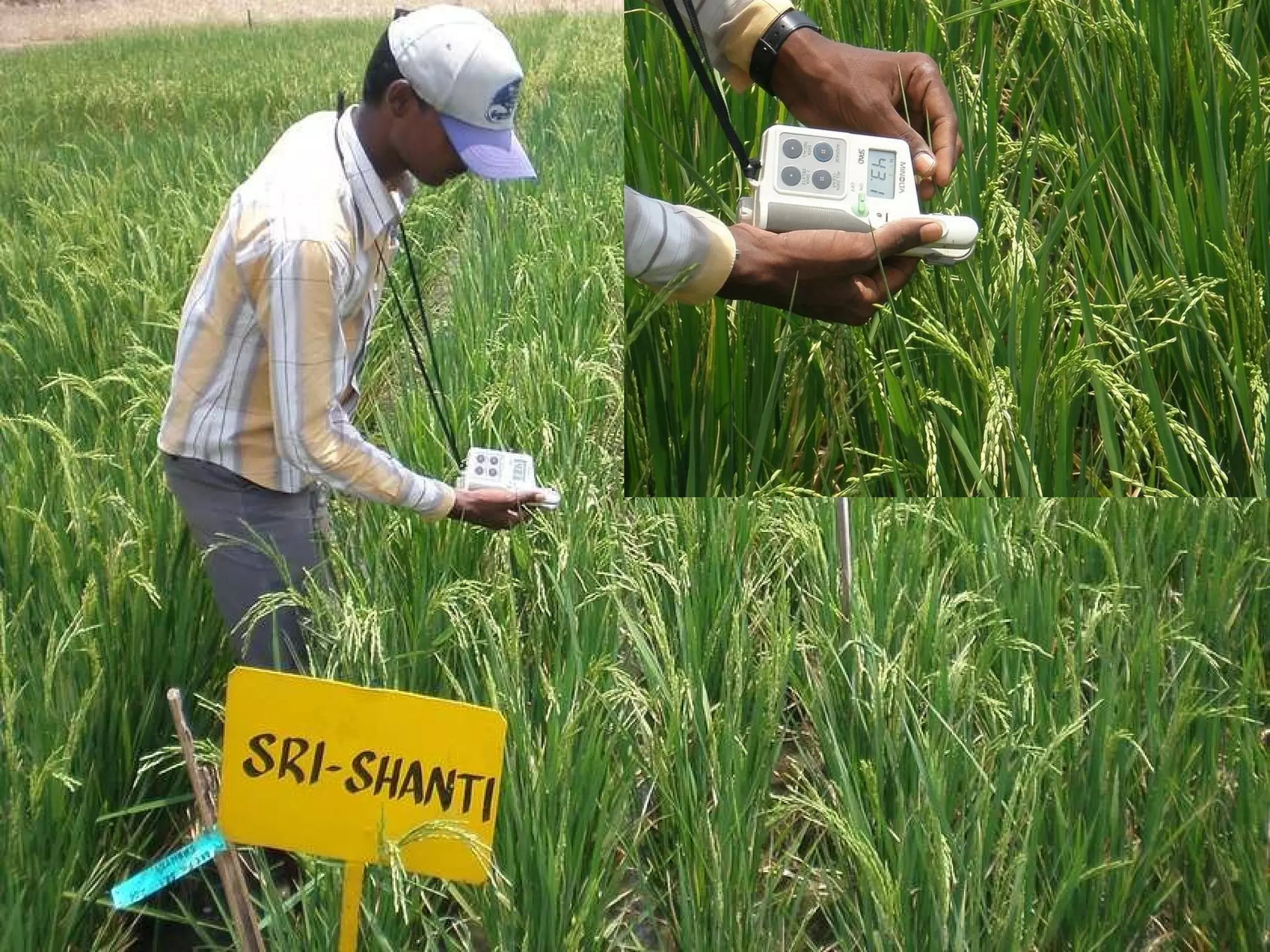
      • Plants in SRI plots were greener than those in normal plots
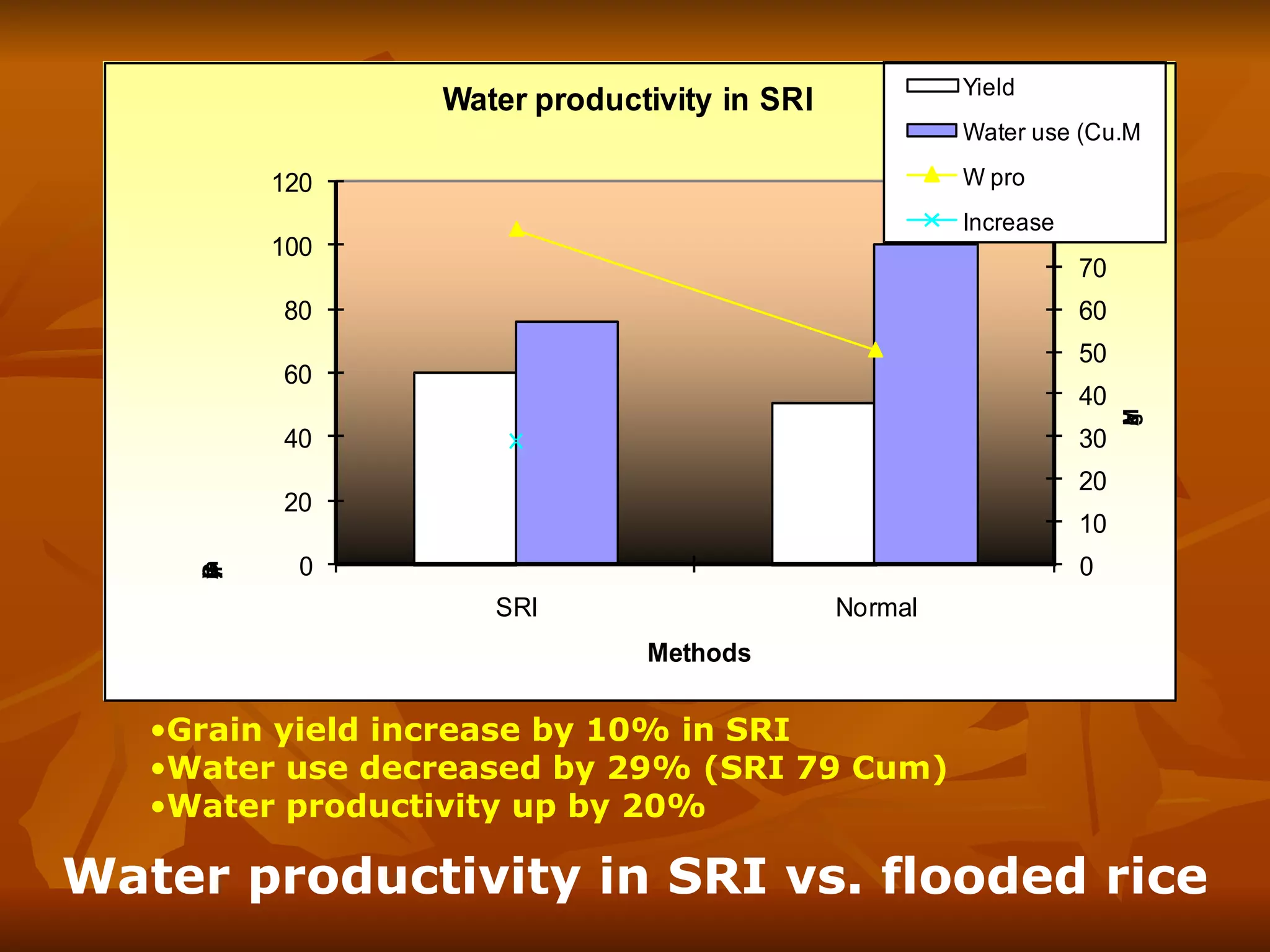
      • Grain yield increase by 10% in SRI
      • Water use decreased by 29% (SRI 79 Cum)
    20. Way Forward/Take-Home Message
      • Root mass, root length density of plants in SRI plots was higher than that of controls and need more studies (over depth).
      • Bigger, better (non-black) and deeper roots together with the generally high microbial activity may explain higher yield in SRI and needs to be studied
      • More studies needed, particularly through long-term experiments, including addressing the issues of soil nutrient depletion in SRI plots and adoption of SRI by farmers to help policy makers towards its scaling up
    21. Water productivity in SRI vs. flooded rice
      • Grain yield increase by 10% in SRI
      • Water use decreased by 29% (SRI 79 Cum)
      • Water productivity up by 20%
    22.  
    23. Stem borer damage at flowering stage
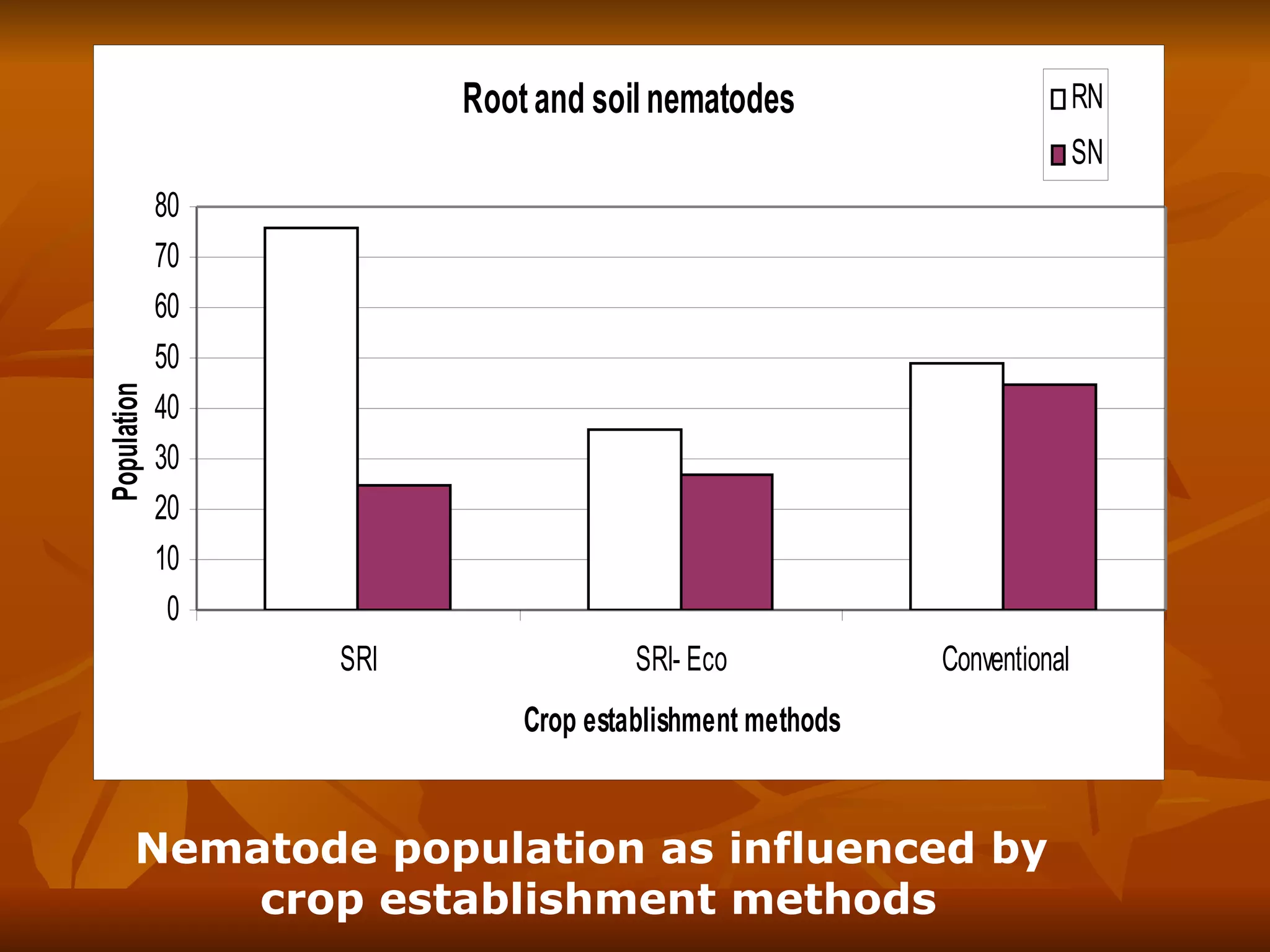
    24. Nematode population as influenced by crop establishment methods
    25.  
    26. Conclusions
      • SRI practice is significantly superior to the conventional method in more than 50% locations indicating that it does not do well at all locations.
      • The performance of SRI was variety-specific, and hybrids performed better than varieties irrespective of date of sowing.
      • The mean yield advantage observed under SRI over the conventional method varied from 10 to 16 per cent.
      • SRI performance was not satisfactory at Malan and Kapurthala.
      • Acidic soils responded better to SRI method.
    27. Future Thrust Areas for Research on SRI
      • Varietal response to SRI and designing suitable plant type
      • Identification of areas/zones most suited for SRI method
      • Precise quantification of savings in water
      • Effective weed management and refinement of machinery
      • Detailed studies on soil health and microbial activity
      • SRI vis-à-vis pest and disease incidence and their management.
      • Detailed economics of SRI and cost : benefit analaysis.
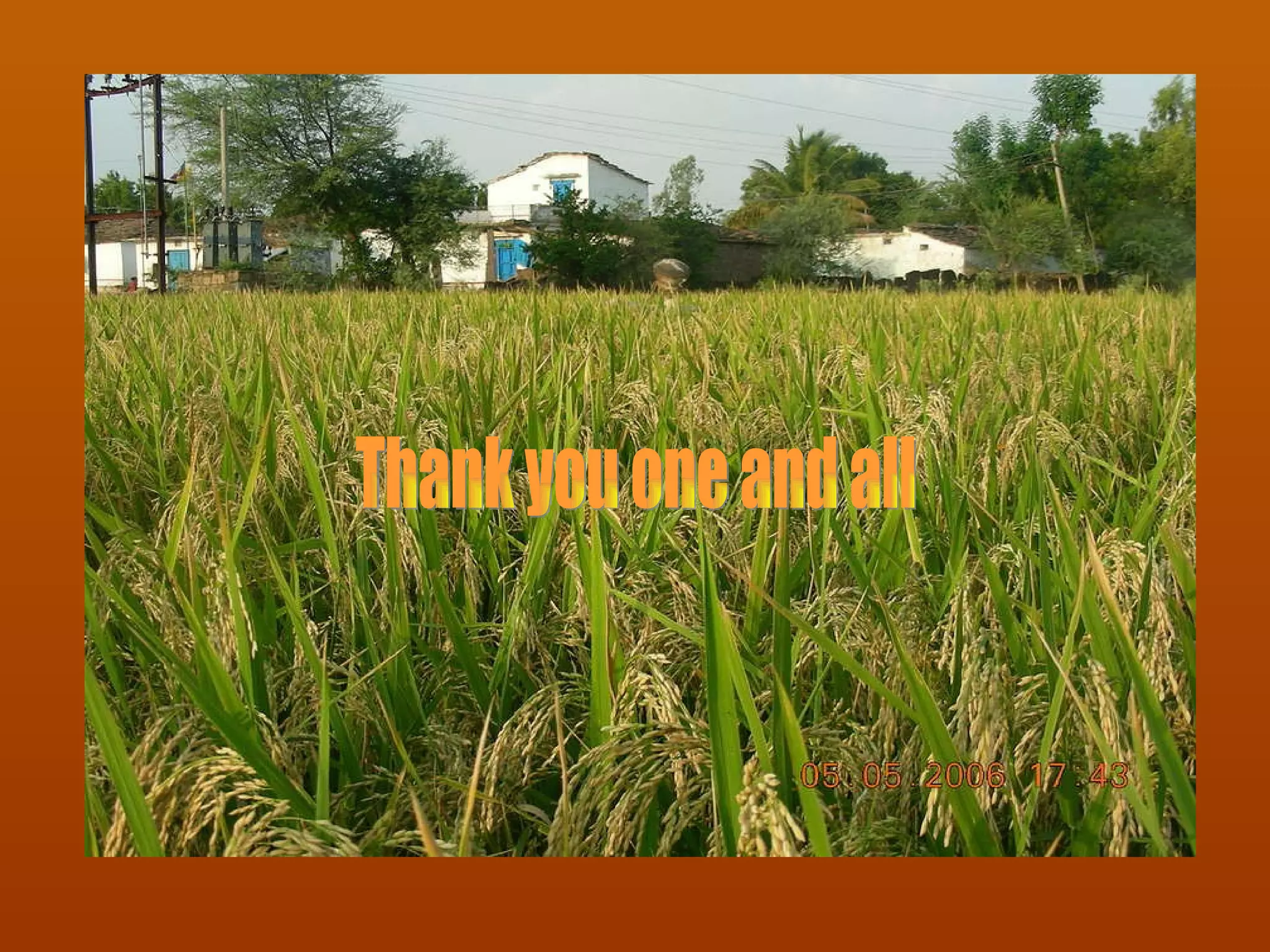
    28. Thank You Thank you one and all
    SlideShare Zeitgeist 2009

    + SRS Program, CIIFAD, Cornell UniversitySRS Program, CIIFAD, Cornell University Nominate

    custom

    157 views, 0 favs, 0 embeds more stats

    Presenter: B.C. Viraktamath

    Audience: 2nd Nation more

    More info about this document

    © All Rights Reserved

    Go to text version

    • Total Views 157
      • 157 on SlideShare
      • 0 from embeds
    • Comments 0
    • Favorites 0
    • Downloads 6
    Most viewed embeds

    more

    All embeds

    less

    Flagged as inappropriate Flag as inappropriate
    Flag as inappropriate

    Select your reason for flagging this presentation as inappropriate. If needed, use the feedback form to let us know more details.

    Cancel
    File a copyright complaint
    Having problems? Go to our helpdesk?

    Categories